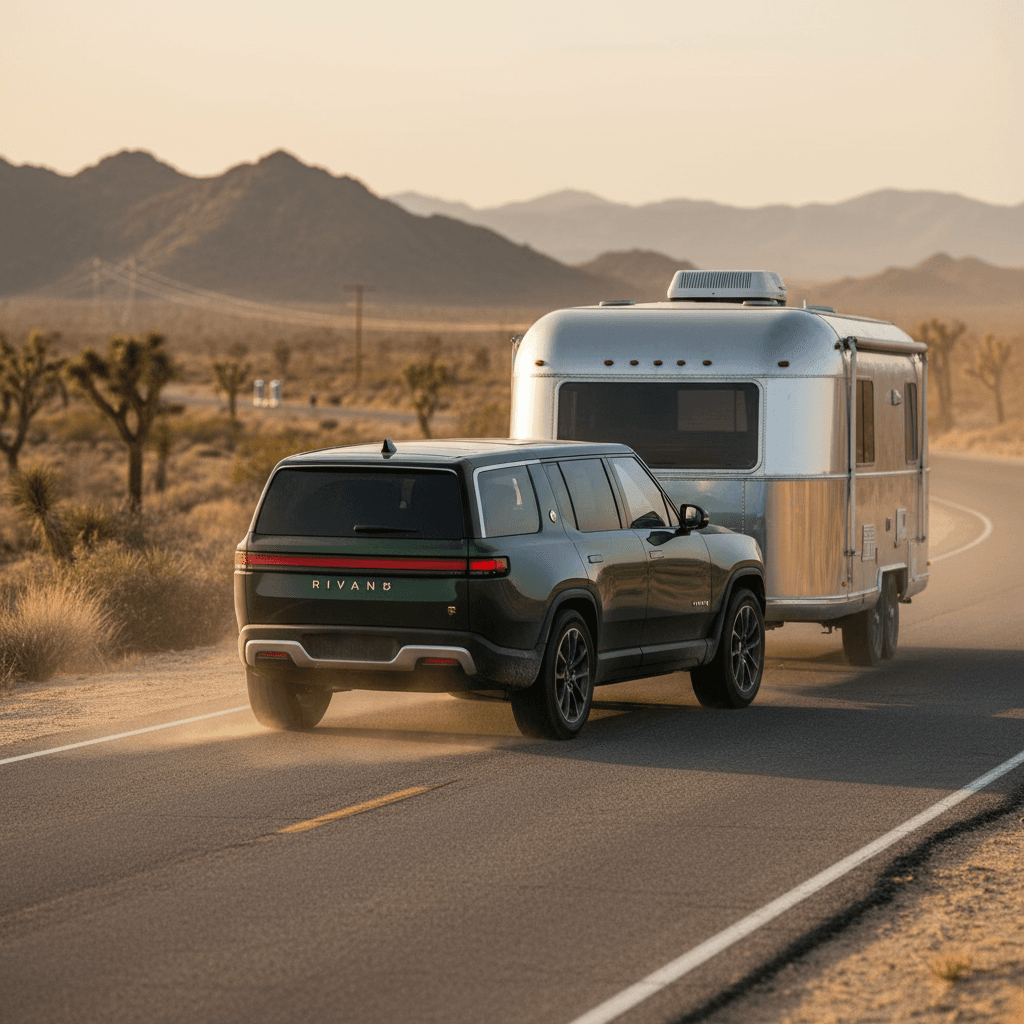
If you’re eyeing a Rivian R1S, or already own one, you’ve probably noticed a gap between the brochure numbers and what you see on a long highway drive. The EPA sticker might say 321, 352, 371 or even 400 miles, but your real-world Rivian R1S highway range at 70–80 mph will be lower. The good news: once you understand how speed, wheels, weather, and driving style interact, you can predict your range and plan trips with confidence.
Key takeaway up front
Why highway range in a Rivian R1S feels different
On paper, the R1S is competitive with other large luxury EV SUVs. Depending on year and configuration, you’ll see EPA ratings like 321 miles for early Quad-Motor Large Pack, up to around 352 miles for Dual-Motor Large Pack on 21-inch wheels, and as much as 400 miles estimated for newer Max Pack variants. But EPA tests blend city and highway and assume moderate speeds, mild weather, and aero‑friendly wheels.
Real life looks different. The R1S is a tall, heavy, brick‑shaped SUV. Push a 7,000‑plus‑pound, three‑row box through the air at 75–80 mph and aerodynamic drag climbs fast. Owners commonly report losing **20–35% of rated range at typical U.S. interstate speeds**, and more in harsh cold or with ski boxes and bikes on the roof.
Don’t panic about the dash estimate
EPA range vs real-world R1S highway numbers
Rivian R1S: lab vs real highway
Independent testing and owner logs paint a consistent picture. In one well‑publicized 75‑mph highway test, an R1S with the Large Pack and Quad‑Motor drivetrain managed about **230 miles** before needing a charge, roughly **70% of its 321‑mile rating**. Newer Tri‑Motor Max Pack versions with 370‑plus‑mile EPA estimates have shown around **250 miles at 75 mph** in similar conditions, again landing in that 65–70% band.
Typical Rivian R1S real-world highway range by configuration
Approximate 65–75 mph highway ranges in mild weather, assuming mostly flat terrain and no roof box. These are directional estimates, not guarantees.
| Configuration | EPA or Rivian rating | Likely 70–75 mph range (good weather) | Notes |
|---|---|---|---|
| Early Quad-Motor, Large Pack, 21" road tires | ~321 mi EPA | 210–240 mi | Heavier, less efficient; more loss at higher speeds |
| Dual-Motor, Large Pack, 21" wheels | Up to ~352 mi EPA | 240–270 mi | Best balance of efficiency and range for most owners |
| Dual-Motor, Max Pack, 21" wheels | Up to ~390–400 mi est. | 270–310 mi | Great for long‑distance highway work |
| Tri-Motor, Max Pack, 21" wheels | ~371 mi EPA | 240–280 mi | Performance focus; test results show ~250 mi at 75 mph |
| Any R1S on 22" wheels | Varies | −5–10% vs 21" | Heavier, wider tires add rolling resistance |
| Any R1S on 20" all‑terrain tires | Varies | −10–20% vs 21" | All‑terrain tread and softer compound hurt efficiency |
Use this as a planning baseline, then adjust for your speed, weather, and load.
Why the gap matters more on road trips
How speed, tires, and weather change R1S highway range
Four biggest highway range killers in a Rivian R1S
If your range looks bad, one or more of these is usually to blame.
1. Speed above 70 mph
Every EV suffers at high speed, but a tall SUV like the R1S feels it more. Many owners report **30% range loss or worse at 75–80 mph** compared with driving at 60–65 mph on the same route.
Hold 65–70 mph when you can, especially in strong headwinds.
2. Cold weather and cold-soaked battery
In real winter, say, under 25°F, R1S drivers commonly see **20–40% less range** than EPA on the highway, especially if the vehicle sat outside unplugged and the pack is cold-soaked.
Plug in overnight and precondition when possible to keep losses closer to the 10–20% range.
3. Wheel size and tire type
Rivian and EPA data show the best highway range on **21‑inch road tires**. Jumping to 22‑inch wheels costs several percent of range, and going to 20‑inch all‑terrain tires can mean 40–50 miles less per charge compared with the most efficient setup.
4. Wind, hills, and roof boxes
Headwinds, long climbs, ski boxes, or bikes on a hitch rack all stack drag and load onto the R1S. Owners report situations where a mix of 70+ mph speeds and strong head/side winds cuts effective range by 30%+ even in warm weather.
A simple back-of-napkin rule
Planning a road trip in a Rivian R1S
With realistic expectations, the R1S is a very capable road‑trip SUV. The pack is big, the ride is comfortable, and DC fast‑charging performance is solid. The trick is how you plan: you want to think in **segments, buffers, and speeds**, not just the big number on the Monroney sticker.
6 steps to plan sane R1S highway legs
1. Start from your real configuration
Note your battery (Standard, Large, or Max), motor setup (Dual, Tri, Quad) and wheel/tire choice. Use the table above to pick a realistic best‑case highway range number rather than the headline EPA figure.
2. Use 65–70% of that number for leg length
If your real‑world highway range looks like 260 miles in mild weather, plan legs around **170–180 miles**, not 230. That leaves headroom for detours, construction, or a stiff headwind.
3. Build in a 15–20% arrival buffer
When you map DC fast chargers, aim to arrive with at least **15–20% state of charge**, especially in unfamiliar regions. In winter or in sparse charging corridors, 25–30% is safer.
4. Precondition the battery when you can
If you can leave with a warm pack, by charging at home up to departure or using the trip/charger preconditioning feature, you’ll recover some of the kWh normally lost to heating the pack on the road.
5. Watch efficiency, not just miles remaining
On the trip screen, pay attention to your kWh/100 mi or mi/kWh over the last 15–30 miles. If that trend is worse than expected, shorten the next leg or slow down 5–10 mph to claw back range.
6. Be flexible about an extra stop
On long days, it’s often smarter to add a quick 10–15‑minute top‑up than to crawl at 60 mph behind semis. The R1S charges fastest between roughly 10–60% state of charge, so shorter, more frequent stops can be time‑neutral.
Used Rivian R1S: what to ask about range
If you’re shopping the used market, highway range becomes a financial question too. You’re paying for battery capacity and efficiency, so it pays to understand how the specific R1S you’re considering performs at speed, and how it’s been treated.
Questions to ask the seller
- What configuration is it? Nail down Standard vs Large vs Max Pack, Dual vs Quad vs Tri motor, and wheel/tire setup.
- What range do they see at 70 mph? A quick, honest number ("about 220 miles from 100 to 10% in mild weather") tells you more than the EPA rating.
- Any winter road‑trip experience? Ask how it behaved on a cold‑weather highway trip, what efficiency they saw, whether fast charging stayed strong, and how they planned legs.
What Recharged adds to the picture
When you buy a used R1S through Recharged, every vehicle comes with a Recharged Score Report. That includes:
- Independent battery‑health diagnostics, so you know how much capacity the pack is actually holding.
- Usage insights that help explain any range differences versus new.
- Transparent, fair‑market pricing based on configuration, mileage, and condition.
An R1S with a healthy pack and efficient wheels/tires will be a far better highway companion than a similar‑year truck on worn all‑terrains and a mystery charging history.
Why battery health matters more than you think
Optimizing your R1S for better highway range
You can’t turn the R1S into a hyper‑efficient sedan, but you can shift the numbers meaningfully with a few smart choices. The difference between careless setup and an optimized one is easily **30–60 miles of extra usable highway range** on a full charge.
- If you have a choice, run 21‑inch road tires for long trips; save 20‑inch all‑terrains for true off‑road duty.
- Keep tires at recommended pressure, low pressure can quickly burn 5–10% of range.
- Use Conserve or a more efficient drive mode on straight highway stints, as long as traction and handling still feel safe for conditions.
- Limit roof boxes and exterior cargo if you’re trying to stretch a leg; hitch‑mounted boxes and bike racks are usually better than roof‑mounted options for drag.
- Preheat or precool the cabin while plugged in so the pack starts warmer and you use less energy on HVAC early in the drive.
- Avoid running 80+ mph for hours unless you’ve plotted very short legs; 5 mph of speed can be the difference between arriving with 20% and white‑knuckling it at 2%.
Caution when towing
Rivian R1S highway range FAQ
Frequently asked questions about Rivian R1S real-world highway range
Bottom line on Rivian R1S real-world highway range
If you take nothing else away, let it be this: a Rivian R1S will rarely match its EPA range number on the highway, but that doesn’t mean it’s a bad road‑trip vehicle. Treat your **true highway range as roughly 60–80% of the sticker**, scale that for cold weather and wheel/tire choices, and plan legs with a healthy buffer. Do that, and the R1S becomes exactly what it looks like, an uncompromising, comfortable long‑distance SUV that just happens to run on electrons instead of gas.
If you’re exploring a **used Rivian R1S**, pairing this range knowledge with hard data on pack health is crucial. That’s where Recharged’s battery diagnostics, fair‑market pricing, and EV‑specialist guidance can help you find an R1S whose highway behavior matches your expectations, before you sign anything or set out on that first big trip.