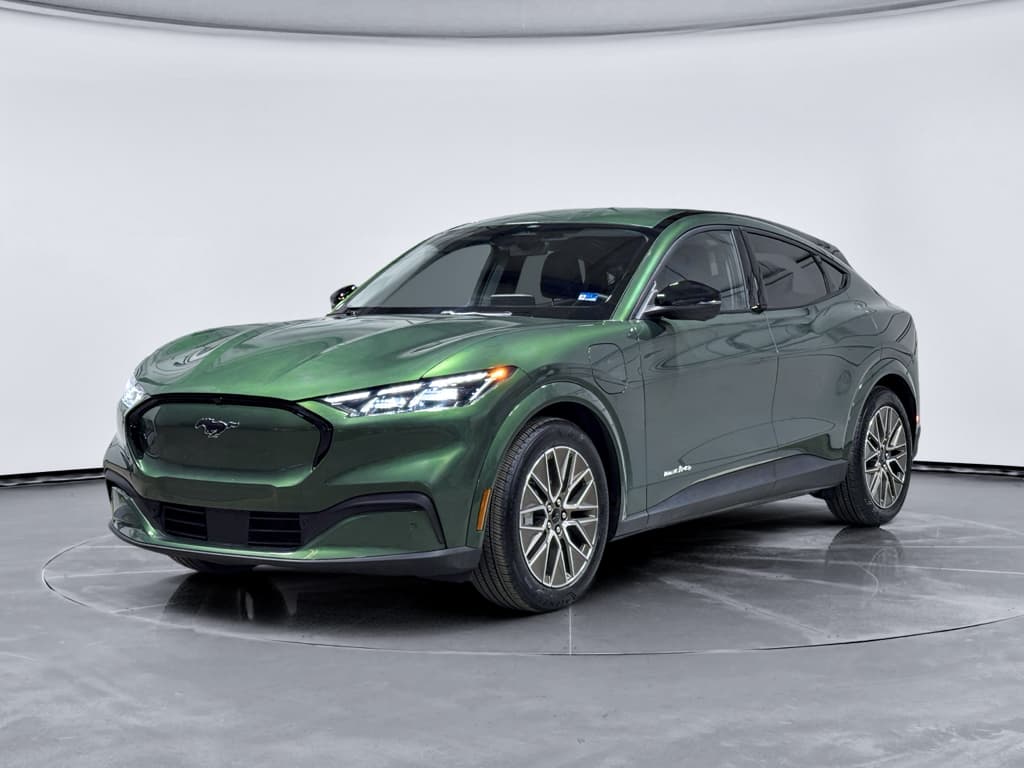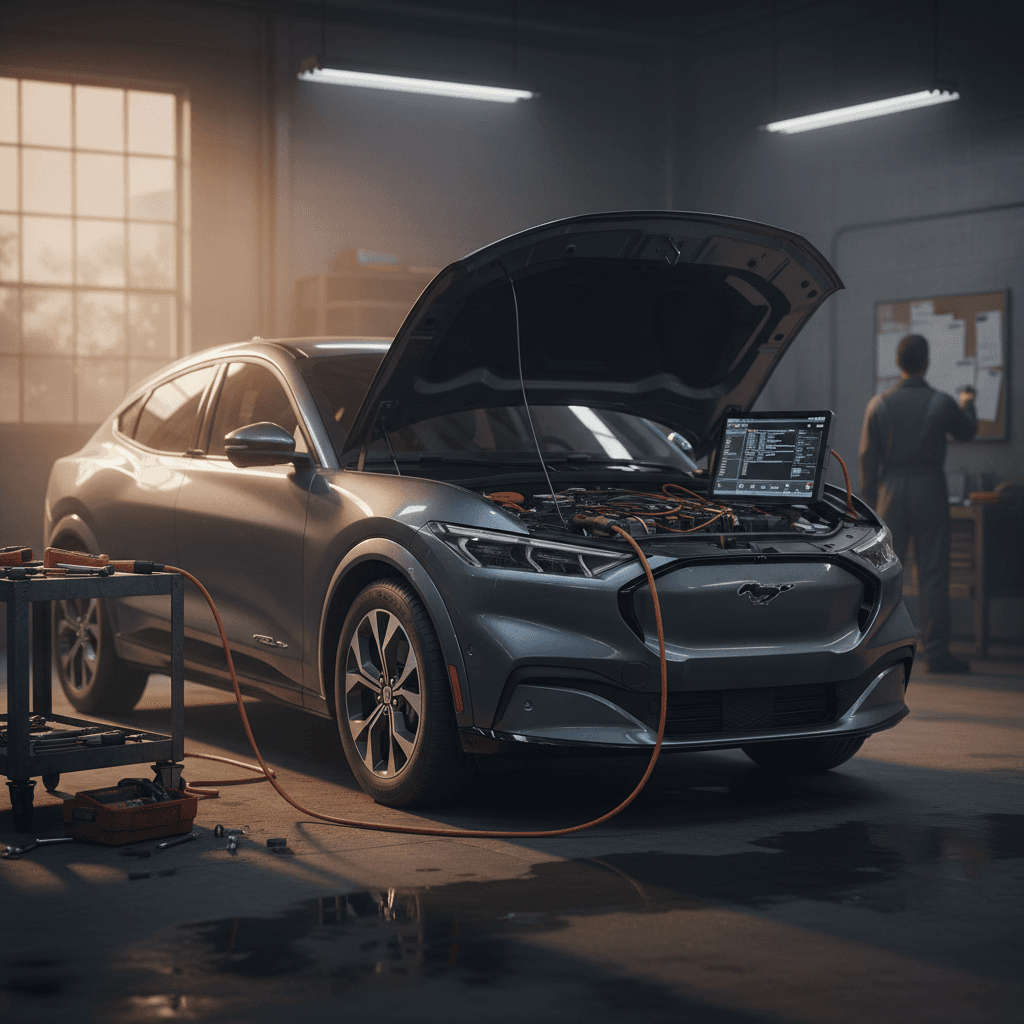
The 2021 Ford Mustang Mach-E was Ford’s breakout electric crossover, and like most first‑model‑year EVs, it has a **distinct pattern of problems and fixes**. If you own one, or you’re shopping for a used Mach‑E, you need to understand issues like **high‑voltage battery junction box (HVBJB) failures**, door‑latch recalls, software glitches, and 12‑volt battery surprises before they become expensive headaches.
Quick take
Overview: 2021 Mach-E problem profile
2021 Mustang Mach-E problem snapshot
From owner reports and recall campaigns, the **2021 Mach‑E’s biggest long‑term concern** is the high‑voltage battery junction box (HVBJB) and its internal contactors on certain builds, especially extended‑range and higher‑output versions. Beyond that, you’ll see a familiar EV grab bag: 12‑volt battery failures, software bugs, occasional charging quirks, and a few traditional car issues (door latches, seat belts, glass and trim).
If you remember only one thing
The biggest 2021 Mustang Mach-E recalls
Ford has issued several major recalls that heavily affect 2021 Mach‑E owners. Here are the ones shoppers and owners should prioritize checking by VIN:
Major 2021 Mustang Mach-E recalls to verify
Always run a VIN check on NHTSA and Ford’s recall site to confirm whether these campaigns apply to a specific vehicle and whether the fixes have been performed.
| Issue | Typical Symptoms | Model Years Affected | Fix Type |
|---|---|---|---|
| High‑voltage battery junction box (HVBJB) / contactor overheating | “Stop safely now,” sudden loss of drive, multiple warnings, won’t ready up | Primarily 2021–2022 (select trims) | Software update + later hardware replacement (HVBJB swap) |
| Electronic door latches may stay locked | Rear passengers potentially trapped if latch doesn’t release; can also lock owner out | 2021–2025 Mach‑E | Software update to door‑latch control modules |
| Rearview camera image delay / freeze / no image | Backup camera lag, frozen frame, or black screen in reverse | 2021–2023 Mach‑E | Software update (dealer or OTA) |
| Functional safety software / unintended acceleration or loss of power | Unintended accel/decel or power loss under rare fault conditions | Primarily early 2021 AWD builds | Control module software update |
| Seat belt / restraint‑related campaigns (select VINs) | Warning lights, restraint system warning messages | Limited subset of 2021 vehicles | Component inspection or replacement |
Recall campaigns evolve; always confirm current status with Ford or NHTSA.
How to check recall status fast
HVBJB battery contactor failure: symptoms and fix
If you’ve heard horror stories about Mach‑E power loss, you’re probably hearing about the **HVBJB (high‑voltage battery junction box)** and its internal **main contactors**. On some 2021–2022 cars, heavy DC fast‑charging or repeated hard acceleration could overheat the contactors, leading to a failure that either derates power heavily or strands the vehicle.
- “Stop Safely Now” message while driving, often under acceleration or after DC fast charging
- Sudden drop to very low power or complete loss of drive, even though the main battery still has charge
- Multiple high‑voltage system warnings and check‑engine lights
- Vehicle may refuse to go into “Ready” mode after being shut off
Why HVBJB failures matter
How Ford’s HVBJB recall evolved
Ford’s response came in phases. Early on, 2021–2022 Mach‑Es received a **software‑only recall** intended to limit stress on the contactors and prevent a total brick. Later, Ford rolled out a more comprehensive campaign involving **physical replacement of the HVBJB** on affected vehicles. If you’re shopping in 2026, you want a car that has already received the **full hardware replacement**, not just the first wave of software tweaks.
What to do if you suspect an HVBJB issue
1. Capture the warnings
Take clear photos of any “Stop Safely Now” or high‑voltage system messages and the instrument cluster. These are extremely helpful for service advisors and can speed up diagnosis.
2. Don’t keep driving hard
If the car is still drivable but showing repeated high‑voltage warnings, avoid highways and DC fast charging. Drive gently to a safe place and arrange service.
3. Check recall completion
Use your VIN to confirm whether the HVBJB recall is open or completed. If only early software campaigns are shown as complete, ask your dealer specifically about **HVBJB replacement** options.
4. Get a dealer diagnosis
This is not a DIY repair. A Ford EV‑certified dealer will check DTCs, inspect the HVBJB, and determine whether replacement is warranted under recall or warranty.
5. For used purchases, demand documentation
Before you sign on a used 2021 Mach‑E, ask for paperwork showing **which HVBJB campaigns and software updates** have been done and when.
12V battery drain and no-start issues
Like many early EVs, the 2021 Mustang Mach‑E has had its share of **12‑volt (12V) battery problems**. Even though propulsion comes from the big high‑voltage pack, the car still relies on a small 12V battery to boot computers, run locks, and close contactors. When the 12V battery is weak or the car fails to keep it topped up, you can end up with a seemingly “dead” EV that won’t start, even with plenty of range showing.
- Vehicle won’t “Ready” or turn on; you may only see a dim cluster or nothing at all
- Instrument panel backlighting or modules staying awake and slowly draining the 12V battery
- Repeated low‑voltage warnings in the app or in‑car messages
- Tow operators sometimes temporarily revive the car by disconnecting/reconnecting the 12V battery
Why 2021 cars are more exposed
Typical fixes for 12V and related drains
Common 12V fixes for 2021 Mach-E owners
Most 12V issues are inexpensive to fix but can be very inconvenient if ignored.
Replace the aging 12V battery
By 2026, the factory 12V in a 2021 Mach‑E is at or beyond typical life expectancy.
- Proactively replace if it’s original.
- Choose an AGM battery that meets Ford specs.
- Record the replacement date and mileage.
Apply latest body & BCM updates
Ford has released software that improves module sleep behavior and charging logic.
- Ask the dealer to bring every module current.
- Verify there are no open campaigns related to 12V behavior.
Check for abnormal parasitic draw
If a fresh 12V still dies quickly, a module may be staying awake.
- Dealer can measure key‑off draw.
- Sometimes tied to telematics, IPC, or door modules.
Used‑car buyer tip
Software bugs, SYNC 4A, and OTA update glitches
The Mach‑E leans heavily on software, Ford’s SYNC 4A infotainment, over‑the‑air (OTA) updates, and a long list of networked modules. On early 2021 cars, that software‑first approach meant **teething issues ranging from annoying to serious**, especially for owners whose vehicles got stuck behind on updates.
- Glitchy or frozen SYNC 4A screen, especially in hot or cold weather
- Dropped Bluetooth connections or unreliable wireless CarPlay/Android Auto
- Incomplete or failed OTA updates that leave the car on a buggy software build
- Occasional phantom warnings that vanish after a restart or later software update
When a software bug isn’t just cosmetic
Best practices for keeping a 2021 Mach-E’s software healthy
Checklist: Keeping your 2021 Mach-E software in good shape
1. Bring the car fully up to date once
Ask a Ford EV‑certified dealer to perform a **full module software refresh**, not just a single campaign. This often stabilizes quirky early‑build cars.
2. Use home Wi‑Fi when possible
Pair the Mach‑E to reliable home Wi‑Fi so large OTA packages download quickly and completely instead of timing out on cellular.
3. Don’t delay safety‑related updates
When the car or FordPass shows a safety‑related update, schedule it promptly. Some are prerequisites for later bug‑fix releases.
4. Avoid interrupting major updates
When the car is installing a big OTA package, leave it parked, locked, and plugged in if possible. Cutting power mid‑update can create strange behavior that requires dealer intervention.
5. Document software levels for a used purchase
On a test‑drive visit, snap a photo of the **software version** screen in settings. Cars that are dramatically out of date are more likely to have unresolved issues.
Charging problems: DC fast charging and home charging
Most 2021 Mach‑E owners report **normal Level 2 home charging** once the equipment is installed correctly. The more interesting failure modes tend to show up on **DC fast‑charging**, especially early on, where some cars experienced charge‑session dropouts or communications errors with certain networks.
Typical DC fast-charging issues
- Charge session starts and then aborts with an error on the charger or in the car.
- Red flashing charge indicator and a “charging fault” message.
- Car limits charge power more aggressively after repeated fast‑charge use.
- Issues more common on specific public networks or older hardware.
Typical Level 2 / home charging issues
- Undersized or improperly wired 240V circuit causing breaker trips.
- Use of very old or low‑quality aftermarket EVSEs.
- Occasional charge‑start failures traced back to software, fixed with updates.
Home charging misbehavior is usually infrastructure‑related, not an inherent Mach‑E defect.
Good news for shoppers
Other notable 2021 Mach-E issues
Beyond HVBJB, 12V, and software, a handful of more traditional issues show up in owner reports and recall campaigns. None of these are uniquely catastrophic, but they’re worth checking for on a used 2021 car.
Secondary 2021 Mach-E problems to watch for
Most are standard new‑model gremlins rather than EV‑specific flaws.
Door latch and handle quirks
Separate from the major electronic latch recall, some owners report:
- Misaligned doors or handles needing adjustment.
- Occasional failure of the electronic release button.
- Weather‑strip wind noise at highway speeds.
Camera and sensor hiccups
Front and rear cameras may occasionally show:
- Temporary black screens or frozen images.
- Parking sensor false positives in heavy rain or snow.
Most issues improve with updated software.
Interior trim & restraint odds and ends
Scattered reports include:
- Seat belt tensioner or buckle recalls on specific VINs.
- Rattles from door panels or cargo area.
- Minor squeaks developing with age.
What to check before buying a used 2021 Mach-E
Shopping for a 2021 Mach‑E in 2026 can be a smart value play: they’ve taken early depreciation, many recalls are already addressed, and the driving experience is still competitive. The trick is screening out problem cars. Here’s a **practical pre‑purchase checklist** you can work through with any seller or dealer.
Pre‑purchase checklist for a 2021 Mustang Mach-E
1. Run a full recall and service history check
Use the VIN on Ford and NHTSA sites. Ask for dealer service printouts showing **HVBJB work, door‑latch updates, and camera/software recalls**. Avoid cars with open high‑voltage or latch campaigns that the seller refuses to complete.
2. Verify HVBJB campaign status
Confirm whether the car had only the early software patch or the **later HVBJB hardware replacement**. If the latter is missing but applicable, bake a dealer visit into your purchase plan.
3. Inspect and date the 12V battery
Look for a sticker or stamping showing manufacturing or installation date. A 2021‑build 12V battery still in the car in 2026 should be treated as due for replacement.
4. Check software version and update behavior
From the center screen, view the software/about page. Cars that are many versions behind may need a **catch‑up visit** to a dealer to iron out bugs.
5. Test Level 2 home‑style charging
Even at a dealer, ask to plug into a Level 2 station. Confirm the car starts charging reliably, shows expected power, and doesn’t throw errors.
6. Do a short DC fast‑charge test if possible
On a public station, charge from, say, 30–60% and watch for session dropouts or faults. This is especially important on extended‑range and GT variants that stress the HV system more.
7. Listen and feel on the road
On your test drive, listen for wind noise around doors, rattles from the hatch, and pay attention to steering feel and brake modulation. Early EVs sometimes have calibration quirks that a later software update may smooth out.
8. Have a third party review the deal
If you’re buying from a private party or non‑EV‑specialist dealer, consider an independent inspection from an EV‑savvy shop, or buy from an EV‑focused retailer like <strong>Recharged</strong> that already does this work for you.
Good signs in a used 2021 Mach-E
How Recharged evaluates used Mustang Mach-E models
Because Recharged specializes in used EVs, we see a lot of 2021 Mach‑Es, both the good ones and the cautionary tales. Our process is built around catching the **exact issues** discussed above before a car ever appears on our marketplace.
What Recharged checks on every Mach-E we list
Beyond a typical used‑car inspection, we focus on EV‑specific risk areas.
Recharged Score & battery health diagnostics
Every Mach‑E on Recharged comes with a Recharged Score Report, which includes:
- Battery health and usable capacity checks.
- Charge‑rate behavior under DC fast charging.
- Thermal‑management performance evaluation.
Recall, software, and 12V review
Our EV‑specialist team verifies:
- Open and completed Ford/NHTSA recalls (HVBJB, door latches, cameras, etc.).
- Firmware/OTA status on critical modules.
- Condition and age of the 12V battery, with replacement as needed.
Retail experience built for EVs
Recharged offers:
- Transparent pricing based on real EV market data.
- Financing options tailored to EV buyers.
- Trade‑in, instant offer, or consignment paths if you’re moving out of a Mach‑E.
- Nationwide delivery and an Experience Center in Richmond, VA.
Expert guidance through the quirks
If you’re comparing a 2021 Mach‑E to other used EVs, our specialists can:
- Explain how Mach‑E issues stack up against rivals.
- Help you weigh standard‑range vs. extended‑range and AWD vs. RWD for your use case.
- Walk you through home‑charging and long‑trip planning.
Ready to find your next EV?
Browse VehiclesFAQ: 2021 Ford Mustang Mach-E problems and fixes
Frequently asked questions about 2021 Mach-E problems
Bottom line: Is a 2021 Mach-E still worth it?
If you judge the 2021 Ford Mustang Mach‑E only by its recall list, you’ll miss the bigger picture. Early‑build EVs almost always have complex launch issues, and Ford’s first dedicated electric crossover was no exception. The difference in 2026 is that the **problems are now mapped**: we know how HVBJB failures present, how 12V issues behave, and which software campaigns matter most.
For current owners, the path forward is straightforward: stay current on recalls and software, treat the 12V battery as a wear item, and push Ford dealers to address high‑voltage concerns decisively. For shoppers, a 2021 Mach‑E can be a compelling value play **if, and only if, you verify the fixes and walk away from cars with incomplete or vague histories**.
If you’d rather not become a part‑time service manager, consider working with an EV‑focused retailer like Recharged that bakes HVBJB status, battery health, recall completion, and charging behavior into every listing. The Mach‑E is a better car when its weak spots are understood and addressed, and in 2026, that knowledge is finally on your side.