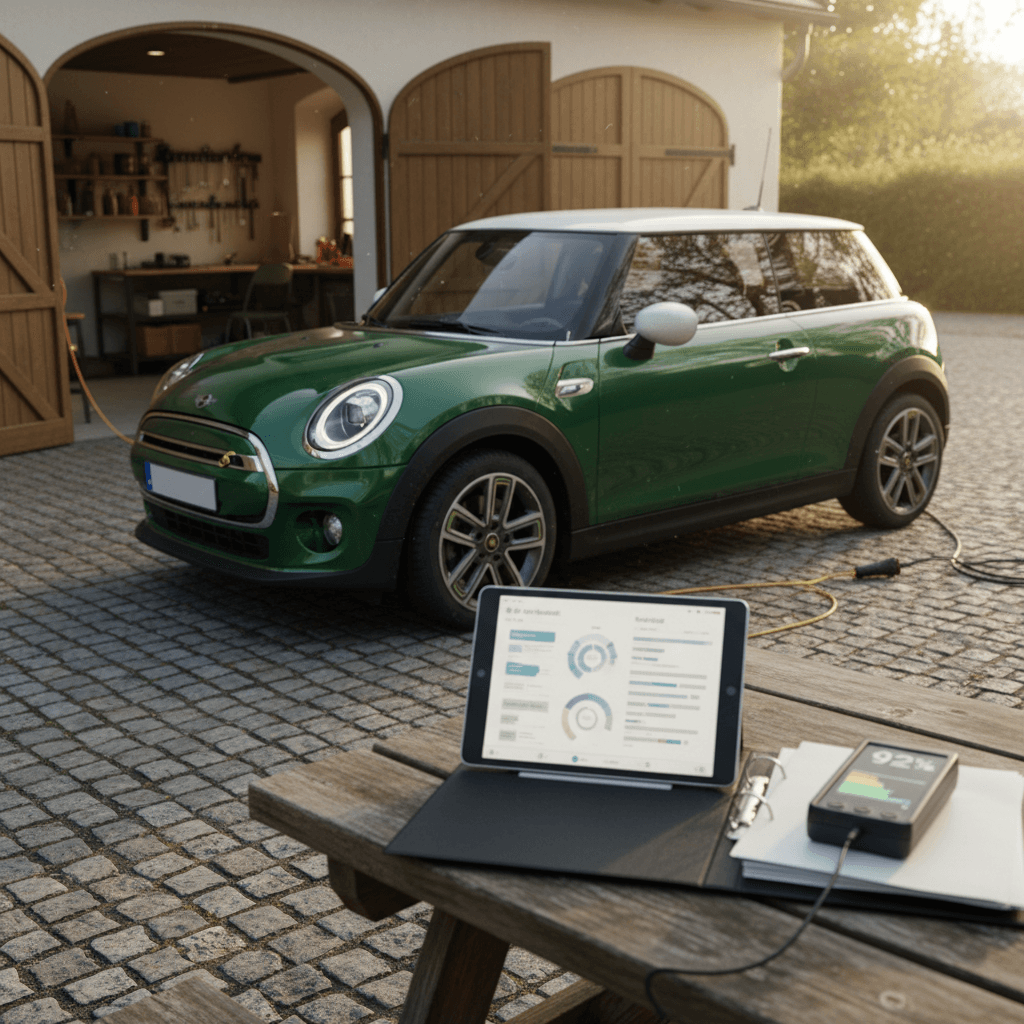
If you’re getting ready to sell your Mini Cooper SE, you’re in a better position than a lot of first‑gen EV owners. The SE’s playful character and city‑friendly range have built a loyal following, and used values have held up better than many niche EVs. But to get top dollar, whether you sell privately or trade it in, you need a Mini Cooper SE selling checklist that speaks to what EV buyers actually care about: battery health, remaining warranty, charging gear, and daily usability.
Who this checklist is for
Why a Mini Cooper SE–Specific Selling Checklist Matters
Mini Cooper SE buyers aren’t just buying a cute hatchback, they’re buying a city‑range EV with a particular battery, charging profile, and warranty story. That means generic used‑car advice (like “change the oil”) simply doesn’t move the needle on price or buyer confidence.
Most shoppers cross‑shop the SE against other small EVs and hybrids. They’ve read about short range, cold‑weather performance, and depreciation. Your job is to answer those concerns up front and show that your car has been well cared for, charged sensibly, and still has plenty of useful life left.
On Recharged, we see well‑presented Mini SEs with clear battery information and complete charging accessories consistently sell faster and closer to asking price than similar cars with vague listings. That’s why this checklist leans hard into:
- Battery health and warranty positioning
- Charging equipment and everyday usability
- Honest disclosure of known Mini SE quirks
- Smart timing and pricing in a fast‑moving EV market
Step 1: Time the Market for Your Mini Cooper SE
Timing matters more for EVs than for comparable gas Minis because newer EVs bring more range and tech, which tends to pull values of older short‑range cars down faster. The first‑gen 2020–2024 Mini Cooper SE has already taken its early depreciation hit, but the window for best resale isn’t infinite.
Mini Cooper SE Value Trends to Know
Smart timing move
- Check how many years and miles remain on the 8‑year/100,000‑mile battery warranty.
- Look at current listings for similar‑year Mini SEs in your area to see if inventory is tight (good for you) or oversupplied.
- If you’re upgrading to a longer‑range EV, consider selling before another model year of newer Minis hits the used market.
Step 2: Know Your Mini’s Value and Price Strategically
Mini Cooper SE resale has been surprisingly resilient compared with some early EVs, but trim, color, wheels, and equipment matter a lot. A well‑optioned Iconic or higher‑spec car with desirable colors and low miles can fetch thousands more than a base spec with sparse equipment.
How to Get a Realistic Price Range
Use multiple data points, then refine based on EV‑specific factors.
1. Book values & comps
Start with pricing tools and local listings:
- Pricing guides for 2020–2024 Mini Cooper SE
- Local dealer used‑lot pricing
- Online EV marketplaces
Note the spread between trade‑in and private‑party values.
2. EV‑specific adjustments
Next, adjust for what EV buyers care about:
- Odometer and charging history
- Battery warranty remaining
- Included charging gear (L1 brick, L2 cable)
- Condition of tires and brakes (rust vs. wear)
3. Demand for short‑range EVs
The SE’s ~110–120‑mile real‑world range is great for city duty but not for everyone.
In dense urban areas with good public charging, demand can be strong. In more spread‑out regions, you may need to price more aggressively.
Don’t chase the highest outlier
Once you know the realistic range, decide whether you value speed or maximum price. Undercutting the market by even $500–$1,000 on a $18,000–$20,000 car can dramatically increase interest without destroying your economics.
Step 3: Gather Key Paperwork and Digital Records
EV buyers are especially sensitive to uncertainty. A tidy folder, physical or digital, with your Mini’s history can be the difference between a cautious lowball and a confident full‑price offer.
Paperwork & Records Checklist
Title and registration
Confirm you have a clean title in your name and up‑to‑date registration. If there’s a lien, contact your lender in advance to understand payoff and release steps.
Service & recall history
Print (or export) a service history from your Mini dealer account, including any high‑voltage battery or software recalls. For 2020–2024 cars, buyers will want to see that EV‑specific updates have been done.
Charging history (optional but powerful)
If you’ve mostly charged at home, note your typical pattern (e.g., 20–80% daily, DC fast only on road trips). This reassures savvy buyers that the battery hasn’t been abused.
Warranty documents
Include warranty booklet pages that show the 8‑year/100,000‑mile high‑voltage battery coverage and any extended warranties you’ve purchased.
Original window sticker or build sheet
If you have it, the window sticker makes it easy for shoppers to see trim, options, and packages at a glance, especially important with Minis’ complex packaging.
EV incentives and tax documents (if relevant)
If you originally claimed federal or state EV incentives, you don't usually need to supply those documents, but knowing how the car qualified can help answer buyer questions.
Step 4: Prepare the Battery and Charging Gear
For EVs, the battery pack is the new engine. The Mini Cooper SE’s pack has held up well in real‑world use, but you have to prove it to a buyer who can’t see degradation with the naked eye.
- Charge the battery to around 80% and take a clear photo of the dash showing state of charge and estimated range in your typical driving conditions.
- If your car supports exporting battery or range data from an app, include a screenshot that shows recent average consumption and typical range.
- Avoid fast‑charging right before a buyer visit, some EV shoppers prefer to see that the car lives most of its life on Level 1 or Level 2 charging.
- If possible, schedule test drives on a day with typical weather so range estimates look realistic, not artificially low from extreme cold.
Include every charging accessory you can
If you’ve added aftermarket home charging hardware that you plan to leave behind, be clear about that in your listing and during negotiation. A professionally installed Level 2 station at the buyer’s home often can’t move with the car, but a plug‑in portable unit can, and that can sweeten the deal.
Step 5: Fix Mini Cooper SE Issues That Scare Buyers
Every model has its quirks. The Mini Cooper SE has been relatively solid mechanically, but certain well‑known issues and EV‑specific wear items will give buyers pause if they’re not addressed.
Common Mini Cooper SE Concerns to Address
Handle these before you list and you’ll avoid last‑minute price cuts.
Charging flap & port issues
Some owners report occasional problems with the charge door sensor or moisture around the port. Make sure your port door opens and closes smoothly, the charge port is dry and clean, and there are no warning lights.
If you’ve had related warranty work, keep the paperwork handy to show it’s been resolved.
Rusty or underused brakes
EVs that rarely use friction brakes can develop surface rust that looks alarming. Have your brakes inspected and cleaned if needed. A report noting “pads/rotors OK, normal EV wear” is reassuring and inexpensive compared with a buyer demanding a brake job.
Cold‑weather range expectations
Short‑range EVs like the Mini SE take a noticeable hit in winter range. Prepare a simple explanation of your real‑world winter vs. summer range so shoppers don’t panic when they read forums.
Cosmetic Mini‑specific wear
Fix easy‑win cosmetics: curbed wheels, small dings, or heavily worn tires. Minis trade a bit on style; a clean exterior and intact trim help justify your asking price.
Be honest about unresolved problems
Step 6: Detail, Photograph, and Stage Your Mini Cooper SE
Because the Mini Cooper SE is as much an emotional purchase as a rational one, presentation carries outsized weight. Think of your photos and description as the digital test drive.
Detail & Photo Checklist for Mini Cooper SE
Exterior deep clean
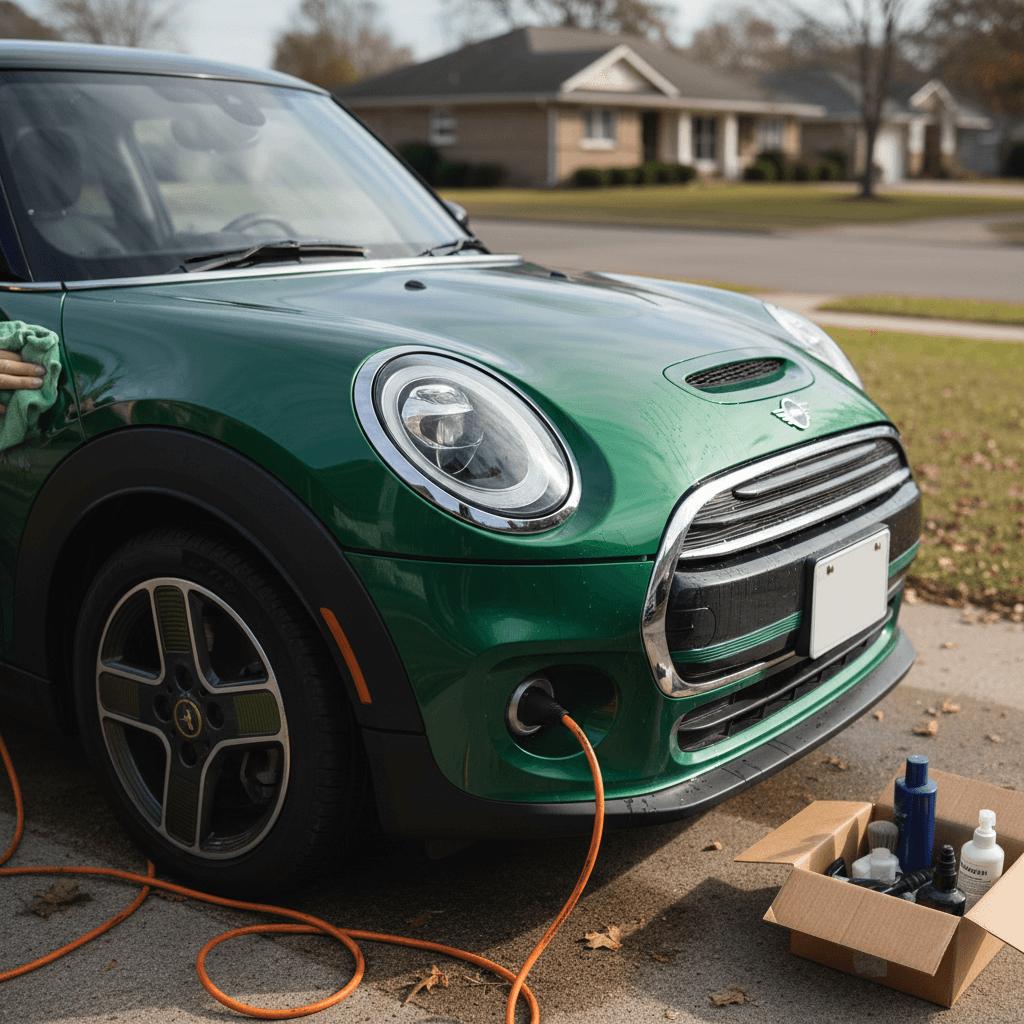
Wash, clay, and wax if needed. Pay attention to the contrast‑color roof and mirrors, wheel faces, and around the charge port. Touch up small chips if you can do it neatly.
Interior reset
Vacuum every surface, clean the high‑touch areas (steering wheel, toggle switches, iDrive controller), and wipe down the digital cluster and central screen. Remove personal items, mounts, and dangling accessories.
EV‑focused hero shot
Take at least one clear photo of the car <strong>plugged in and charging</strong>. Show the dash screen with charging status or range, it visually communicates that the EV systems work as expected.
Battery & range screen close‑up
Photograph the instrument cluster displaying state of charge, estimated range, and odometer. This is a key reassurance shot for range‑sensitive buyers.
Charging equipment layout
Lay out the OEM charging brick, cables, adapters, and manuals in the trunk and photograph them together. Label in your listing exactly what’s included.
Undercar & wheel check
Snap a couple of photos low to the ground at the rocker panels and under the rear. Buyers aren’t expecting a show car, but visibly clean underbody and wheels signal that the car hasn’t been abused.
Step 7: Build a Transparent, EV-Focused Listing
A strong Mini Cooper SE listing does more than recite features, it answers the buyer’s top questions before they even message you. That’s where EV‑specific detail and transparency can set you apart from generic classifieds.
Must‑include details
- Model year, trim, and options (e.g., “2022 Mini Cooper SE Iconic with panoramic roof and Driver Assistance package”).
- Odometer and usage pattern (city commute, highway, second car, etc.).
- Remaining battery warranty in years and miles.
- Typical real‑world range in your climate (summer vs. winter if relevant).
- Charging habits (mostly Level 1 or Level 2, how often DC fast‑charged).
- Included charging gear and accessories.
Sample EV‑savvy description snippet
“Selling my 2021 Mini Cooper SE (Signature Plus) with 28,500 miles. Daily driven for a 20‑mile round‑trip commute, charged at home on Level 2 (40A) and only DC fast‑charged a handful of times per year for weekend trips.
Still under Mini’s 8‑year/100,000‑mile high‑voltage battery warranty. In current mild weather, I see about 115–120 miles of estimated range at 80–90% charge. Includes OEM Level 1 charging brick and a 240V portable Level 2 charger.”
How Recharged helps with listings
Ready to find your next EV?
Browse VehiclesStep 8: Handle Test Drives Safely and Confidently
Once your listing generates interest, test drives are where you either close the deal, or lose a buyer because they don’t quite “get” how an EV like the Mini SE fits into their life. Your goal is to make the EV experience feel intuitive and low‑risk.
Mini Cooper SE Test‑Drive Checklist
Verify identity and insurance
Before any drive, confirm the buyer’s driver’s license and, ideally, proof of insurance. Meet in a public, well‑lit area and don’t hand over the keys without you in the car unless you’re working with a trusted intermediary.
Explain one‑pedal driving
Many shoppers are new to strong regen. Before moving, explain how lift‑off deceleration works in the SE and show them how to adjust regen or driving modes if they’re uncomfortable at first.
Show basic charging workflow
If possible, start or end the test drive at a charging spot. Demonstrate opening the charge door, plugging in, watching the dash/app, and ending a session. This demystifies day‑to‑day ownership.
Point out realistic range use cases
As you drive, narrate how you’ve used the car: commuting, errands, occasional short trips. Frame the SE as a practical <strong>second car or urban primary</strong>, not an interstate road‑trip machine.
Highlight remaining warranty and service history
Have your paperwork in the car. When they ask about reliability, show the Mini dealer service records and confirm that all recalls/updates are current.
Avoid high‑pressure tactics
EV shoppers, especially first‑timers, sometimes need a night to think. Make it clear you’re available for follow‑up questions instead of forcing an on‑the‑spot decision.
Step 9: Close the Sale and Handover Like a Pro
Once you’ve agreed on a price, the rest should feel procedural. A clear, professional closing process protects both of you and leaves the buyer feeling confident about their new EV.
Closing Options for Your Mini Cooper SE
Choose the path that best balances convenience, price, and risk tolerance.
| Option | Pros | Cons | Best for |
|---|---|---|---|
| Private‑party cash or cashier’s check | Highest potential sale price; you control the process and timeline. | Requires handling paperwork, verifying funds, and meeting strangers. | Experienced sellers willing to manage logistics. |
| Trade‑in at dealer or Recharged partner | Fast and low‑friction; tax savings when trading toward another vehicle; no dealing with tire‑kickers. | Lower price than a strong private‑party sale. | Sellers upgrading to another EV soon. |
| Consignment or marketplace like Recharged | Professional photos, battery diagnostics, and marketing; expert EV guidance for buyer; reduced hassle. | Fees or commission; may take slightly longer to sell than a rock‑bottom private listing. | Owners who want close‑to‑retail pricing without becoming a full‑time salesperson. |
You can mix approaches, for example, shop your car to Recharged or dealers for a trade‑in baseline while you test the waters with a private listing.
Think like a product manager
Mini Cooper SE Selling Checklist (Quick Reference)
Here’s the condensed version of this Mini Cooper SE selling checklist. Use it as a final run‑through before you click “Publish” on your listing or drive to the dealer.
One‑Page Mini Cooper SE Selling Checklist
1. Confirm timing & value
Check remaining battery warranty, look up current market values, and decide whether you’re prioritizing speed or maximum price.
2. Assemble records
Gather title/registration, service and recall history, warranty documents, and any battery or charging app data you can export.
3. Optimize battery presentation
Charge to a realistic level (around 70–90%), photograph the dash with range, and be ready to discuss your real‑world summer/winter range.
4. Inspect known Mini SE issues
Check the charge door and port, brakes for rust, electronics for warning lights, and address easy cosmetic fixes like wheels and tires.
5. Detail and photograph thoroughly
Deep clean inside and out, stage the car plugged in and charging, and photograph the instrument cluster, cargo area, and charging gear.
6. Write an EV‑savvy listing
Explain how you’ve used and charged the car, list remaining battery warranty, include realistic range, and clearly list all included accessories.
7. Plan your test‑drive script
Decide how you’ll explain regen, drive modes, charging basics, and how the Mini SE fits into everyday life for different types of buyers.
8. Choose your closing path
Decide in advance whether you’d accept a trade‑in, consignment with Recharged, or only private‑party sales so you’re not negotiating blind.
Mini Cooper SE Selling FAQ
Mini Cooper SE Selling FAQ
Selling a Mini Cooper SE isn’t about convincing someone that EVs are the future; it’s about showing the right buyer that this particular EV is a low‑drama, high‑fun daily driver with transparent history and healthy battery life ahead of it. If you follow this Mini Cooper SE selling checklist, timing your sale well, pricing realistically, documenting the battery and charging history, and presenting the car honestly, you’ll attract serious shoppers instead of skeptics. And if you’d rather skip the DIY route, Recharged can help you value, market, and sell your Mini Cooper SE with the same transparency and data we’d want if we were buying it ourselves.