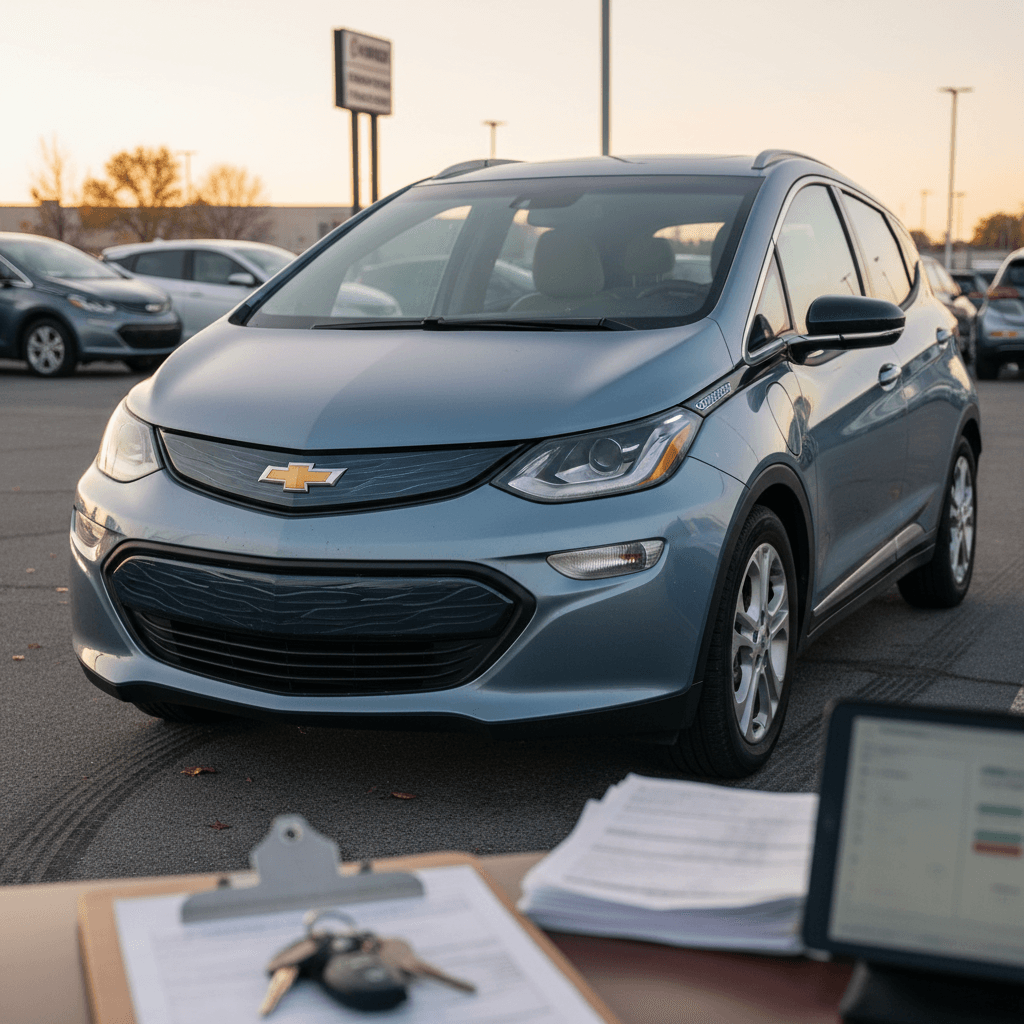
If you’re hunting for an affordable long‑range electric car, the 2018 Chevy Bolt EV probably pops up near the top of every used‑EV list. It delivers genuine 200‑plus‑mile range, hatchback practicality and zippy performance, usually for less than many new hybrids. But this model year also lived through GM’s high‑profile battery‑fire recall, which means a smart 2018 Chevy Bolt EV review has to cover more than just specs and sticker prices.
At a glance
Why the 2018 Bolt EV still matters in 2026
Launched for 2017, the Bolt EV was the first relatively mainstream EV to offer 200+ miles of range at a price that undercut early Teslas. The 2018 model carried that formula forward with only minor tweaks, so it’s fundamentally the same package that drew so much attention from early adopters and mainstream shoppers alike.
- Compact footprint but tall, airy cabin that seats four adults comfortably
- EPA‑rated 238‑mile range when new, still competitive for the price in today’s used market
- Quick 0–60 mph in the mid‑6‑second range, making it feel more like a hot hatch than an economy car
- Available advanced safety tech and a big 10.2‑inch center touchscreen that still feels modern
Why used shoppers love it
2018 Chevy Bolt EV specs at a glance
2018 Bolt EV key specs
Core performance and efficiency numbers for the 2018 Chevrolet Bolt EV.
| Spec | 2018 Bolt EV |
|---|---|
| Battery capacity | 60 kWh lithium‑ion |
| Motor output | 200 hp, 266 lb‑ft torque |
| Drivetrain | Front‑wheel drive |
| EPA range (new) | 238 miles |
| EPA efficiency | 128 MPGe city / 110 MPGe highway |
| 0–60 mph (approx.) | 6.5 seconds |
| DC fast‑charge peak | ~55 kW CCS |
| Onboard AC charger | 7.2 kW Level 2 |
| Seating | 5 passengers (4 adults comfortably) |
Official EPA figures and factory performance specs for the 2018 model year.
2018 Bolt EV ownership fast facts
Driving experience, comfort and tech
On the road, the 2018 Bolt EV feels more like a well‑sorted compact hatch than a science project. The instant torque makes it jump off the line, and one‑pedal driving in L mode quickly becomes second nature. Around town it’s agile and easy to park; on the highway it tracks straight, though wind and tire noise are more noticeable than in some newer EVs and compact crossovers.
Ride & handling
- Nimble in the city: Tight turning radius and quick electric torque make gaps in traffic easy to exploit.
- Firm but controlled ride: You’ll feel potholes more than in a heavier crossover, but body motions stay in check.
- Front‑wheel drive only: Great for efficiency, but no AWD option if you live in snow country.
Interior & comfort
- Roomy for its size: Tall roof and upright seating give more space than you’d expect from the outside.
- Seats are a hot topic: Early owners complained about narrow, firm cushions; others find them acceptable on long trips. Test them yourself.
- Cargo friendly: Split‑folding rear seats and a hatchback opening make Costco runs and luggage easy.
Tech still feels current. Every 2018 Bolt has a large 10.2‑inch center touchscreen with smartphone‑style menus, plus a fully digital driver cluster. Apple CarPlay and Android Auto are standard. Higher‑trim Premier models add niceties like heated leather seats, surround‑view cameras, rear cross‑traffic alert and more advanced driver‑assist features.
Range and real‑world efficiency
When it was new, the 2018 Bolt EV carried an EPA rating of 238 miles of range. That’s still more than many newer entry‑level EVs. Real‑world range today will depend heavily on your climate, driving style, tire choice and, crucially, whether the car received a replacement battery pack as part of GM’s recall campaign.
What kind of range can you expect?
Ballpark expectations for a healthy 2018 Bolt EV in 2026 conditions.
Mild weather (65–75°F)
Many owners report 200–240 miles on mixed driving with a healthy battery and efficient tires.
Cold climates
Expect winter range to drop 20–40%, especially on short trips using cabin heat.
City vs. highway
City driving favors the Bolt, regen braking recaptures energy. At 70–75 mph highway speeds, expect less than the EPA rating.
Range and degradation
Charging: slow DC fast, solid for daily use
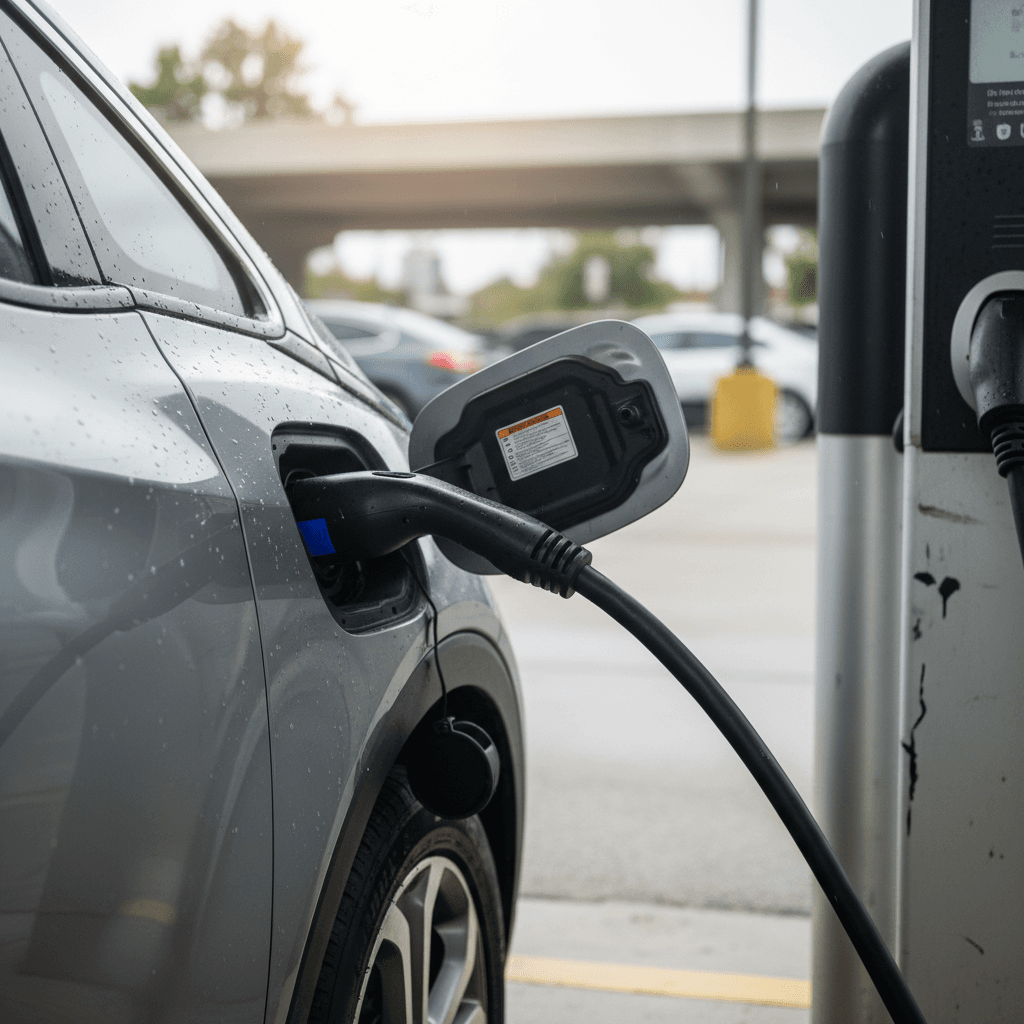
Charging is the 2018 Bolt EV’s biggest compromise versus newer electric cars. The onboard Level 2 charger is rated around 7.2 kW, which is plenty for overnight home charging. But DC fast charging is capped at roughly 55 kW on a CCS connector, and the charging curve tapers early. That means longer highway stops than you’d see in a newer Hyundai, Kia, or Tesla.
- Level 1 (120V household outlet): roughly 3–4 miles of range per hour, emergency use only.
- Level 2 (240V, 32–40A): about 25–30 miles of range per hour, ideal for overnight home or workplace charging.
- DC fast charging (CCS, up to ~55 kW peak): think in terms of 80–100 miles added in about 30–40 minutes under good conditions.
How to live with slow DC charging
Battery recall: what changed and why it matters
Any honest 2018 Chevy Bolt EV review has to address the battery‑fire recalls. GM and federal regulators identified a manufacturing defect in certain LG battery cells used in 2017–2019 Bolts that could, in rare cases, lead to thermal runaways and fires when the pack was charged to high states of charge.
- Initial software limits: Early on, GM issued software updates that limited usable battery capacity (often to about 90–94%) while engineers investigated the root cause.
- Full recall and pack replacements: GM later moved to replace battery modules or entire packs on affected vehicles, restoring full usable range and updating hardware to a revised design.
- Owner instructions: Until repairs were completed, Bolt owners were instructed to avoid parking indoors overnight, limit state of charge, and avoid deep discharges. Those restrictions should not apply once the full recall remedy is complete.
Good news for used buyers
Ready to find your next EV?
Browse VehiclesDo not skip recall verification
Reliability and common issues on 2018 Bolts
Outside of the battery recall, the 2018 Bolt EV has a generally solid reliability record, especially for the electric powertrain. Most owner complaints center on software glitches, electronics, and some wear‑and‑tear components rather than motor or inverter failures. As with any six‑ to eight‑year‑old compact, the condition of a specific car matters more than any single model‑year stereotype.
Common 2018 Bolt EV issues to know
Not every car will see these, but they show up often enough to watch for.
Infotainment & camera quirks
Some owners report intermittent black screens, frozen rear cameras, or glitchy CarPlay/Android Auto. Software updates fix many of these, but a full check during a test drive is wise.
Steering rack noise or play
A subset of Bolts have developed steering clunks or play. In a few cases, owners needed steering rack replacement out of basic warranty, which is a four‑figure repair.
12V battery and warning lights
Like many modern cars, a weak 12V battery can trigger odd warning messages or limp modes. Replacement is straightforward but easy to overlook on a used EV.
Seat comfort complaints
Some drivers find the narrow front seats uncomfortable on long drives. It’s subjective, but you should spend at least 20–30 minutes in the seat before deciding.
How Recharged approaches 2018 Bolts
Ownership costs and used 2018 Bolt EV pricing
One of the 2018 Bolt EV’s biggest draws is total cost of ownership. Depreciation hit early EVs hard, which is painful for first owners but a win for you if you’re shopping used in 2026.
Energy & maintenance
- Electricity vs gas: Many owners pay the equivalent of $1–$1.50 per “gallon” when charging at home, depending on local rates.
- Maintenance: No oil changes, fewer moving parts, and minimal wear on brakes thanks to regenerative braking.
- Biggest potential costs: Out‑of‑warranty repairs to the high‑voltage system are rare but expensive. That’s why battery health and recall history matter.
Used pricing context
- Wide price spread: Asking prices vary with mileage, trim, battery recall status, and regional EV demand.
- Value vs new EVs: A well‑sorted 2018 Bolt often costs less than a base new EV with shorter range.
- Financing: Platforms like Recharged offer EV‑friendly financing and trade‑in options, which can make a used Bolt more approachable than the sticker suggests.
Factor incentives into the math
LT vs Premier: trims and features to look for
The 2018 Bolt EV came in two main trims, LT and Premier, with a handful of option packages. Both share the same battery, motor and core range; differences come down to comfort, tech and safety features.
2018 Bolt EV trims compared
Key differences between LT and Premier trims for used shoppers.
| Feature | LT | Premier |
|---|---|---|
| Seat material | Cloth (leather optional via package in some markets) | Standard leather-appointed |
| Heated front seats | Often part of Comfort or Convenience package | Standard |
| Heated rear seats | Not available or rare | Available |
| Surround Vision camera | Not available | Standard or package‑dependent |
| Rear cross‑traffic alert / blind‑spot alert | Package‑dependent | Widely available |
| Wheel size | Typically 17-inch alloys | 17-inch alloys with different finish |
| Optional packages | Comfort/Convenience, Driver Confidence | Additional Driver Confidence and infotainment upgrades |
Both trims share the same electric powertrain; the Premier piles on comfort and safety tech.
Which trim is right for you?
Should you buy a 2018 Chevy Bolt EV?
For many shoppers, the answer is yes, with eyes open. As a daily driver, second car, or commuter, the 2018 Bolt EV offers an attractive mix of range, performance and practicality at a price point that’s hard to match. The main caveats are the history of battery recalls, slower DC fast charging, and the usual used‑car variables like prior damage and maintenance history.
2018 Bolt EV pros and cons
How it stacks up as a used buy today.
What it does well
- Long range for the money compared with many used EVs and new plug‑in hybrids.
- Fun to drive with strong acceleration and nimble city manners.
- Hatchback practicality for families, pets and cargo.
- Low running costs on electricity and maintenance.
Where it falls short
- Slow DC fast charging can make long‑distance trips tedious.
- Battery recall history adds homework, VIN checks and paperwork are essential.
- Road noise and seat comfort may disappoint if you’re coming from a quieter, cushier car.
If your driving is mostly local or regional, and you’re willing to vet recall status and battery health carefully, a 2018 Chevy Bolt EV can be a smart, budget‑friendly way into long‑range electric driving. Buying through a specialist such as Recharged, where battery diagnostics, pricing transparency, and nationwide delivery are baked into the process, can remove much of the uncertainty that typically surrounds older EVs.
Used 2018 Bolt EV buying checklist
Checklist for evaluating a 2018 Chevy Bolt EV
1. Confirm battery recall completion
Ask for documentation of all recall work, including battery module or pack replacement. Cross‑check the VIN with a Chevrolet dealer or official recall tools before you sign anything.
2. Review battery health and range
Look at recent photos or screenshots of the car’s estimated range at 100% charge, then compare to expectations. When possible, rely on third‑party diagnostics like a Recharged Score report rather than guesswork.
3. Inspect charging behavior
Test both Level 2 and (if possible) DC fast charging. Make sure the car charges reliably, doesn’t throw errors, and that connectors lock and release smoothly.
4. Test drive for noises and glitches
On a varied test route, listen for steering clunks, suspension rattles, or unusual drivetrain sounds. Cycle through infotainment functions, cameras, and driver‑assist features to ensure they behave consistently.
5. Check tires, brakes and underbody
EVs can be hard on tires due to weight and instant torque. Inspect tread depth, look for uneven wear, and have the underbody and suspension checked for rust or impact damage.
6. Evaluate fit, finish and comfort
Spend real time in the driver’s seat. Adjust the seat and wheel, check rear‑seat space for passengers, and confirm that seat firmness and driving position work for your body.
7. Run the numbers on charging access
Make sure you have a realistic plan for charging at home, work, or nearby public stations. The Bolt’s value shines when you can plug in regularly without relying solely on DC fast charging.