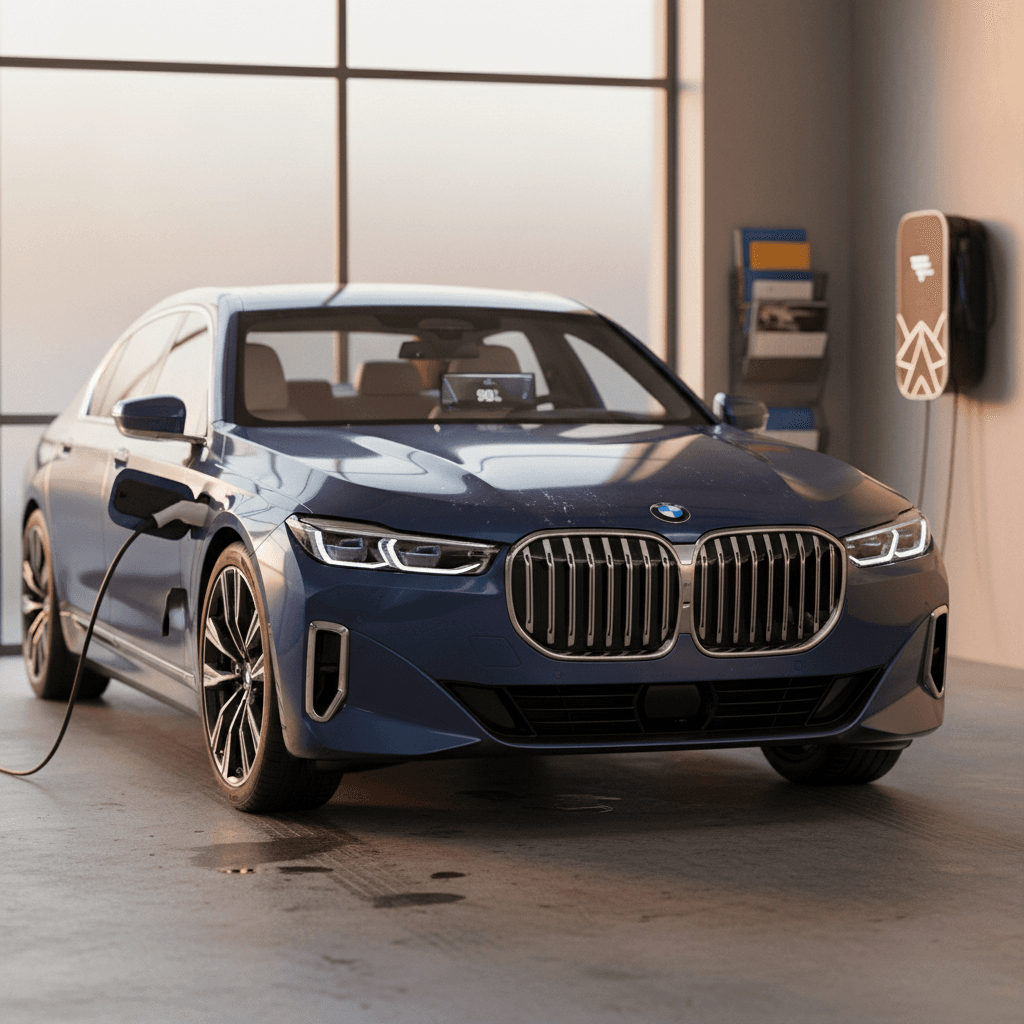
If you buy a 2024 BMW i7, you’re not just buying a car. You’re buying an $100,000 rolling electronics lab with a theater screen, power doors, and more processors than a WeWork. When shoppers ask about 2024 BMW i7 reliability, what they really want to know is simple: will this thing actually behave like a flagship or like a beta test?
Big picture on i7 reliability
2024 BMW i7 reliability at a glance
2024 BMW i7 reliability snapshot
Reliability on a cutting‑edge luxury EV is never a simple yes/no answer. With the 2024 i7 you have very robust core hardware, BMW’s modular battery and motor system, heavy‑duty cooling, strong crash structure, wrapped in layers of software, screens, motors and gimmickry that can and do misbehave. Think rock‑solid powertrain with the occasional fussy gadget.
If you’re shopping used
How reliable is the 2024 BMW i7 so far?
We’re still in the early innings for i7 reliability. The car launched for 2023; the 2024 model is essentially the second model year of the same G70‑generation platform. That’s usually when big, ugly teething problems have been identified and engineered out, but you’re still living with the aftershocks of first‑gen software.
Where the 2024 i7 looks strong
- Powertrain robustness: BMW’s modular EV hardware has seen far fewer catastrophic failures than some rivals.
- Battery protection: Big warranty coverage and conservative thermal management suggest good long‑term health.
- Ride hardware: Air suspension and chassis electronics are shared with the gas 7 Series, already vetted in the field.
- Brand reliability baseline: BMW tends to sit in the upper middle of the pack in J.D. Power reliability studies, not Toyota, but not a disaster either.
Where the 2024 i7 worries people
- Software complexity: Multiple screens, apps, user profiles, and digital services give the car a big attack surface for bugs.
- Gadget failures: Automatic doors, theater screen, and ambient light bars all add potential failure points.
- Recall history: Several small but notable recalls around the high‑voltage system and drive software.
- Repair costs: Even minor out‑of‑warranty fixes on a 7 Series tend to be expensive.
Flagship rule of thumb
Common 2024 BMW i7 problems and owner complaints
Because the i7 shares its bones and much of its software with the gas 7 Series and smaller BMW EVs, we can triangulate a fairly clear picture of its early‑life quirks. None of these are guaranteed to happen to you, but they’re recurring themes on owner forums and in early reviews.
Most frequently reported BMW i7 issues
What owners of 2023–2024 cars are actually complaining about
Connectivity & eSIM glitches
Owners report eSIM connectivity problems, especially with certain carriers, along with dropped data sessions that affect in‑car apps, navigation traffic, and streaming.
Annoying more than dangerous, but it undermines the tech‑forward pitch.
Infotainment lag & app bugs
The large curved display and dashboard OS can occasionally lag, freeze, or reboot. Built‑in apps like Spotify sometimes cut out and require a full system restart.
Theater screen oddities
The optional rear theater screen is a marvel when it works, but some owners note buffering, HDMI issues, and intermittent pairing problems with devices and streaming apps.
Automatic door behavior
Power doors occasionally fail to close fully or misdetect obstacles, forcing owners to override them manually. Early builds seem most affected.
Wind & cabin noises
A subset of owners note wind noise from the mirrors at highway speeds or light rattles from rear interior trim. Not catastrophic, but out of character for a six‑figure limo.
Warning lights & software gremlins
Like many modern BMWs, the i7 can occasionally throw transient driver‑assistance or powertrain warnings that clear after a restart or software update.
Good news: problems are mostly digital
BMW i7 recalls, software fixes, and what they actually mean
BMW’s recent EVs, including the i7, have been through a few high‑voltage and software recalls. That sounds frightening in headline form, but the details matter. The volumes are relatively small, and most fixes have been straightforward.
Key BMW i7 recall themes so far
Representative recall campaigns affecting 2023–2024 BMW i7 models in the U.S. (exact coverage varies by build date and VIN).
| Issue | Model years affected (select) | What happens | Typical fix |
|---|---|---|---|
| High‑voltage battery monitoring software | 2022–2023 i4, iX, i7 | Battery‑management software can misdiagnose conditions and trigger a temporary loss of drive power or charging interruptions. | Dealer or over‑the‑air software update to the battery ECU. |
| Electric motor software fault | 2022–2025 i4, i5, i7, iX | Error in electric‑motor control software can cause a sudden reduction or loss of power while driving. | Software update at dealer or via OTA, depending on build. |
| Battery module assembly concern (very small batch) | 2023–2024 i7 (handful of cars) | Improperly assembled battery modules could, over time, increase the risk of power loss or thermal event. | Inspection and replacement of affected battery modules at no cost. |
Always run a VIN lookup with BMW or NHTSA for the most accurate recall status.
Loss‑of‑power recalls sound scarier than they’ve been
How to sanity‑check a 2024 i7 for recall and software status
1. Run the VIN through official tools
Use BMW’s website or NHTSA’s VIN lookup to see if the specific i7 has any <strong>open recalls</strong>. Screenshots of a “no open recalls” page are worth saving with your records.
2. Ask for proof of completed campaigns
For any listed recalls, ask the seller for <strong>service invoices</strong> showing the recall or software campaign codes. This is standard paperwork on a car at this level.
3. Confirm current software version
In the infotainment settings you can see the installed software version. Compare it to the latest version your BMW dealer says is available, or confirm they’ve applied all available updates.
4. Do a full system restart during test drive
On a test drive, cycle the car off and on and spend time with the infotainment, theater screen, doors, and driver‑assistance systems. Look for warning lights or repeatable glitches.
5. Plan for ongoing updates
Like a smartphone, the i7 will get <strong>periodic OTA updates</strong>. Make sure the previous owner hasn’t disabled them, and be prepared to spend a few minutes now and then letting the car reboot its brain.
Battery life, range, and long‑term degradation
Under the floor, the 2024 BMW i7 is less avant‑garde and more German engineer with a slide rule. The battery pack uses conservative chemistry and active liquid cooling, and BMW is famously cautious about protecting its cells with generous buffers. That’s boring, and exactly what you want for long‑term reliability.
What to know about 2024 i7 battery reliability
Range today, range tomorrow, and how to keep it healthy
Degradation expectations
Real‑world data is still sparse, but based on similar BMW EVs, you should reasonably expect modest degradation in the first few years, think single‑digit percent loss with normal use.
Aggressive DC fast‑charging and repeated 0–100% cycles will accelerate wear, as with any EV.
Thermal management
The i7 uses active liquid cooling/heating and pre‑conditioning logic to keep the pack in its comfort zone. That protects range in very hot or cold climates and reduces stress on the cells.
Range realism
Official range numbers assume gentle driving. In real U.S. highway use, a 2024 i7 will often see less than the window‑sticker range, especially at 75–80 mph or in winter.
Warranty safety net
If the battery develops a defect covered by BMW’s 8‑year/100,000‑mile warranty, modules or the entire pack can be repaired or replaced. That’s a major backstop for second and third owners.
How Recharged reduces battery‑anxiety
What does it cost to keep a 2024 i7 on the road?
Reliability isn’t just “does it break?” It’s also “how painful is it when it does?” With the 2024 i7, routine running costs are relatively friendly for a 7 Series; unexpected repairs are not.
The cheap part: energy & routine care
- Electricity vs. gas: Even at high U.S. power rates, feeding an i7 is usually cheaper per mile than feeding a twin‑turbo V8 7 Series.
- No oil changes: You still have brake fluid, cabin filters, and tires, but far fewer moving parts in the drivetrain.
- Brake wear: Regenerative braking means pads and rotors can last a long time if you’re not track‑day ambitious.
The expensive part: parts & labor
- Dealer rates: BMW dealer labor is premium‑priced, and complex EV diagnostics add billable hours.
- Electronics & trim: Replacing a failed power door motor, ambient light bar, or rear theater screen won’t be cheap.
- Tires & wheels: Heavy, powerful EVs on 21‑inch wheels can eat through expensive rubber quickly.
How to de‑risk ownership costs
Ready to find your next EV?
Browse VehiclesUsed 2024 BMW i7 reliability checklist
Shopping a used 2024 i7 is where reliability knowledge really pays off. You’re not just evaluating leather and paint; you’re auditing a very complicated computer that happens to have a license plate.
Pre‑purchase reliability checklist for a used 2024 i7
1. Scan for warning lights and stored faults
Before you fall in love with the ambient lighting, make sure the dash is clean of <strong>check‑engine, drivetrain, or driver‑assist warnings</strong>. A pre‑purchase inspection with a BMW‑capable scan tool is money well spent.
2. Verify all recalls and software campaigns
Ask for documentation showing that <strong>high‑voltage and drive‑software recalls</strong> have been closed. On a Recharged vehicle, this kind of history is pulled together and summarized for you.
3. Stress‑test the tech toys
Spend real time with the <strong>infotainment system, theater screen, audio, power doors, driver assists, and ambient lighting</strong>. If something glitches during a 30‑minute test, assume it will annoy you for years.
4. Inspect for cabin noises on bad pavement
On the test drive, find rough roads or concrete surfaces and listen for <strong>rattles from the rear cabin, door trims, and parcel shelf</strong>. Is it quiet enough for a car in this class?
5. Evaluate charging behavior
Try both AC and, if possible, a DC fast‑charge session. Look for <strong>unexpected interruptions, warnings, or unusually slow charging</strong> relative to what the car should deliver.
6. Get independent battery‑health data
Don’t rely solely on the dash range estimate. Use a platform like Recharged that can provide <strong>quantitative battery‑health metrics</strong> as part of a Recharged Score Report.
How 2024 i7 reliability compares to other luxury EVs
Luxury EV reliability is a bit of a rogues’ gallery: nobody is perfect, and everyone has a different flavor of problems. The 2024 BMW i7 sits somewhere near the rational middle, less drama than some Silicon Valley science projects, more complexity than simpler big‑battery sedans.
2024 BMW i7 vs key luxury EV rivals (reliability flavor)
A qualitative comparison of reliability themes across the big luxury EV sedans and flagships.
| Model | Reliability character | Typical pain points | Who it suits |
|---|---|---|---|
| BMW i7 | Generally solid EV hardware, fussy tech. | Software glitches, connectivity, gadget failures, occasional recalls. | Buyers who want traditional luxury feel with modern EV drivetrain. |
| Mercedes EQS | Soft, tech‑heavy luxury with mixed quality. | MBUX complexity, squeaks/rattles, some 12‑volt and electronics issues. | Comfort‑first shoppers who prioritize ride comfort over handling. |
| Tesla Model S | Strong drivetrain record, variable build quality. | Panel gaps, trim rattles, occasional MCU/screen issues, service delays. | Owners near Tesla service centers who value range and Supercharger access. |
| Lucid Air | Early‑stage brand, still maturing. | Infant‑mortality glitches, service network still growing, software bugs. | Early adopters willing to trade some drama for cutting‑edge range and design. |
This is about patterns, not definitive rankings, individual cars can be better or worse than the stereotype.
Who the 2024 i7 fits
- You want a traditional luxury feel, quiet, cocoon‑like, with a proper dealer network, wrapped around an electric platform.
- You’re comfortable dealing with the occasional software update and infotainment quirk.
- You plan to own it primarily within warranty, or you’ve budgeted for potential post‑warranty repairs.
Who might want something simpler
- You value set‑and‑forget reliability above all else and aren’t married to the BMW badge.
- You’re planning to keep the car 10+ years and want minimal electronics complexity.
- You live far from a BMW dealer and don’t want to deal with dealer‑only software updates.
Is the 2024 BMW i7 a good long‑term bet?
The 2024 BMW i7 is not a fragile diva, and it’s not a Toyota either. The EV hardware looks stout, the battery is heavily protected and strongly warrantied, and BMW has been aggressive about issuing recalls and software fixes before problems become front‑page news. The trade‑off is complexity: more screens, motors, and code than any sane person strictly needs, which means more ways for the car to get on your nerves.
If you treat the 2024 i7 as a high‑tech appliance under warranty, it makes a lot of sense, especially bought used after the first owner has eaten the depreciation. Buying through a specialist like Recharged, with a Recharged Score Report to verify battery health and pricing, lets you enjoy the theater‑screen absurdity with far less anxiety about what’s happening under the floor and behind the screens.