Color seems like a purely personal choice, but it can move your car’s resale value by thousands of dollars. Recent large‑scale analysis of more than a million used listings shows that the *worst colors for car resale value* lose significantly more over three years than the best ones. That matters whether you’re buying a new EV, shopping used, or planning a trade‑in a few years down the road.
Quick takeaway
How much does color really matter for resale?
How color affects depreciation (big picture)
Before we rank the worst paint choices, it’s worth keeping perspective. **Mileage, condition, accident history, trim, and powertrain (ICE vs EV)** typically matter more than color. But once you’ve narrowed down make, model, and options, color becomes a meaningful tiebreaker, especially for shoppers who plan to sell in 3–6 years instead of driving a car into the ground.
Don’t overcorrect
The 10 worst car colors for resale value
Recent U.S. depreciation studies of late‑model used cars consistently show that rare *bright* colors often **hold value best**, while some seemingly “safe” choices and certain oddball hues end up at the bottom. Based on aggregated data and market behavior through 2025, here’s how the **worst colors for car resale value** generally stack up.
Worst car colors for resale value (overall market)
Approximate ranking across the whole market, assuming similar mileage, age, and condition.
| Rank | Color | Typical 3‑Year Performance vs Best Colors | What Goes Wrong at Resale |
|---|---|---|---|
| 1 | Gold | Among the worst; often ~10 pts worse than top colors | Looks dated quickly, low demand, usually tied to older buyer image. |
| 2 | Brown | Near bottom; often several points worse than average | Earth tones have a narrow fan base and read “used rental” to many buyers. |
| 3 | Purple | Can be bargain‑bin cheap used | Very polarizing; niche enthusiast appeal but tiny mainstream demand. |
| 4 | Pink | Almost always discounted | Viewed as gimmicky or highly personal; tough to match with interiors and trims. |
| 5 | Two‑tone/odd wraps | Highly variable; often hurts value | Non‑factory schemes or loud wraps scare buyers about paint underneath. |
| 6 | Flat/matte finishes | Used prices often softer than glossy equivalents | Harder to care for; many buyers assume costly repaint if damaged. |
| 7 | Very bright lime/teal | Can lag unless on specific sporty models | Too loud for most daily drivers; trims without performance cred struggle. |
| 8 | Beige/champagne | In the bottom tier on many crossovers/sedans | Reads as dated or fleet‑spec; buyers prefer white, gray, or silver instead. |
| 9 | Non‑OEM custom colors | Frequently discounted vs factory paint | Raises questions about accident repairs or quality of respray. |
| 10 | Black/white on the wrong segment | Average or below on some sports + premium EVs | On coupes/convertibles, bright colors win; black/white can underperform. |
These colors typically see the steepest 3‑year depreciation compared with the market average.
Wait, what about black, white, gray, and silver?
Why common colors can still hurt resale
1. Oversupply of grayscale cars
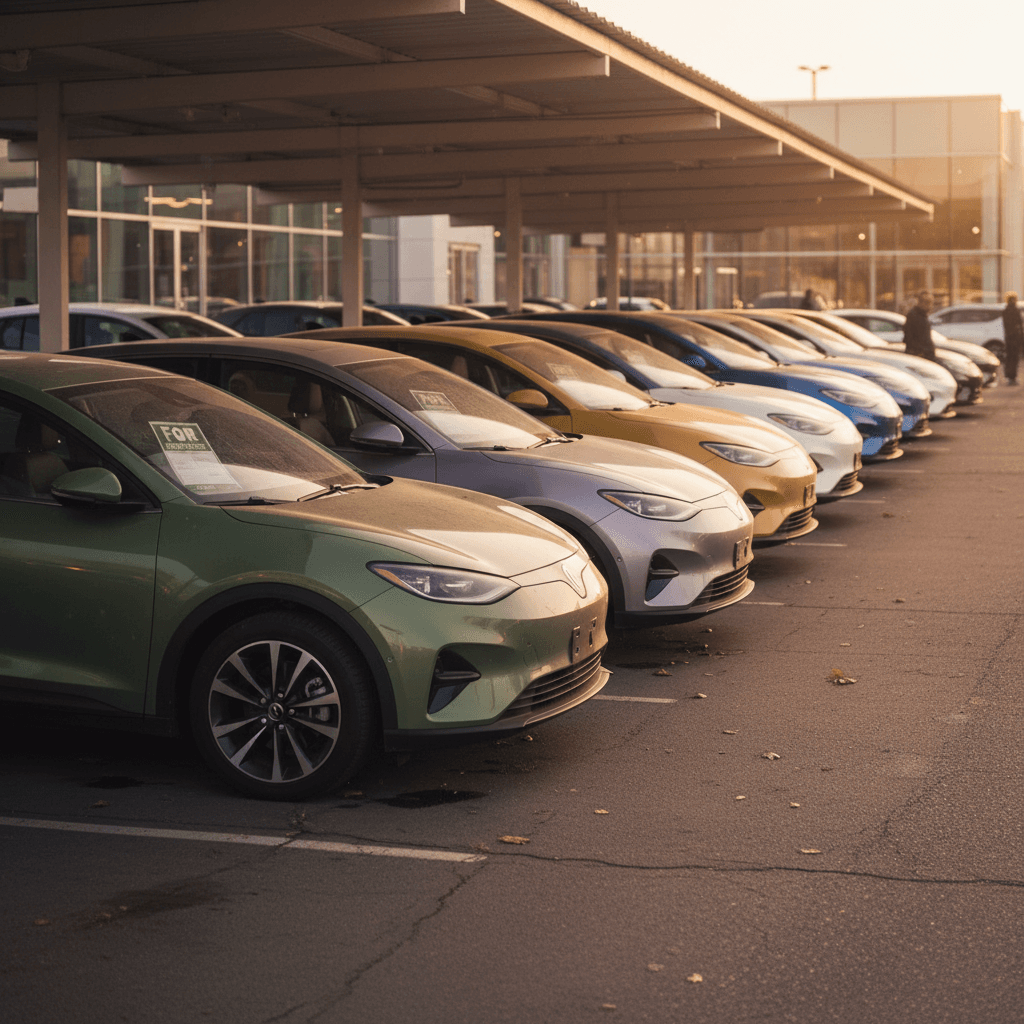
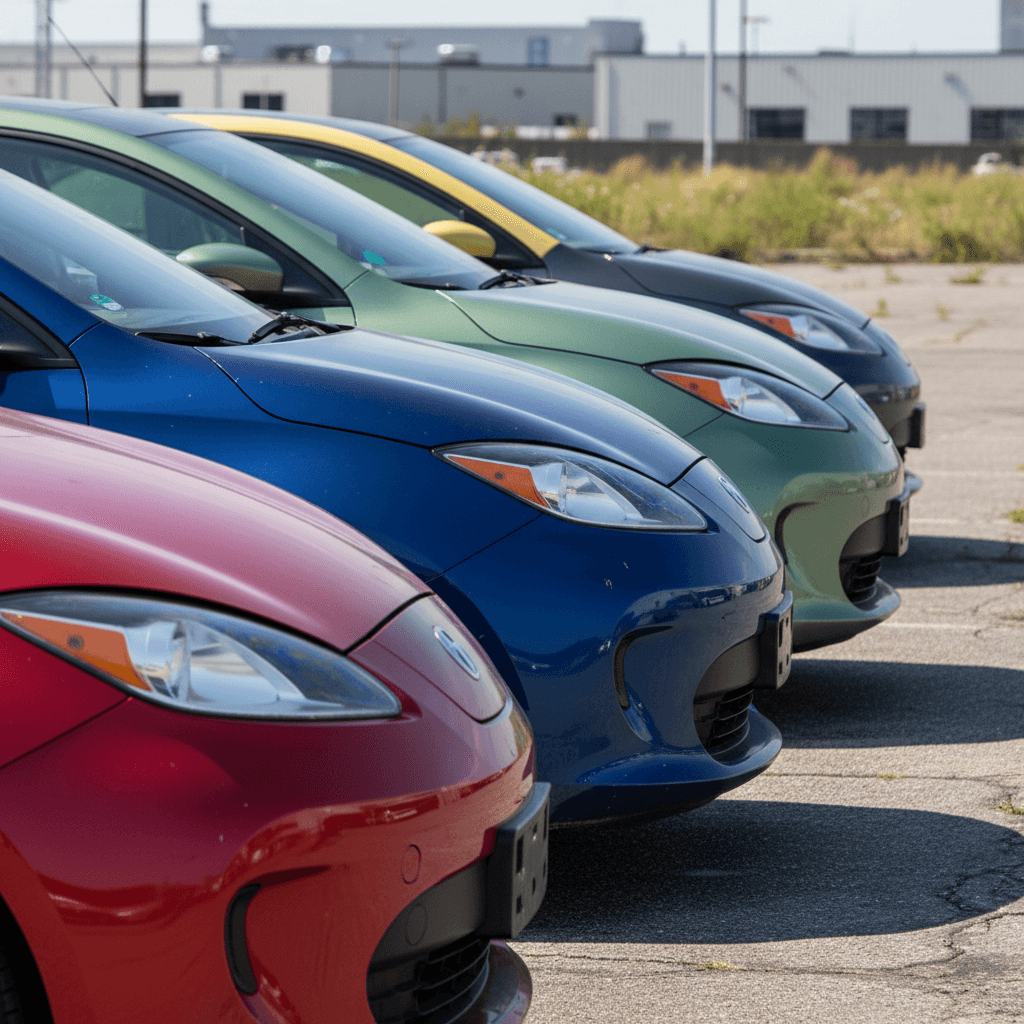
Most new vehicles sold in the U.S. today are some shade of white, black, gray, or silver. That’s great for finding something on the lot, but it also means the used market will be flooded with the same colors a few years later.
Even if buyers don’t *dislike* those colors, abundant supply gives them leverage. Two identical white crossovers will compete harder on price than one orange or green example in the same zip code.
2. Bland colors on fun cars
Body style matters. A white compact crossover is fine. A white track‑edition coupe? Many shoppers quietly wish it were yellow, orange, or bright blue.
Data on coupes and convertibles shows **yellow and orange often depreciate the least**, while **black, white, and silver underperform**. Buyers expect some visual drama when they’re paying a premium for a fun car.
In other words, a color can be **too common** for its own good. Being in the middle of the pack is fine if you plan to keep the car for 10+ years; if you’re flipping in three, a tasteful but distinctive color can quietly put money back in your pocket.
Segment by segment: how body style changes the story
Color resale patterns by body style
The “worst” color is different for trucks, SUVs, sedans, and sports cars.
Pickup trucks
Studies of late‑model pickups show orange and green trucks near the top for value retention, especially on off‑road or special trims. On the flip side, **gold and beige trucks** are often hard to move, and fleet‑spec white without desirable options can sit longer on used lots.
SUVs & crossovers
In family‑oriented segments, buyers lean conservative. **Beige, brown, and gold** crossovers often depreciate more than the same vehicle in white, gray, or blue. Bright yellow or orange SUVs can be resale winners on sporty or off‑road trims, but risky on mainstream grocery‑getter models.
Sedans & hatchbacks
Here, the worst offenders are usually odd pastels, purples, or champagne tones that read like dated rental‑car colors. Neutral grays and blues tend to be safest. Black and white are fine, but often not resale standouts unless paired with the right trim and wheels.
Coupes & convertibles
On fun cars, the script flips. Bright colors (yellow, orange, vivid red) routinely command more on the used market, while “boring” black, white, and silver can underperform. Buyers shopping used sports cars are often looking for the poster‑car spec they dreamed about, not the stealth choice.
Match color to mission
Do EVs follow the same color–resale patterns?
Broadly, yes, but with a twist. EV shoppers tend to skew more tech‑ and design‑conscious. That means **clean, modern palettes** (whites, silvers, deep blues) do well, and some “legacy” colors that already hurt resale on gas cars, like gold or drab brown, can be even more of a liability on an electric car.
- On high‑end EVs, **matte or satin finishes** can narrow the buyer pool because of care and repair concerns.
- On mass‑market EVs, unusual colors that clash with minimalist design (muddy browns, dated greens) tend to sit longer on the used market.
- Performance‑oriented EVs (like dual‑motor trims) can mirror sports‑car behavior: bold colors age better than boring ones, as long as they’re factory‑applied.
- Fleet‑spec white on a de‑contented EV can feel like a rideshare or corporate car, dragging down perceived value even if the condition is good.
Where Recharged fits in
Ready to find your next EV?
Browse VehiclesOther factors that matter more than color
You shouldn’t pick a color in a vacuum. A gold car with a pristine history may still be a better long‑term bet than the perfect‑color car that’s been crashed, repainted, and neglected. When we look at real‑world transactions, **these factors routinely overpower color**:
Biggest resale drivers (besides color)
Accident and damage history
Cars with clean, verifiable histories almost always beat structurally repaired or poorly repainted cars, regardless of color. That’s doubly true for EVs, where battery‑pack damage is a major concern.
Battery health on EVs
For electric vehicles, **battery state of health** can easily move value by 10–20% or more. That’s why Recharged includes verified battery diagnostics with every EV we sell.
Mileage and usage patterns
Low‑mileage cars driven consistently age better than high‑mileage vehicles with lots of short trips. The difference in odometer readings typically matters more than paint choice.
Trim level and options
Desirable trims (long‑range batteries, driver‑assist suites, heat‑pump HVAC, premium audio) help cars stand out on used sites, often more than color does.
Maintenance and cosmetic care
A properly detailed, well‑maintained car in an average color routinely sells for more than a scratched, swirl‑marked car in the “best” resale color.
The real resale killer: mismatched paint
How to choose a car color if you care about resale
If you’re ordering a new car or choosing among a few used candidates, you can absolutely steer toward smarter resale choices without giving up personality. Use these rules of thumb to avoid the worst colors for car resale value while still buying something you’re happy to look at every day.
Practical rules for color‑smart car shopping
1. Avoid gold and drab beige unless you truly love them
These colors routinely show up near the bottom of value‑retention rankings, especially on crossovers and sedans. If you’re only “okay” with champagne or gold, skip it.
2. Be cautious with browns and purples on mainstream models
Earth tones and purples can work on niche or luxury vehicles, but on everyday sedans and compact SUVs they narrow your buyer pool later.
3. For trucks and off‑roaders, lean into bold but tasteful
Orange or green pickups and SUVs, especially on off‑road trims, have historically **held value very well**. In this niche, the “fun” color can be the financially smart choice.
4. On EVs and family crossovers, choose modern neutrals
White, gray, silver, and deep blue are usually safe bets. They won’t be the absolute best or worst for resale, but they appeal to the broadest set of second owners.
5. Treat matte and wild wraps as lifestyle choices
If you want matte paint or a full‑body color‑change wrap, do it because it makes you happy, not because you expect the next owner to pay extra for it.
6. Think about your exit plan
If you’ll sell or trade within 3–4 years, nudge toward colors that are either **pleasantly bold** (yellow/orange on sporty cars, green/orange on trucks) or **widely acceptable** (white, gray, blue on family EVs).
Selling or trading in: how color affects your offers
When it’s time to sell or trade, color shows up in two ways: how much interest you get, and how much dealers or marketplaces are willing to risk on your car. The worst colors for car resale value don’t always mean *no sale*, they usually mean **lower offers and a longer wait**.
Private sale
- Pros: If you find the right buyer who loves your car’s unusual color, you may close the gap with market‑average colors.
- Cons: Niche colors mean fewer shoppers. You might need to discount more or wait longer, especially outside big metro areas.
Dealer or instant‑offer trade
- Dealers and online buyers think in probabilities: “How fast can we retail this?”
- If your color is historically slow, they’ll either **bid less** or plan to wholesale the car at auction.
- Extremely polarizing colors can attract lowball offers even if the car is otherwise strong.
How Recharged handles color risk
FAQ: worst colors for car resale value
Frequently asked questions about car color and resale
Bottom line: choose color with your head and your heart
Color won’t turn a bad car into a good one, but it can **nudge a good car into great‑resale territory, or quietly cost you thousands**. The worst colors for car resale value tend to be dated, polarizing, or mismatched to the vehicle’s mission: think gold, champagne beige, drab browns, or oddball custom schemes on mainstream cars.
If you care about resale, avoid those obvious pitfalls, match the color to the type of vehicle you’re buying, and prioritize condition and battery health above everything else. And if you’re shopping or selling a used EV, platforms like Recharged can help you see, in black and white (or yellow and orange), exactly how color, mileage, and battery health show up in fair‑market pricing, so you can make a smarter, more confident move.