
If you’re trying to decode the Genesis GV60 service schedule, you’ve probably already discovered that Genesis doesn’t just say “service every 10,000 miles” the way gas brands do. Instead, the owner’s manual breaks maintenance into inspections and replacements at specific time‑and‑mileage intervals. This guide translates those tables into plain English so you know exactly what your GV60 needs at 5,000, 15,000, or 60,000 miles, whether you bought it new or used.
EVs still need maintenance
Genesis GV60 service schedule at a glance
Genesis doesn’t advertise one single interval like “every 7,500 miles.” Instead, the GV60 schedule is built from multiple line items, tire rotations, inspections, fluid changes, each with its own timing. In practice, U.S. dealers usually bundle this into a simple pattern of annual or mileage‑based visits.
Typical Genesis GV60 service cadence (U.S.)
Think of the schedule in layers: frequent, low‑cost items (tire rotations and inspections) early on, with occasional fluid and coolant changes spread out over the GV60’s life. Your owner’s manual is the final word, but this framework will get you 90% of the way there.
Official GV60 schedule vs. what dealers tell you
What Genesis publishes
In the GV60 owner’s manual and quick‑reference guide, Genesis lists each maintenance item separately. Examples:
- Tire rotation: every 5,000 miles or 4 months
- Climate control (cabin) air filter: every 15,000 miles or 12 months
- Brake hoses, lines, and pads: inspect every 15,000 miles or 12 months
- Coolant: first change at about 120,000 miles or 120 months, then every ~25,000 miles or 24 months
Those tables split out normal vs. severe driving; you always follow whichever hits first, time or mileage.
What many dealers say
Dealers often condense those tables into branded packages like a "6,000‑mile service" or "15,000‑mile service." That can be helpful, but it can also hide extra add‑ons you don’t need, especially if they’re reusing checklists from gas Genesis models.
- Oil changes (not required on the GV60)
- Engine air filter (no engine)
- Transmission service (GV60 uses a different drivetrain layout)
If a service writer can’t show you where an item appears in the EV maintenance table, treat it as optional, not required for warranty.
Always default to the manual
Genesis GV60 service schedule: 0–60,000 miles
Below is a practical, U.S.‑oriented Genesis GV60 service schedule for the first 60,000 miles. It blends the official tables with how most dealers actually group visits. Always check your specific model‑year manual and follow whichever comes first between time and mileage.
Suggested Genesis GV60 maintenance schedule (normal driving)
Approximate maintenance timing for 0–60,000 miles on a Genesis GV60, combining factory intervals into real‑world visits.
| Odometer / Time | Key maintenance items | Notes |
|---|---|---|
| First 5,000–7,500 miles / ~6 months | • General inspection • Tire inspection and rotation if needed • Software updates as available | Many owners let the first rotation wait until 7,500–10,000 miles if tire wear is even. |
| 10,000 miles / 12 months | • Tire rotation • Brake pads, rotors, hoses and lines inspection • Suspension, steering, and driveline inspection • Fluid level checks (including brake fluid and coolant condition) • Check for software updates and recalls | This is your first “annual” EV service visit, roughly the equivalent of the old oil‑change stop. |
| 15,000 miles / 12–18 months | • Replace climate control (cabin) air filter • Re‑check A/C refrigerant and cooling system • Inspect high‑voltage components (charge port, cabling, battery cooling hardware) • Repeat tire rotation if due | The cabin filter interval is usually every 15,000 miles or 12 months; dusty climates may need more frequent changes. |
| 20,000–24,000 miles / ~2 years | • Tire rotation • Full brake inspection (pay attention to caliper slide pins, EV brakes can stick when underused) • Recheck steering, suspension and alignment • Inspect underbody, driveshafts and boots | If you’ve been gentle with the brakes, hardware might last a long time, but corrosion still matters, especially in snowy climates. |
| 30,000 miles / ~3 years | • Tire rotation • Replace cabin air filter again • Comprehensive EV system inspection (high‑voltage components, battery cooling) • Inspect brake fluid condition and replace if recommended • Inspect 12‑volt battery health | This is a good moment to proactively replace brake fluid if your dealer hasn’t already, many shops now treat 3‑year intervals as best practice on EVs. |
| 45,000 miles / ~4 years | • Tire rotation • Brake hardware inspection and cleaning • Steering, suspension, and driveline inspection • A/C performance check | Intervals tighten up a bit as the car ages; if you’re driving more than 12,000 miles a year, go by mileage rather than calendar. |
| 60,000 miles / ~5 years | • Tire rotation • Replace cabin air filter • Detailed inspection of high‑voltage battery, inverters and DC‑DC converter • Check for coolant leaks and condition, follow manual for first coolant change timing • Full safety systems inspection | Some manuals show the first coolant replacement at around 120,000 miles, but many owners choose to do a preventative change between 60,000–100,000 miles. Discuss with a shop that understands EVs. |
Use this as a planning tool, then confirm exact requirements in your owner’s manual for your model year.
Let the car help, but don’t let it lead
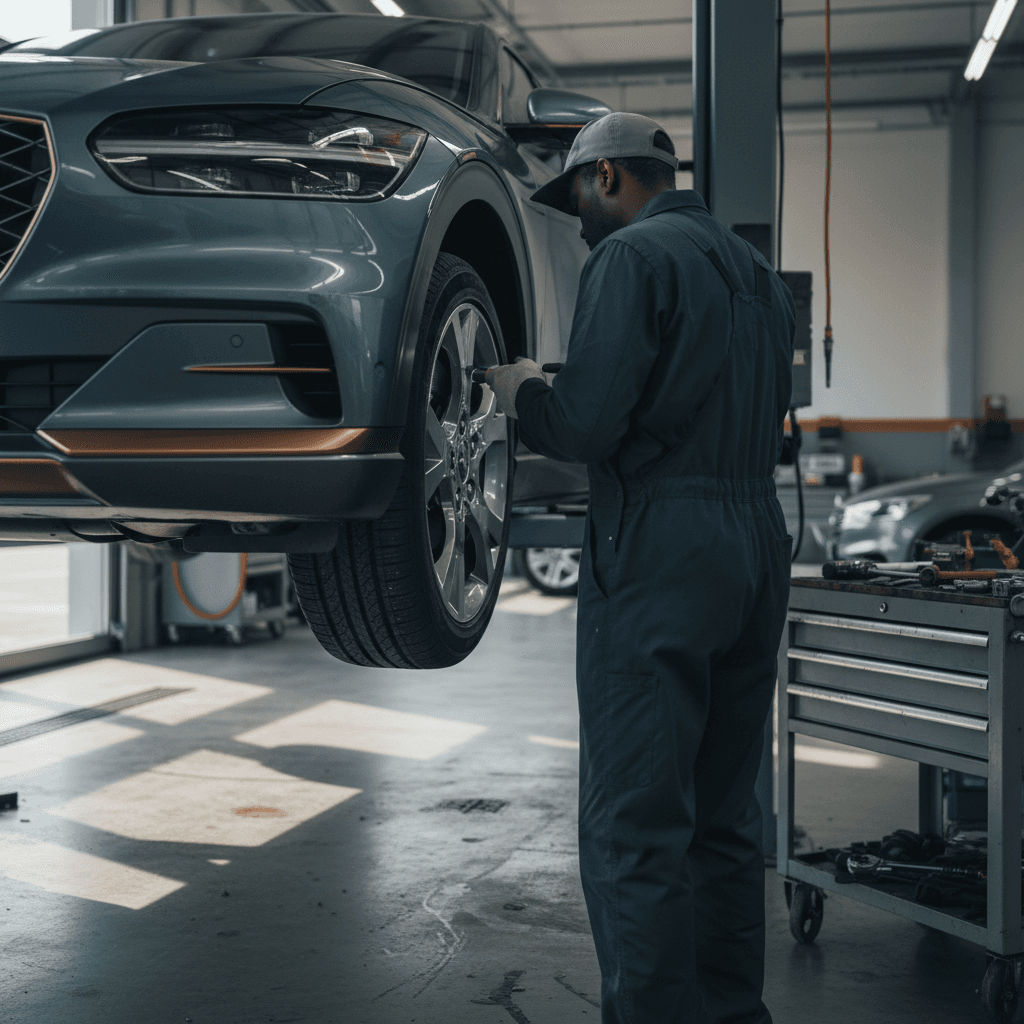
Normal vs. severe service schedules for the GV60
Like nearly every automaker, Genesis publishes two schedules: normal and severe usage. A lot of U.S. owners technically fall closer to “severe” than they realize.
- Frequent stop‑and‑go driving, especially in hot weather
- Regular driving on rough, dusty, or salted roads
- Towing or heavy cargo loads (less common in GV60s but still possible)
- Extended idling or very short trips in extreme temperatures
- Living near the coast, where corrosion risk is higher
If several of those describe your daily use, follow the severe intervals in the manual, which usually means a bit more frequent inspections and fluid checks. It’s less about padding dealer profits and more about catching corrosion and wear early, especially in the brakes and suspension.
Don’t ignore the “severe” column
Key Genesis GV60 maintenance items explained
What actually gets serviced on a GV60?
Four systems matter most once you remove oil changes from the picture.
Tires and alignment
EVs like the GV60 are heavy and make instant torque. That’s great for fun; harder on tires.
- Rotate roughly every 5,000–7,500 miles.
- Check pressures monthly; under‑inflation kills range.
- Ask for an alignment check if you see uneven wear or feel the car pulling.
Brakes and brake fluid
Regenerative braking means pads can last a long time, but hidden corrosion can sneak up on you.
- Inspect pads, rotors and calipers at least yearly.
- Have brake fluid tested and replaced roughly every 2–3 years.
- Ask the shop to clean and lubricate slide pins, especially in snowy climates.
Cabin air filter & HVAC
The GV60’s climate system works hard to heat and cool the cabin efficiently.
- Replace the cabin filter about every 15,000 miles or 12 months.
- If your windows fog easily or airflow drops, don’t wait for the scheduled change.
- Periodic A/C checks keep the heat pump and refrigerant loop healthy.
Coolant & high‑voltage systems
The battery, motors and power electronics are liquid‑cooled.
- First coolant change is often at 120,000 miles or 10 years, then more frequently.
- Techs will visually inspect for leaks and monitor temperatures long before that.
- Never top off with random coolant; EV systems need the exact specified fluid.
The upside of EV maintenance
GV60 maintenance costs, complimentary service, and warranties
Cost is where EV maintenance gets more complicated than it should be. The work on a GV60 is straightforward; what you pay depends heavily on how your local dealer or shop bundles and prices that work.
- Complimentary maintenance: Most recent Genesis models in the U.S. have offered 3 years/36,000 miles of complimentary scheduled maintenance. Confirm whether your specific GV60 model year still includes this and what items it covers.
- Service valet: New Genesis vehicles often come with a few years of Service Valet (pickup and drop‑off with a loaner). Convenient, but you can still ask exactly what’s being done at each visit.
- Out‑of‑warranty costs: After complimentary coverage ends, basic EV services, tire rotation, inspections, cabin filter, are usually in the low hundreds per visit at dealers, and often less at independent shops that understand EVs.
- Battery and powertrain warranties: Genesis backs the GV60 with a strong new‑vehicle warranty and a separate long EV battery warranty. Those don’t replace maintenance, but they do cap your exposure to rare, high‑dollar failures.
How to avoid surprise service bills
How to check service history on a used Genesis GV60
If you’re shopping for a used GV60, or trying to figure out what a previous owner did or skipped, service history matters. The difference between a well‑maintained GV60 and a neglected one is usually tires, brakes, and how carefully software updates and recalls were handled.
Used Genesis GV60 service checklist
1. Ask for dealership service records
Genesis dealers can usually print a full history for services performed in their network. Look for evidence of regular tire rotations, annual inspections, and cabin filter replacements.
2. Look for gaps in early years
The first three years should show at least annual service. Long gaps might mean the owner skipped inspections, even if mileage is low.
3. Inspect tires and brakes in person
Uneven tire wear or heavily rusted brake components can reveal that the GV60 wasn’t rotated or inspected on the schedule, even if the paperwork looks fine.
4. Confirm software and recall status
Ask that the latest software updates and any open campaigns be performed before you take delivery. Software matters just as much as fluids on a modern EV.
5. Verify coolant and brake fluid timing
If the GV60 is older or higher‑mileage, confirm whether brake fluid has been changed and when the first coolant service is due. These are common blind spots for gas‑oriented shops.
6. Use third‑party tools when possible
Vehicle history reports and digital service logs can help, but they rarely tell the whole story. A pre‑purchase inspection by a shop familiar with EVs is still worth it.
How Recharged fits in
How Recharged helps you stay on top of GV60 maintenance
Whether you’re buying a GV60 or already own one, staying ahead of maintenance is mostly about information and planning, not constant trips to the shop. That’s where Recharged’s EV‑specific focus helps.
Owning a Genesis GV60 is easier with the right partner
Recharged is built around used EV ownership, not gas‑car habits.
Battery health clarity
Every GV60 we list includes a Recharged Score battery health report, so you know how the pack is aging before you budget for long‑term maintenance.
Transparent cost outlook
We combine factory schedules with real‑world data to help you understand total ownership costs, including tires, brakes, and long‑term coolant service.
Nationwide, EV‑savvy support
From our digital retail experience and Richmond, VA Experience Center to nationwide delivery and trade‑in options, our team helps you find and maintain the right GV60 for how you actually drive.
Genesis GV60 service schedule FAQ
Frequently asked questions about the Genesis GV60 service schedule
The Genesis GV60 service schedule can look intimidating on paper, but once you translate the tables into real‑world visits, it’s mostly about predictable checkups with a few long‑interval fluid changes. If you follow the manual, keep good records, and push back on gas‑car upsells, the GV60 is one of the simpler luxury vehicles to own long‑term. And if you’re considering a used GV60, working with a seller that understands EV maintenance, and backs it up with real battery‑health data, like the Recharged Score, can turn a confusing maintenance story into a clear plan for the next 100,000 miles.