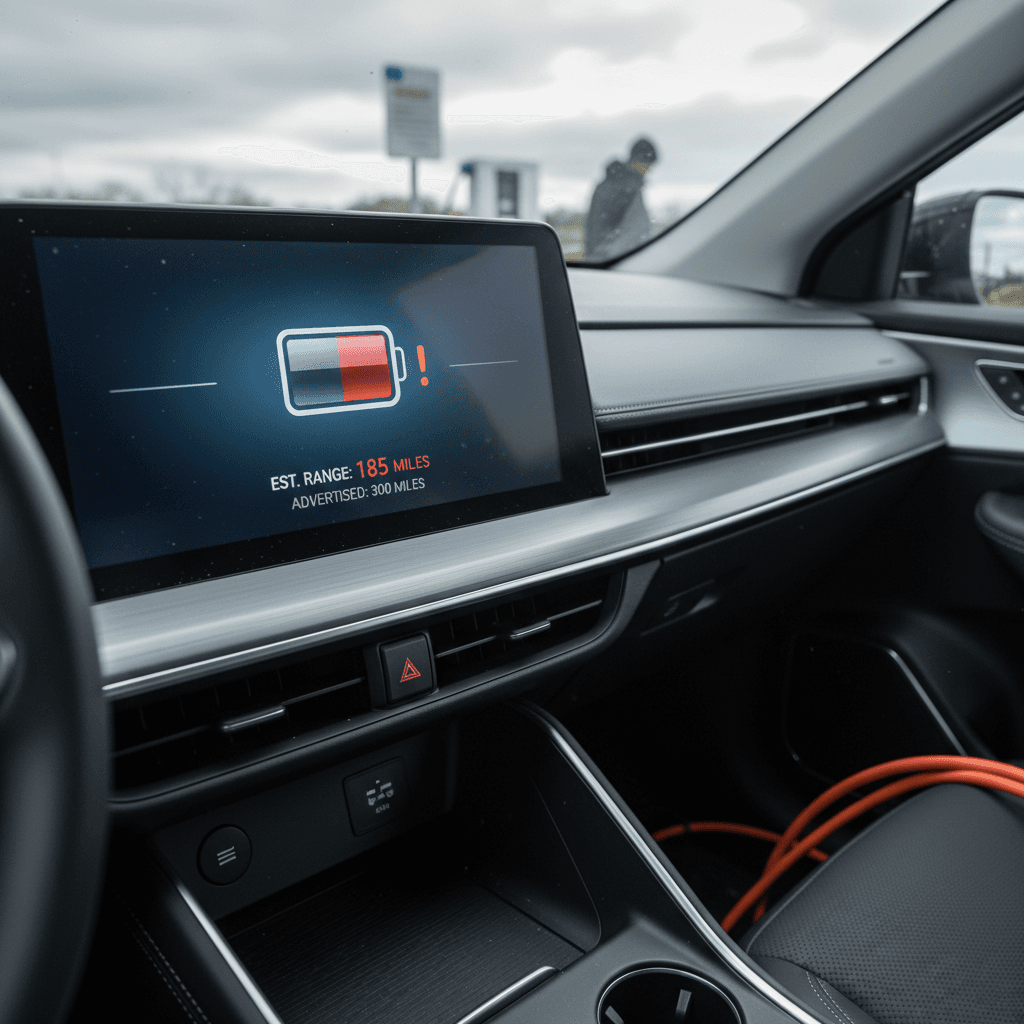
If you’ve ever wondered, “Why is my EV range less than advertised?” you’re far from alone. Many drivers hop into a new electric car expecting the full 250 or 300 miles printed on the sticker, then see something very different on the dash once real‑world weather, speed, and driving habits enter the picture.
Quick reality check
Why EV range never quite matches the label
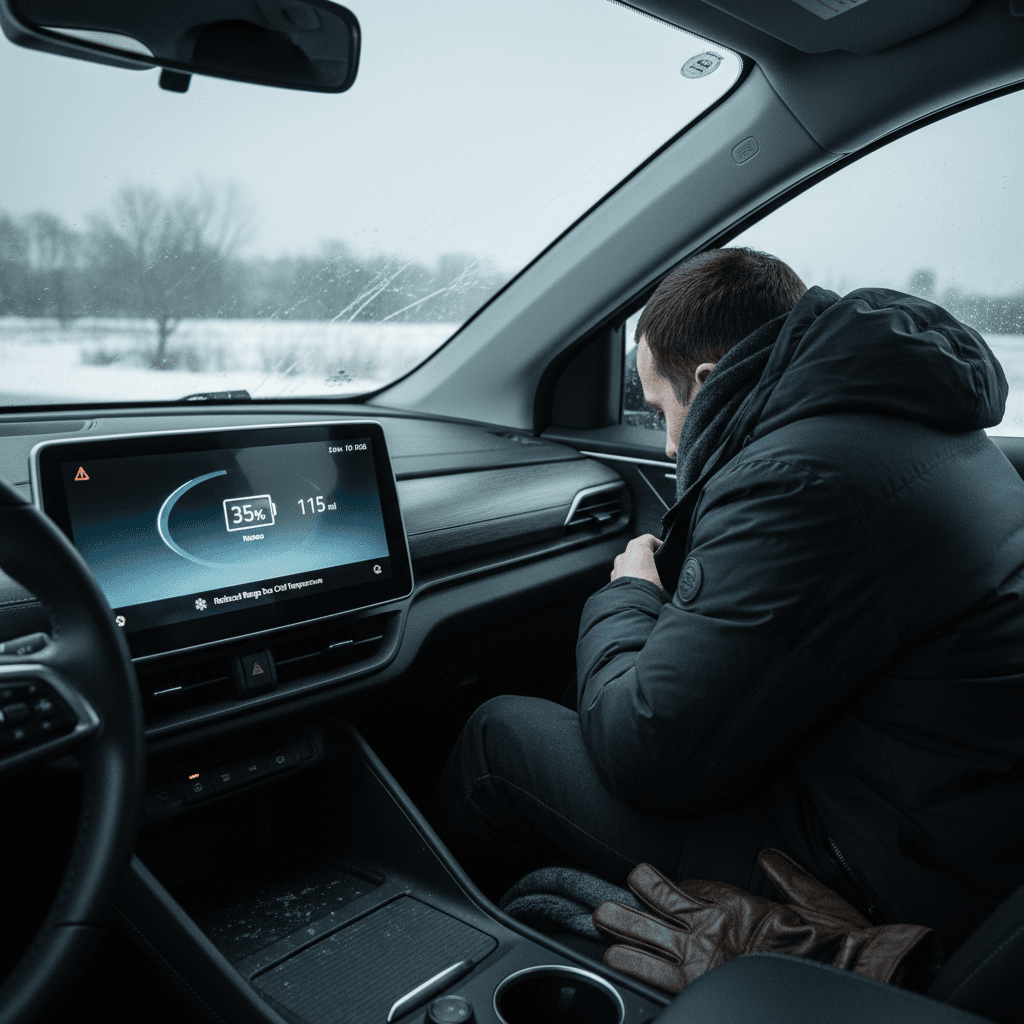
Start with this idea: the number on your window sticker is like the “up to” speed on a home internet plan. It’s achievable under specific conditions, but your day‑to‑day experience will usually be lower. Real‑world tests around the world routinely find that many EVs deliver 5–20% less range than advertised, and in harsh winter testing some models fall closer to 25–30% below their lab rating.
That doesn’t mean your EV is broken, and it doesn’t necessarily mean the brand misled you. It means the test and your life don’t look the same. To understand what’s happening, you need to know how range is measured and what factors quietly chip away at those miles.
How EPA range ratings are actually created
In the U.S., the EPA range rating you see on the Monroney label comes from carefully controlled tests on a dynamometer, a sort of automotive treadmill. The car follows prescribed city and highway driving cycles indoors, on perfectly flat ground, with no wind, no traffic, and a fully warmed‑up drivetrain.
- Engineers run a series of standardized drive cycles that simulate city and highway use.
- They measure how much energy the car uses from full to empty under these cycles.
- The raw laboratory result is then adjusted downward (often using a 0.7 multiplier) to better reflect typical on‑road conditions, including HVAC use and higher speeds.
- The adjusted city and highway numbers are blended into the single "combined" range you see on the sticker.
Key point about ratings
Other markets use different test procedures, such as WLTP in Europe. Those procedures generally produce higher advertised ranges than the EPA does, which is why importing a WLTP figure directly to U.S. driving often leads to big disappointments.
The biggest real‑world range killers
Once you leave the lab, dozens of variables start nibbling at your range. Five of them do most of the damage: temperature, speed, climate control, terrain, and driving style.
Top 5 reasons your EV range is less than advertised
Most EV owners see some combination of these every week
Cold weather
Highway speed
Cabin heat & A/C
Hills & towing
Aggressive driving
Weight & accessories
Beware the short, cold trip
What’s “normal” range loss vs. a real problem?
Before you assume something is wrong with your battery, it helps to separate temporary range loss from permanent battery degradation. Most of what drivers notice day‑to‑day is temporary.
Temporary range loss (comes back)
- Happens with temperature swings, weather, HVAC use, and speed.
- Range improves again when conditions improve (e.g., spring vs. winter).
- Dash estimate can jump up or down after a software update or road‑trip.
- Battery health is usually fine; the car is just using more energy today.
Permanent range loss (battery aging)
- Slow, long‑term loss of usable capacity measured over years.
- Typically in the range of 2–3% per year for modern EVs under normal use.
- After 8–10 years, many EVs still retain about 80–90% of original range.
- Shows up as a lower maximum estimate on mild days too, not just in winter.
What the data shows
How battery age and health affect your range
Lithium‑ion batteries slowly lose the ability to hold energy as the years and miles pile on. That’s chemistry, not a defect. The important question is how fast it happens and whether your car falls within the normal window.
Typical EV battery degradation over time
A few things accelerate degradation: consistent exposure to very high heat, storing the battery at 100% charge for long periods, deep discharges to near 0% on a regular basis, and extremely high annual mileage. But even under hard use, most modern packs age more gracefully than early EV skeptics expected.
How Recharged approaches battery health
Quick checklist to diagnose your range drop
If your EV suddenly seems to go far less distance than it used to, work through this short checklist before assuming the battery is failing.
6 questions to ask when your EV range seems low
1. What’s the outside temperature today?
Compare a mild 60–70°F day to a 20°F morning or a 95°F afternoon and you’ll often see double‑digit swings in available range. If the drop lines up with a cold snap or heat wave, it’s likely temporary.
2. Are you driving faster than usual?
Use your car’s energy or trip screen to compare consumption at 65 mph vs. 75–80 mph on the same route. If your consumption (kWh/100 mi or mi/kWh) worsens dramatically with speed, that explains much of the range gap.
3. How hard is the HVAC working?
Blasting heat on max in winter or heavy A/C on a blazing day can use energy equivalent to driving at moderate speeds. Try dialing back the cabin temp, using seat and steering‑wheel heaters, and preconditioning while plugged in.
4. Has your route changed?
More highway, more hills, more stop‑and‑go, or more cargo all change your energy use. Many owners see their best ranges on mixed city/highway routes with light traffic and modest speeds.
5. Has your range dropped across seasons?
Compare a mild spring or fall day this year with similar weather a year or two ago. If range is consistently lower in the same conditions, that points more toward degradation than temporary factors.
6. What does the battery health readout show?
Some EVs display battery health or maximum capacity in a service menu, and third‑party tools can also estimate it. If that number is still high and your range only dips in bad weather, your pack is probably fine.
Practical tips to get closer to advertised range
You can’t control the chemistry inside your battery, but you can control how hard you make it work. A few habit changes can move you significantly closer to the label number, especially on days when conditions aren’t in your favor.
Everyday habits that add real miles
Small changes in how you drive and charge can add up
Drive as if you’re paying by the mile
Precondition while plugged in
Re‑think your cruising speed
Use seat and wheel heaters
Plan routes with smart stops
Charge and store smart
When to contact the dealer
Used EVs: Why real‑world range matters more than the window sticker
When you’re shopping used, the gap between advertised range and real‑world range becomes even more important. A five‑year‑old EV that was rated for 270 miles new might realistically be a 225–240‑mile car today in mild weather, and a 170‑mile car on a cold freeway road‑trip.
That doesn’t make it a bad purchase. In fact, for many commuters driving 30–50 miles a day, a used EV with 180–220 miles of honest, real‑world range is a fantastic value. The trick is to know what you’re getting and price it accordingly.
Questions to ask when test‑driving a used EV
- What range does it show at 90–100% on a mild day?
- How does that compare to the original EPA rating?
- Has the car lived in an extremely hot or cold climate?
- How often was it DC fast‑charged vs. Level 2 at home?
How Recharged helps
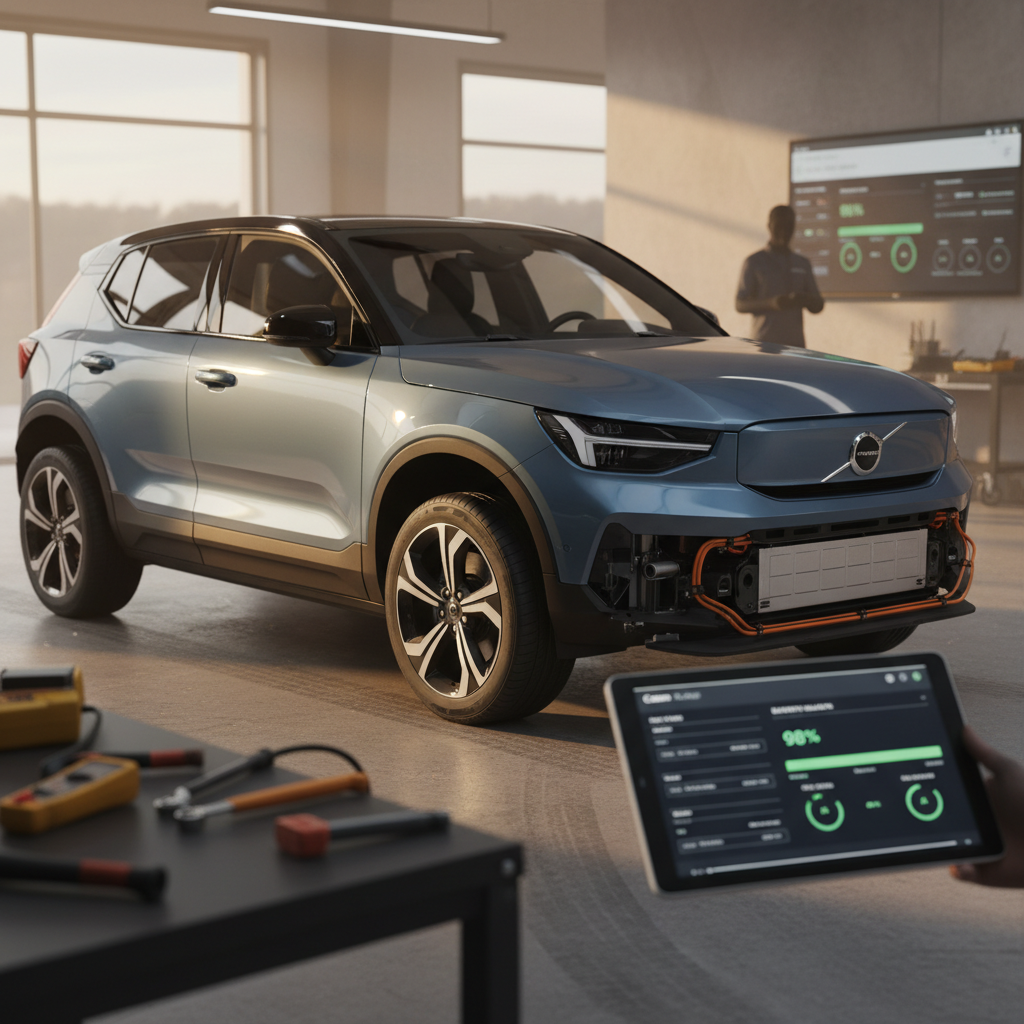
Every vehicle sold through Recharged comes with a Recharged Score Report that includes verified battery health, estimated remaining range, and fair market pricing tied to that real performance. Our EV specialists can walk you through what the numbers mean for your use case, whether that’s a short commute or regular interstate road‑trips.
FAQ: Why is my EV range less than advertised?
Common questions about EV range vs. advertised numbers
Bottom line: Making peace with EV range
An EV that doesn’t quite hit its advertised range in your daily routine isn’t necessarily a disappointment, it’s a reminder that the sticker number is a benchmark, not a guarantee. Weather, speed, route, and your right foot all play starring roles in how far you actually go on a charge.
The encouraging news is that most modern batteries age more slowly than early headlines suggested, and simple habits, preconditioning, smoother driving, smarter charging, can claw back a surprising number of miles. If you’re weighing a used EV, focusing on real‑world range and verified battery health will tell you far more than any original marketing claim. That’s exactly why Recharged builds detailed battery diagnostics into every Recharged Score Report, so you can choose the right car and the right range for how you actually drive.