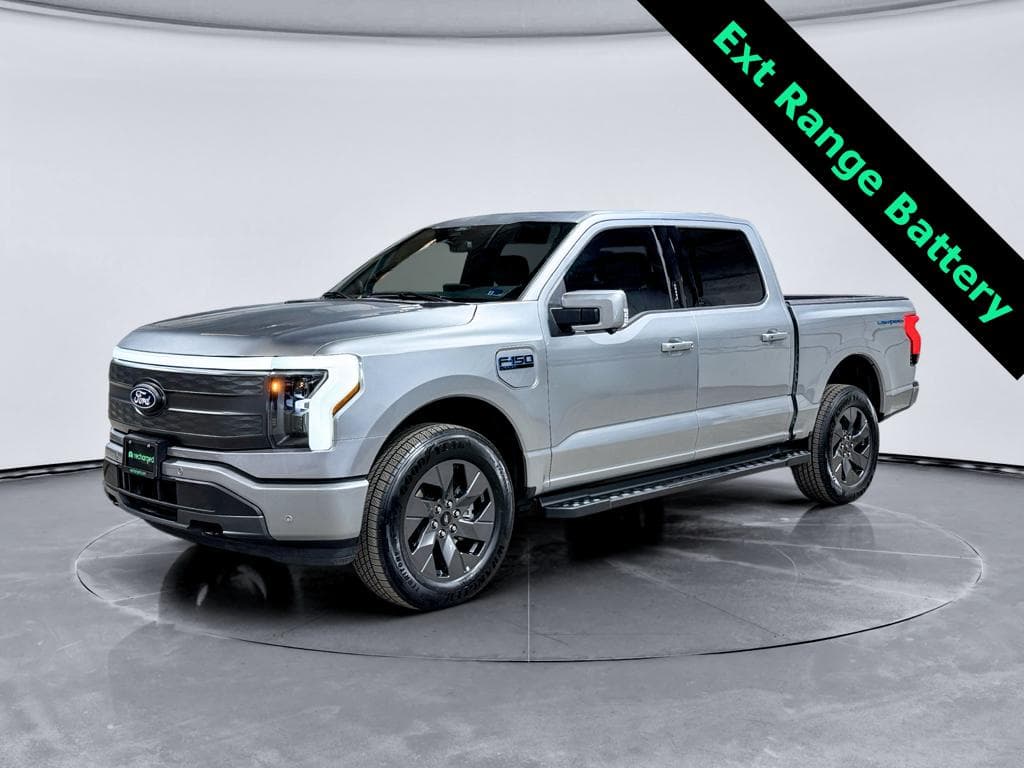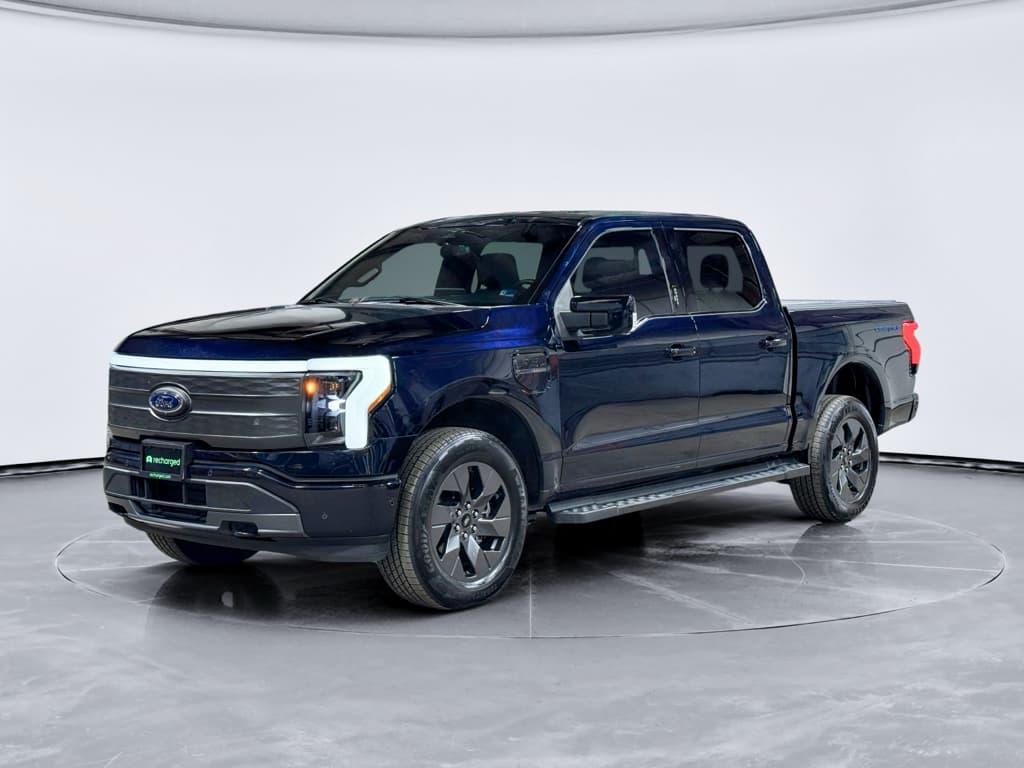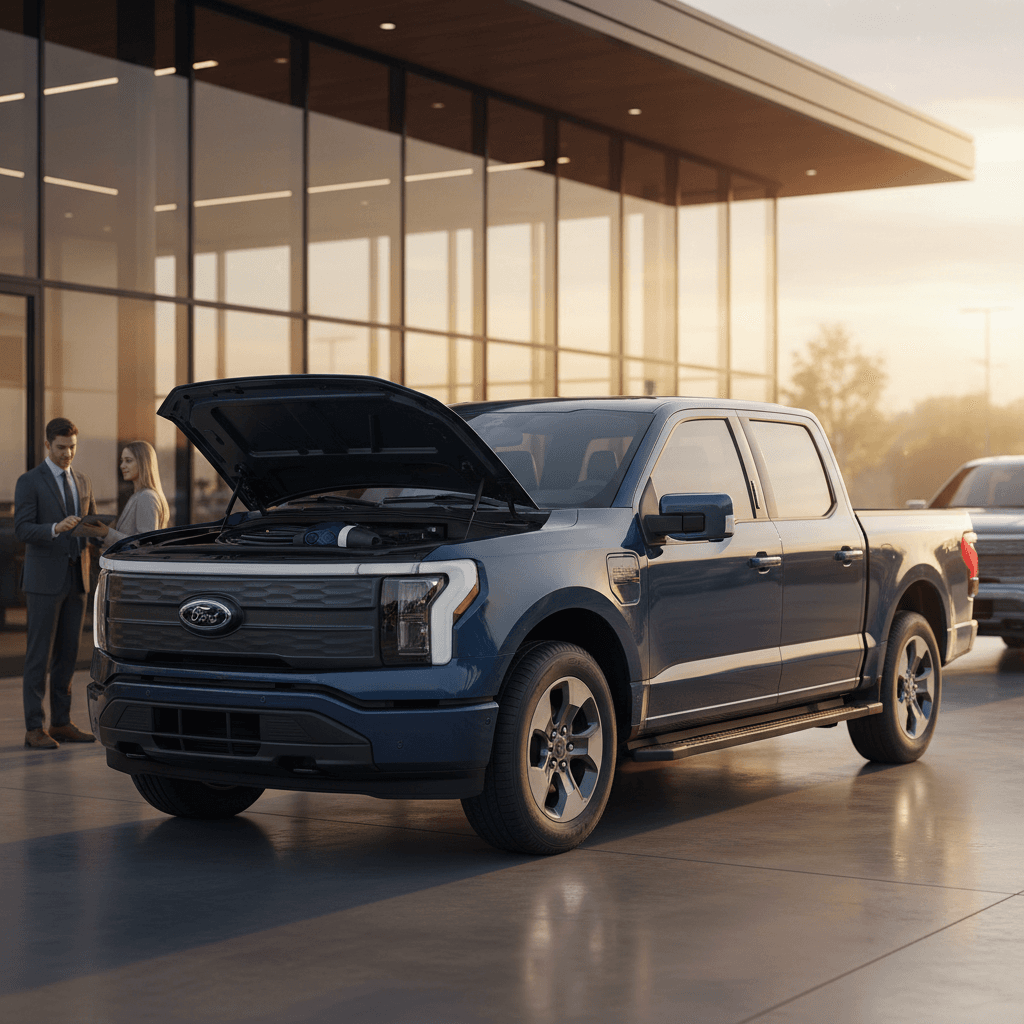
If you’re wondering where to sell a used Ford F-150 Lightning, you’re not alone. Early buyers got in at high MSRPs, incentives and price cuts arrived later, and by late 2025 Ford announced it would end production of the current all‑electric Lightning in favor of an extended‑range replacement. All of that makes selling your truck feel more complicated than offloading a typical gas F‑150.
Quick take
Why selling a used F-150 Lightning feels different in 2026
The F-150 Lightning is still a capable truck, but its market story is unusual. Launch pricing was high, then Ford repeatedly cut MSRPs and added incentives. Used values dropped faster than many owners expected, and by late 2025 Ford confirmed that production of the current battery‑electric Lightning would end in favor of a next‑generation extended‑range (EREV) truck, shifting demand again.
F-150 Lightning used-market snapshot (early 2026)
Why this matters for selling
How much is a used F-150 Lightning worth today?
Used F-150 Lightning values move quickly with incentives, fuel prices, and Ford’s strategy changes. As of early 2026, it’s not unusual to see real‑world trade‑in ranges landing in the mid‑$40,000s to low‑$60,000s for clean 2023–2024 trucks, with lower numbers for high‑mileage work rigs and early 2022 builds.
Illustrative value bands for used F-150 Lightnings (early 2026)
Ballpark ranges to frame expectations before you start shopping offers. Actual numbers depend heavily on trim, options, mileage, local demand, and battery warranty status.
| Model year / trim example | Mileage band | Condition example | Rough trade-in band | Ambitious private-party ask |
|---|---|---|---|---|
| 2024 Flash / XLT ER | 10k–25k mi | Clean, one-owner | $52k–$60k | $60k–$66k |
| 2023 Lariat ER | 25k–45k mi | Well-kept, minor wear | $45k–$55k | $53k–$60k |
| 2022 Pro / XLT SR | 40k–70k mi | Fleet or work use | $32k–$42k | $40k–$48k |
| High-spec Platinum ER | Under 30k mi | Excellent, loaded | $55k–$65k+ | $65k–$72k+ |
Use this as a starting point, then pull live values from KBB, Black Book, or an EV specialist like Recharged.
Depreciation vs. what you actually paid
Main places to sell a used Ford F-150 Lightning
You’ve got the same broad choices as any truck owner, dealers, online buying platforms, private sale, but with an electric twist. Some channels understand EVs and battery value; others just see an expensive, heavy truck they’re not sure how to price. Here’s how the main options stack up for a used F‑150 Lightning.
Where to sell your used F-150 Lightning
Compare speed, effort, and price potential across the main channels.
1. Ford & other franchise dealers
Best for: Convenience when you’re already buying another vehicle.
- Instant trade-in credit against a new or used truck.
- Dealers lean on guides and auctions; some undervalue EVs.
- EV knowledge varies, battery health often treated as a black box.
2. Big online buyers (CarMax, Carvana, etc.)
Best for: Quick, low-friction sale without haggling.
- Online offers in minutes; inspections at a hub or at home.
- Pricing models were built on ICE trucks, then adapted to EVs.
- Simple, but they need margin, expect a wholesale‑leaning number.
3. EV-focused marketplaces (like Recharged)
Best for: Maximizing value on a modern EV truck.
- Buyers see verified battery health, not guesses.
- Used EV pricing tools tuned to current Lightning trends.
- Options like consignment, instant offer, and trade‑in.
Other ways to sell your Lightning
Higher price potential often means more work on your side.
4. Private-party sale
Best for: Squeezing out top dollar if you’re patient.
- List on Autotrader, Facebook Marketplace, Craigslist, forums.
- You handle photos, test drives, paperwork, and screening.
- Most buyers will ask about battery health and warranty, have answers ready.
5. Auctions & wholesalers
Best for: Fleets or dealers moving multiple units quickly.
- Typically accessed through a dealer or commercial channel.
- Lightning values can be volatile at auction.
- Rarely the best path for a single retail owner unless your truck is rough or hard to retail.
Where Recharged fits in
Ready to find your next EV?
Browse Vehicles
Trade-in vs. selling your F-150 Lightning yourself
Trading your Lightning in
Trading into a Ford store or another franchise dealer is the classic low‑friction move. You’ll usually:
- Get a single number you can apply to your next purchase.
- Avoid the hassle of listing, showing, and negotiating.
- Save on sales tax in some states because the trade value is subtracted from the taxable amount of your new vehicle.
The trade-off? Dealers need room to recondition, hold, and resell your truck. That almost always means leaving some money on the table compared with a strong private‑party sale or an EV‑savvy buyer.
Selling to a consumer or EV marketplace
Going beyond a traditional trade can unlock more value, especially with an electric truck whose story is complicated.
- A well‑priced private‑party listing can clock in $3,000–$7,000 higher than many trade offers, depending on market conditions.
- EV-focused marketplaces like Recharged sit in the middle: more convenient than private sale, generally stronger numbers than generic wholesale trades.
- These buyers know how to value things like battery warranty, software updates, and charging hardware.
It’s more work than dropping keys at the dealer, but you gain leverage, especially if you can document battery health.
Smart move: Get at least three real offers
How EV-specific factors impact your sale
Unlike a gas F-150, a used Lightning lives or dies on battery, charging, and software. Most buyers don’t fully understand those pieces, which is why clear documentation can separate a smooth sale from a painful one.
Key Lightning factors every buyer will care about
Hit these points early in your listing or conversation.
1. High-voltage battery health
Ford’s high‑voltage battery is backed by an 8‑year/100,000‑mile warranty against excessive capacity loss for U.S. trucks, and that coverage follows the vehicle to the next owner.
Showing recent range data, DC fast‑charging history, or a third‑party battery report (like a Recharged Score) reassures buyers you’re not dumping a problem pack.
2. Warranty balance and recalls
Buyers will ask: how many years and miles of battery warranty are left? Have any Lightning‑specific recalls, especially battery‑related, been addressed?
Download a current Ford service/recall printout from your dealer and keep it with the truck’s records.
3. Charging gear and upgrades
Include the original mobile charge cord, wall box (if removable), and any adapters when possible. Replacing missing gear isn’t cheap.
If you’ve upgraded home charging or added accessories, call them out in your listing, savvy EV buyers recognize the value.
Range realism sells
Prep checklist before you list or get offers
Taking a couple of hours to prep your F-150 Lightning like a dealer would can easily pay for itself in a stronger offer, regardless of where you sell it. Use this checklist as a roadmap.
Essential prep before selling your F-150 Lightning
1. Confirm battery warranty and service history
Pull the in‑app or dealer record showing your Lightning’s in‑service date and current mileage so you can explain how many years and miles remain on the 8‑year/100,000‑mile battery warranty. Grab a dealer printout of completed recalls and software updates.
2. Get a battery health or range snapshot
Capture recent range estimates at 100% charge, typical daily use, and any third‑party diagnostics you can access. If you sell through Recharged, the Recharged Score Report includes a battery‑health analysis buyers can see before they commit.
3. Gather every key, cable, and accessory
Locate all keys, key cards, the mobile charge cord, wall‑box documentation, bed accessories, and any OEM tow or off‑road packages. Missing items give buyers an excuse to push your price down.
4. Deep clean and de‑personalize the cabin
Detail the interior, remove decals or personal branding, empty the frunk and bed, and clear your data from the infotainment system and FordPass account. A neutral, tidy truck photographs, and sells, better.
5. Take honest photos in good light
Shoot the exterior from multiple angles, close‑ups of any dings, the bed and frunk, tires, interior, and the main screen showing mileage and state of charge. Good photos reduce buyer skepticism and time‑wasting messages.
6. Decide your floor price and must‑haves
Before you field offers, set a minimum number you’ll actually accept and list your non‑negotiables (e.g., cash or verified cashier’s check only for private sales). It’s easier to walk away when you’ve made these calls up front.
Avoiding common mistakes when selling a Lightning
- Only checking one offer source. The first number you hear, whether from a Ford dealer or an online buyer, is almost never the best. Shop at least three real offers.
- Ignoring battery health questions. Saying “the range has been fine for me” without data is a red flag. Come prepared with charging stats or a formal report.
- Overpricing based on what you paid, not the market. Buyers don’t care that you paid $80,000 in 2022 if similar trucks list in the $50,000s today.
- Missing paperwork and accessories. A lost charge cord or spotty service history can knock thousands off certain buyers’ offers.
- Letting strangers test drive without guardrails. For private sales, verify identity, ride along, and consider meeting at a bank or police‑station lot for safety.
Title, payoff, and fraud checks
Is now a good time to sell, or should you wait?
Timing the market with a niche EV truck is tricky. On one hand, the current Lightning is discontinued and supply will eventually shrink. On the other, a range‑extended successor could shift attention away from early all‑electric models, and further mainstream EV price cuts could pull used values down another notch.
How to think about timing your Lightning sale
You should consider selling now if…
You no longer need a full‑size truck or the Lightning’s range doesn’t match your routes anymore.
Your truck is still well within the 8‑year/100,000‑mile battery warranty window, which is a major selling point today.
You’re eyeing a lower‑cost EV, a hybrid truck, or you want to get out ahead of potential future EV price cuts.
You’ve received a surprisingly strong offer from a dealer, online buyer, or EV marketplace compared with KBB or guide values.
You might wait or hold if…
Your Lightning fits your needs perfectly and you’re not convinced a replacement will be cheaper to operate.
You’re in an EV‑friendly region where truck adoption is still rising and used inventory is thin, local scarcity often supports stronger prices.
You’re within a year or two of paying the truck off and want to enjoy a few years of loan‑free ownership before selling.
You’re comfortable riding out some additional depreciation in exchange for more utility from the truck.
Use depreciation curves, not gut feel
FAQs about selling a used Ford F-150 Lightning
Frequently asked questions
Selling a used Ford F-150 Lightning in 2026 means navigating an EV market that’s still finding its footing, while your truck’s model line is already shifting to its next chapter. If you treat battery health, warranty coverage, and documentation as core selling points, then line up offers from a mix of dealers, online buyers, and EV‑focused marketplaces like Recharged, you’ll quickly see where real market value sits. From there, you can decide whether the speed of a trade‑in or the upside of a more EV‑savvy buyer is the right move for you and your Lightning.