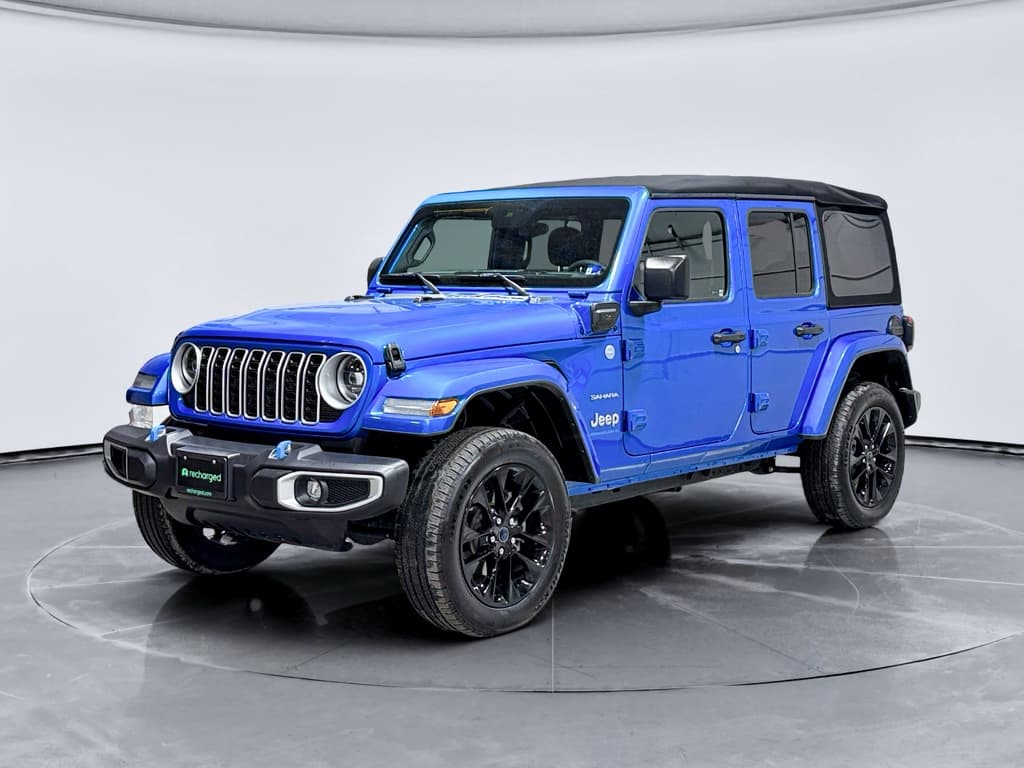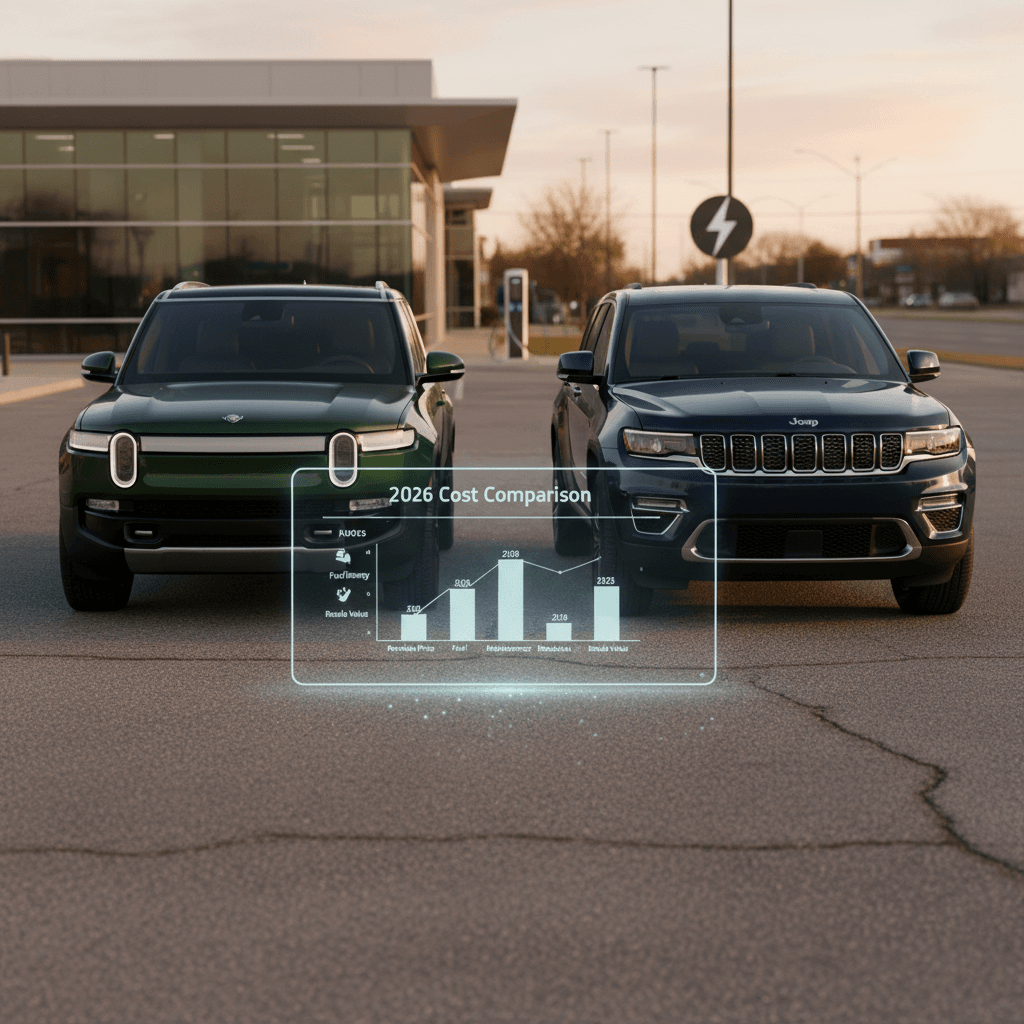
If you’re cross‑shopping a Rivian R1S against a Jeep Grand Cherokee, you’re probably trying to answer one big question: in 2026, which one will actually cost you less to own? This Rivian R1S vs Jeep Grand Cherokee cost comparison for 2026 walks through purchase price, fuel or electricity, maintenance, insurance, and resale so you can see how the numbers pencil out over five years.
Quick Take
R1S vs Grand Cherokee: Who This Cost Comparison Is For
This guide is aimed at U.S. shoppers in 2026 who are deciding between a new or nearly new Rivian R1S and a similarly equipped Jeep Grand Cherokee. Maybe you’re an SUV family driver who has always owned Jeeps, or you’re EV‑curious but unsure if the cost premium makes sense. We’ll focus on mainstream trims rather than rare high‑performance or ultra‑luxury variants and assume mostly on‑road family and commuting use instead of heavy rock‑crawling.
- Daily drivers doing roughly 10,000–15,000 miles per year
- Shoppers comparing a three‑row electric SUV to a two‑row or three‑row gas SUV on cost, not just performance
- Owners planning to keep the vehicle at least five years
- Buyers who care about both monthly payment and long‑term total cost of ownership (TCO)
Baseline Assumptions for This 2026 Cost Comparison
To keep things apples‑to‑apples, we’ll standardize a few assumptions. You can mentally adjust these up or down based on your own driving and local prices, but using a consistent baseline helps reveal the general direction of the math.
Key 2026 Cost Assumptions Used in This Guide
These assumptions reflect typical U.S. conditions in early 2026 and rounded real‑world data.
| Factor | Rivian R1S (electric) | Jeep Grand Cherokee (gas) |
|---|---|---|
| Annual miles driven | 12,000 miles | 12,000 miles |
| Energy efficiency | ~37 kWh per 100 miles (about 2.7 mi/kWh) | 22 mpg combined (typical V6 4x4 |
| Average energy price | $0.18 per kWh home charging | $3.75 per gallon regular |
| Ownership horizon | 5 years | 5 years |
| Financing | Typical 72‑month loan, similar APR | Same loan terms and APR |
| Location | Average‑cost U.S. state | Average‑cost U.S. state |
All dollars are 2026 U.S. estimates and rounded for simplicity.
About the Numbers
Purchase Price: 2026 Rivian R1S vs Jeep Grand Cherokee
By 2026, the Rivian R1S remains a premium electric SUV. A well‑equipped Dual‑Motor model with a large pack and popular options typically stickers in the low‑to‑mid $80,000s before taxes and fees. Incentives vary by income, MSRP cap, and whether you buy new or used, so some shoppers will see meaningful tax credits while others won’t.
A comparably equipped Jeep Grand Cherokee, think mid‑to‑upper trims with 4x4, driver‑assist features, and a few comfort packages, usually lands in the mid‑$50,000s to low‑$60,000s new in 2026. Higher‑spec variants and plug‑in hybrids (4xe) can climb from there, but for a conventional gas V6 Grand Cherokee, the Jeep almost always undercuts the Rivian on sticker price by something like $20,000 or more.
Typical 2026 Rivian R1S Transaction
- Dual‑Motor Large Pack, popular options
- MSRP ballpark: $82,000–$88,000
- Destination and fees add a bit more
- Potential used examples trending lower over time
Typical 2026 Jeep Grand Cherokee Transaction
- Mid/upper trim V6 4x4 with options
- MSRP ballpark: $52,000–$62,000
- Dealer discounts/incentives often available
- Plenty of used inventory at various price points
Think in Monthly Terms Too
Energy Costs: Electricity vs Gasoline
Ongoing energy cost is where the Rivian R1S starts to claw back money. In early 2026, the national residential average electricity price is in the high‑teens cents per kWh, while gasoline is still bouncing around historically elevated levels in many states. Even if your local prices differ, the pattern, electricity cheaper per mile than gasoline, usually holds.
Estimated Annual Energy Costs at 12,000 Miles/Year
Put differently, every mile you drive in the Rivian R1S might cost you around 6–7 cents in electricity, while the Jeep Grand Cherokee can be closer to 17 cents per mile in gasoline at these assumptions. That difference compounds quickly if you have a long commute or take frequent road trips.
What About Fast Charging?
Maintenance and Repairs: EV Simplicity vs Gas Complexity
Over five years, maintenance is the second big lever in this cost comparison. A Jeep Grand Cherokee has an internal‑combustion engine, multi‑speed automatic transmission, exhaust system, and a long list of wear items that simply don’t exist on an R1S. That means more routine service and more potential repair bills as mileage piles up.
Typical 5‑Year Maintenance Picture
Real‑world averages will vary, but the structure of costs is similar nationwide.
Rivian R1S
- No oil changes, spark plugs, or transmission service
- Brake wear is often light thanks to strong regeneration
- Most routine service = inspections, cabin filters, fluids checks
- Out‑of‑warranty repairs can be pricey, but less frequent in early years
5‑year estimate: often well under $3,000 in routine service for typical mileage.
Jeep Grand Cherokee
- Regular oil and filter changes
- Transmission fluid, spark plugs, and belts over time
- More moving parts, more potential leak and sensor repairs
- Brake jobs more frequent without strong regen
5‑year estimate: third‑party data often lands around $4,500–$5,500 for maintenance and minor repairs.
Where EVs Quietly Save You Money
Insurance, Tires, and Other Running Costs
Insurance and tires are the wild cards here. The Rivian R1S is a heavy, high‑value EV loaded with technology, which typically means higher insurance premiums than a mainstream Jeep Grand Cherokee. On the flip side, high‑trim Grand Cherokees aren’t cheap to insure either, especially in urban or high‑theft areas.
- Insurance: Many households see the R1S run a few hundred dollars more per year than a comparable Grand Cherokee, though clean driving records and bundling can narrow that gap.
- Tires: Both are heavy SUVs; the Rivian’s curb weight and torque can mean more frequent tire replacements if you drive aggressively. The Jeep’s off‑road‑oriented trims can also chew through tires quickly.
- Registration and fees: Some states charge extra registration for EVs to replace gas‑tax revenue; others offer breaks. Check your state DMV or DOT site.
Don’t Forget Charging Equipment
Five‑Year Total Cost of Ownership: Side‑by‑Side
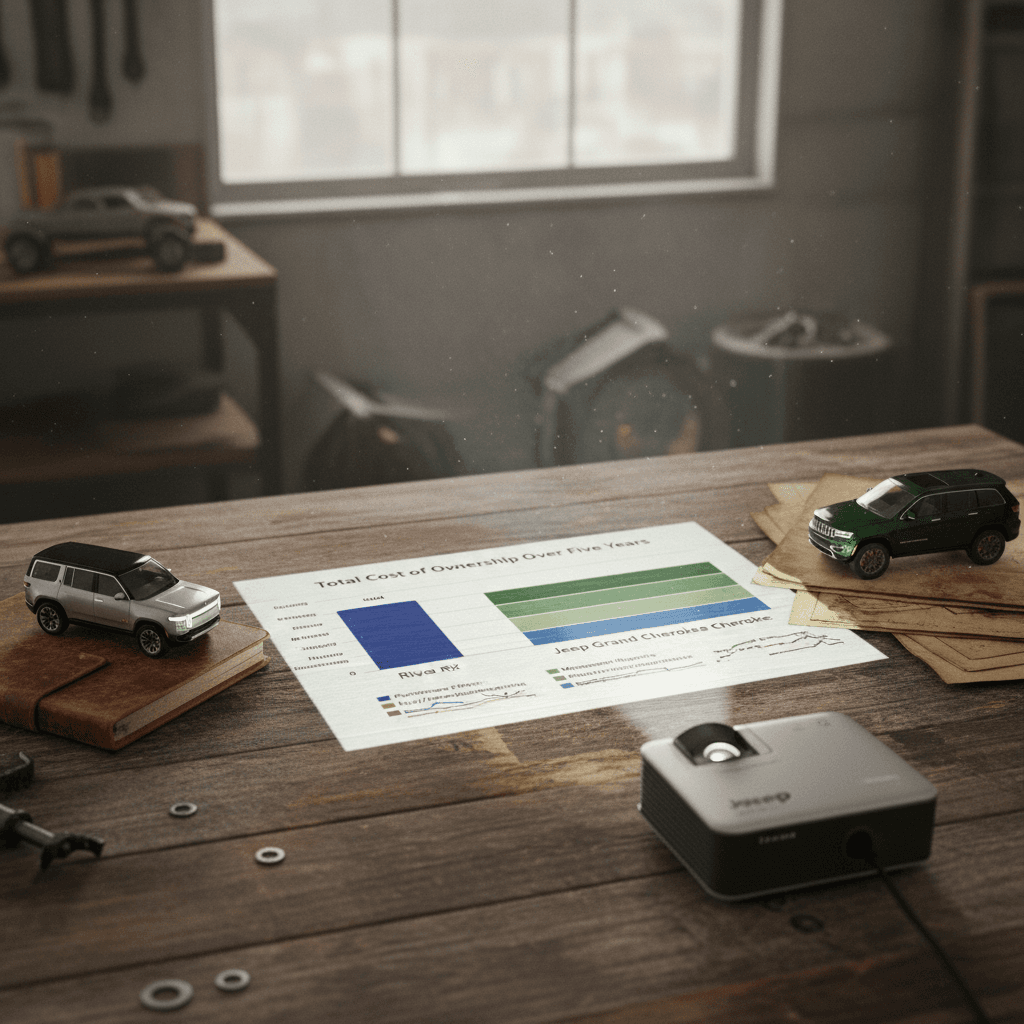
Let’s pull the big pieces together, purchase price, fuel or electricity, and routine maintenance. These are ballpark figures for a 12,000‑miles‑per‑year driver in an average‑cost U.S. state. Taxes, financing costs, and insurance are intentionally left as similar between the two to focus on what really differs.
Illustrative 5‑Year Cost of Ownership (Excluding Insurance & Tax)
Rounded 2026 U.S. estimates for a typical Rivian R1S vs a mid/upper‑trim Jeep Grand Cherokee V6 4x4.
| Category (5 years) | Rivian R1S | Jeep Grand Cherokee |
|---|---|---|
| Purchase price (before incentives) | $85,000 | $58,000 |
| Estimated energy cost | $4,000 | $10,250 |
| Estimated maintenance/repairs | $2,500 | $5,000 |
| Home charging equipment & install (one‑time) | $1,500 | $0 |
| Subtotal (cash outlay before resale) | $93,000 | $73,250 |
These numbers are directional; plug in your local prices and miles for a personalized comparison.
At face value, the R1S still costs about $20,000 more in total outlay over five years before you account for resale value or incentives. That surprises some shoppers who assume cheap electricity instantly makes an EV “cheaper than gas.” Energy and maintenance help, but they don’t completely erase a big MSRP gap on their own, at least not over just five years.
How Resale Value Changes the Math
The missing piece is what your SUV is worth when you sell or trade it. Residual values are volatile, especially for newer EV brands, but both Rivian and Jeep have large owner bases by 2026, and used‑market data is filling in fast. A high‑spec Grand Cherokee tends to hold value reasonably well; an R1S combines luxury‑SUV pricing with EV‑market uncertainty, which can cut both ways depending on timing.
Conservative 5‑Year Resale Assumption
- Rivian R1S: retains ~45% of original MSRP
- Jeep Grand Cherokee: retains ~50% of original MSRP
Estimated 5‑year values:
- R1S: 0.45 × $85,000 ≈ $38,000
- Jeep: 0.50 × $58,000 ≈ $29,000
Net 5‑Year Cost After Resale
- R1S net outlay ≈ $93,000 – $38,000 = $55,000
- Grand Cherokee net outlay ≈ $73,250 – $29,000 = $44,250
Difference: The Rivian still costs roughly $10,000–$12,000 more over five years in this conservative scenario.
What If Rivian Holds Value Better?
When the Rivian R1S Makes More Financial Sense
Even if the Rivian looks more expensive in many average‑use cases, there are clear scenarios where it can be the smarter long‑term money play, or at least very close in cost while delivering a very different driving experience.
Scenarios Where the R1S Can Beat or Match the Jeep on Cost
1. You Drive a Lot Every Year
At 15,000–20,000 miles annually, electricity savings really compound. The more you drive, the more the R1S’s per‑mile advantage over gasoline helps close the gap to the Jeep.
2. You Have Cheap or Free Charging
If your workplace offers free Level 2 charging or you live in a low‑electricity‑cost state, your effective cost per kWh drops, and so does your cost per mile.
3. You Qualify for Strong EV Incentives
Point‑of‑sale credits, state rebates, and utility incentives can reduce the effective R1S purchase price by several thousand dollars, shrinking the upfront gap to a Grand Cherokee.
4. You Plan to Keep the SUV 8–10 Years
The longer you own the R1S, the more years of low fuel and maintenance costs you enjoy. Past year five, the cumulative EV savings start to loom larger than the initial premium.
5. You Value Performance and Tech Anyway
If you were already shopping luxury‑performance SUVs, the R1S’s acceleration, AWD capability, and tech suite may offer more value per dollar than a loaded gas alternative.
Run Your Own Numbers
Financing and Buying a Used Rivian R1S
One of the most compelling ways to improve the R1S side of this cost comparison is to let someone else pay the steepest portion of depreciation. By 2026, the used EV market is maturing quickly, and lightly used Rivian R1S models are appearing at more accessible prices. That can radically improve the math versus a brand‑new Jeep Grand Cherokee.
Why a Used R1S Can Be a Smart Play
Especially when you buy through an EV‑focused retailer like Recharged.
Verified Battery Health
Lower Effective Depreciation
Financing & Trade‑In Support
Use Total Cost, Not Just Sticker, to Decide
FAQ: Rivian R1S vs Jeep Grand Cherokee Costs
Frequently Asked Questions
Bottom Line: Which SUV Is the Better Value?
If you’re shopping strictly on lowest cost over five years, a mid‑ or upper‑trim Jeep Grand Cherokee is still usually the cheaper bet in 2026. Its lower sticker price and broad dealer discounts are tough to overcome in a short ownership window, even with today’s fuel prices.
But cost isn’t the whole story. The Rivian R1S delivers a very different ownership experience: quiet, instant‑torque acceleration; strong all‑weather traction; zero tailpipe emissions; and a cabin loaded with modern tech. For higher‑mileage drivers, households with access to cheap electricity, and buyers willing to keep the SUV longer, or buy used, the R1S can come surprisingly close to the Jeep on lifetime cost while delivering a very different kind of value every time you drive it.
If you’re leaning toward an R1S but want to make sure the numbers add up, consider looking at used Rivian R1S inventory with a verified battery‑health report. At Recharged, every vehicle includes a Recharged Score, fair‑market pricing, EV‑specialist guidance, and nationwide delivery. That combination of cost transparency and EV expertise makes it much easier to decide whether an electric SUV like the R1S, or a familiar gas SUV like the Grand Cherokee, is the right financial move for your garage.