You’ve probably heard someone say, “Sure, electric cars are cheaper to run, but when does an electric car actually pay for itself?” It’s a fair question, and the honest answer is, it depends on how much you drive, what you’re paying for electricity and gas, and whether you buy new or used. Let’s walk through the real math, without the marketing gloss.
Quick answer
How an electric car actually “pays for itself”
Before you get lost in spreadsheets, it helps to define what “paying for itself” really means. An electric car doesn’t suddenly become free one Tuesday afternoon. Instead, it gradually makes up for a higher purchase price (if there is one) with lower running costs until, at some point, you’ve spent less overall than you would have with a similar gas car.
- Upfront costs: purchase price, taxes, fees, home charging setup
- Ongoing costs: fuel (electricity vs gas), maintenance and repairs, insurance, registration
- One-time boosts: federal tax credits, state/local incentives, rebates from utilities
- End-of-ownership: what you can sell or trade the vehicle for
When your total cost of ownership for the electric car drops below what a comparable gas car would have cost you over the same time, that’s the moment it has “paid for itself.” For some drivers that’s just a few years; for others, it may never happen on a purely financial basis, and that’s important to know before you buy.
Where EVs Typically Save You Money
7 key factors that decide your EV payback period
The variables behind “when an electric car pays for itself”
Most of your payback timeline comes down to these levers.
1. How much you drive
2. Gasoline prices where you live
3. Your electricity rate
4. Home vs public charging
5. Incentives and rebates
6. Maintenance and repair costs
7. New vs used EV pricing
Think in cost-per-mile, not just MPG
Real-world examples: When an EV pays for itself
Let’s move from theory to something you can feel: real, back‑of‑the‑envelope math. These are simplified examples using reasonable, round‑number assumptions to show how the payback period changes with your driving habits and purchase choice.
Sample EV vs Gas Payback Scenarios
Illustrative, rounded numbers for a compact crossover in the U.S. assuming $3.50/gal gas and $0.15/kWh home charging.
| Scenario | Annual miles | Upfront EV price difference | Annual fuel & maintenance savings | Approx. payback time |
|---|---|---|---|---|
| A. Heavy commuter, new EV | 18,000 | $8,000 more than gas | $1,800 | 4–5 years |
| B. Average driver, new EV | 12,000 | $6,000 more than gas | $1,000 | 6 years |
| C. Light driver, new EV | 7,500 | $5,000 more than gas | $550 | 9+ years |
| D. Average driver, used EV | 12,000 | $1,500 more than gas | $1,000 | 1.5–2 years |
| E. Heavy driver, used EV | 20,000 | Similar to gas car | $2,000 | Instant, EV is cheaper from year one |
Your exact numbers will vary, but these scenarios give you a realistic sense of what to expect.
In Scenario B, the kind of “normal” driving pattern many of us have, an electric car that costs $6,000 more up front could realistically pay for itself in about six years. In Scenario D, where you buy used and sidestep the steepest depreciation, the EV can catch up in less than two years.
Don’t forget financing costs
Why used electric cars often pay for themselves faster
If you care about when an electric car pays for itself, it’s hard to ignore the used market. EVs, like most new cars, take their biggest hit in value in the first few years. When you buy used, someone else has already eaten that first big bite of depreciation.
- You often pay a price that’s much closer to a comparable gas car, or even less.
- You still get the ongoing fuel and maintenance savings of an EV.
- In some cases you can still qualify for a used EV tax credit if the car and your income meet the requirements.
- Modern EVs are proving more durable than early skeptics expected, especially when the battery is in good health.
That battery caveat is the big one. With a used EV, the question isn’t just “How many miles are on the odometer?” but “How much useful battery life is left?” That’s exactly why Recharged built the Recharged Score Report, to give you a verified look at battery health, pricing, and how the specific car you’re eyeing stacks up on long‑term value.

Battery health, depreciation and resale value
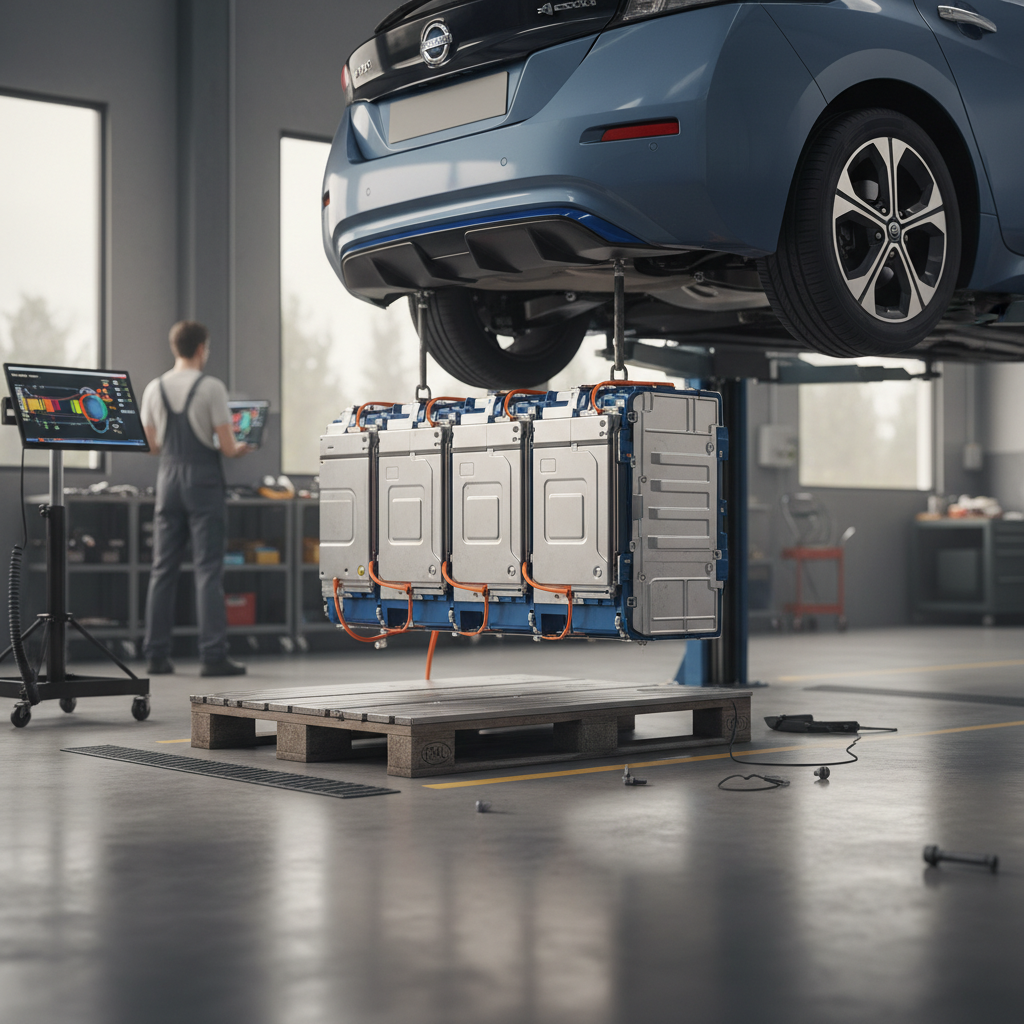
An EV’s battery is its heart and its single most expensive component. Fortunately, modern packs are designed to last the life of the vehicle for most drivers. Still, how that battery ages has a direct impact on when the car pays for itself, and whether it keeps paying you back later when you sell or trade it.
How battery health affects payback
- Good health, modest degradation: Range stays close to original, so the car remains practical for commuting and road trips. Resale value holds up, which improves your long‑term cost picture.
- Significant degradation: If range drops far below your needs, you may be forced to replace or sell earlier than planned, cutting into the years you had to recover your investment.
Why a third‑party battery check matters
- Odometer mileage alone doesn’t tell you how the car was charged or driven.
- A battery health report can reveal usable capacity, fast‑charging history, and cell balance.
- Recharged’s battery diagnostics and Recharged Score are designed to make this invisible wear visible, so you know whether you’re buying a bargain or a future headache.
Protecting resale value
How to estimate your own EV payback time
You don’t need a finance degree to get a decent estimate of when an electric car will pay for itself. You just need a few numbers and a calculator app.
DIY EV Payback Calculator (In 6 Simple Steps)
1. Figure out your annual mileage
Grab your last year of odometer readings or service records, or log your miles for a typical month and multiply by 12. Be honest, this number drives the whole calculation.
2. Add up your current fuel costs
Look at bank or credit card statements and total what you’re spending on gas in an average month, then multiply by 12 for your annual fuel bill.
3. Estimate an EV’s energy cost
Check your electric bill for your price per kWh. Multiply that by how many kWh an EV would need to cover your annual miles. (A rough rule: many EVs use about 0.25–0.35 kWh per mile in mixed driving.)
4. Include maintenance differences
Look at what you’ve spent on oil changes, tune‑ups, and engine‑related repairs over the last couple years. EVs still need tires, cabin filters, and brake service, but you can reasonably expect <strong>lower maintenance spending overall</strong>.
5. Compare purchase prices after incentives
Look at the out‑the‑door price of a comparable gas car and your target EV, minus any tax credits or rebates you qualify for. The difference between those totals is your <strong>upfront "EV premium"</strong>, what you need to earn back in savings.
6. Do the break‑even math
Take your annual savings (fuel plus maintenance) and divide your upfront EV premium by that number. If the EV costs $6,000 more and saves you $1,200 a year, your rough payback time is about five years.
Want help running the numbers?
Smart ways to make an electric car pay for itself sooner
You can’t control gas prices or redesign the grid, but you can tilt the odds in your favor. A few smart choices can knock years off your EV’s payback period.
Levers You Can Pull to Shorten Your Payback
Most of these don’t cost a thing, just planning.
Buy the right size car
Prioritize home charging
Use off-peak or EV rates
Stack incentives
Keep driving it
Consider a well-vetted used EV
The fastest way to delay payback
Common myths about when EVs pay for themselves
Talk about electric cars long enough at a cookout and the myths start flying. Let’s swat a few of the big ones so they don’t cloud your decision-making.
- “EVs never really pay for themselves.” – For low‑mileage drivers who buy brand‑new, high‑end models, that can be true financially. But for average or high‑mileage drivers, especially those who buy smart or buy used, EVs often match or beat gas cars on total cost of ownership over a typical 6–10‑year span.
- “Batteries all die in a few years, wiping out any savings.” – Real‑world data shows most modern EV batteries hold up far better than early horror stories suggested, particularly when they aren’t abused. Warranty coverage on many packs runs eight years or more.
- “Electricity is getting so expensive that EVs won’t be cheaper to run.” – In most of the U.S., even with higher electric rates, home charging still beats gas on a cost‑per‑mile basis. Off‑peak and EV‑specific rates widen that gap.
- “Maintenance on EVs is about the same as gas cars.” – EVs eliminate oil changes, spark plugs, exhaust systems, and a long list of engine bits that fail with age. You still have wear items like tires, but most owners see meaningfully lower maintenance over time.
FAQ: When does an electric car pay for itself?
Frequently Asked Questions
Bottom line: Does an EV make financial sense for you?
At the end of the day, when an electric car pays for itself comes down to your life, not the brochure. If you drive a fair number of miles each year, can charge mostly at home, and shop carefully, especially in the used market, an EV can match or beat a gas car on total cost of ownership within just a few years. If you’re a low‑mileage driver or you’re tempted by an oversized, over‑optioned new model, the math gets fuzzier and the payback point may drift out of reach.
The good news is you don’t have to guess. With transparent battery health data, fair‑market pricing, and EV‑savvy guidance from specialists, you can compare real cars, real payments, and real fuel savings, not just theoretical charts. That’s the experience Recharged was built for: helping you decide not just whether to go electric, but exactly which electric car makes both emotional and financial sense for your driveway.