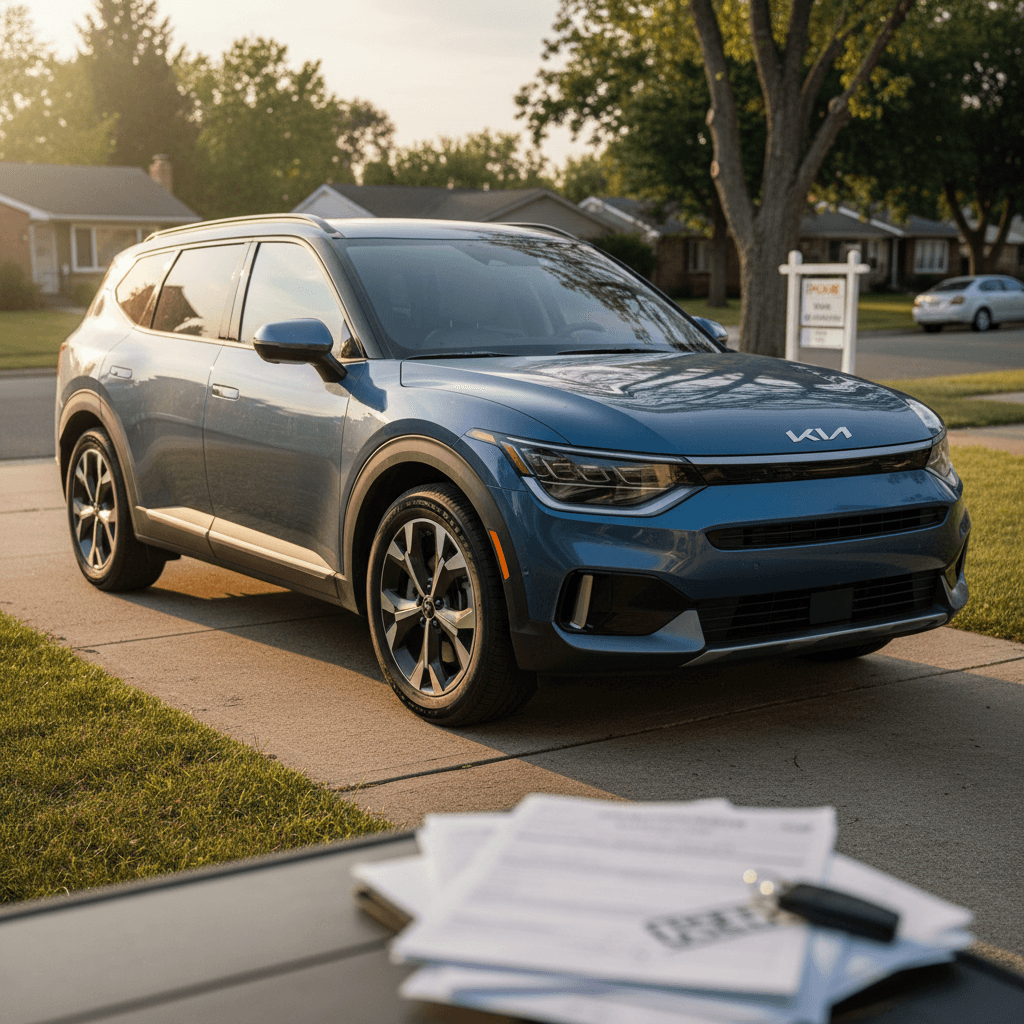
If you’re used to gas cars, seeing 90,000 or 120,000 miles on a used electric vehicle can feel like a red flag. You start wondering, what mileage is too high for a used EV? The honest answer is: it depends less on the odometer and more on the battery, how the car was used, and the specific model you’re looking at.
Quick answer
Why EV mileage feels confusing compared with gas cars
With gas cars, you’re trained to think in hard lines: under 60,000 miles is great, 100,000 miles is the danger zone, and 150,000+ miles feels like overtime. EVs don’t follow those rules. They have far fewer moving parts, no oil changes, and regenerative braking that reduces wear. The main long‑term question isn’t whether the engine will blow up; it’s how much usable battery capacity is left.
- Gas car fear: engine, transmission, and head gaskets at high mileage
- EV concern: battery range loss and potential pack replacement cost
- Bonus with EVs: less wear on brakes, no exhaust system, no timing belt, fewer fluids
Think “battery miles,” not just odometer miles
How many miles do EVs actually drive each year?
Before you judge what’s “high mileage,” it helps to know how much EVs actually get driven. In the U.S., newer data from the Department of Energy shows battery‑electric vehicles averaging around 12,000–12,500 miles per year, slightly less than comparable gasoline vehicles, which sit closer to the mid‑teens. In plain English: a five‑year‑old EV with 55,000–65,000 miles is right on schedule, not worn out.
Typical U.S. annual mileage by drivetrain
That’s why you’ll often see five‑ or six‑year‑old EVs with 40,000–70,000 miles. That’s not low or high, it’s normal. What you’re really trying to decide is whether 80,000, 110,000, or 150,000 miles is a problem for the specific EV in front of you.
What matters more than mileage: battery health and SOH
Every modern EV tracks State of Health (SOH), a measure of how much capacity the battery still has compared with when it was new. Instead of asking, “Is 110,000 miles too much?” ask, “How much usable range do I have, and how quickly is this pack degrading?”
Battery health benchmarks for used EV shoppers
How to translate SOH into a yes/no buying decision
80–100% SOH: Green zone
If the pack is at 80–100% SOH, you’re in the safe zone for most use cases. Range is still close to new, and degradation is usually slow.
- Daily commuting: No problem for years.
- Road‑trips: Still practical on most modern models.
- Resale: Stronger value later.
75–79% SOH: Caution zone
Usable for local driving, but you’re starting to feel the loss of range.
- Good price can make it worthwhile.
- Best as second car or short‑range commuter.
- Budget for earlier replacement or trade‑in.
Below 75% SOH: Walk‑away or deep discount
Below 75% SOH, most buyers should walk away unless the price is very low and you understand pack replacement options.
- Limited range and flexibility.
- Future resale will be tough.
- Battery work may cost four figures.
Non‑negotiable: a real battery report
Never guess. Ask for verified battery diagnostics from the manufacturer, a trusted third party, or a marketplace like Recharged that includes a battery report with every vehicle.
Don’t rely on the dash guess‑o‑meter
General mileage ranges for used EVs (low, medium, high)
Let’s talk concrete numbers. These are broad guidelines for today’s EVs, not hard rules, but they’ll help you quickly size up a listing. We’ll assume a typical 12,000‑mile‑per‑year driver.
How to read mileage on a used EV by age
Use this as a starting point, then layer in battery health, brand, and your own range needs.
| EV age | Low mileage | Normal mileage | High mileage | What it usually means |
|---|---|---|---|---|
| 1–2 years | Under 10,000 mi | 10,000–30,000 mi | Over 35,000 mi | High mileage often means rideshare or heavy commuting, dig into charging history. |
| 3–4 years | Under 25,000 mi | 25,000–55,000 mi | Over 65,000 mi | Normal cars in this range are daily‑driven commuters; high mileage demands a battery report. |
| 5–6 years | Under 40,000 mi | 40,000–80,000 mi | Over 90,000 mi | 90k+ isn’t an automatic no, especially on Teslas and well‑cooled packs. |
| 7–9 years | Under 55,000 mi | 55,000–110,000 mi | Over 120,000 mi | Check battery SOH and warranty status; early Leafs and small‑battery cars may be range‑limited. |
| 10+ years | Under 70,000 mi | 70,000–130,000 mi | Over 140,000 mi | These are value plays. Great for local use if the price and battery line up. |
Mileage alone doesn’t make or break a used EV, but these bands help frame what you’re seeing.
So… what’s “too high”?
Model-by-model: how much mileage is “too high”?
Different EVs age very differently. Some have robust liquid‑cooled packs that handle fast charging and high mileage gracefully. Others, especially early, air‑cooled designs, can lose range faster even with modest miles. Here’s how to think about a few common categories.
Tesla (Model 3, Y, S, X)
Tesla battery data from hundreds of thousands of cars shows that many still retain roughly 85–90% of capacity even after around 200,000 miles of driving. Real‑world owners regularly report 8–12% loss at about 100,000 miles, much better than early fears.
- Comfortable mileage ceiling for most buyers: up to ~140,000 mi if SOH is 80%+.
- Beyond that: 150,000–200,000 mi is possible if the price is right and diagnostics look strong.
Liquid‑cooled non‑Teslas (Hyundai/Kia, VW, Ford, GM, etc.)
Most newer EVs from Hyundai, Kia, Volkswagen, Ford, and GM use liquid‑cooled battery packs and show solid degradation patterns when properly cared for.
- Comfortable range: up to ~120,000–130,000 mi with good SOH.
- Focus on: DC fast‑charging history and climate; desert‑heat cars may age faster.
Early air‑cooled EVs (Nissan Leaf, early e‑Golf, etc.)
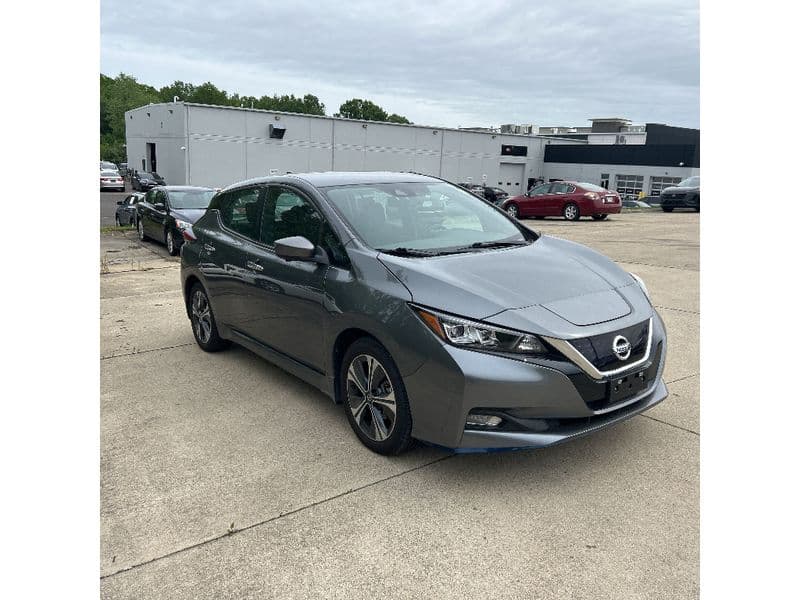
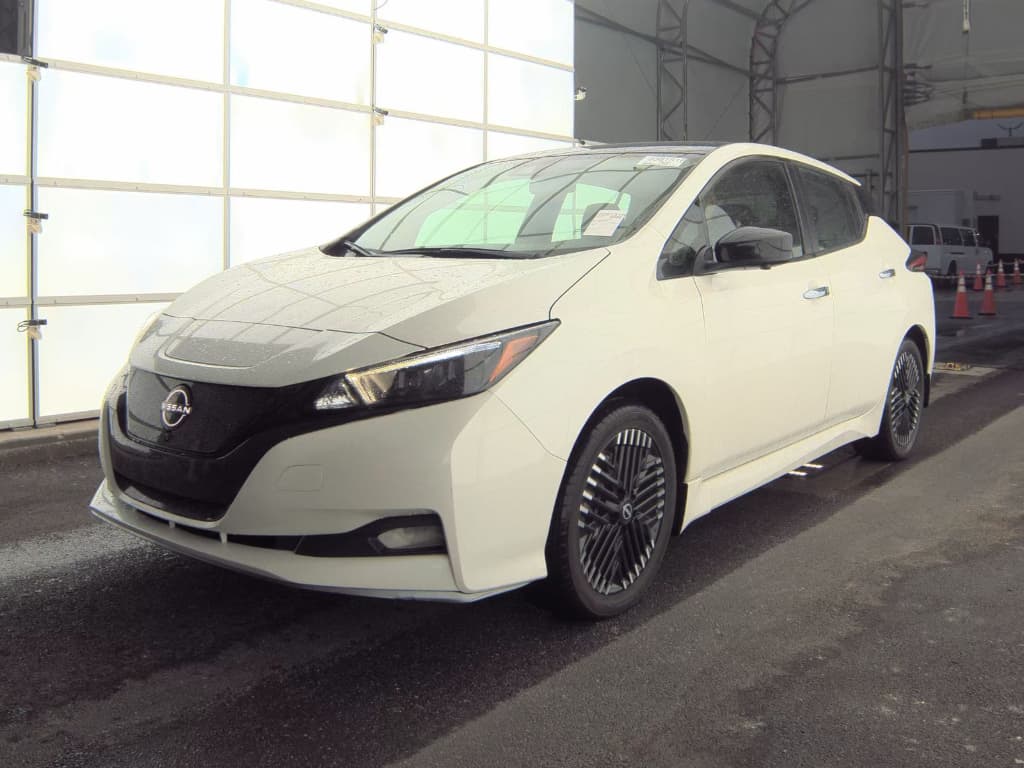
First‑ and second‑generation LEAFs and some other early EVs use air cooling and are more vulnerable to heat. It’s common to see noticeable range loss by 60,000–80,000 miles, especially from hot states.
- Comfortable range: often under 80,000–90,000 mi unless SOH is excellent.
- Perfect for: shorter‑range city duty if priced attractively.
Match the EV to your life, not a magic number
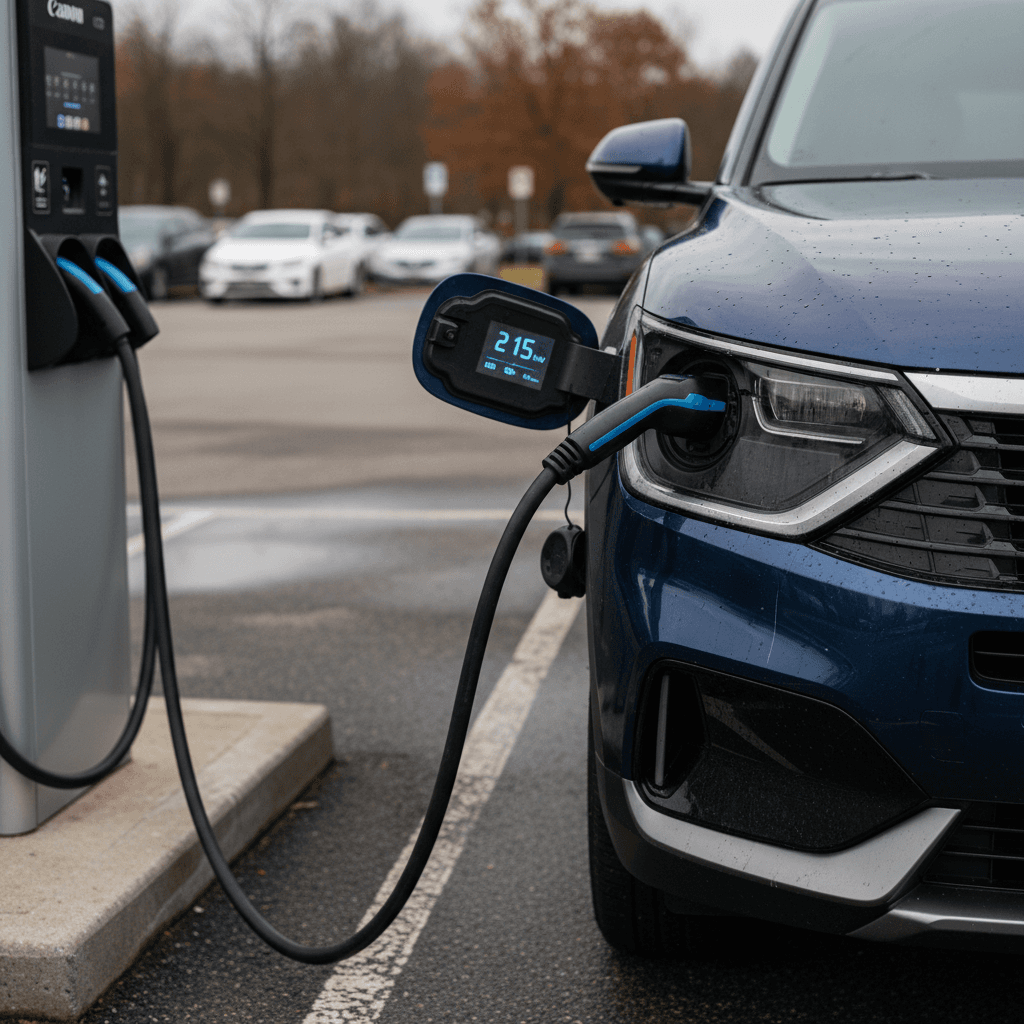
Other factors that matter as much as mileage
5 things that matter as much as the odometer on a used EV
These clues tell you whether “high mileage” is healthy mileage.
1. Climate history
Extreme heat is rough on batteries, especially in air‑cooled EVs.
- Hot‑weather car? Look for stronger SOH and good price.
- Cool‑climate commuter? Higher mileage can be less risky.
2. Charging habits
Occasional fast charging is fine. Living on DC fast chargers is not.
- Ask how often the owner fast‑charged.
- Frequent DCFC + high mileage = more scrutiny.
3. Age vs. miles
A 10‑year‑old EV with 55,000 miles has had more calendar time to age than a five‑year‑old with 75,000 miles.
Both time and use affect degradation; that’s why SOH is key.
4. Service history
EVs still need tires, alignment, cabin filters, coolant services, and occasional software updates.
Spotty records are a bigger concern on a high‑mileage car.
5. Past use case
Was it a rideshare car, a fleet vehicle, or a single‑owner commuter?
- Fleet use: lots of miles + lots of fast charging.
- Single‑owner: easier to judge habits.
6. Warranty status
Many EV batteries have 8‑year/100,000‑mile (or more) warranties.
A high‑mileage EV that still sits inside a battery warranty can be a smart risk.
Red flags on a high‑mileage EV
How to check a high-mileage used EV like a pro
Whether you’re staring at a 95,000‑mile Bolt EUV or a 145,000‑mile Model 3, you can use the same structured approach to decide if it’s a smart buy. Think of it as a quick inspection script you can follow on any test drive, or rely on a partner like Recharged to do it for you.
High‑mileage used EV inspection checklist
1. Get a real battery health report
Ask for documentation of <strong>State of Health</strong> from the manufacturer, a reputable third‑party tester, or a marketplace that includes diagnostics. If the seller refuses, that’s your cue to move on.
2. Compare SOH to your range needs
Translate SOH into real‑world range. If the car started at 250 miles EPA and now shows ~210 miles at 85% SOH, will that comfortably cover your commuting, errands, and occasional trips with a buffer?
3. Review charging and climate history
Ask how often the car was fast‑charged, where it lived, and whether it spent long stretches parked at 100% charge. A highway commuter in a mild state is safer than a fast‑charge‑only car from a very hot region.
4. Scan for software and hardware recalls
Check that critical software updates and recall work have been completed. On some models, updates improve thermal management, charging curves, and even range predictions.
5. Inspect tires, brakes, and suspension
High mileage shows up in rubber and metal long before it shows up in electric motors. Uneven tire wear or clunky suspension can hint at neglected maintenance or a lot of rough roads.
6. Take a long, mixed test drive
Drive on city streets and highway. Note how the car tracks, how the regen feels, and whether the range estimate behaves predictably over 20–30 miles instead of just around the block.
Where Recharged fits in
Ready to find your next EV?
Browse VehiclesHow the Recharged Score helps with high-mileage EVs
Mileage is just one line on a used‑car listing. The Recharged Score pulls the rest of the story into a single report so you aren’t left connecting the dots on your own, especially helpful when you’re considering a car with serious seat time behind it.
1. Battery health, front and center
Instead of squinting at a dash display and guessing, the Recharged Score includes verified battery health diagnostics. You see where that pack sits versus what’s typical for its age and mileage, and what that means for real‑world range.
That’s the difference between “Wow, 130,000 miles, no thanks” and “130,000 miles, 87% SOH, priced right, this could work.”
2. Fair value and long‑term costs
The report also cross‑checks market pricing, depreciation, and ownership costs so you know whether a high‑mileage EV is actually a bargain or just cheap up front.
Combine that with Recharged’s EV‑specialist support, financing options, and nationwide delivery, and you can buy a used EV from your couch with fewer surprises.
FAQ: Common questions about used EV mileage
Used EV mileage FAQs
Bottom line: should you buy a high-mileage EV?
High mileage on a used EV is not the automatic deal‑breaker it is for many gas cars. A highway‑driven, well‑maintained EV with 110,000 miles and a strong battery report can be a smart, budget‑friendly way to get into electric driving, especially if your daily needs are modest. What you’re really shopping is usable range, battery health, and total cost of ownership, not just a number on the odometer.
If you’d rather not decode all of that alone, start your search with Recharged. Every used EV on the platform comes with a Recharged Score Report, transparent pricing, flexible options to sell or trade your current vehicle, financing, and even nationwide delivery or an in‑person visit at the Richmond, VA Experience Center. That way, when you do say yes to a higher‑mileage EV, you’ll know exactly what you’re getting, and how long it’s likely to serve you.