If you’ve shopped for an electric car lately, you’ve probably run into a new acronym: NACS. Automakers announce it in press releases, Supercharger signs are being updated, and every EV forum thread eventually turns into a NACS debate. So what is the NACS charging connector, and how does it change the way you charge, today and five years from now?
Quick definition
NACS at a glance
What is the NACS charging connector?
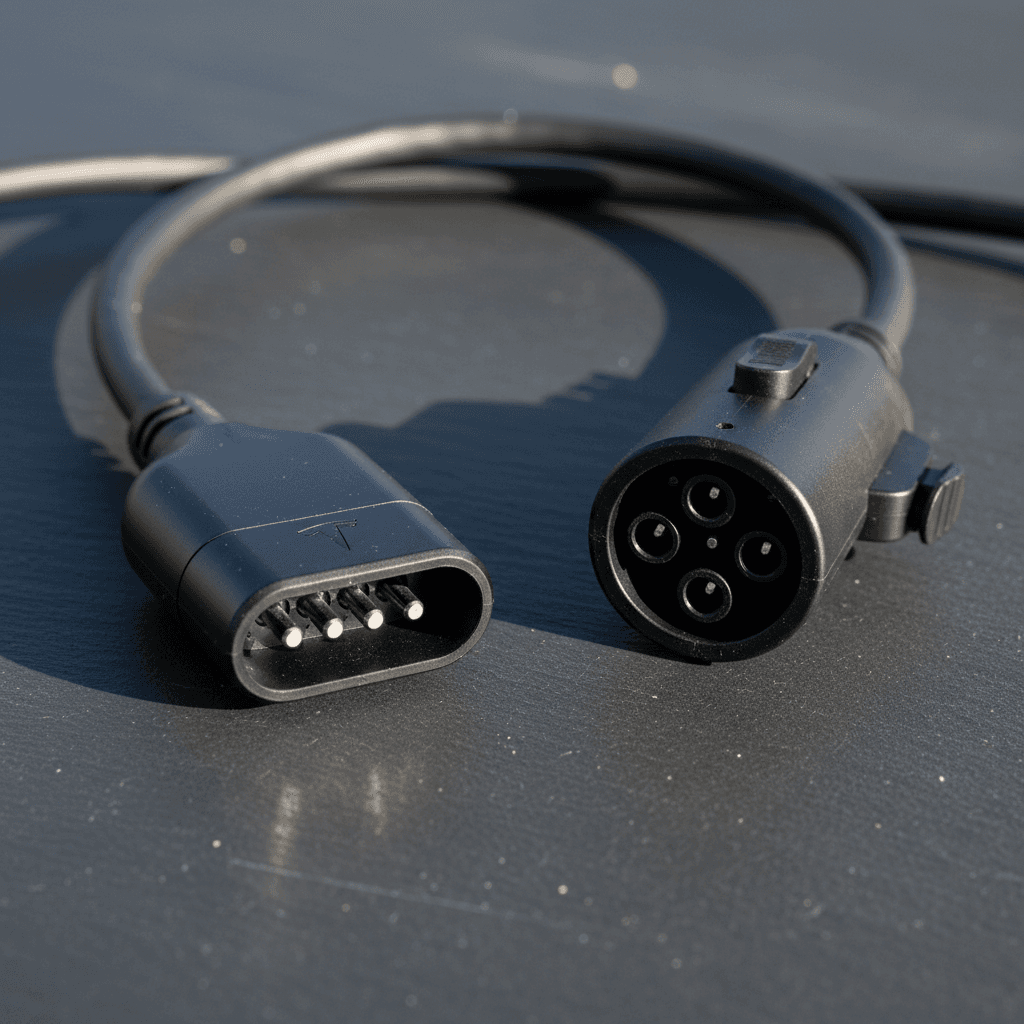
The NACS charging connector is a five‑pin plug originally designed by Tesla and used on every Tesla sold in North America. In 2022, Tesla published the design as the North American Charging Standard and invited other automakers and charging networks to adopt it. SAE International, the same standards body behind the familiar J1772 plug, later formalized it as SAE J3400.
Unlike older systems that use separate or bulkier connectors for DC fast charging, NACS squeezes everything into one compact plug. The same connector your car uses on a 240‑volt home charger can also handle hundreds of kilowatts at a highway fast charger, depending on the vehicle and station.
Think of it like USB‑C
How the NACS connector actually works
You don’t need an EE degree to use NACS, but a little understanding helps you make smarter decisions about outlets, adapters, and future cars.
- Five pins, two big power contacts. The two large pins carry either AC power for home/Level 2 charging or DC power for fast charging. Three smaller pins handle ground and communication between the car and the charger.
- AC charging at home. With a wall connector or 240 V home EVSE, NACS can typically deliver up to about 11–12 kW to most passenger EVs, enough to add dozens of miles of range per hour overnight.
- DC fast charging on the road. On a modern fast charger, the same plug can deliver hundreds of kilowatts. Tesla’s latest Superchargers and other J3400‑equipped stations use the connector for high‑power highway charging.
- Smart communication. NACS uses the same underlying communication protocols as CCS (ISO 15118), which is why automakers can support both standards with the right ports or adapters. That’s also what enables plug‑and‑charge and app‑based billing.
NACS vs CCS vs J1772: what’s the difference?
For years, North American EV drivers had to memorize an alphabet soup of plugs: J1772 for Level 1 and Level 2, CCS1 for DC fast charging, and a separate Tesla connector for everything Tesla. NACS is the attempt to clean this up.
NACS vs CCS1 vs J1772 in plain English
How the three main North American connectors stack up for everyday drivers.
| Connector | What it’s used for | Who uses it | Physical size | Home charging | DC fast charging |
|---|---|---|---|---|---|
| NACS / SAE J3400 | AC Level 1 & 2 + DC fast charging | Tesla plus most new North American EVs from 2025 onward | Small, light, single plug | Yes, native | Yes, native |
| CCS1 | DC fast charging (separate from J1772) | Most non‑Tesla EVs sold before the NACS switch | Large, bulky head with extra pins | Via J1772 inlet or adapter | Yes, native on CCS cars |
| J1772 | AC Level 1 & 2 home/public | Almost all non‑Tesla EVs sold through early‑mid 2020s | Small, but AC‑only | Yes, native on older EVs | No, needs CCS1 for DC |
NACS consolidates what CCS1 and J1772 split apart, while also giving automakers easy access to Tesla’s Supercharger network.
Everyday usability
NACS is noticeably smaller and lighter than CCS1. If you’ve ever wrestled a thick CCS cable in the rain, the NACS handle feels like a smartphone charger by comparison. That user‑friendliness is a big part of why automakers are switching.
Backwards compatibility
Because NACS and CCS share the same communications backbone, it’s relatively straightforward for automakers to support both via adapters. That’s why Ford, GM, Hyundai, and others can give existing CCS‑equipped drivers access to NACS stations without redesigning the entire car.
Which automakers and chargers are switching to NACS?
Once Tesla opened NACS in 2022, the industry response was slow… and then very fast. Starting in 2023, major automakers lined up to adopt the connector so their drivers could tap into the Supercharger network and future J3400 infrastructure.
Automakers moving to NACS
Exact timing varies by brand and model, but the pattern is clear: NACS is no longer just “the Tesla plug.”
Early adopters
Ford and General Motors were first out of the gate, announcing NACS adoption in 2023. New EVs beginning with the 2025 model year start to get NACS inlets, while existing CCS vehicles use adapters to access Superchargers and other J3400 sites.
Hyundai, Kia, Genesis
The Korean trio moved quickly as well. Recent models like the Hyundai Ioniq 5 and Kia EV6 are gaining either factory NACS ports on new model years or OEM adapters for existing owners, letting these 800‑volt cars drink from Superchargers without third‑party hardware.
BMW Group, Mercedes, others
BMW, MINI, Mercedes‑Benz, Nissan, Honda, Toyota/Lexus, Volvo/Polestar, Stellantis brands and more have all outlined plans to transition North American EVs to NACS ports by mid‑decade, again using adapters as a bridge for existing CCS cars.
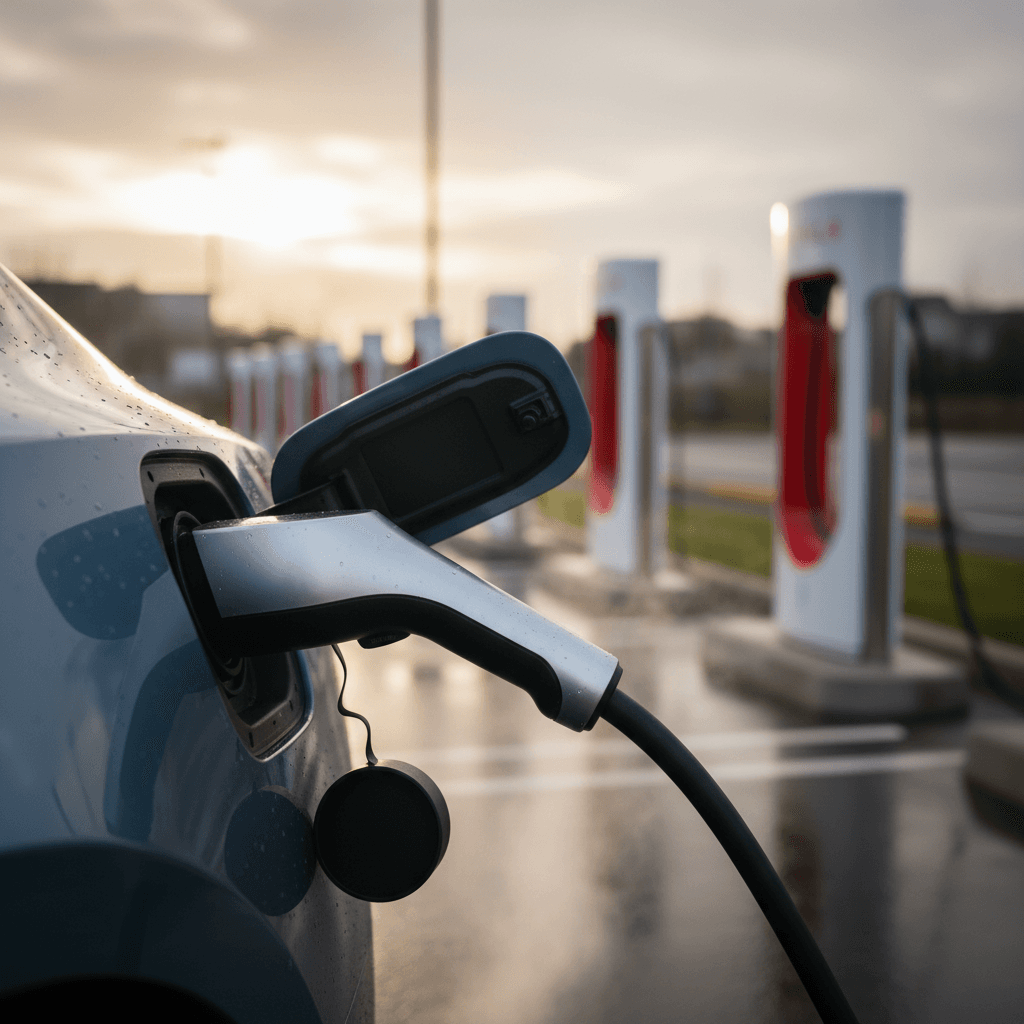
On the infrastructure side, big charging networks like ChargePoint, EVgo, Electrify America and Ionna are adding NACS cables to their fast chargers alongside CCS1. New stations funded by U.S. federal programs are increasingly required to support both CCS and NACS, so you’re going to see the slim Tesla‑style plug almost everywhere you can fast‑charge.
The standards piece
What NACS means for you right now
How much NACS matters today depends on what you already drive, or what you’re thinking about buying. Let’s split it into a few real‑world scenarios.
If this is you, here’s what NACS changes
Short version: no one is getting locked out, but some owners have better short‑term perks than others.
You own a Tesla
Your life doesn’t get more complicated. Your existing Tesla connector is NACS. Over time, more non‑Tesla fast chargers will add NACS cables, so you’re likely to gain options, not lose them.
You own a non‑Tesla with CCS
Check with your automaker: many are offering free or discounted NACS adapters for recent models so you can use Superchargers and other J3400 stations. Until then, you’ll keep using CCS1 for DC fast charging and J1772 (or an included adapter) for Level 2.
You’re shopping used
This is where things get interesting. You’ll want to know which connector the car has, whether the automaker supports NACS access via an adapter, and how soon that support begins. A clean, late‑model CCS car with guaranteed NACS access can be a sweet spot in the market.
Don’t panic‑buy adapters
Future‑proofing your next EV purchase
If you’re cross‑shopping EVs in 2025–2027, the connector conversation isn’t academic. It’s part of the total ownership experience, right up there with battery size and driver‑assist tech.
1. Look beyond the badge to the inlet
Pop open the charge door before you fall in love. A NACS inlet gives you native access to the Supercharger network and other J3400 stations without extra hardware. A CCS inlet isn’t a deal‑breaker, but you’ll want to know the automaker’s timeline and policy for NACS adapters.
2. Consider where you actually charge
If 90% of your charging happens at home on Level 2, the connector type is mostly a road trip question. If you’re an apartment dweller relying on public fast chargers, NACS access can significantly change your quality of life, and your willingness to take spontaneous weekend trips.
This is also where buying a used EV through a specialist matters. At Recharged, every vehicle includes a Recharged Score Report that covers not just battery health and pricing, but also practical charging details, connector type, adapter options, and realistic public charging expectations for that specific model.
Used doesn’t mean outdated
Checklist: questions to ask about NACS on a used EV
NACS questions for your next test drive
1. Which DC fast‑charging port does it have?
Open the charge door and confirm whether the car uses <strong>CCS1</strong> or <strong>NACS</strong>. Some models changed mid‑cycle, so don’t rely on photos from older reviews.
2. Does the automaker provide a NACS adapter?
Ask whether the brand offers an official adapter, whether it’s included, discounted, or full price, and what the expected ship date is for your model year.
3. Is the car eligible for Supercharger access?
Not every legacy EV automatically gets access to Tesla’s network. Check whether your VIN, trim, and software version are supported and if any account setup is required.
4. How fast can this car charge on NACS?
Connector type is only half the story. Ask for the car’s <strong>maximum DC rate</strong> (in kW) and typical time from 10–80% at a fast charger. Many compact EVs will top out well below the station’s headline number.
5. What’s the home charging plan?
Will you plug into a NACS wall connector, a J1772 Level 2 unit with an adapter, or a standard 120 V outlet? Make sure the seller, or your consultant at Recharged, walks you through a realistic home setup.
6. Are there NACS chargers where you actually drive?
Open PlugShare, A Better Routeplanner, or your preferred app and map your commute and favorite weekend routes. Look for a healthy mix of <strong>CCS and NACS sites</strong>, plus Level 2 options near your home base.
NACS charging connector FAQ
Frequently asked questions about the NACS connector
The bottom line on NACS
The NACS charging connector started life as Tesla’s in‑house plug and has quietly become the closest thing North America has to a universal EV port. It’s smaller and easier to use than CCS, flexible enough to handle both home and highway charging, and now backed by formal SAE standards and federal policy.
For you, that doesn’t mean your current EV is suddenly obsolete. It means the charging map is getting simpler. New EVs with NACS ports are rolling out, legacy CCS cars are gaining official adapters, and more stations are installing dual‑standard hardware. The real question isn’t “Which alphabet soup do I prefer?” It’s “Which EV, with which charging story, fits my actual life?”
If you’re sorting through that question on the used market, Recharged exists for exactly this era of transition. From verified battery health to clear explanations of connectors, adapters, and real‑world charging speeds, we help you see past the acronyms and into how an EV will actually live with you, today, and through the NACS decade ahead.