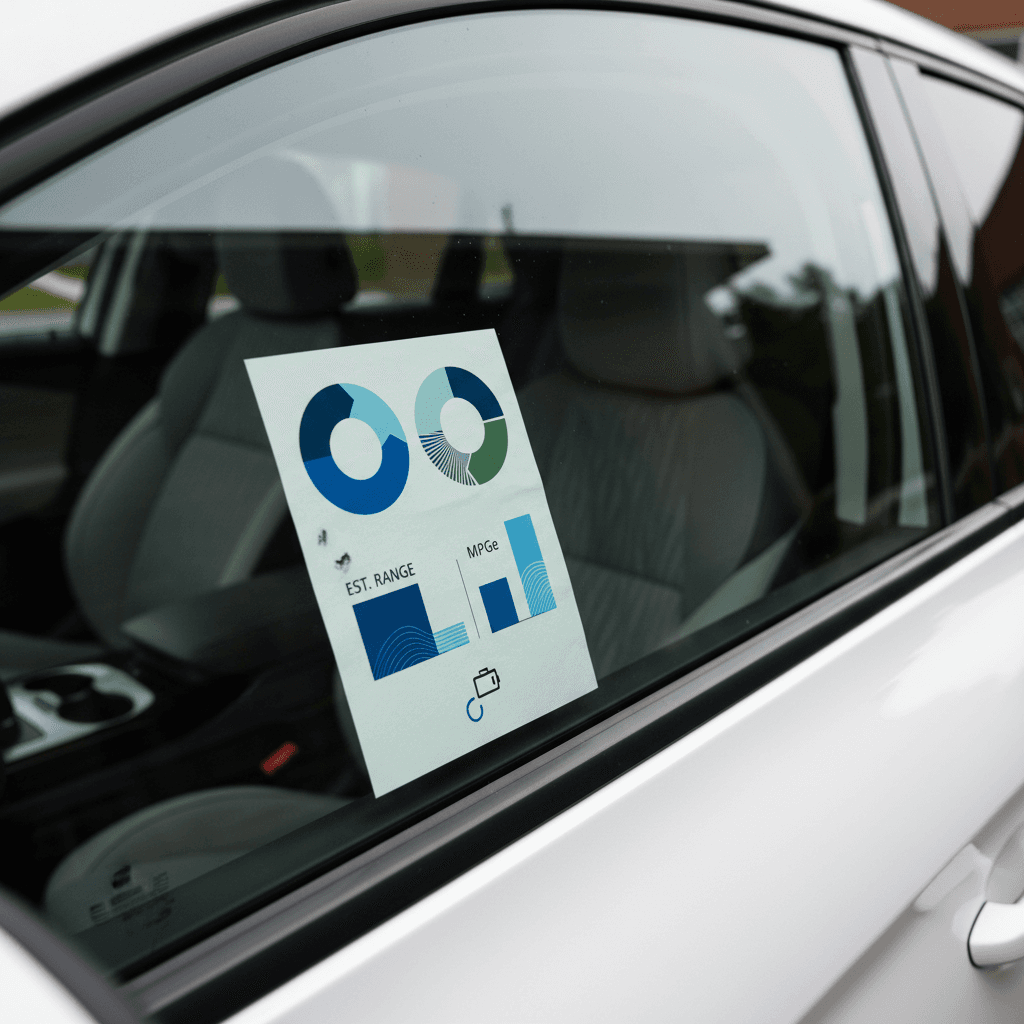
When you shop for an electric car in the U.S., one number jumps out on the window sticker: **EPA-estimated range**. That figure, 250 miles, 310 miles, 360 miles, shapes everything from your daily commute confidence to your road‑trip plans. But what is EPA range for electric cars, how is it tested, and how closely does it match real life?
Quick definition
EPA range for electric cars: the basics
In simple terms, **EPA range** is the **combined city/highway driving distance** an electric vehicle is expected to travel on a full battery under the Environmental Protection Agency’s testing procedures. The number you see on the Monroney (window) sticker is already adjusted to better reflect real‑world driving, and it’s the official benchmark automakers must use when advertising range in the United States.
- It’s **measured in miles** on a full charge.
- It’s **specific to each trim and wheel/tire setup** of a vehicle.
- It’s based on **controlled lab tests on a dynamometer**, not open roads.
- It’s reported as a **single combined number**, even though the EPA also calculates separate city and highway results.
- It’s designed primarily for **apples‑to‑apples comparison**, not as a promise of minimum range.
EPA range ≠ guarantee
How the EPA actually tests EV range
To create a fair comparison across brands, the EPA requires automakers to follow **strict test procedures** on indoor dynos, basically treadmills for cars. There are two main paths: a **single‑cycle test** (city only or highway only, repeated) and a **multi‑cycle test** that mixes several drive cycles and steady‑speed segments. Here’s how it works in practice.
The core drive cycles behind EPA EV range
Standardized patterns that simulate different kinds of driving
City cycle (UDDS)
Low speeds, frequent stops and starts, gentle acceleration. Simulates stop‑and‑go city traffic with speeds up to ~60 mph.
Highway cycle (HWFET)
Higher average speeds and fewer stops. Represents typical U.S. highway driving with cruising and some passing.
Additional cycles
Optional high‑speed, hot‑weather, and cold‑weather tests help the EPA adjust results for aggressive driving and HVAC use.
For a typical **single‑cycle** EV range test, an automaker (or the EPA) will fully charge the battery, then run the car repeatedly over the **city** cycle until the battery is depleted and the car can no longer follow the speed profile. The same process is repeated on the **highway** cycle. The total miles driven until the car is out of usable energy give the raw city and highway ranges.
All on a dyno, not on public roads
From lab test to window sticker: how the number is calculated
The raw city and highway range numbers from the dyno aren’t what you see on the window sticker. They’re adjusted and combined to better match everyday driving. Conceptually, the process looks like this:
How an example EPA range is built
A simplified walk‑through using hypothetical city and highway test results.
| Step | What happens | Example result |
|---|---|---|
| 1. Lab test | Automaker runs city and highway dyno cycles from full to empty. | City: 240 mi, Highway: 200 mi |
| 2. Real‑world adjustment | EPA applies an adjustment factor (often around 0.7) to account for HVAC, temperature, and driving style. | City: 168 mi, Highway: 140 mi |
| 3. City/highway weighting | Adjusted city and highway are combined using a 55% city / 45% highway mix. | (0.55 × 168) + (0.45 × 140) ≈ 155 mi |
| 4. Rounding and label | Result is rounded to the nearest whole mile and printed as “EPA‑estimated range.” | Official EPA combined range: 155 miles |
Note: These numbers are for illustration only, but they mirror the EPA’s adjustment and weighting approach.
Don’t ignore MPGe and kWh/100 mi
What the EPA range label tells you at a glance
EPA range vs real‑world range
Even with those adjustments, **most EVs don’t hit their EPA range every day**. Road tests and owner data often show **10–25% lower real‑world range**, especially at high speeds or in extreme weather. That doesn’t mean the label is wrong; it means your conditions differ from the test assumptions.
Main factors that reduce real‑world EV range
- Higher speeds: Aerodynamic drag climbs quickly above 65–70 mph.
- Cold weather: Batteries and cabin heaters both hurt efficiency.
- Very hot weather: Heavy A/C use draws significant power.
- Hilly routes: Climbing grades eats energy faster than flat terrain.
- Heavy loads: Extra passengers or cargo add weight.
- Aggressive driving: Hard acceleration and braking burn extra kWh.
When you might beat EPA range
- Moderate speeds: Steady 45–55 mph on flat roads.
- Mild temperatures: Around 60–75°F with little HVAC use.
- Eco modes: Softer acceleration and reduced climate output.
- Good route planning: Using regen on downhills, avoiding congestion.
On an ideal day, some efficient EVs can **match or slightly exceed** their EPA ratings. Treat that as a bonus, not the expectation.
Cold weather is the biggest wildcard
EPA range vs WLTP and other test cycles
If you read about EVs in Europe or elsewhere, you’ll see different test labels like **WLTP** (Worldwide harmonized Light vehicles Test Procedure) or, on older European models, **NEDC**. These are similar lab procedures with different assumptions and drive cycles, and their numbers often look **higher** than EPA range for the same car.
How EPA compares to WLTP and other range standards
Same car, different test assumptions
EPA (U.S.)
Generally considered **more conservative** and closer to typical highway use in North America. Uses city/highway cycles, real‑world adjustments, and a 55/45 weighting.
WLTP (Europe)
Often yields **10–20% higher range** than EPA for the same EV. Mixes more moderate speeds and less sustained high‑speed driving than many U.S. highway trips.
Other cycles
Legacy tests like NEDC tended to be **overly optimistic**. For used imports, always look up the EPA figure if you’ll be driving mostly in the U.S.
For U.S. buyers, prioritize the EPA number
How to use EPA range when shopping for a new or used EV
Once you understand what EPA range is, and isn’t, you can use it as a powerful tool instead of a marketing headline. The goal is to translate that lab number into **your reality**: your commute, your climate, and your charging options.
Turning EPA range into real‑world expectations
1. Start with your worst‑case day
Look at your **longest regular round‑trip** (commute plus errands, kids’ activities, etc.). Multiply it by 1.5 to leave headroom for detours and weather. That’s your minimum **real‑world** target.
2. Add a buffer for your climate
If you live with harsh winters or very hot summers, assume you’ll see **15–30% below** the EPA figure at times. In milder climates, 10–15% is usually a reasonable buffer.
3. Compare trims and wheel sizes
Bigger wheels and stickier tires often **cut EPA range**. When you see different ratings for the same model, check the fine print: wheel size, performance trim, and aero packages all matter.
4. Look at efficiency, not just range
Two EVs with 300 miles of EPA range can use very different amounts of energy. Compare **kWh/100 mi and MPGe** to understand ongoing energy costs, especially if electricity rates are high where you live.
5. Consider your charging plan
If you’ll **charge at home every night**, you may be comfortable with less EPA range. If you rely heavily on public charging, or have long, rural routes, aim for a larger buffer above your daily needs.
6. For used EVs, think “EPA minus battery age”
EPA range is based on a **new battery**. On a used EV, it’s a reference point, not today’s reality. You’ll want a way to verify actual battery health before you buy.
Used EVs: battery health, EPA range, and what really matters
EPA range tells you what a car could do **when its battery was new**. For a used EV, the more important question is: **how much capacity does the battery still have today?** That’s what determines how close you’ll get to the original EPA rating.
EPA range is the starting line, not the finish line
What affects EV battery health over time
- Total miles and charge cycles: More use means more wear.
- Frequent DC fast charging: High‑power charging generates heat that can accelerate degradation.
- Extreme climates: Hot environments are especially tough on batteries.
- Storage at high charge: Sitting for long periods at 100% isn’t ideal long‑term.
How Recharged helps you see beyond the EPA label
Every EV sold through Recharged comes with a detailed Recharged Score Report that includes verified battery health diagnostics. Instead of guessing how far a used EV will go compared with its original EPA rating, you see:
- Measured usable capacity vs. original spec.
- Estimated real‑world range based on that capacity.
- Charging history insights where available.
That transparency makes it easier to decide whether a 4‑year‑old EV still meets your range needs today.
Driving tips to get closer to your EPA range
You can’t control the EPA test cycle, but you can control how you drive. Small changes in behavior can noticeably close the gap between **EPA‑rated range** and your daily experience.
- Use **Eco mode** when you don’t need maximum performance, this softens acceleration and can reduce climate draw.
- On highways, hold **65–70 mph instead of 75–80** whenever traffic allows; aerodynamic drag climbs quickly with speed.
- Pre‑condition the cabin while the car is still plugged in so heating or cooling draws from the grid, not the battery.
- Take advantage of **regenerative braking** by coasting early and letting regen slow the car instead of hard friction braking.
- Keep tires properly inflated and remove unnecessary cargo; weight and rolling resistance add up over time.
- In extreme cold, bundle up a bit and favor **seat and steering‑wheel heaters** over blasting hot air, which is energy‑intensive.
Focus on consistency, not perfection
Frequently asked questions about EPA range for EVs
Common questions about EPA range for electric cars
The bottom line: how much trust to put in EPA range
EPA range for electric cars is a **useful but imperfect yardstick**. It’s the best way to compare models on an even playing field, but it isn’t a promise that your car will always deliver that number. Real‑world conditions, speed, temperature, terrain, driving style, and battery age, will push your actual range up or down around the label value.
If you treat EPA range as a **starting point**, then adjust for your climate and driving habits, you’ll make smarter choices, especially in the used market, where battery health matters as much as the original spec sheet. That’s where a transparent, data‑driven platform like Recharged can help, pairing official EPA ratings with **verified battery diagnostics, fair pricing, financing options, trade‑in support, and nationwide delivery** so you know exactly what you’re getting before you ever click “buy.”