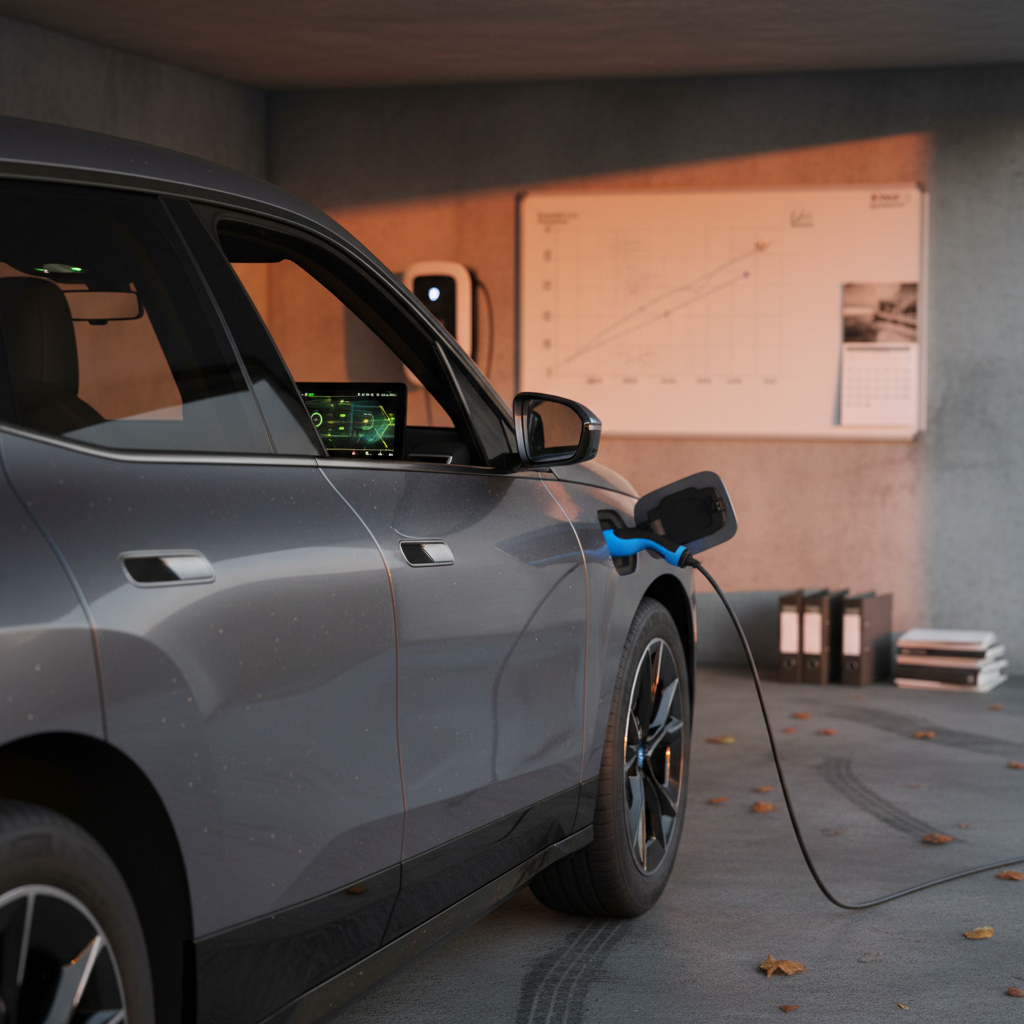
If you’re thinking about an electric car, you’ve probably wondered: what happens to electric car batteries when they’re “used up”? Do they all end up in landfills? Do they suddenly die at 100,000 miles? Or can they be recycled and reused? The short answer: modern EV batteries usually last much longer than most people think, and when they’re done moving cars, they still have value as energy storage and as raw materials.
Big picture
How long electric car batteries really last
Most automakers design EV packs to last the life of the car. In the real world, today’s lithium‑ion batteries typically last 10–15 years in a vehicle, depending on climate, mileage, and how they’re charged. Many EVs sold in the early 2010s are still running on their original packs with reduced, but usable, range.
- Most brands warranty the battery for 8 years or around 100,000–150,000 miles against excessive degradation.
- Manufacturers generally consider a pack at the end of its automotive life when usable capacity falls to about 70% of original.
- Degradation is usually gradual: a few percent in the first couple of years, then a slow taper rather than a sudden failure.
How to help your battery last longer
EV battery life and recycling by the numbers
When an EV battery stops being a good car battery
EV batteries don’t suddenly fail when they reach “end of life.” What really happens is the range and peak power slowly shrink until the pack is no longer a good fit for life in a car. You may notice more frequent fast‑charging stops, slower DC charging, or reduced acceleration at low state of charge.
How EV batteries age over time
Same pack, different roles as it loses capacity
New (90–100% capacity)
Full rated range and performance.
- Ideal for long commutes
- Strong fast‑charging performance
- Battery management system keeps cells well‑balanced
Middle age (75–90%)
Range shrinks modestly but car still feels normal.
- Great for daily driving
- Most road trips still easy with charging stops
- Often where used EVs sit today
Retired from driving (~70%)
Range too short for many drivers.
- Perfect for home or commercial storage
- Gentler charge/discharge cycles
- Can provide 5–10 more years of useful work
Not all “end of life” batteries are worn out
The three main paths for used EV batteries
When an electric car is no longer on the road, its battery usually goes down one of three paths. The exact route depends on its condition, age, and where it is in the world, but the pattern is the same whether we’re talking about a Tesla, a Nissan LEAF, or a Chevy Bolt.
- Stay in the car longer – Many EVs simply keep driving with reduced range until the car itself reaches end of life. The pack might be repaired at the module level along the way.
- Second‑life use – Packs with enough health left are repurposed for stationary storage or other lower‑stress jobs.
- Recycling – Packs that are too degraded or damaged are dismantled and processed to recover raw materials such as lithium, nickel, cobalt, copper, and aluminum.
1. Staying in the car
For a lot of owners, especially those with shorter commutes, a battery at 75% of its original capacity is still perfectly usable. A car that started with 250 miles of range might still deliver ~185 miles, which is plenty for many households.
Automakers can also perform module‑level repairs, replacing faulty sections rather than the entire pack. That keeps cars on the road longer and delays recycling.
2. Second life & 3. Recycling
Once a pack isn’t a good fit for a car, specialists decide whether it’s a candidate for second‑life use or should go straight to recycling. That decision hinges on three things:
- Remaining capacity and power output
- Cell chemistry and pack design
- Any damage from crashes, water, or abuse
Good packs get a second act; bad ones become feedstock for the recycling industry.
Second life: what happens before recycling
Before anyone melts anything down, companies look for ways to reuse EV batteries in less demanding roles. Stationary storage doesn’t care about weight, instant acceleration, or freezing‑cold launches onto the freeway. It just needs safe, reliable charge and discharge over many hours.
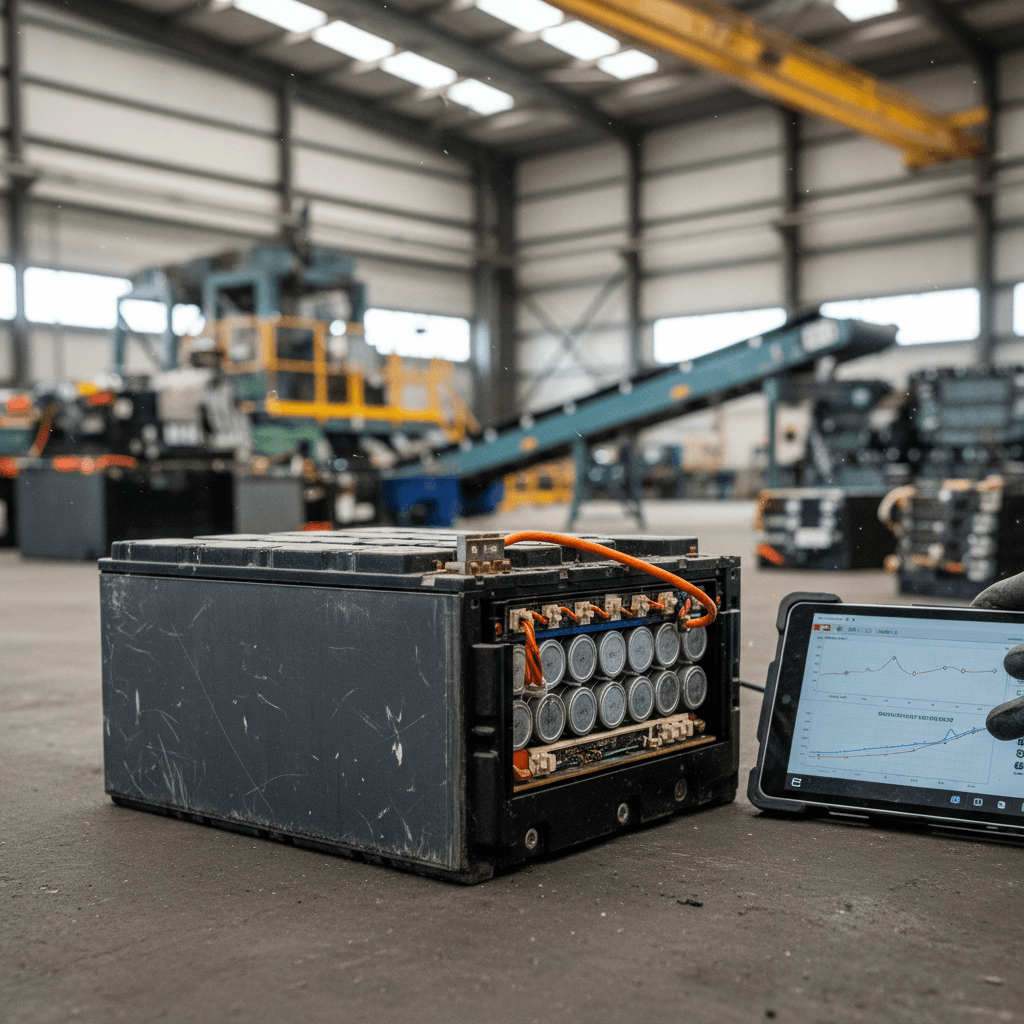
Common second‑life uses for EV batteries
Where “retired” car packs go to work next
Home energy storage
Used packs or modules are built into battery cabinets that pair with rooftop solar or off‑peak charging. They store cheap or clean energy and discharge when grid prices spike or the lights go out.
Commercial & grid storage
Large banks of second‑life batteries help stabilize the grid, shave peaks for factories, or provide backup power for data centers and other critical loads.
Mobile and specialty power
Second‑life packs can power mobile EV chargers, event stages, construction sites, or remote telecom equipment where running new lines would be expensive.
Why second life matters
“End-of-life for a battery in a vehicle is rarely the end of its usefulness. It’s the start of a new role, usually one that’s gentler, longer, and just as important for the energy transition.”
How EV battery recycling actually works
When a pack really is done, or isn’t safe to reuse, it heads to a recycling facility. This is where the phrase “urban mining” comes to life. Instead of digging new ore out of the ground, recyclers pull high‑value metals back out of used batteries.
Inside an EV battery recycling plant
The basic steps recyclers use to turn old packs into new raw materials.
| Step | What happens | Goal |
|---|---|---|
| Collection & transport | Packs arrive from dealers, scrap yards, fleets, and refurbishers. | Gather enough volume to recycle efficiently and safely. |
| Discharge & disassembly | Packs are fully discharged, opened, and broken down into modules and cells. | Make components safe to handle and sort by chemistry and format. |
| Shredding | Cells are shredded in controlled conditions to create a granulated mix. | Expose the internal materials for separation. |
| Separation | Mechanical and chemical processes separate plastics, metals, and “black mass.” | Recover aluminum, copper, steel, and concentrate active battery materials. |
| Refining | Hydrometallurgy or similar processes extract lithium, nickel, cobalt, and other metals. | Produce battery‑grade materials ready for new cathodes and anodes. |
Processes vary by company and chemistry, but most follow a version of this flow.
How much can actually be recovered?
Why proper recycling beats landfill every time
Keeps hazardous materials out of landfills
Lithium‑ion batteries can cause fires and contain materials that don’t belong in household trash. Proper collection and recycling keeps communities safer.
Reduces the need for new mining
Recovering metals from used packs cuts demand for new mines, which are often energy‑ and water‑intensive and can have serious local impacts.
Supports domestic supply chains
In the U.S., battery recycling is becoming a key source of home‑grown lithium, nickel, and cobalt, important for both EV affordability and energy security.
Improves long‑term EV sustainability
When batteries loop back into new batteries, EVs get cleaner over their full life, not just at the tailpipe.
Don’t throw EV batteries in the trash
What happens to batteries in salvage and totaled EVs
Not every battery reaches end of life because it’s old. A lot of EVs are written off by insurance after a crash, flood, or fire, even if the pack itself is relatively fresh. Those batteries have become hot property at salvage auctions because they’re powerful, compact energy systems looking for a second job.
Paths for batteries from totaled EVs
From wrecking yard to second life or recycling line
Inspection & testing
Specialists inspect packs for structural damage and water intrusion, then run electrical tests and diagnostics to see what’s salvageable.
Module harvesting
Good modules are extracted and re‑configured into new packs for solar storage, off‑grid power, or backup systems.
Recycling for damaged packs
Packs that are unsafe or uneconomical to repair are discharged and sent straight to large recycling facilities for material recovery.
This salvage pipeline is also where a lot of the early supply for second‑life projects comes from. EVs built in the last few years tend to have modern chemistries and relatively light wear, which makes their packs attractive for reuse once the vehicle itself is beyond repair.
What all of this means if you’re buying a used EV
If you’re shopping for a used electric car, all this talk about second life and recycling isn’t just theory. It directly affects how confident you can feel about the battery, long‑term running costs, and the car’s future value.
Used EV battery checklist
Check the warranty status
Most EVs have an 8‑year battery warranty. Knowing how much time and mileage is left can tell you a lot about your risk profile.
Look at the real‑world range
Take a proper test drive and note displayed range at a given state of charge. Compare that to the car’s original EPA rating to get a feel for degradation.
Ask for a battery health report
Tools like the <strong>Recharged Score</strong> use specialized diagnostics to measure battery state of health, not just guess from the dash display.
Review fast‑charging history
Heavy DC fast‑charging isn’t automatically bad, but a car that’s lived on road trips and superfast chargers will typically have more wear than one charged mostly at home.
Inspect for crash or flood history
A clean title and solid service history make it more likely the pack has lived an easy life. Salvage or flood titles call for deeper inspection.
How Recharged fits into this picture
Resale value & peace of mind
A healthy battery with documented diagnostics makes a used EV easier to sell and more valuable. Buyers want proof that the pack has plenty of life left, and that’s exactly what robust testing provides.
If you buy from a marketplace like Recharged, you also get transparent pricing and the option to finance or trade‑in your current vehicle, making the whole transition smoother.
End of life down the road
Even if you keep the car until the pack is tired, you’re not stuck with a giant dead battery in your driveway. Automakers, recyclers, and second‑life specialists all want that pack because of the value locked inside.
In other words, owning an EV doesn’t mean signing up for a future disposal headache. The ecosystem around these batteries is growing fast, and that’s good news for you as an owner.
The future of EV batteries and waste
We’re still in the early innings of EV battery reuse and recycling, but the direction of travel is clear: more recovery, more local supply, and less true “waste.” As the first big waves of EVs hit end of life over the next decade, the infrastructure to handle their packs is scaling up with them.
- Recycling companies are building massive new facilities in North America and Europe, aiming to supply a significant share of the metals new batteries will need by the 2030s.
- Governments are tightening rules on how industrial batteries are tracked, collected, and recycled, pushing manufacturers toward circular designs.
- Battery chemistries are evolving, with more cobalt‑lean or cobalt‑free designs that are cheaper, longer‑lasting, and easier to recycle.
- Data and diagnostics are improving, making it easier to judge whether a used pack should be reused, repaired, or recycled on a cell‑by‑cell basis.
Why this should reassure you
EV battery end‑of‑life FAQ
Frequently asked questions about what happens to EV batteries
So what happens to electric car batteries? They don’t simply “die” and they don’t vanish into landfills. They gradually trade peak performance for staying power, move from cars into homes and grids, and ultimately get turned back into the ingredients for the next generation of EVs. If you’re considering a used electric vehicle, understanding that journey, and having transparent battery health data in hand, can turn a big unknown into a manageable, even reassuring, part of the ownership story. That’s exactly why Recharged puts verified battery diagnostics at the center of every EV we sell.