Yes, you can sleep in a Chevrolet Bolt EUV, and many owners already do. The Bolt EUV’s nearly flat load floor, split‑folding rear seats, and efficient electric drivetrain make it a surprisingly capable micro‑camper for road trips, festival weekends, or quick overnight stops. But comfort depends on your height, your setup, and how much you’re willing to customize.
Quick answer
Can you actually sleep in a Chevy Bolt EUV?
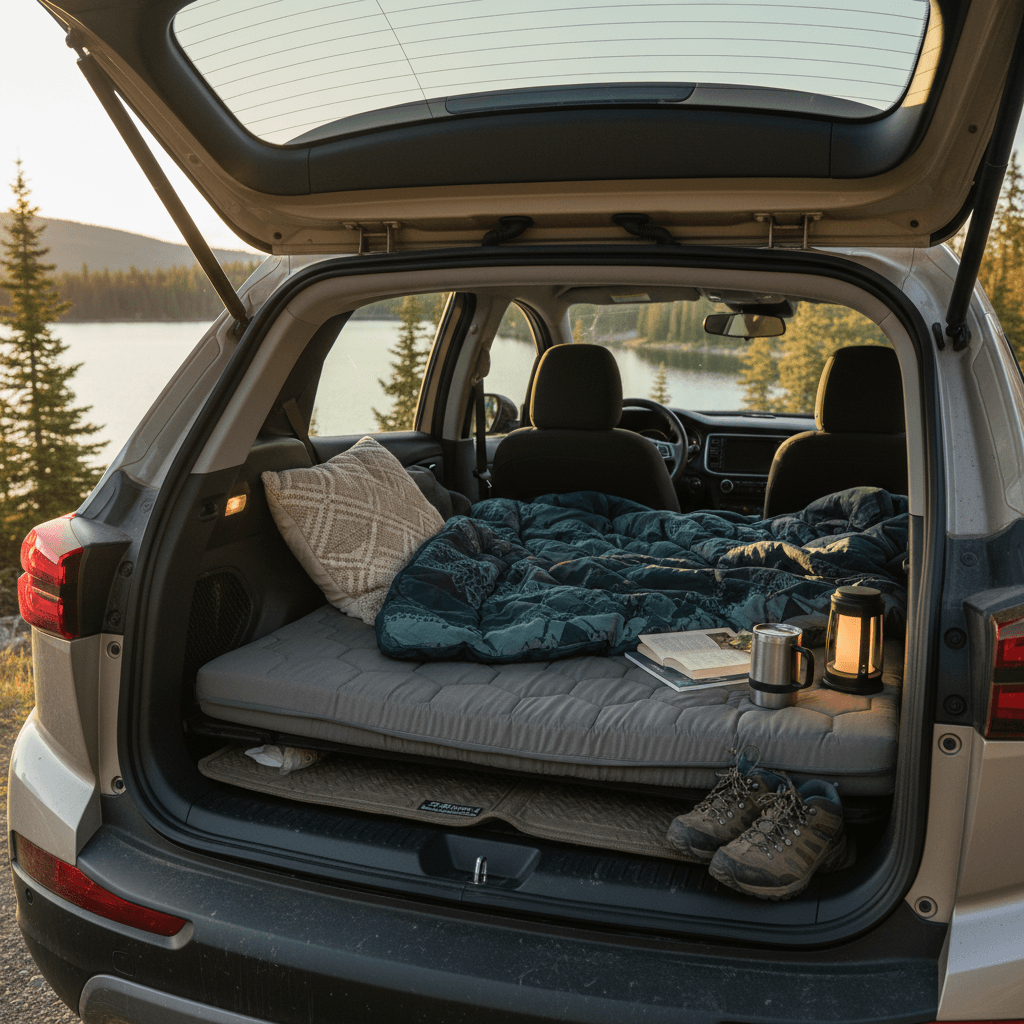
From a practical standpoint, the Chevrolet Bolt EUV is **sleep‑able**, not spacious. Think minimalist micro‑RV, not full‑size SUV. Owners commonly use it for: - Solo road trips where hotels are optional - One‑night stops at trailheads or ski areas - Working overnights or naps between shifts - Festival or event camping where space is limited If you’re expecting to stand up inside, cook elaborate meals, and seat four while leaving a bed permanently set up, the Bolt EUV will feel cramped. If you just want a **flat-enough space to lie down with climate control and locked doors**, it can work very well.
Important fit reality
Bolt EUV cargo space & dimensions for sleeping
Chevy Bolt EUV interior basics for sleeping
On paper, the Bolt EUV offers **16.3 cubic feet of cargo space with the rear seats up and about 56.9 cubic feet with them folded**. That’s similar to many small crossovers. The key for sleeping, though, is shape and usable length, not just volume.
- With the 60/40 rear seatbacks folded, the **load floor is nearly flat**, especially if your car has the adjustable cargo floor insert in the higher (flush) position.
- Measured at the cargo floor, owners typically report around **58–60 inches** from the hatch to the back of the front seats in a normal driving position, and a bit more if you slide a front seat forward.
- Real‑world width between the wheel arches is around **39 inches**, widening toward the hatch opening. That’s enough for many **narrow twin or 25–26" backpacking mattresses**.
Check your own dimensions
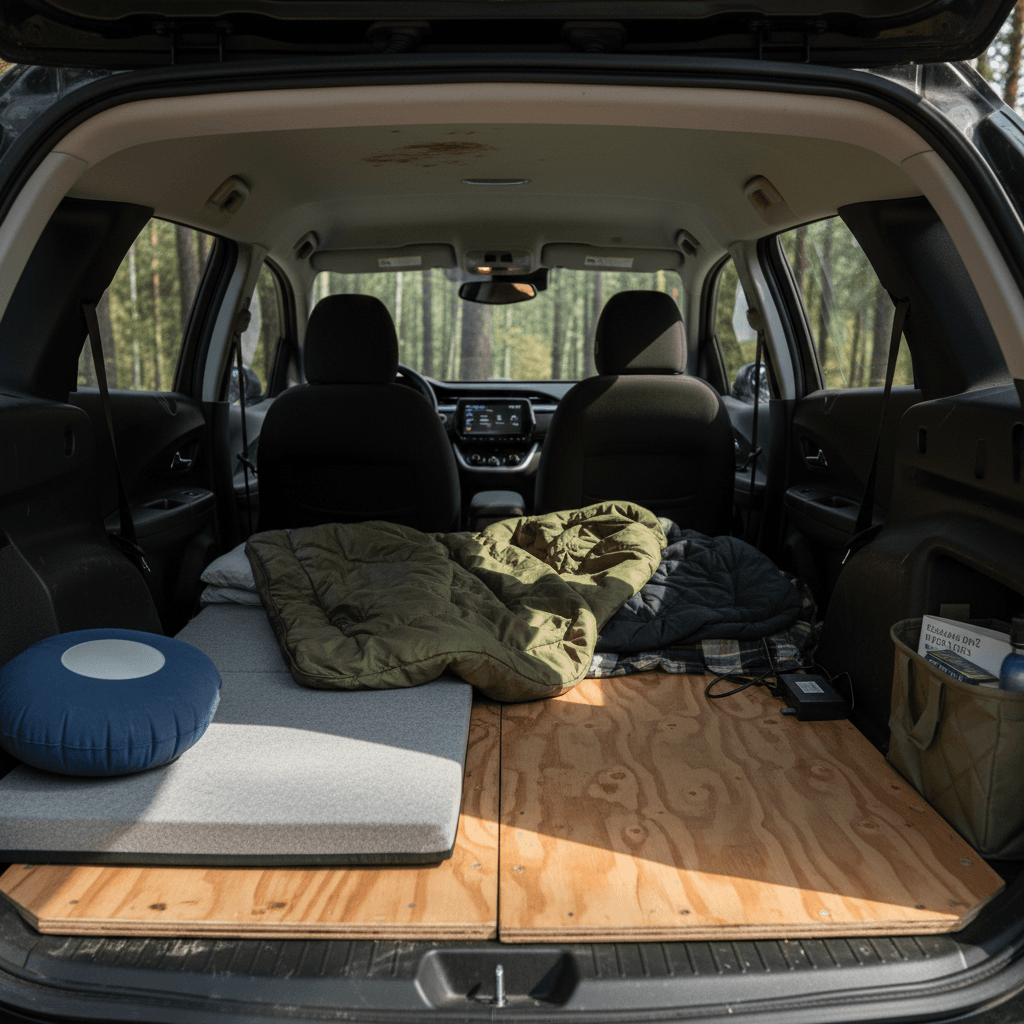
Best sleeping setups in a Bolt EUV
Three common Bolt EUV sleeping layouts
Pick the setup that matches how often, and how long, you plan to sleep in your car.
1. Simple pad on folded seats
Best for: Occasional overnights, lowest effort.
- Fold rear seats flat.
- Lay down a foam or inflatable camping pad.
- Store luggage up front or under the pad.
Fast and cheap, but you’ll feel the seat contours unless you use a thick pad.
2. Low sleeping platform
Best for: Frequent trips, better comfort.
- Build a simple plywood platform that spans from hatch to back of front seats.
- Use storage bins underneath for gear.
- Top with a folding foam mattress.
More work up front, but gives a flat, consistent surface.
3. Passenger-seat extension
Best for: Taller drivers.
- Slide front passenger seat forward and remove headrest.
- Recline it to align with rear seatback.
- Use a segmented mattress bridging rear area to the reclined seat.
Gains precious inches of legroom if you’re over ~5'10".
Solo sleeper setup
For one person, the Bolt EUV works best with your head near the hatch and feet toward the front. That lets you crack front windows slightly for ventilation, keep essentials (water, phone, light) near your feet, and still access the cargo area from outside.
A **24–26 inch wide backpacking mattress or narrow twin tri‑fold foam pad** usually fits the space well without bunching up on the wheel arches.
Two adults: possible, but snug
Two smaller adults can sleep side‑by‑side if you’re comfortable being close and okay with slightly bent knees. Use:
- A full‑width custom foam cut to about the width between the trim panels.
- Low‑profile pillows so your heads don’t hit the hatch or seatbacks.
It’s fine for occasional nights, but most people wouldn’t want it as a full‑time living arrangement.
Comfort tips: mattresses, storage, and privacy
Dialing in comfort in your Bolt EUV micro‑camper
1. Choose the right mattress thickness
A 3–4" high‑density foam or quality inflatable mattress smooths over the seat hinges and cargo floor steps. Thinner pads work, but you’ll feel the seat split after a few hours.
2. Level the floor
If your Bolt EUV has the adjustable cargo floor, use the higher (flush) setting for a flatter surface. You can also shim low spots with yoga mats or folded blankets under the mattress.
3. Use under‑bed storage
Shallow plastic bins or soft duffels under your platform keep gear organized and free up legroom. Just be sure not to stack bins high enough to press into the mattress.
4. Add window covers for privacy
Reflectix cutouts or purpose‑built magnetic window shades add privacy, keep light out, and improve temperature control. They also help hide valuables when you’re away from the car.
5. Keep essentials within arm’s reach
Before you turn in, stage water, snacks, a flashlight or headlamp, phone, and a portable battery pack where you can reach them without climbing over gear.
6. Plan your morning exit
Sleeping with your head by the hatch makes it easier to crack the rear door for air or exit quickly. Just remember some parking garages and residential areas won’t love you hanging out the back.
EV vs gas car: comfort advantage
Using climate control while you sleep
One of the biggest perks of sleeping in an EV is safe, quiet climate control. The Bolt EUV doesn’t have a formal “camp mode” like some Teslas, but you can keep the cabin comfortable overnight if you plan around the controls and your state of charge.
- Set the **parking brake** and put the car in Park before you get comfortable.
- Use **"Auto" climate control** and set a reasonable temperature (e.g., 68–72°F).
- Expect the car to cycle the high‑voltage system on and off as needed to maintain temperature. You’ll hear occasional fans or pumps, but it’s far quieter than a gasoline engine.
- In mild weather, running climate control overnight may only use **a small fraction of your battery**. Very hot or very cold conditions will use more, plan extra buffer into your route.
Don’t underestimate winter energy use
Safety and legal considerations
- **Legality varies by location.** Some cities and states restrict or ban overnight car camping in certain parking lots, rest areas, or streets. Look for posted signs and check local rules before settling in.
- **Use common‑sense security.** Lock your doors, keep valuables out of sight, and avoid isolated spots that feel sketchy. Well‑lit truck stops, highway rest areas, or 24‑hour stores are often better than deserted pullouts.
- **Ventilation matters.** Even in an EV, crack a window slightly or use vent shades to reduce condensation. You don’t need to worry about carbon monoxide in the same way as a gas vehicle, but stale, humid air is uncomfortable.
- **Respect private property.** Some businesses (including big box stores) allow overnight parking; others don’t. When in doubt, ask a manager or choose a public rest area or campground instead.
Know your local rules
Pros and cons of sleeping in a Chevy Bolt EUV
Chevy Bolt EUV as a micro‑camper: pros vs. cons
How the Bolt EUV stacks up as an ultra‑compact camper platform.
| Pros | Cons |
|---|---|
| Very efficient overnight climate control | Tight for two adults on a regular basis |
| Nearly flat load floor with seats folded | Limited overall length for anyone much over 6 ft |
| Easy to park in cities and crowded trailheads | No built‑in "camp mode" or bed kit from the factory |
| Low running costs vs. hotels or Airbnbs | Cargo space drops quickly once you add a full bed setup |
| Quiet, no engine idling or fumes | You must manage battery state of charge carefully on colder nights |
For the right kind of traveler, the Bolt EUV delivers quiet, efficient overnights, but space is the limiting factor.
How car camping affects range and battery health
Short answer: **occasional sleeping in your Bolt EUV won’t hurt the battery** if you treat state of charge reasonably. The car is designed to run climate systems off the high‑voltage pack for hours at a time.
- Expect **some range loss overnight** from climate control and accessories. In moderate weather, that could be roughly comparable to driving a small leg of your trip; in extreme heat or cold, it will be more.
- Avoid arriving at camp with **single‑digit state of charge**. Give yourself extra buffer so you’re not forced into an emergency fast‑charge first thing in the morning.
- Long‑term battery health is more sensitive to **very high or very low state of charge** and extreme temperatures than to occasional overnight use. Try to camp with the pack somewhere in the middle (for example, 30–80%).
- If you’re shopping used, a professional **battery health assessment**, like the Recharged Score, can tell you how much usable capacity the car still has, valuable if you plan to stack driving plus climate‑heavy nights into your trips.
Range‑planning rule of thumb
Shopping for a used Bolt EUV for camping
If you’re eyeing a used Chevrolet Bolt EUV specifically with car‑camping in mind, you’ll want to look beyond color and trim. Focus on the details that impact comfort, range, and everyday usability.
What to check on a used Bolt EUV if you plan to sleep in it
These details matter more once your car is also your bedroom.
Interior & cargo layout
- Verify the 60/40 rear seats fold properly and latch securely.
- Check if the car has the adjustable cargo floor; it makes the sleeping surface flatter.
- Look for worn or sagging seatbacks if you’ll be laying directly on them.
Battery health & range
- Ask about real‑world highway range at 70 mph.
- Review charge history if available (DC fast vs. home charging).
- On Recharged, the Recharged Score battery health report shows remaining capacity, so you know what kind of trip lengths and climate usage you can realistically support.
Climate & charging hardware
- Test AC and heat to be sure they ramp up quickly and quietly.
- Confirm the included charge cable and any adapters you’ll rely on while traveling.
- Check for software updates that may improve efficiency or climate behavior.
Buying through a marketplace focused on used EVs, like Recharged, also simplifies the process. Every vehicle includes a verified **battery health report**, transparent pricing, and EV‑savvy guidance, useful if you’re trying to match a specific camping or road‑trip use case to the right car.
FAQ: Sleeping in a Chevrolet Bolt EUV
Frequently asked questions about Bolt EUV car camping
Bottom line: Is the Bolt EUV good to sleep in?
If your priority is a compact, efficient EV that can **double as a bedroom when you need it to**, the Chevrolet Bolt EUV is a solid choice. It won’t replace a van or full‑size SUV for spacious camping, but with a thoughtful mattress or platform, window covers, and a bit of planning around range, it delivers quiet, climate‑controlled nights almost anywhere you can park.
For drivers considering a used Bolt EUV, especially for road trips or stealthy overnight stops, it’s worth pairing these fit and comfort questions with a close look at battery health and real‑world range. That’s exactly what Recharged was built to simplify, every car comes with a detailed battery report, transparent pricing, and EV‑savvy support so you can choose the right vehicle for both your weekday commute and your weekend micro‑adventures.