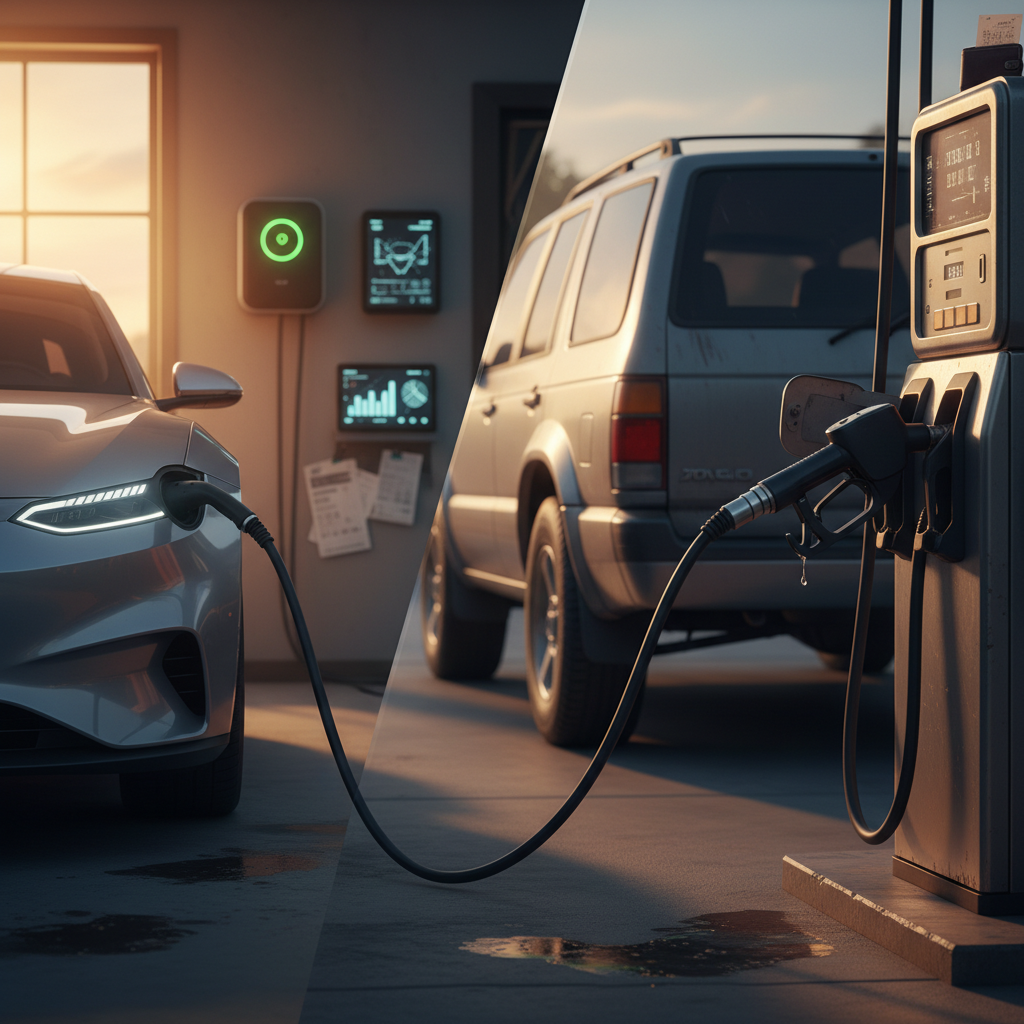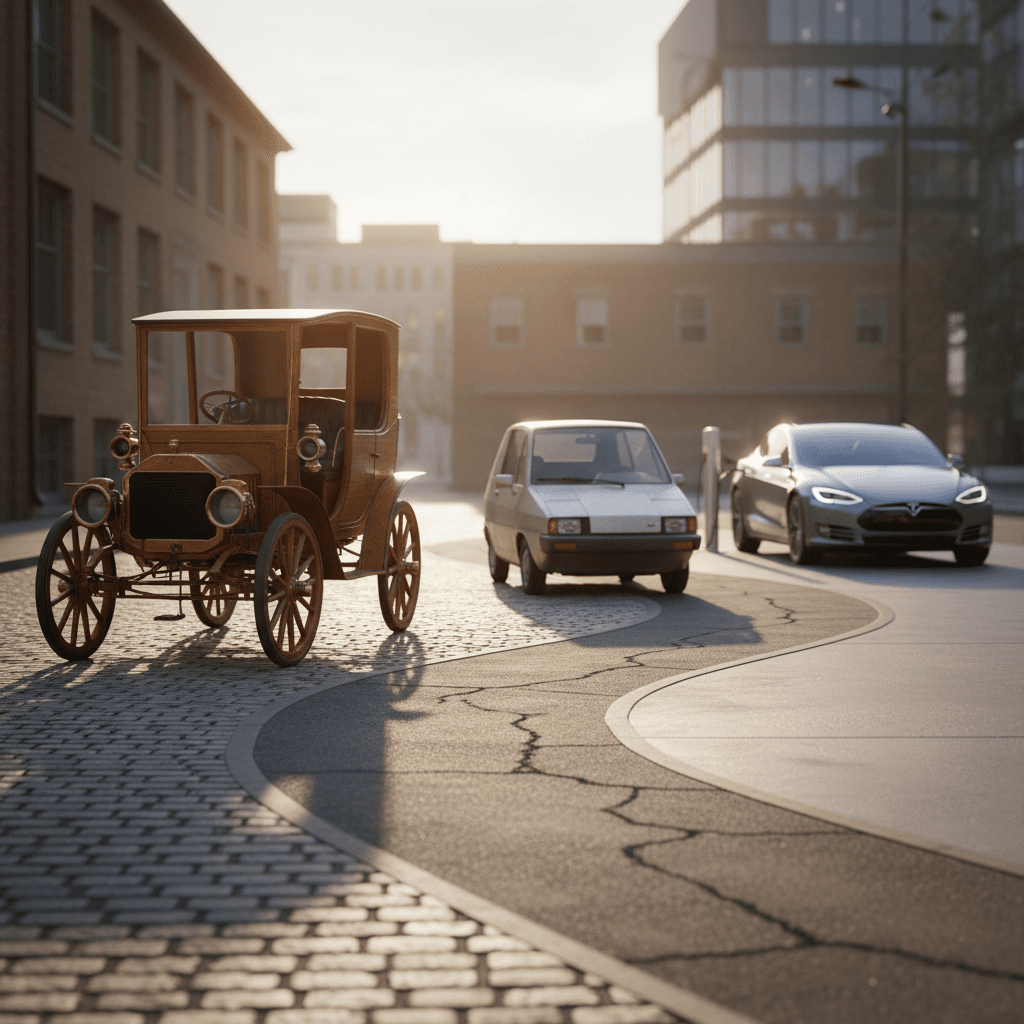
If you only started paying attention to electric vehicles in the last decade, it’s easy to assume Tesla invented the electric car. After all, Tesla’s Roadster and Model S made EVs fast, desirable, and newsworthy. But was Tesla the first electric car? Not even close. Electric cars have been around for well over a century, long before Elon Musk, lithium‑ion batteries, or even modern highways.
Key takeaway
Short answer: Was Tesla the first electric car?
No. Tesla was not the first electric car, the first electric car company, or even the first modern electric car. The first practical electric vehicles appeared in the late 1800s, and by the early 1900s, brands like Detroit Electric and Baker Electric were selling EVs with real customers, particularly in U.S. cities.
- Experimental electric carriages appeared as early as the 1830s–1840s.
- By the 1890s, electric taxis operated in cities like London and New York.
- Around 1900, electric cars made up a significant share of U.S. automobiles, competing directly with steam and gasoline.
- Companies like Detroit Electric (founded 1907) sold thousands of EVs, mainly to urban drivers.
How Tesla fits in
Who actually built the first electric car?
There’s no single, tidy answer to who built the absolute "first" electric car. Several inventors were experimenting with electric propulsion throughout the 19th century, and records are spotty. But historians generally agree on a few milestones:
Early electric vehicle pioneers
Multiple inventors, not a single "Tesla moment"
Early experiments (1830s–1850s)
Inventors in Scotland, the U.S., and Europe built crude electric carriages and locomotives powered by non‑rechargeable cells. They proved the concept but weren’t practical for daily use.
Rechargeable breakthroughs (1860s–1880s)
The development of rechargeable lead‑acid batteries in the 1860s made electric road vehicles more realistic. This tech underpinned the first commercially viable EVs.
Practical road cars (1890s)
By the 1890s, electric cars that looked like early horseless carriages were driving in cities. Fleet operators ran electric taxis, and wealthy urban buyers adopted them for quiet, easy motoring.
Why there’s no single "first"
The first EV boom: 1890–1920
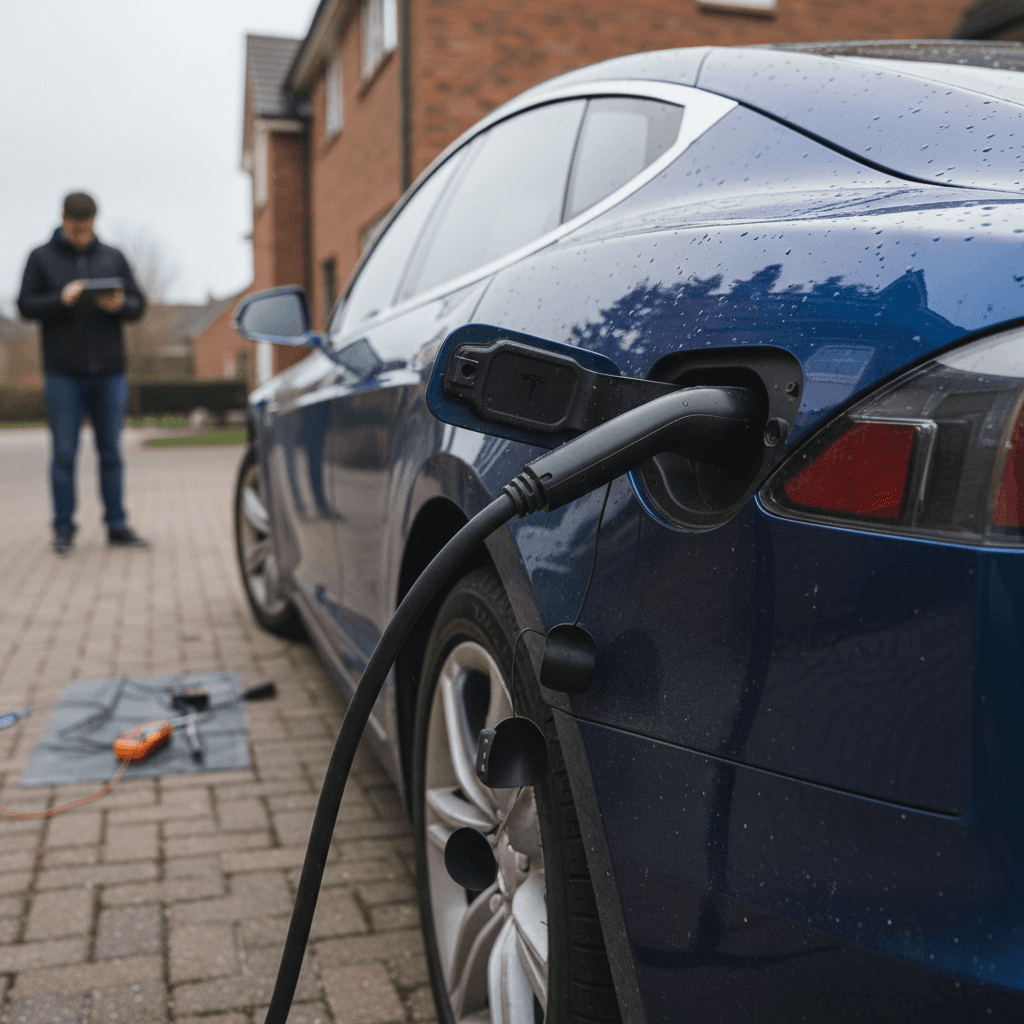
Around 1900, the car market looked nothing like it does today. Gasoline, steam, and electric vehicles were all competing. In some U.S. cities, electric taxis and runabouts were the default urban car, especially for wealthier drivers who valued comfort over long‑distance range.
Electric cars in the early 1900s
Two names you’ll often see in this period are Detroit Electric and Baker Electric:
- Detroit Electric (founded 1907) built thousands of electric cars, often marketed to doctors and urban professionals who wanted reliability and low maintenance.
- Baker Electric sold elegant electric coupes; a preserved 1909 Baker Coupe famously still runs today with an original‑spec wooden frame and advertised ~80‑mile range.
Who bought early EVs?
The long winter for EVs: 1920s–1990s
If electric cars were so promising, why did they disappear for most of the 20th century? Several forces pushed them into a long hibernation:
1. Cheap gasoline & better roads
- Massive oil discoveries and favorable tax treatment made gasoline cheap for decades.
- As paved roads spread beyond cities, drivers wanted longer range and higher speeds, areas where early EVs struggled.
2. Better gas cars & weak electricity access
- Technologies like the electric starter (early 1910s) removed some of gas cars’ biggest pain points.
- In rural areas, many homes still didn’t have reliable electricity, making charging difficult outside city centers.
By the 1920s, most electric car makers were either gone or marginalized. For decades, EVs survived only in niche roles like forklifts, neighborhood runabouts, and specialized delivery vehicles.
Policy didn’t help, either
So what did Tesla actually do first?
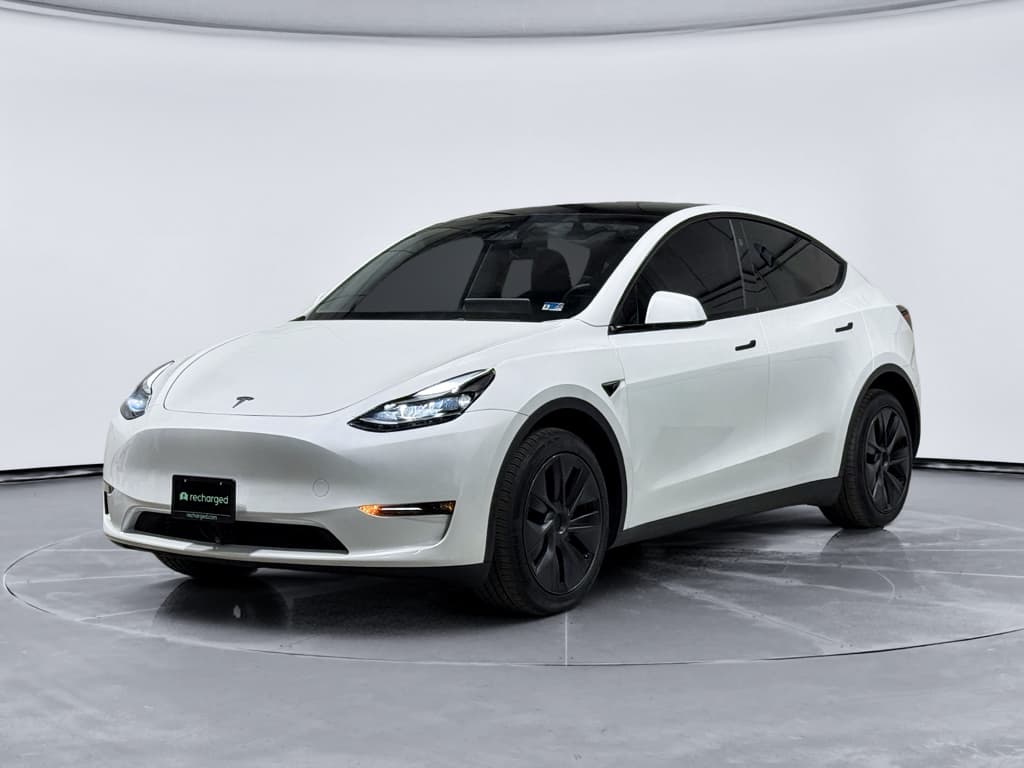
Tesla enters the picture over a century after the first electric cars. The company was incorporated in 2003; its first production car, the Tesla Roadster, reached customers in 2008. That timeline alone tells you Tesla was not first, but it did break new ground in important ways.
Tesla’s real "firsts" in context
Not the first EV, just the first of a new kind
First long‑range lithium‑ion sports car
The 2008 Tesla Roadster was the first production all‑electric car to use lithium‑ion battery cells and deliver more than 200 miles of range per charge, in a high‑performance sports car package.
Supercharging and software focus
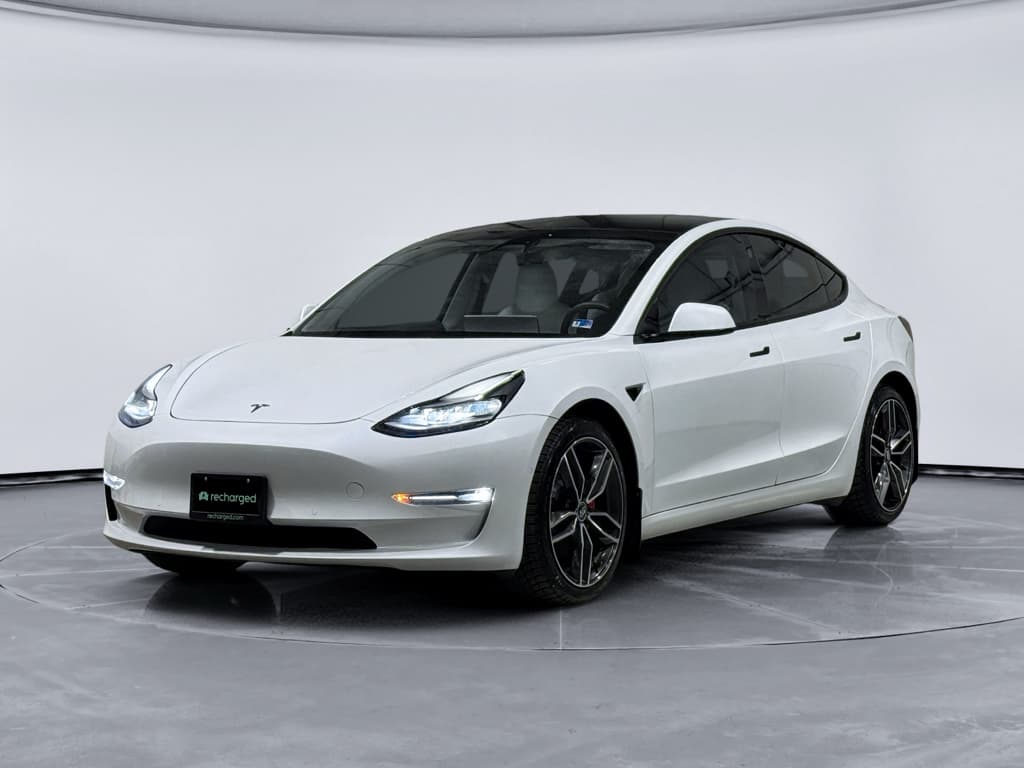
Later Teslas (Model S, Model 3, etc.) paired long‑range batteries with fast charging, over‑the‑air software updates, and always‑connected features, turning the car into a rolling computer as much as a vehicle.
Direct‑to‑consumer EV brand at scale
Tesla effectively skipped the traditional franchise dealer model and sold cars largely online or through its own stores, reshaping expectations around how you shop for an EV.
Performance as a selling point
Rather than marketing EVs as slow, eco‑only runabouts, Tesla emphasized 0–60 performance, handling, and design, changing the cultural narrative around EVs.
Why this matters to you
Timeline: Key electric cars before and after Tesla
Electric car milestones at a glance
A simplified look at how EV technology evolved, and where Tesla fits in.
| Year | Model / Event | Why it matters |
|---|---|---|
| 1890s | Early electric taxis | Fleet EVs show up in major cities like London and New York. |
| 1907–1910s | Detroit Electric & Baker Electric | Thousands of comfortable, short‑range EVs sold to urban drivers. |
| 1996 | GM EV1 | One of the first modern, highway‑capable EVs leased to consumers; later recalled and crushed, becoming a cautionary tale. |
| 1997–2000s | Hybrid era (Toyota Prius, etc.) | Hybrids prove there’s a mainstream appetite for electrification, even if not full battery electric yet. |
| 2008 | Tesla Roadster | First production EV using lithium‑ion cells with ~200+ mile range in a sports car body. |
| 2010 | Nissan Leaf | First mass‑market modern EV from a major automaker; becomes an early global sales leader. |
| 2012 | Tesla Model S | Large‑battery EV with long range, performance, and a Supercharger network, redefines expectations. |
| 2017+ | Tesla Model 3 / global EV wave | More affordable long‑range EVs arrive from many brands, making used EVs increasingly accessible. |
This isn’t exhaustive, but it highlights why the question "was Tesla the first electric car" misses over a century of history.
How Tesla shaped today’s used EV market
Even though Tesla wasn’t first, its impact on the current used EV landscape is hard to overstate. Tesla helped push battery costs down, normalize long‑range EVs, and force legacy automakers to respond. That matters a lot for you if you’re shopping used today.
The modern EV shift Tesla helped catalyze
Why this history matters when you buy used
Buying a used EV today: What matters more than who was first
When you’re deciding whether to buy a used Tesla or another EV, the question isn’t "who invented what", it’s "what condition is this specific car in, and does it fit my life?" Here are the factors that matter most today:
Checklist: How to evaluate a used EV
1. Battery health and degradation
The single most important factor for any used EV is how much usable capacity the battery has left. A car that started at 250 miles of range but is now down to 190 will drive very differently on a road trip. At Recharged, every vehicle includes a <strong>Recharged Score Report</strong> with verified battery diagnostics so you’re not guessing.
2. Realistic range for your driving pattern
Forget brochure numbers. Look at how far you actually drive in a typical day and in your worst‑case week. Many non‑Tesla EVs with 120–180 miles of usable range are perfect for commuters, while long‑range Teslas shine for road‑trippers.
3. Charging options where you live
If you have home charging, almost any modern EV can work well. If you rely heavily on public stations, network quality and connector type matter more. Tesla’s Supercharger network is strong, but CCS networks have also matured, and many non‑Tesla EVs are gaining access to NACS connectors.
4. Software, updates, and support
Tesla set expectations for over‑the‑air updates, but other brands now offer similar capabilities. On a used car, confirm which software features are included, what’s still being updated, and how easy it is to get service from EV‑literate technicians.
5. Total cost of ownership
Compare not just the sticker price but energy costs, maintenance, insurance, and potential battery warranty coverage that may still apply. Often, a slightly cheaper used EV with a healthier battery is a better deal than a famous badge with more degradation.
How Recharged helps
FAQ: Electric cars before Tesla
Frequently asked questions about Tesla and early EVs
The bottom line for EV shoppers
So, was Tesla the first electric car? No. The first electric vehicles were quietly gliding through city streets more than a century before Tesla existed. What Tesla did was reframe what an EV could be: long‑range, software‑driven, fast, and aspirational enough to force the rest of the industry to respond.
If you’re shopping today, whether for a used Tesla or another EV, the smartest move isn’t to chase the company that came "first," but to focus on the car that works best for your life and budget. That means looking closely at battery health, charging access, real‑world range, and total cost of ownership across all the brands now in the mix.
And if you’d rather have expert help evaluating those tradeoffs, Recharged is built for exactly this moment in EV history: a marketplace where Tesla is influential but not the only story, and where a transparent battery report and fair, data‑driven pricing matter more than myths about who invented what.