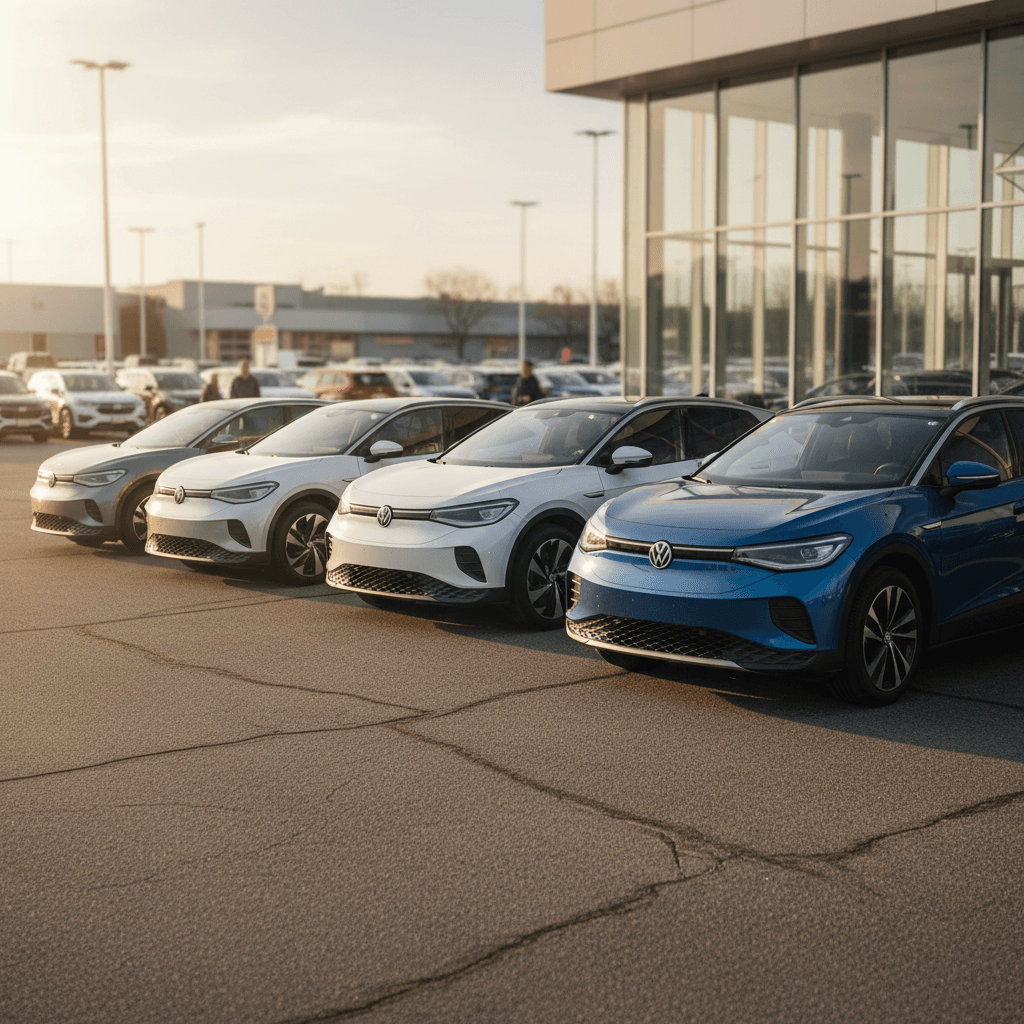
If you’re cross-shopping a **used VW ID.4**, you’ve probably noticed something: prices on early 2021 models can look tempting, but later 2023–2024 builds quietly fix a lot of the things that made headlines early on. Choosing the **VW ID.4 best year to buy used** is really about balancing price, reliability, range and tech updates, plus where you live and how you plan to use the car.
At a glance
Quick answer: Best used VW ID.4 years
Best used VW ID.4 years by shopper type
Different buyers, different sweet spots
Best value overall: 2022 (late build)
Why: Big price drop from new, but many early software and hardware issues from 2021 were reduced or addressed on later 2022 builds.
- Often still under factory warranty
- More inventory than 2021, so easier to be picky
- Good match of range, features and price
Most confidence: 2023
Why: U.S.-built in Chattanooga with running updates and a clearer recall history compared with the launch year.
- Improved perceived build quality versus early imports
- Refined software versus 2021 launch cars
- Usually plenty of warranty left
Best performance & tech: 2024+
Why: Updated powertrain with more power and efficiency, plus the latest infotainment and driver-assistance tweaks.
- Higher output rear motor on most trims
- Newest batteries and software baseline
- Higher prices, but least compromise
Proceed carefully with 2021s
How the VW ID.4 evolved from 2021 to 2024
VW ID.4 U.S. evolution highlights
From the outside, most 2021–2024 ID.4s look similar. Under the skin, though, Volkswagen has been steadily reworking software, motors and even build location. That’s why two ID.4s that look identical on a listing can feel very different on the road, and why picking the best year to buy used is more nuanced than just chasing the lowest odometer reading.
Model-year breakdown: Which VW ID.4 year fits you?
VW ID.4 model years at a glance
High-level strengths and watch‑outs for 2021–2024 model years if you’re shopping used.
| Model year | Main production source for U.S. | Biggest pros | Key watch‑outs |
|---|---|---|---|
| 2021 | Germany | Lowest prices, early adopters already took big depreciation hit. | Most recalls and software campaigns, more electrical/infotainment complaints, limited fast-charging confidence without history. |
| 2022 | Mainly Germany, some running improvements | Better than 2021 on average, still relatively affordable, often decent equipment levels. | Some cars still share early software and component issues; tire wear and suspension complaints crop up on certain builds. |
| 2023 | Chattanooga, TN | Perceived build-quality step, more stable software baseline, strong warranty remaining, large used inventory. | Still not perfect, software quirks and recalls exist; need to confirm updates and charging behavior. |
| 2024 | Chattanooga, TN with updated motor | More powerful and efficient powertrain in many trims, newest safety and driver-assistance software. | Higher prices, limited used supply so far; long-term reliability picture still forming. |
Always verify specific build details (battery size, motor, options) on any individual vehicle.
Budget-focused commuter
If you’re chasing the lowest payment, a 2021 or early 2022 ID.4 can make sense, especially in RWD Pro trims. The key is to be ruthless about inspection and documentation, pay less only if the risk profile is acceptable and recalls are fully addressed.
Long-term keeper
If you plan to hold the car 5+ years, the sweet spot is usually a 2023 or 2024 ID.4. You get newer hardware, fresher batteries, more refined software, and more factory warranty runway to absorb any surprises.
Reliability and common issues by year
Reliability is where the model-year story really matters. Across owner forums and survey data, patterns have emerged: earlier ID.4s simply have more reported issues, especially around software and electrical systems. Later years are better, but not immune.
Common reliability themes
What tends to show up most often by model year
2021: Launch-year growing pains
- High recall count covering electrical risks, software logic, and battery-system concerns.
- Owners report warning lights, unexpected shutdowns, or cars refusing to start until reset.
- Infotainment and driver-assist glitches (frozen screens, phantom alerts) are more common.
If you’re considering a 2021, assume extra due diligence and possibly more dealer visits over time.
2022: Better, but still mixed
- Fewer catastrophic stories than 2021, but many of the same software-family bugs can appear.
- Suspension and tire wear complaints in some markets; some cars still see electrical warning lights.
- Benefit: many 2022s have already had the key campaigns done and lived through early OTA updates.
2023: More mature product
- U.S.-assembly coincides with improved quality perception from many owners and dealers.
- Electrical and software complaints don’t disappear, but they’re less concentrated in specific build batches.
- Longer remaining warranty can absorb hiccups without destroying your budget.
2024: Too new to fully grade
- Updated rear motor and tweaks to software stack reduce some pain points, but introduce new unknowns.
- Owner reports so far skew positive on performance, but true long‑term reliability data isn’t in yet.
- Factory warranty is your buffer here; you’re paying for recency and improvements.
Don’t ignore recall history
Battery, range and charging differences
All ID.4s sold in the U.S. are built on Volkswagen’s MEB platform, with battery sizes and charging behavior that changed less dramatically than the software headlines might suggest. Still, there are a few key considerations if you’re cross‑shopping years.
- Most U.S. ID.4s use the larger ~82 kWh (gross) pack, with select trims in later years offering a smaller pack with less range but lower price.
- Rated range for early 2021–2023 82 kWh RWD models is typically in the mid‑250s to low‑260s miles, depending on wheels and trim; AWD and smaller packs sit below that.
- Fast‑charging peak power is broadly similar across years on paper, but software updates greatly affect how consistently the car hits and holds those numbers in the real world.
- Real‑world winter range can drop significantly, especially on early software versions that weren’t as aggressive about preconditioning or heat‑pump management.
How Recharged checks ID.4 batteries
Features and tech: What actually changed?
Volkswagen continually tweaked the ID.4’s feature mix, from driver‑assist tech to interior materials and infotainment responsiveness. That matters if you care about lane‑keeping polish or how quickly the screen wakes up on a cold morning.
Key tech and feature considerations
What to look for on a test drive, regardless of year
Infotainment & screens
Early cars are more prone to freezes, laggy responses, or delayed boot‑ups. Later software updates improved this, but only if they were actually applied. On any ID.4, cycle through navigation, media, and settings and watch for slow or buggy behavior.
ADAS & driver assist
Traffic‑jam assist, adaptive cruise and lane‑keeping can work well, or feel nervous, depending on software revision and calibration. Changes year to year are incremental rather than revolutionary, so the real question is how well the individual car behaves today.
Interior & options
Trim names and option bundles shifted over time, changing seat materials, ambient lighting, roof options and wheel sizes. Instead of fixating on year alone, build a must‑have list (heated seats, heat pump, tow hitch) and verify each VIN’s equipment list carefully.
Pricing, depreciation and value sweet spots
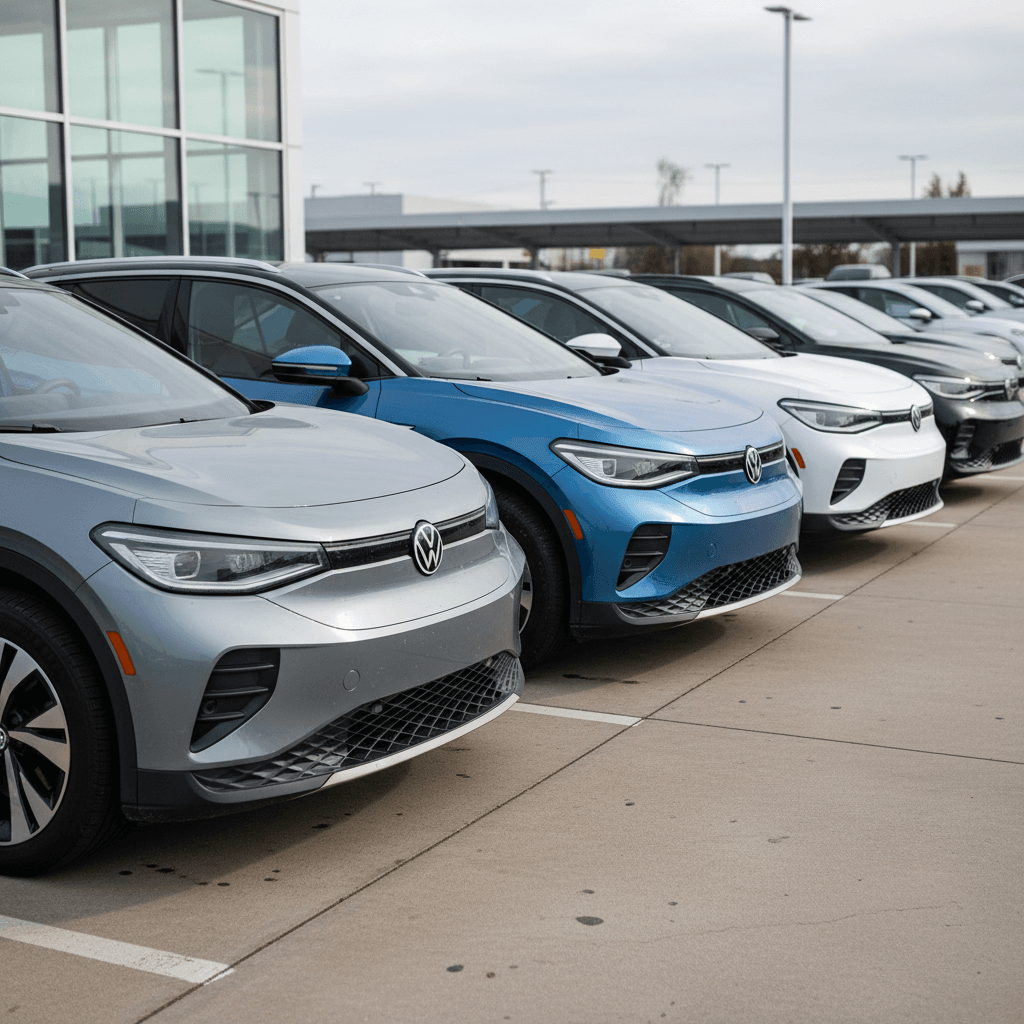
The ID.4 followed a familiar EV story line: high MSRPs at launch, substantial discounts and incentives during the peak inventory years, and then heavier‑than‑average depreciation as newer tech arrived. That’s challenging if you bought new, but a big opportunity if you’re buying used today.
- **2021 ID.4s** often carry the lowest asking prices and the steepest depreciation from original MSRP. They’re attractive for monthly payment shoppers who are comfortable with a bit more risk.
- **2022 ID.4s** now sit in a price pocket where many buyers see them as a smarter compromise than 2021s, especially if they’re one‑owner cars with complete service records.
- **2023 ID.4s** can feel like “almost new” but are already through their biggest depreciation drop, especially ex‑lease vehicles returning to market.
- **2024 ID.4s** are just starting to appear used and often command a premium for upgraded motors and fresher battery packs. The flip side is more warranty and a longer technology runway.
Where value and peace of mind intersect
Tax credit considerations for used VW ID.4 buyers
On top of model‑year differences, federal incentives add another wrinkle. Under today’s rules, **qualifying used EVs** can be eligible for a federal credit of up to $4,000 at the point of sale, as long as you and the vehicle meet specific criteria (income caps, price caps, first‑time transfer, model‑year age, and more).
How the federal used EV credit typically applies to ID.4s
High‑level guidance only; always confirm with the dealer and current IRS rules before you rely on a credit.
| Model year you’re buying in 2026 | Rough eligibility window for used credit* | What to watch |
|---|---|---|
| 2021–2022 | Most likely to qualify by age rules | Must meet price cap and buyer income limits; car must not have already been claimed as a used‑EV credit. |
| 2023 | May or may not qualify depending on sale date and IRS rules | New‑EV credit history and final guidance can affect eligibility; confirm on a case‑by‑case basis. |
| 2024 | Often too new for used‑EV credit age rules | Focus more on pricing and warranty; assume no used‑EV federal credit unless a dealer and tax professional confirm otherwise. |
Tax rules change frequently. Use this as a starting point, not tax advice.
Quick tax reminder
Pre‑purchase checklist for any used ID.4
Used VW ID.4 buyer checklist
1. Scan recall and campaign history
Ask the seller for a full VIN‑based recall and service printout. Confirm completion of major ID.4 campaigns (electrical system, software, battery-related). An incomplete recall stack is a red flag, and a negotiation point.
2. Verify software version and update status
In the settings menu, check what software version the car is on and ask when the last update happened. Cars that are several revisions behind may have more bugs and could need a long dealer visit to catch up.
3. Evaluate battery health, not just range estimate
A full‑to‑empty test is rarely practical, but you can look at energy‑use readouts and fast‑charge behavior. Platforms like <strong>Recharged</strong> include a Recharged Score battery-health report so you can compare degradation across cars objectively.
4. Test DC fast charging
If possible, plug into a DC fast charger during the test drive. Watch how quickly the car ramps up, whether it holds speed reasonably, and whether any errors pop up. Early‑year cars with problematic charge behavior will often show it here.
5. Check tires and suspension
Uneven tire wear, early replacement tires on low‑miles cars, or clunks/creaks over bumps can hint at alignment or suspension issues. Pay attention to steering feel at highway speeds.
6. Stress-test infotainment and driver aids
Run navigation, Bluetooth, and apps all at once. Toggle adaptive cruise, lane‑keeping, and parking sensors. You’re looking for lag, reboots, or inconsistent behavior that could indicate unstable software or failing modules.
How Recharged evaluates used VW ID.4s
Because the ID.4 story is so software‑ and recall‑heavy, buying one purely off a classified listing can feel like a coin toss. At Recharged, we try to turn that into a data decision instead of a gamble.
What’s in a Recharged Score for an ID.4?
More than just a battery percentage
Battery health diagnostics
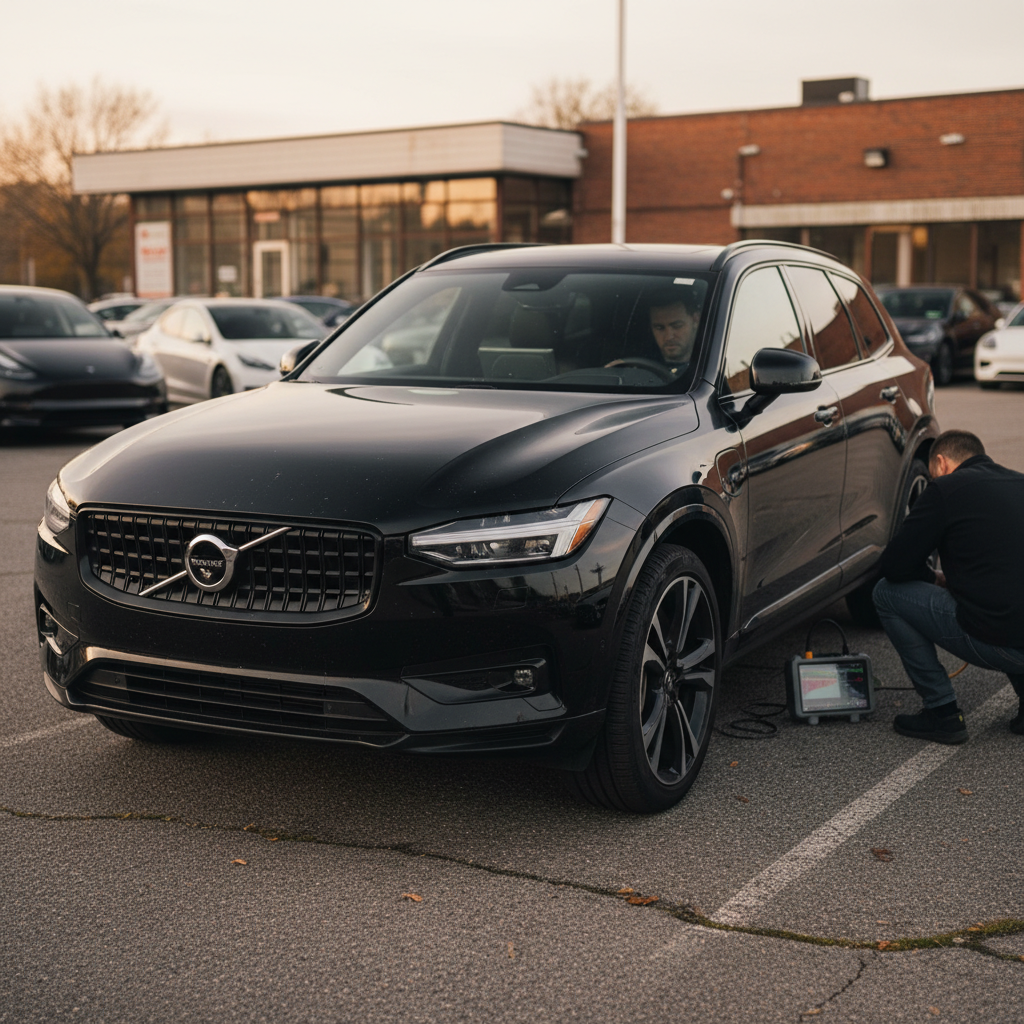
We use diagnostic tools and on‑road tests to estimate usable capacity versus original, then roll that into the Recharged Score. You see how one vehicle’s pack compares to similar ID.4s, not just a generic guess.
Recall & campaign verification
Our team cross‑checks VINs against recall databases and service records. If critical ID.4 campaigns are still open, we flag them in the report and factor them into pricing.
Fair market pricing & support
We benchmark each ID.4 against the broader used EV market, taking model year, options, mileage, and condition into account, so you know whether the price reflects the car’s actual story. EV‑specialist support can also walk you through trade‑in, financing, or selling your current car.
Ready to find your next EV?
Browse VehiclesFAQ: Best year to buy a used VW ID.4
Frequently asked questions about used VW ID.4 years
Bottom line: Which used VW ID.4 should you buy?
If you want the **VW ID.4 best year to buy used** in 2026, the answer depends on whether you’re chasing the lowest price, the smoothest ownership, or the newest tech. For most shoppers, **2023** strikes the best balance of maturity, warranty and value, with **late‑build 2022** a smart alternative if you find one that’s been updated and well cared for. 2021s are the bargain-bin picks, occasionally great deals, occasionally headaches, while 2024s are ideal if you’re willing to pay more for performance and the latest hardware.
Whichever year you choose, focus on the **individual vehicle’s story**: recall status, software version, battery health and real‑world behavior on a thorough test drive. Shopping through a platform like Recharged adds another layer of confidence, with Recharged Score battery diagnostics, fair‑market pricing, expert EV support, and nationwide delivery to get the right ID.4 into your driveway without the guesswork.