You don’t buy a VW ID. Buzz with your spreadsheet alone, you buy it with your heart. But when the heart wants a $60,000‑plus electric van with modest range, you absolutely should run the numbers. Long‑term, the VW ID. Buzz long‑term ownership cost is shaped as much by depreciation, insurance and charging as it is by that retro‑cool shape you fell for in the first place.
Quick take
Why VW ID. Buzz ownership costs matter
The ID. Buzz isn’t just another crossover. It’s a three‑row electric van that trades outright efficiency for style and space. In the U.S., it arrived for the 2025 model year with a 91 kWh battery and about 231–234 miles of EPA range, depending on rear‑ or all‑wheel drive. That’s fine for daily family duty, but only average for an EV at this price point, and that has ripple effects on resale value, insurance, and how much you’ll actually spend each year keeping it on the road.
Volkswagen has already announced it will pause U.S. imports for the 2026 model year after slower-than‑hoped early sales, then bring an updated Buzz back around 2027. That pause is a clue: the ID. Buzz is cool, but it’s not a slam‑dunk financial proposition new. Understanding the long‑term cost picture will help you decide whether to buy new, wait for later model years, or hunt for a used example once they start hitting the secondary market in meaningful numbers.
VW ID. Buzz at a glance: key cost levers
About the numbers in this guide
Sticker price vs. what people actually pay
For 2025, U.S. pricing for the long‑wheelbase ID. Buzz lands roughly here (including destination):
2025 VW ID. Buzz U.S. pricing snapshot
Approximate starting MSRPs including destination for the main trims.
| Trim | Drivetrain | Seats | Approx. Starting MSRP* |
|---|---|---|---|
| Pro S | RWD | 7 | $61,500 |
| Pro S Plus | RWD | 7 (bench) / 6 (optional captain’s) | $65,000 |
| Pro S Plus | AWD | 6 (captain’s chairs) | $69,500 |
| 1st Edition | RWD or AWD | 6 or 7 | ~$67,000–$71,500 |
Exact pricing varies by options and region; incentives and dealer discounts can move these numbers up or down.
No more easy federal tax credit
On the ground, early reports show dealers discounting unsold Buzz inventory more aggressively than VW probably hoped, particularly as 2025 turned into 2026. That can work in your favor if you’re buying new, just keep in mind that a big discount today often foreshadows softer resale tomorrow.
Energy costs: what it costs to charge an ID. Buzz
The ID. Buzz uses a big battery and a big, boxy body. That’s not the recipe for Prius‑like efficiency, but it’s still far cheaper to feed electricity than gasoline. VW quotes combined consumption in the low‑20s kWh/100 km on WLTP tests; independent U.S. real‑world testing has translated that into something like 2.6–3.0 miles per kWh in mixed driving, and closer to 22–27 kWh/100 km (around 35–44 kWh/100 mi) at typical highway speeds.
Home charging cost (most owners)
If you can plug in at home, your long‑term energy cost is easy to estimate:
- Assume 2.7 mi/kWh (a realistic mixed‑driving figure).
- At a U.S. average of $0.16/kWh, 1,000 miles costs about:
1,000 ÷ 2.7 × $0.16 ≈ $59. - That’s roughly 6¢ per mile, or about $900/year at 15,000 miles.
If your utility offers EV off‑peak rates or you have solar, your cost per mile can drop significantly below that $0.06 baseline.
Public fast charging cost (road‑trip heavy)
Frequent DC fast charging changes the math:
- Typical U.S. fast‑charge rates often run $0.35–$0.55/kWh.
- Using $0.45/kWh and the same 2.7 mi/kWh efficiency, 1,000 miles costs:
1,000 ÷ 2.7 × $0.45 ≈ $167. - That’s about 17¢ per mile, or roughly $2,550/year at 15,000 miles.
Real owners land somewhere between these extremes. A typical suburban family mixing home charging with occasional road trips might spend $1,100–$1,500/year on electricity.
Compare it with a gas minivan
Maintenance and repair costs
Under the skin, the ID. Buzz shares much of its hardware and software with other VW ID‑series EVs. That’s good news for long‑term maintenance costs: EVs simply have fewer moving parts than gas vans, and VW’s existing electric warranty structure gives us a pretty good template for what to expect.
Where the money goes on maintenance
Less oil, more tires, and occasional software drama.
Almost no routine engine service
Battery + EV components
Tires, brakes, and wear items
Volkswagen also tends to bundle a couple of years of scheduled maintenance and roadside assistance with its EVs. That won’t cover everything for a decade, but it will take the sting out of the first few years. Long‑term, most ID. Buzz owners should expect lower maintenance costs than a comparable gas minivan, especially once you look past the first warranty window and into years seven through ten.
Software and recall reality check
Insurance, taxes, and fees
Insurance companies care about two main things: how expensive the vehicle is to repair or replace, and how likely it is to be involved in a claim. The ID. Buzz is new, packed with sensors, and priced in luxury‑SUV territory, so you shouldn’t expect rock‑bottom premiums.
Insurance premiums
In many U.S. ZIP codes, a new $60,000–$70,000 EV van will sit 10–25% higher than an equivalently priced gas SUV for insurance, simply because parts and battery‑related repairs are more expensive. For a typical driver with a clean record, ballpark annual premiums of $1,800–$2,400 aren’t unusual, and dense urban areas or younger drivers can easily push past $3,000.
Shopping multiple quotes, choosing slightly higher deductibles, and adding safety options like garage parking can help tame this line item.
Taxes and registration
The Buzz is imported from Europe, which means higher tariffs baked into the sticker price and, in some states, higher sales tax and registration fees. Expect:
- Sales tax based on the full transaction price (before any dealer discounts), often 6–10% depending on your state and local rates.
- Registration that may be weight‑ or value‑based. Some states tack on an extra annual EV fee in lieu of gas taxes, commonly $100–$250/year.
These are unavoidable ownership costs that hit hardest in year one, but they’re worth seeing in your full‑ownership spreadsheet.
Depreciation and resale value
This is where the VW ID. Buzz’s charm runs into some tough math. Its high initial price, only mid‑pack range, niche body style, and the decision to pause U.S. imports for 2026 all converge into one reality: you should plan on fairly heavy depreciation, especially in the first 3–5 years.
- High MSRPs (~$61,000–$71,000) put the Buzz in competition with longer‑range, better‑known three‑row EVs and luxury SUVs.
- Built in Germany with import tariffs, it lacks the built‑in price support of U.S.‑built EVs that qualify for federal incentives.
- VW’s stop‑start U.S. rollout (launch for 2025, pause for 2026, return for 2027) makes used‑market shoppers cautiously curious rather than confident.
- Range around 231–234 miles is adequate today, but sub‑300‑mile EVs tend to soften faster in value as newer models push well beyond that.
A reasonable depreciation forecast
5-year cost of ownership estimate
Let’s put some numbers together. Suppose you buy a 2025 VW ID. Buzz Pro S Plus AWD for $69,500 out the door (including destination but excluding tax), drive 15,000 miles a year, charge mostly at home, and keep it for five years.
Illustrative 5‑year VW ID. Buzz cost of ownership
Approximate totals for a typical owner driving 15,000 miles per year, charging mostly at home.
| Category | 5‑Year Estimate | Notes |
|---|---|---|
| Depreciation | $32,000–$38,000 | Assumes $69,500 purchase, 45–55% of value remaining after 5 years. |
| Electricity | $5,000–$7,500 | Home‑heavy charging at 2.7 mi/kWh, $0.16–$0.20/kWh average with some DC fast charging. |
| Maintenance & Repairs | $3,000–$4,500 | Tires, periodic service, out‑of‑warranty odds‑and‑ends late in the period. |
| Insurance | $9,000–$12,000 | Roughly $1,800–$2,400 per year; high‑cost urban markets may exceed this. |
| Taxes & Fees | $5,000–$7,000 | Sales tax at purchase plus annual registration and EV fees. |
| Total 5‑Year Cost | $54,000–$69,000 | Excluding financing costs; lower end assumes gentle depreciation and cheap power. |
These are planning‑level numbers; your local electricity, insurance, and tax rates will move the totals up or down.
If you think in cost‑per‑mile terms, that’s roughly $0.72–$0.92 per mile all‑in over five years excluding finance charges. The biggest swing factor is depreciation: buy at a discount and sell into a moment of renewed demand, and you’ll be much closer to the low end of that range.
How buying a used VW ID. Buzz changes the math
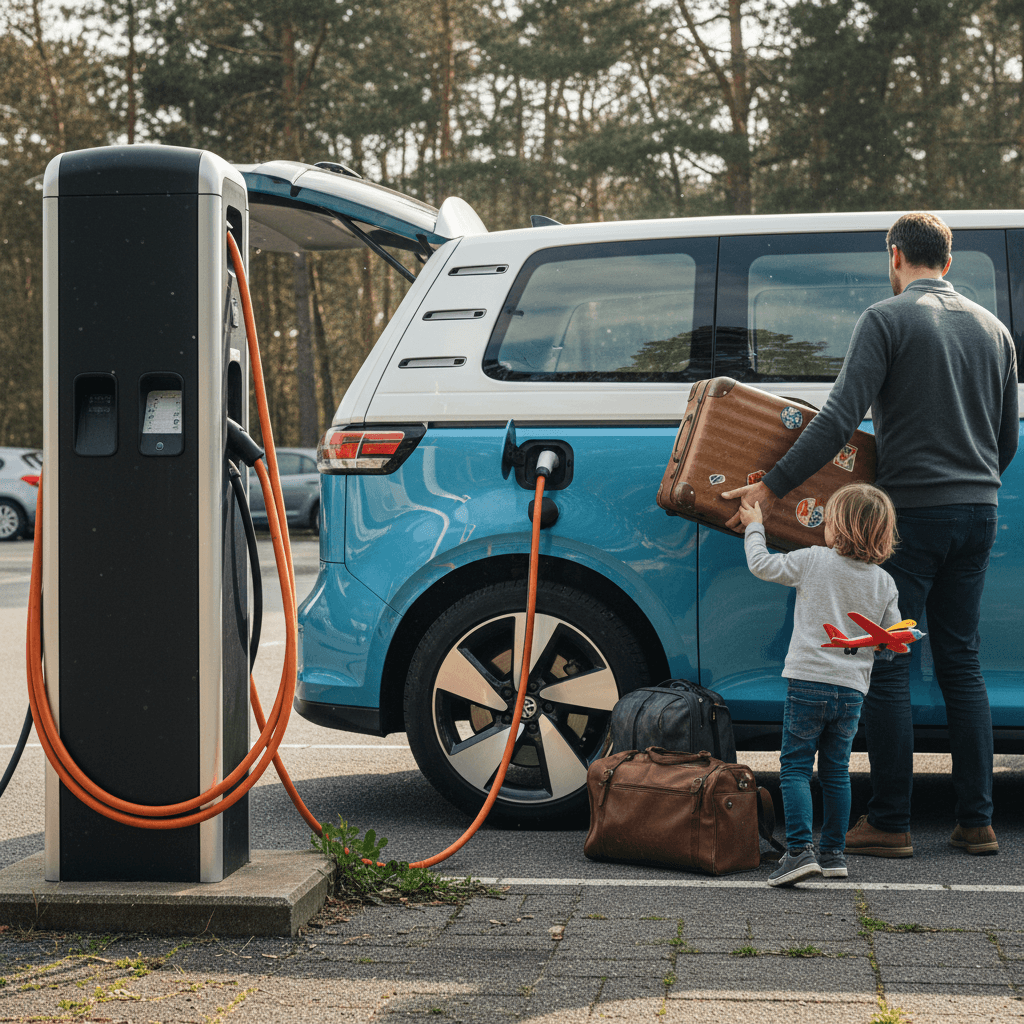
The nice thing about “first‑year flop” EVs is that they can turn into terrific used‑car values. As 2025 Buzzes age into off‑lease and second‑owner territory, you can let someone else take the bruising first‑owner depreciation and simply enjoy the van.
Why used ID. Buzz pricing should be attractive
- Steep first‑owner depreciation means three‑year‑old vans could realistically land in the mid‑$30Ks to mid‑$40Ks depending on trim and miles.
- The pause for the 2026 model year may soften demand further as shoppers wait for an updated 2027 model, good for patient used buyers.
- As long as there is adequate service support and parts availability, a short stretch of lukewarm sales doesn’t make the Buzz a bad ownership proposition; it just makes it a niche one.
What to look for in a used ID. Buzz
- Battery health: Ask for a high‑voltage battery report and look for consistent fast‑charge behavior. Tools like a Recharged Score Report on used EVs give you a verified, objective snapshot of pack health.
- Software and recalls: Confirm that all recall campaigns and major software updates have been completed.
- Charging history: A van that lived its life on DC fast chargers may have a bit more battery wear than one mostly charged at home.
How Recharged can help
Ready to find your next EV?
Browse VehiclesTips to keep your ID. Buzz ownership costs down
Practical ways to lower your long‑term costs
1. Maximize home and off‑peak charging
Home charging at standard residential rates will almost always beat public fast‑charging costs. If your utility offers a time‑of‑use EV plan, schedule charging for off‑peak hours to push your per‑mile cost even lower.
2. Baby the battery on road trips
Try to live between 10% and 80% state‑of‑charge on DC fast chargers whenever practical, and avoid leaving the battery at 100% for days at a time. Battery‑friendly habits support range and resale value.
3. Budget for good tires and alignments
The Buzz is tall and heavy. Don’t cheap out on tires, quality rubber and regular alignments preserve efficiency, handling, and safety, and can prevent premature tire wear that eats into your budget.
4. Keep software and recalls current
Many EV quirks are software‑related. Staying current on updates and recall campaigns can prevent nuisance issues from turning into larger repair or resale headaches later.
5. Cross‑shop insurance every couple of years
Rates can change quickly for new EVs as insurers gather more data. Get fresh quotes every renewal cycle; switching carriers can save hundreds per year with no change in coverage.
6. Consider buying lightly used
Let the first owner tackle the steepest depreciation curve. A well‑documented, 2‑ or 3‑year‑old Buzz with strong battery health can dramatically improve your cost‑per‑mile story without sacrificing the fun part.
FAQ: VW ID. Buzz long-term ownership costs
Frequently asked questions
Is the VW ID. Buzz worth it long term?
The VW ID. Buzz is not the rational bargain hunter’s choice. A Kia EV9 or a conventional hybrid minivan will probably beat it on range, pricing, and spreadsheets alone. But long‑term ownership cost isn’t just about the cheapest way from A to B, it’s about what you’re willing to pay for space, character, and the way a vehicle fits your life.
If you buy new and flip quickly, you’re likely to feel the sting of depreciation most sharply. If you buy at the right price, keep your charging mostly at home, and plan to hold onto it, the ID. Buzz can be a surprisingly reasonable long‑term companion. And if you’re patient enough to let someone else take the first hit and then pick up a well‑vetted used example with documented battery health, the math starts to look better still, especially with tools like the Recharged Score Report and EV‑savvy support guiding you through the fine print.