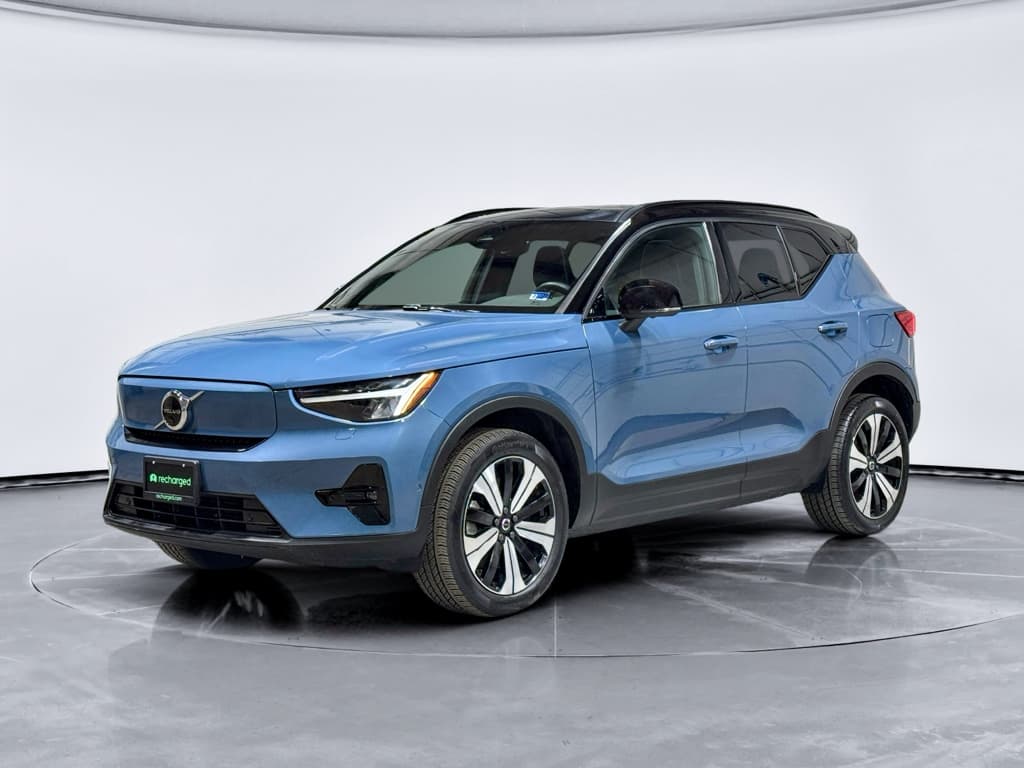
If you’re shopping for or thinking about selling a Volvo XC40 Recharge, you’ve probably typed “Volvo XC40 Recharge KBB value” into a search bar. Kelley Blue Book is still the default pricing language in the used‑car world, but electric SUVs like the XC40 Recharge don’t always behave the way traditional KBB charts suggest. Let’s unpack what those numbers really mean in today’s EV market.
A quick note on KBB data
Why KBB value matters for the Volvo XC40 Recharge
Kelley Blue Book values still shape how dealers talk about price, how banks structure loans, and what many private‑party buyers feel comfortable paying. For the Volvo XC40 Recharge, KBB value is especially important because the model has seen fast early depreciation as newer EVs with more range and lower MSRPs hit the market. That’s painful if you bought new, but it can be a serious opportunity if you’re buying used.
- As a seller, KBB gives you a baseline for trade‑in and private‑party pricing.
- As a buyer, it helps you see if an asking price is above, below, or right at typical market value.
- For lenders, KBB and similar guides help determine how much they’ll finance on a used XC40 Recharge.
Tip for EV shoppers
Quick look: current KBB‑style values for the XC40 Recharge
Exact KBB values change by day and by ZIP code, but recent guide data and market appraisals let us sketch a realistic window for late‑model Volvo XC40 Recharge pricing in early 2026. Think of these as ballpark ranges that you’ll refine for your specific vehicle.
Sample KBB-style value ranges for Volvo XC40 Recharge
Illustrative value bands based on recent KBB Fair Purchase Price data and appraisal tools for typical mileage and "clean" condition. Always verify your exact car.
| Model year & trim (example) | Typical mileage | Trade‑in range* | Private‑party range* | Dealer retail range* |
|---|---|---|---|---|
| 2024 XC40 Recharge Core/Plus | 10,000–20,000 mi | Low $30,000s | Mid $30,000s | High $30,000s–low $40,000s |
| 2023 XC40 Recharge Plus | 20,000–30,000 mi | Low–mid $30,000s | High $30,000s | Around $40,000 |
| 2022 XC40 Recharge Plus | 30,000–40,000 mi | Mid $20,000s | High $20,000s–low $30,000s | Low–mid $30,000s |
| 2021 XC40 Recharge P8 | 40,000–50,000 mi | Low–mid $20,000s | Mid–high $20,000s | High $20,000s–low $30,000s |
Use these numbers as orientation, then plug your VIN and mileage into a live tool for a precise figure.
About those asterisks
How KBB estimates Volvo XC40 Recharge value
Kelley Blue Book doesn’t just pick a number out of thin air. For the Volvo XC40 Recharge, KBB looks at the same fundamental ingredients it uses for gas SUVs, then layers on EV‑specific data.
Key ingredients in your XC40 Recharge KBB value
The same SUV basics, with an EV twist
Vehicle details
Year, trim, and options all matter. A 2024 XC40 Recharge Plus with a heat pump, panoramic roof, and advanced driver aids will carry a different value than a base Core.
Mileage & use
KBB assumes about 12,000 miles per year as normal. Well below that can bump value; significantly above it will drag value down, especially on older EVs.
Location & season
Your ZIP code and timing matter. EV‑friendly markets (coasts, big metros) often show stronger XC40 Recharge values than regions with sparse charging.
Condition & history
KBB uses condition grades, Outstanding, Clean, Average, Rough, that reflect accident history, cosmetic wear, and maintenance. A clean Carfax and documented service help.
EV incentives & fuel costs
Local electric rates, gas prices, and incentives can push values up or down versus a gas XC40. Cheaper electricity and HOV perks tend to help resale.
Market supply & demand
KBB digests wholesale auction data and real‑world sales. When lots of XC40 Recharges sit on lots and few buyers bite, values soften quickly.
What KBB doesn’t see directly, but the market absolutely reacts to, is battery health. The guide assumes an average battery for age and mileage. If your pack is significantly better or worse than average, your real‑world value can diverge from the KBB line.
Real‑world depreciation: what XC40 Recharge owners are seeing
If you bought a Volvo XC40 Recharge new, you already know this part stings. Early model years, particularly 2021–2022, have taken a steep value hit compared with many gas luxury SUVs, and even some rival EVs.
XC40 Recharge depreciation snapshot
Several data sources that track depreciation off KBB and market pricing show 2021–2022 XC40 Recharge models retaining only about a third to roughly half of their original MSRP after a few years on the road. That’s tough news for original owners, but it turns the car into a compelling used‑EV value, especially if you find one with strong battery health.
Why this can be great news for you
KBB value vs. actual market price for a used XC40 Recharge
Open three browser tabs, Kelley Blue Book, an appraisal tool like Edmunds, and a used‑car marketplace, and you’ll notice something: no two numbers are exactly the same. That’s especially true for fast‑moving EVs like the XC40 Recharge.
Where KBB tends to land
KBB’s Fair Purchase Price for a late‑model XC40 Recharge often aims for the middle of the real‑world transaction band in your area. It smooths out spikes from one strange auction result or a desperate fire‑sale listing.
That makes it a good anchor for negotiations, but it can lag a few weeks or months behind sudden swings in EV sentiment or incentives.
Where the market actually settles
Market tools and live listings can show wider variation. Dealers looking to move aging EV inventory may undercut KBB. A low‑mileage XC40 Recharge with a rare color and big‑ticket options might sit at the top of the range, or above it.
Think of KBB as the ruler and the market as the weather report. You need both to dress correctly.
How to use KBB when you shop or sell
How battery health affects your XC40 Recharge’s value
For a gasoline XC40, KBB doesn’t ask how your fuel tank is feeling. With the XC40 Recharge, the battery pack is the heart of the car’s value, and traditional pricing guides only account for it indirectly, through mileage and age. Two Volvos that look identical on paper can have very different stories under the floor.
Battery health: what buyers quietly pay for
Beyond the generic KBB assumptions
State of health (SoH)
Batteries lose capacity over time. An XC40 Recharge that still delivers close to its original rated range is worth more than one that feels tired on cold mornings.
Climate history
Lots of DC fast charging and life in very hot or very cold climates can accelerate degradation. Buyers and dealers who understand this will price accordingly.
Service & software
Volvo software updates, completed recalls, and documented service history show the car has been cared for like the complex computer it is. That builds confidence, and value.
Where Recharged comes in
What actually moves your individual KBB value up or down
You can’t rewrite the depreciation curve for the entire model, but you can absolutely influence where your specific XC40 Recharge lands within KBB’s ranges. Here’s what tends to nudge values one way or the other.
Key factors that change your XC40 Recharge KBB value
1. Mileage vs. model year
An XC40 Recharge with mileage well below the 12,000‑miles‑per‑year baseline will usually sit at the high end of KBB’s range. High mileage pushes you toward the low side or into a lower condition bracket.
2. Accident and damage history
Even professionally repaired collision damage can reduce value. A clean history report and photo documentation of any minor cosmetic fixes help you justify pricing toward the top of the KBB band.
3. Interior and exterior condition
Scuffed wheels, curb‑rashed bumpers, worn upholstery, and cracked glass all chip away at value. Small reconditioning steps before you list or trade can nudge your XC40 Recharge up a condition tier.
4. Tires and brakes
EVs are heavy, and they can be hard on tires. Fresh, quality tires and healthy brakes are worth real money to the next owner, and often more than the cost of replacement.
5. Options and trim level
Volvo’s Plus and Ultimate trims, advanced safety packages, and desirable colors can all support a stronger value, especially when buyers are cross‑shopping similar vehicles in your area.
6. Timing and local demand
Listing in peak EV‑shopping season, or in a market with strong charging infrastructure and incentives, can lift offers above what KBB predicts for softer regions.
Pricing checklist: buying or selling a used XC40 Recharge
Whether you’re eyeing a used Volvo XC40 Recharge or preparing to let yours go, a structured approach keeps emotion from hijacking your budget. Use this step‑by‑step list as your playbook.
Step‑by‑step: pricing your XC40 Recharge smartly
1. Pull fresh guide values
Run your XC40 Recharge (or the one you’re considering) through Kelley Blue Book and at least one other guide. Save the printouts or screenshots so you can refer to exact assumptions later.
2. Map local listings
Search used‑EV marketplaces for XC40 Recharges within a few hundred miles, matching year, trim, mileage band, and options. This shows you the true market cluster around the KBB number.
3. Evaluate battery and range
On a test drive, note displayed range at full charge, recent charging behavior, and any battery‑related alerts. If you’re working with Recharged, review the <strong>Recharged Score Report</strong> for hard data.
4. Adjust for condition honestly
If you’re selling, grade your car with brutal honesty using KBB’s condition definitions. If you’re buying, assume at least one grade lower than the ad claims until an inspection proves otherwise.
5. Build in negotiation room, not fantasy
Price a private‑party sale slightly above the heart of the market cluster, not at a dream number no one else is asking. As a buyer, come armed with your research so your offer feels fair, not arbitrary.
6. Compare instant‑offer options
If you want hassle‑free selling, compare instant‑offer tools. Recharged can provide an <strong>instant offer or consignment option</strong> that bakes in battery health, market demand, and fair‑market pricing, so you’re not haggling blind.
How Recharged uses KBB-style data alongside the Recharged Score
At Recharged, we respect what guides like KBB bring to the table, but we also know they were built in a gasoline world. So we layer KBB‑style fair‑market pricing with EV‑specific data to get closer to what an XC40 Recharge is truly worth today.
Traditional data we still use
- Model year, trim, options, and mileage
- Regional sales and wholesale auction trends
- Seasonality and incentive environment
- Standard condition grading and history reports
EV‑first data we add on top
- Verified battery state of health and range from the Recharged Score
- Charging behavior insights (fast‑charge vs. home charging mix, when available)
- Software and recall status specific to the XC40 Recharge
- Current competition from newer Volvo EVs like the EX30 and EX40
What this means for you
Ready to find your next EV?
Browse VehiclesVolvo XC40 Recharge KBB value: FAQ
Common questions about XC40 Recharge KBB value
Bottom line: is the XC40 Recharge a good used buy?
The phrase “Volvo XC40 Recharge KBB value” doesn’t tell the whole story, but it’s a smart place to start. On paper, the XC40 Recharge has depreciated hard, especially in its earliest model years. In the flesh, that means you can often buy a safe, stylish, well‑equipped Swedish EV SUV for the money of a new compact gas crossover.
If the XC40 Recharge fits your range needs and you verify its battery health, you’re not just getting a bargain, you’re taking advantage of the EV market’s learning curve. And if you’d like help decoding guide values, understanding fair pricing, or lining up financing and nationwide delivery on a used EV, Recharged is built to make that journey simple, transparent, and firmly grounded in data, not guesswork.