If you’re considering a Volvo EX90, you’re shopping at the sharp end of the EV market: big battery, three rows, advanced lidar-based safety and serious money. A clear Volvo EX90 buying checklist will keep you from getting dazzled by the tech and help you decide if this SUV actually fits your life, budget and charging reality, especially if you’re weighing a used EX90 against other electric three-row SUVs.
Big-picture context
Quick Volvo EX90 specs to know first
Volvo EX90 fast facts (ballpark values)
You don’t need to memorize every spec, but you should be clear on three things before you start comparing individual EX90s: battery size and range, charging speeds, and whether you actually need the Performance drivetrain or just want it. The rest of this checklist builds on those fundamentals.
Step 1: Clarify how you’ll use your EX90
Usage checklist: is the EX90 the right tool?
Daily commute and errands
Estimate your real daily mileage. The EX90’s large battery means even a 40–60 mile round-trip commute is easy on a single charge, but you’ll pay for that battery in purchase price and weight.
Family-hauling and carpools
Will you regularly use all three rows, or just occasionally? The EX90’s third row is kid-friendly rather than adult-luxurious; if you need adult-sized seating in all three rows every day, test it carefully.
Road trips and vacations
How many long trips (200+ miles one-way) do you take per year, with how many passengers and how much cargo? This determines how critical charging speed, network access and cargo space really are.
Climate and terrain
Cold winters, high freeway speeds and lots of hills all eat into range. If you live in a harsh climate or commonly drive 75–80 mph, mentally haircut official range figures by 20–30%.
Charging situation at home
Do you have, or can you add, a 240 V circuit and Level 2 charger in your garage or driveway? Relying only on public DC fast charging with a vehicle this large is a recipe for frustration.
Think beyond the first year
Step 2: Choose the right EX90 drivetrain and battery
The EX90 lineup can look confusing at first glance, Twin Motor vs Twin Motor Performance, wheel sizes, different model years and, increasingly, different voltage architectures. Here’s how to break it down in practical terms.
Volvo EX90 drivetrain options at a glance
Power is fun, but focus on how you’ll actually drive.
Twin Motor (standard)
The base Twin Motor EX90 uses dual motors with all-wheel drive and roughly 300 kW (≈408 hp) of power. That’s already quicker than most gas three-row SUVs and more than sufficient for daily driving and highway merges.
- Better efficiency than Performance
- Still plenty quick, especially off the line
- Generally the better value for most families
Twin Motor Performance
The Performance version turns the knob up further, into the neighborhood of 380 kW (≈510+ hp) with stronger acceleration. It’s the enthusiast choice, but also the least efficient.
- Faster 0–60 mph times
- More fun if you care about quick launches
- Slight range penalty in real-world use
Don’t overbuy power
Battery, voltage and charging – what to look for by model year
Exact numbers vary by market and wheel choice, but this captures the big-picture differences buyers should understand.
| Model year | Architecture | Approx. usable battery | Peak DC charge rate | 10–80% DC fast‑charge time (claim) |
|---|---|---|---|---|
| Early years (400‑V) | 400‑V | ≈107–111 kWh | Up to 250 kW | ~30–35 minutes in ideal conditions |
| Updated models (800‑V) | 800‑V | ≈102 kWh | Up to ~350 kW (claimed) | As little as low‑20s minutes in ideal conditions |
Ask the seller or dealer to confirm battery size, peak DC charge rate and whether your EX90 uses the newer 800‑V architecture.
Bigger battery vs faster charging
Step 3: Range, charging and road‑trip viability
The EX90’s large pack and three-row body make it a natural family road-trip machine, on paper. In practice, aero drag, weight and winter conditions can narrow your comfort margin. This part of the buying checklist is about validating that the EX90 will do your real routes with the charging you actually have.
Range and charging checklist
Confirm realistic range for your trim
Ask for the official EPA range for the exact trim and wheel size, then subtract 20–30% to approximate winter or 75–80 mph driving. Make sure that adjusted range still covers your longest regular drive with a buffer.
Understand your DC fast-charging curve
Peak kW numbers don’t tell the whole story. Ask for an estimated <strong>10–80% time</strong> at a 200–250 kW charger and look for independent tests if possible. For family road trips, consistency matters more than bragging rights.
Check charging port and connector standards
U.S. EX90s use CCS DC fast charging but are increasingly shipping with <strong>North American Charging Standard (NACS) adapters</strong> so you can tap into Tesla’s Supercharger network. Confirm what’s included for the model you’re considering.
Plan your home charging setup
With an 11 kW onboard charger, the EX90 can go from empty to full at home in roughly 10–11 hours on a <strong>48 A Level 2 circuit</strong>. Verify your electrical panel capacity and whether you’ll need an electrician to add a 40–60 A circuit.
Evaluate public charging near you
Scan PlugShare or similar apps for fast chargers on your daily routes and typical road-trip corridors. Prioritize stations with 150 kW+ hardware and multiple stalls so you’re not queuing with kids in the back.
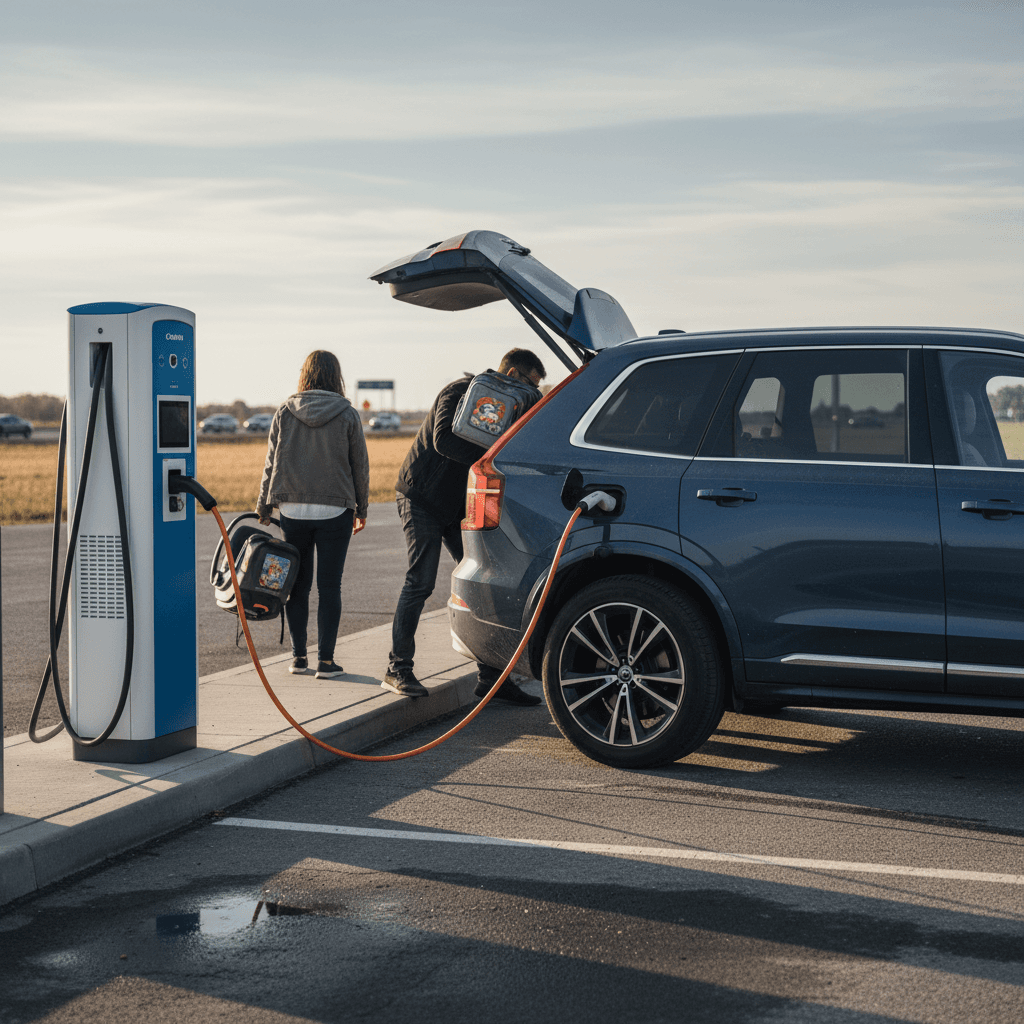
Home charging is non‑negotiable
Step 4: Seating, cargo and family practicality
On the showroom floor, the EX90’s minimalist interior and big glass roof can be intoxicating. But you’re not buying a sculpture; you’re buying a family tool. This is where you get brutally honest about seat comfort, third-row usability and how your actual stuff will fit.
Row-by-row comfort check
- Front row: Are the seats supportive on your spine and thighs after 20–30 minutes? Play with lumbar and side-bolster settings. Try different driving positions.
- Second row: Can adults sit comfortably behind a tall driver? How is headroom with the panoramic roof? If you have kids, bring their actual car seats and see how many fit across.
- Third row: This row is realistically sized for kids or small adults. Have potential passengers climb back there, and verify knee room, toe room and ease of access with seats and boosters installed.
Cargo and real-world usability
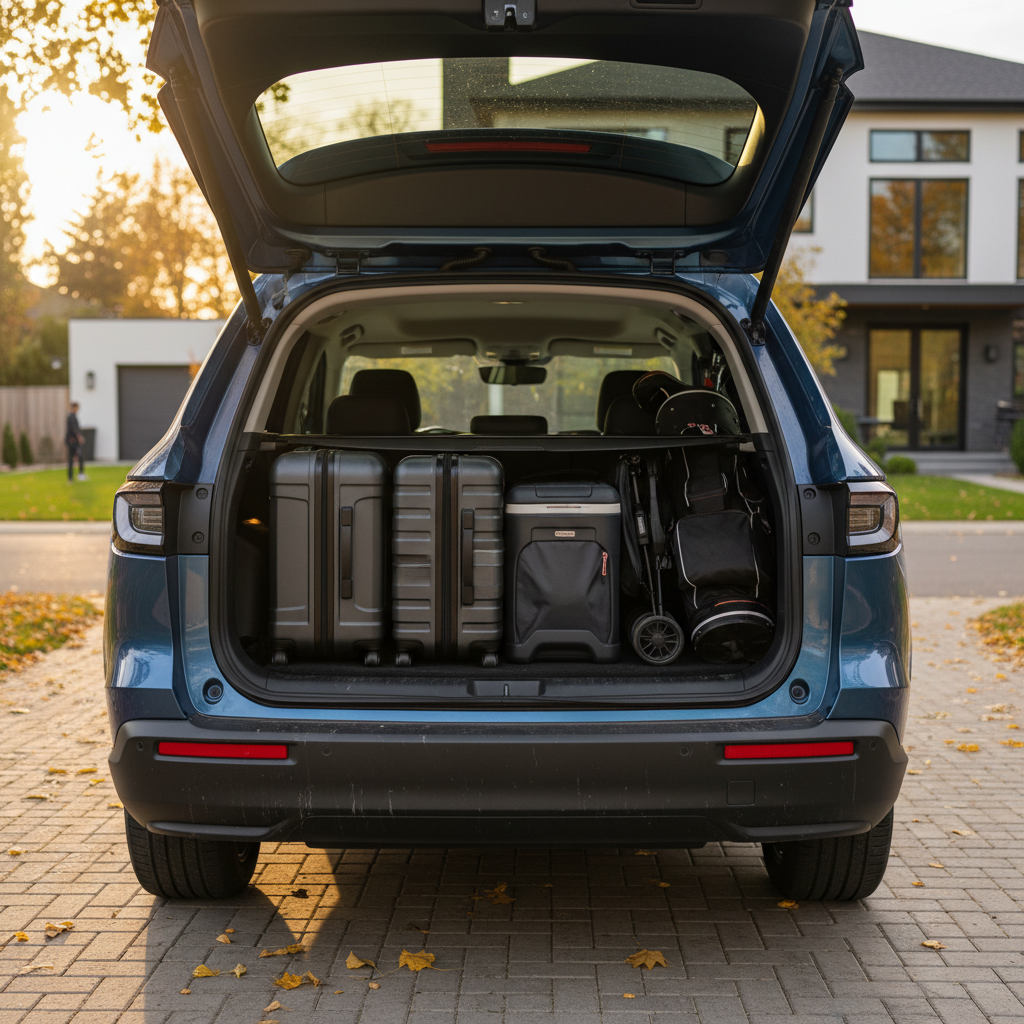
- With all rows up: Check whether strollers, backpacks and a few grocery bags fit with the third row in use. Many three-row EVs are tight here.
- With third row folded: This is the mode many families use most. Lay down your luggage, sports gear, or Costco haul and see how space feels.
- Underfloor storage: Look for spots to stash charging cables, adapters and emergency gear so they’re not rolling around in the main cargo area.
Car-seat and tether reality check
Step 5: Safety, lidar and driver‑assist tech
Safety is the EX90’s calling card: structural engineering, a big battery in the floor and a roof-mounted lidar sensor supporting advanced driver-assist systems. But hardware is only half the story; software maturity and calibration matter just as much.
Safety and driver-assist checklist
Start with the basics, then dive into advanced tech.
Crash structure & airbags
Verify that your target EX90 trim has the full set of airbags and structural reinforcements standard in your market. Most do, but equipment can vary by region and package.
Lidar and camera hardware
Inspect the roof-mounted lidar pod and surrounding cameras for physical damage, chips or misalignment. Ask whether the car has ever had windshield or roof glass replaced, and if so, whether sensors were recalibrated.
Driver-assist performance
On a test drive, try adaptive cruise and lane-centering on a stretch of highway you know well. The goal isn’t ‘hands-off driving’, it’s predictable and confidence-inspiring assistance, without phantom braking or ping-ponging between lane lines.
Feature set and subscriptions
Clarify which driver-assist features are fully included vs. tied to software options or subscriptions. Ask the seller to show you the active features in the settings menu.
Software update history
The EX90 has had its share of early software gremlins. Ask which over-the-air updates have been applied, whether any recalls are outstanding and whether the seller has service records documenting major fixes.
Emergency support
Understand how the EX90 handles emergencies: automatic emergency braking, driver monitoring and any emergency stop assist features. Confirm that required cameras and sensors are clean and functioning.
Don’t accept warning lights or disabled safety features
Step 6: Software experience and infotainment
The EX90 leans heavily on a central touchscreen and Google-based software for everything from climate to navigation. When it works, it’s slick. When it doesn’t, the whole ownership experience can feel rough around the edges. That makes software evaluation a key part of your buying checklist, especially for used examples.
Infotainment and software checklist
Startup and responsiveness
From a cold start, time how long it takes for the main screen to become responsive. Laggy, glitchy behavior may improve with updates, but it can also signal deeper issues.
Navigation and charging integration
Plot a long trip that requires charging stops. Verify that the system suggests realistic chargers, preconditions the battery before fast charging and shows accurate arrival state‑of‑charge estimates.
Climate control usability
Because climate is screen-based, make sure you can adjust temperature, seat heaters and defrosters quickly while driving. If basic tasks feel distracting in a test drive, they’ll be worse in daily use.
Phone integration
Test Android Auto or Apple CarPlay (where available), Bluetooth pairing and call quality. Confirm whether your preferred smartphone ecosystem is supported, and how well.
Over‑the‑air update policy
Ask how often the car has received software updates, whether they’ve improved or degraded anything, and how long installs typically take. Make sure you’re comfortable living with an evolving software platform.
Remember: you’re buying a computer on wheels
Step 7: Total cost of ownership and resale
A lot of EX90 shoppers fixate on MSRP or monthly payment and forget the other side of the ledger: charging costs, insurance, maintenance, depreciation and potential software or hardware fixes down the line. A simple worksheet today can save thousands over the life of the vehicle.
Ownership cost questions to answer
- Electricity vs fuel: Estimate your home charging cost per kWh from your utility bill and multiply by the EX90’s typical consumption (commonly in the low‑20 kWh/100 km or high‑20s kWh/100 mi range).
- Insurance: Get actual quotes with VINs when possible. Advanced sensors, glass roofs and expensive bodywork can push premiums up.
- Maintenance: EVs skip oil changes but still need tires, brakes, coolant and occasional high-voltage system checks. Budget for premium EV tires, this is a heavy, powerful SUV.
Resale, incentives and financing
- EV incentives: Check federal, state and local incentives for both new and used EVs. Some U.S. tax credits now transfer at the point of sale.
- Depreciation: Early EX90s will likely depreciate faster than mature models as the platform and software evolve. That can be an opportunity if you’re buying used, but a risk if you’re the first owner.
- Financing options: If you’re exploring used EX90s, platforms like Recharged can help you finance a used EV, trade in your current vehicle and compare total-cost scenarios side-by-side.
How Recharged can help on costs
Ready to find your next EV?
Browse VehiclesStep 8: Buying a used Volvo EX90 – what to check
Because the EX90 is both new and complex, the used market will be a mix of early software builds, hardware revisions and owners with very different charging habits. A disciplined inspection process protects you from inheriting someone else’s experiment.
Used Volvo EX90 inspection checklist
1. Battery health and DC fast‑charge history
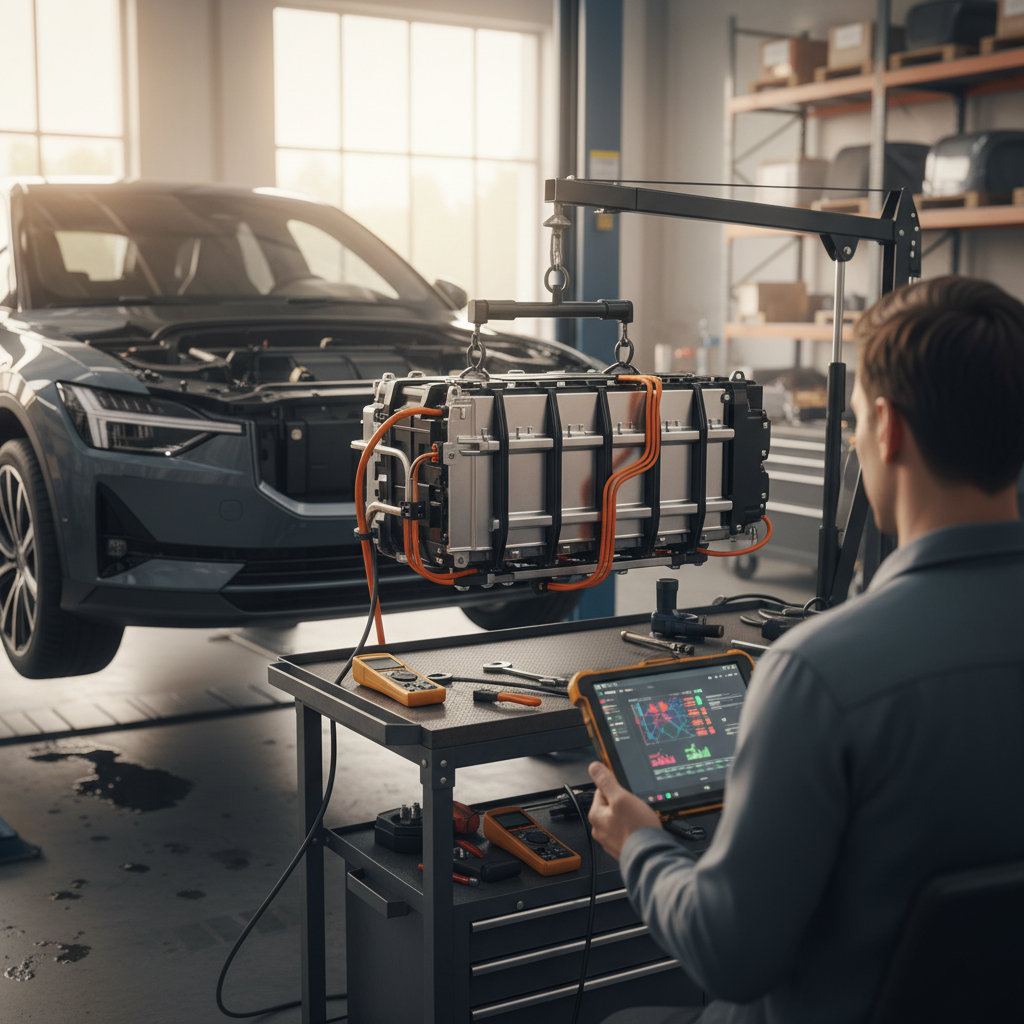
Ask for a <strong>battery health report</strong> that shows usable capacity vs original. Heavy DC fast charging isn’t necessarily a deal-breaker on its own, but unexplained capacity loss is. On Recharged, the Recharged Score includes a verified battery-health assessment so you’re not guessing.
2. Software version and recall status
Have the seller show you the current software version, then confirm with a Volvo dealer or official documentation that all critical recalls and service campaigns are complete.
3. Charging hardware and accessories
Verify that the original <strong>charge cable, NACS adapter (if equipped)</strong> and any wallbox hardware being sold with the car are present and functional. Missing adapters and cables can add hundreds of dollars to your real purchase price.
4. Sensor, glass and paint condition
Inspect the lidar pod, cameras, bumpers and panoramic roof for chips, cracks or previous repairs. ADAS sensors live in these parts; sloppy bodywork can lead to chronic driver-assist issues.
5. Tires, wheels and brakes
Look for uneven tire wear (which can signal alignment or suspension issues) and curb rash on the big wheels. Given the EX90’s weight and torque, under-spec or mismatched tires are a red flag.
6. Charging and long‑drive test
If possible, do at least one <strong>DC fast charge</strong> from a low state-of-charge and a longer highway drive. Watch for charging speeds that are dramatically below expectations, software glitches or warning lights under sustained load.
In a software‑defined EV like the EX90, a clean battery and charging history can be more important than low odometer miles. You’re buying a system, not just a chassis.
Use a standardized inspection report
Volvo EX90 buying checklist summary
The Volvo EX90 is one of the most ambitious three-row EVs on the market: big battery, high-end safety hardware and Scandinavian design inside and out. That ambition comes with complexity, from fast-evolving software to 800‑V charging hardware and dense driver-assist stacks. The point of a structured Volvo EX90 buying checklist isn’t to scare you off, it’s to make sure the specific EX90 you pick fits your usage, charging reality and risk tolerance.
- Start with your use case: family size, commute, climate and road trips.
- Choose the right drivetrain and battery rather than chasing the highest horsepower number.
- Validate range and charging for your real routes, including home charging capabilities.
- Stress-test seating, cargo and car-seat fit with your actual family and gear.
- Treat safety and driver-assist features as must-have and fully functional, not optional.
- Evaluate software behavior and over-the-air update history, especially on used cars.
- Model your total cost of ownership, not just payment or price.
- On used EX90s, prioritize battery health, sensor integrity and documentation over cosmetic perfection.
If you’d like help comparing a Volvo EX90 to other used EVs, or want objective data on battery health, range and fair pricing, a platform like Recharged can do a lot of the heavy lifting. Every vehicle we list includes a Recharged Score battery-health report, transparent pricing and expert EV guidance from first click to delivery, so you can decide whether the EX90 is the right flagship for your driveway, or if a different EV better matches your needs.