If you’re eyeing a Volvo EX30, or already have one in the driveway, you’re probably wondering what it will be worth in five years. The EX30 is a small, stylish luxury EV SUV, and that means **depreciation and battery health** will matter a lot more to your wallet than leather stitching or ambient lighting. Let’s walk through what we know so far about Volvo EX30 value after 5 years, what’s still uncertain for such a new model, and how you can protect yourself whether you’re buying or selling.
A quick reality check
Why Volvo EX30 value after 5 years matters
Depreciation is usually the single biggest cost of owning any new car, and it’s especially brutal with luxury EVs. A compact electric SUV like the Volvo EX30 can lose tens of thousands of dollars in value in its first five years. If you buy new, this affects how much equity you’ll have when you trade it in or sell it. If you buy used, it determines whether you’re getting a screaming deal or walking into a money pit.
On top of that, EV shoppers have a few extra questions on their minds: Will the battery still be healthy? Will the charging standard still make sense? Will software support and parts still be solid if Volvo leaves the U.S. with this model? The goal of this guide is to give you a realistic, numbers-backed way to think about all of that so you can decide whether the EX30 fits your 5‑year plan.
Quick answer: What is a Volvo EX30 worth after 5 years?
Estimated 5‑year Volvo EX30 value snapshot
Early European data and third‑party valuation tools suggest that a Volvo EX30 may retain roughly **45–50% of its original value after 5 years** in markets where demand stays decent. In the U.K., for example, some tools currently peg a 5‑year‑old EX30 at around **46% of its original price**. That’s a touch better than the worst luxury EVs, but still more depreciation than a comparable gas SUV.
Translating that to a U.S. example: if your EX30 had an MSRP of about **$44,000**, a reasonable 5‑year value range might be roughly **$18,000–$22,000**, assuming normal mileage, no major accidents, and a healthy battery. A high‑spec Twin Motor model that stickered closer to $50,000 and piled on miles could drift lower; a well‑optioned but gently used Single Motor example might sit on the higher side of that range.
Don’t read these numbers like a contract
How the EX30’s 5‑year depreciation compares to other EVs
Where the EX30 sits in the 5‑year value pecking order
Broad EV segments vs. the EX30’s likely trajectory
Compact gas SUV
Typical 5‑year retained value: 50–60%.
Think mainstream crossovers from Honda, Toyota, Subaru. These are depreciation champs thanks to broad demand and cheap running costs.
Luxury EV SUV
Typical 5‑year retained value: 35–45%.
Models like the Jaguar I‑Pace and some big‑ticket German EVs are often used‑car bargains because they shed value fast.
Volvo EX30 (forecast)
Likely 5‑year retained value: ≈40–50%.
Positioned slightly better than the worst luxury EVs, but unlikely to match mainstream gas SUVs.
Recent market analyses show that battery‑electric vehicles as a group now lose close to **60% of their value over five years**, and luxury EV sedans and SUVs often end up in the **55–65% depreciation** range. That’s steeper than most gas models, which have settled into the mid‑40% range for 5‑year depreciation.
The Volvo EX30 slots into a weird middle ground. It’s a **small, relatively affordable luxury EV**, which helps, but it also belongs to a segment, luxury electric SUVs, that historically takes some of the biggest hits. Add in the EX30’s short U.S. model run, and you get an EV that’s likely to lose value faster than a RAV4 Hybrid, but not necessarily as catastrophically as a six‑figure German EV sedan.
Key factors that shape 5‑year Volvo EX30 value
1. Original price and incentives
The more discount or tax credit is baked into the first buyer’s deal, the more room there is for resale values to look ugly on paper. A $47,000 EX30 that effectively cost the first owner $40,000 after incentives and rebates doesn’t have to be worth all that much five years later before the numbers look harsh.
For used buyers, that’s not bad news, it just means you’re letting the first owner swallow that early loss.
2. Luxury EV headwinds
Luxury EVs have been some of the fastest‑depreciating vehicles on the market. High MSRPs, fast tech turnover, and buyer skepticism about long‑term battery costs all play a role.
The EX30’s upside is that it starts lower than many rivals. The downside is that it’s competing in a segment where brand cachet and infotainment tech change quickly, which tends to drag values down.
3. Volvo discontinuing the EX30 in the U.S.
Volvo has already announced that 2026 will be the final model year for the EX30 in the U.S. That could tilt used values either way. If parts and support stay strong, the EX30 might become a niche, sought‑after model. If owners perceive parts or software support as risky, values could sag.
Buyers should assume a modest discount baked in for that uncertainty, and verify local dealer support before committing.
4. Trim, options, and drivetrain
The EX30 comes in Single Motor and Twin Motor variants with different ranges and performance. Historically, mid‑trim, single‑motor versions with decent range and simpler hardware tend to hold value better than fully loaded rockets with thirsty performance and expensive tires.
In other words: a well‑equipped, not‑maxed‑out EX30 is often the sweet spot for 5‑year value.
How Recharged looks at EX30 value
Battery health & warranty: The biggest driver of EX30 resale
With any EV, long‑term value lives and dies on the battery. For the EX30, that means two things: how the pack actually ages, and what Volvo is willing to stand behind if things go wrong.
Typical Volvo EX30 warranty coverage (North America)
How the EX30’s battery coverage compares to the rest of the car.
| Component | Time limit | Mileage limit | What it means for 5‑year value |
|---|---|---|---|
| New Vehicle Limited Warranty | 4 years | 50,000 miles | Covers most of the car; on a 5‑year timeline, year 5 is just outside this window. |
| High‑voltage battery | 8 years | 100,000 miles | Battery defects and excessive capacity loss are covered well past the 5‑year mark. |
| Corrosion (perforation) | 12 years | Unlimited miles | Body rust‑through isn’t likely to affect a 5‑year‑old EX30’s value. |
Always verify the warranty booklet for your specific model year and market – terms can change.
In North America, the EX30’s high‑voltage battery is generally covered for **8 years or 100,000 miles** against defects and excessive capacity loss. That means a five‑year‑old EX30 with typical mileage is still deep inside its battery warranty, which is a major confidence boost for second owners.
Early owner reports suggest that the EX30’s battery degradation in the first 20,000–30,000 km has been modest, often in the low single digits, especially for cars that spend most of their time on AC charging rather than DC fast chargers. That tracks with what we see across modern EVs: it’s rare to see a healthy pack down below the mid‑80s in state of health (SOH) at year five, assuming normal use and no defects.
Know the recall landscape
Battery checks that really move EX30 value
1. Verify remaining battery warranty
Confirm the in‑service date and mileage so you know exactly how much of the 8‑year/100,000‑mile battery warranty is left. A car with three or more years of coverage remaining will be easier to resell.
2. Get a real SOH reading
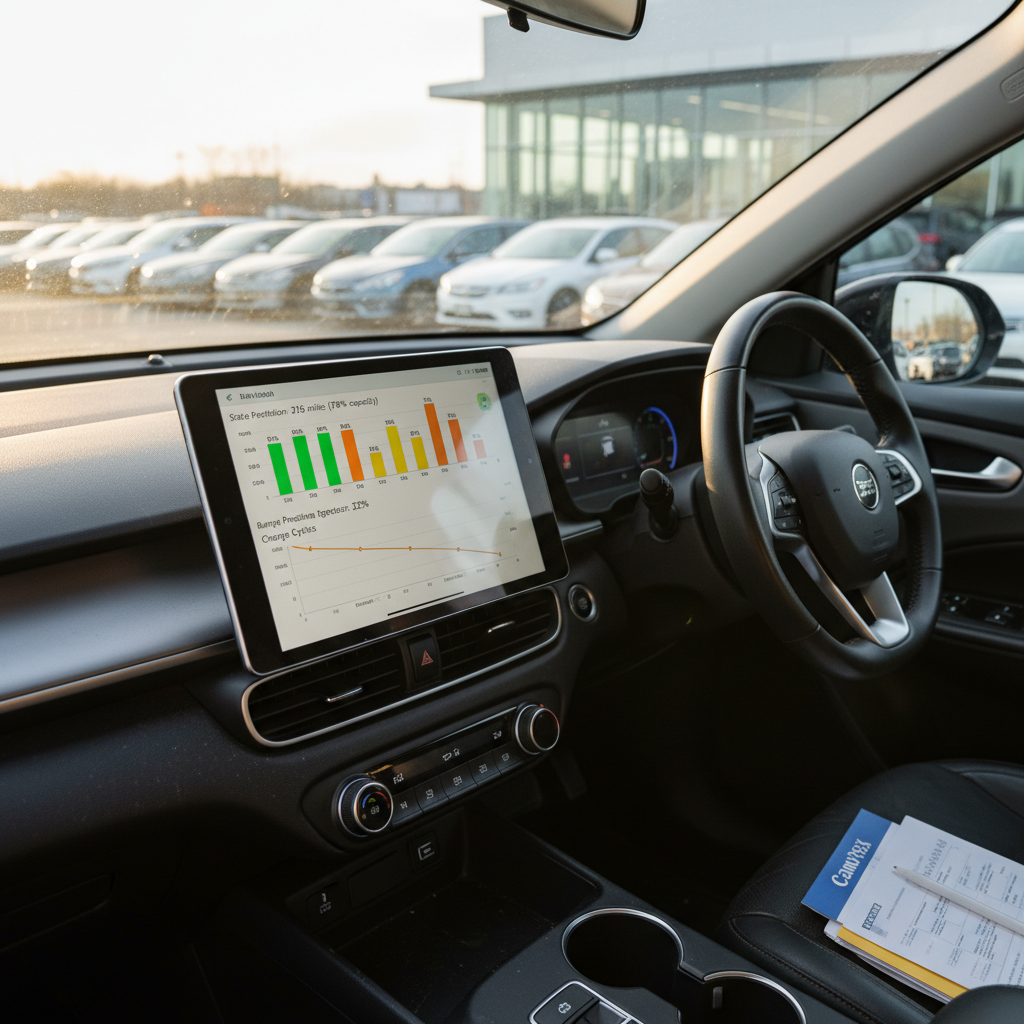
Dashboard range estimates are guesses. Ask for a <strong>proper battery health scan</strong>. At Recharged, every EX30 gets a Recharged Score battery report so you can see state of health, charge history patterns, and any battery‑related fault codes.
3. Look at fast‑charging history
Heavy DC fast‑charging isn’t automatically bad, but a car that was almost exclusively fast‑charged may warrant a closer look and a small price discount vs. an EX30 that lived on a Level 2 charger in a garage.
4. Check software and recall status
Some battery‑related updates arrive via software. Make sure the EX30 is on current software and that any battery or charging recalls have been addressed before you agree on a price.
Ownership costs beyond depreciation
What a 5‑year‑old EX30 might cost to own each year
Depreciation is only part of the 5‑year picture. A small EV like the EX30 generally costs less to fuel and maintain than a comparable gas luxury SUV, but it can be more expensive to insure and repair after a collision.
- Energy costs: If you do most of your charging at home, your "fuel" cost per mile will usually beat a comparable gas SUV by a wide margin.
- Maintenance: No oil changes and fewer moving parts, but you still have brakes, tires, suspension components, and cooling systems to service.
- Insurance: Luxury EVs can be pricier to insure, partly due to repair complexity and high parts costs.
- Repairs and body work: Advanced driver‑assist sensors and aluminum or composite panels can make minor crashes surprisingly expensive. That can influence how insurers value and total these cars, another subtle driver of used pricing.
How Recharged factors costs into pricing
Is the Volvo EX30 a good 5‑year buy?
Where the EX30 shines over 5 years
- Right‑sized and efficient: Easy to park and cheap to “fuel,” especially if you have home charging.
- Modern safety tech: Strong crash‑test scores and Volvo’s safety heritage help resale.
- Battery warranty coverage: Five‑year‑old examples still enjoy several years of high‑voltage battery protection.
- Used‑market sweet spot: First owners will absorb heavy early depreciation, creating value for second owners.
Where you need to be cautious
- Model discontinuation in U.S.: Support and perception risk can depress values in some regions.
- Luxury EV depreciation: Don’t expect it to hold value like a RAV4 Hybrid or CR‑V.
- First‑generation quirks: Early software bugs, recalls, and build issues can scare off some buyers later.
- High‑spec trims: Twin Motor Ultras may lose value faster than simpler, cheaper trims.
The sweet spot for many shoppers
How to evaluate a used Volvo EX30
Because the EX30 is still new to the market, every used example tells a story, how it was charged, where it lived, and how well its software and recalls were handled. Here’s a practical checklist to separate the great cars from the ones you should walk away from.
Used Volvo EX30 evaluation checklist
1. Start with VIN history and recall status
Run a full history check to verify title, accidents, mileage, and open recalls. Any structural damage or unresolved high‑voltage battery recall should trigger a price re‑think, or a polite "no thanks."
2. Confirm in‑service date and warranty left
Ask for the original sales paperwork or service records to pin down when the 4‑year/50,000‑mile base warranty and 8‑year/100,000‑mile battery warranty started. This matters more than model year on a 5‑year value horizon.
3. Get a professional battery health report
Insist on a real battery diagnostic, not just a screenshot of the range estimate. At Recharged, every Volvo EX30 listing includes a <strong>Recharged Score Report</strong> with verified battery health so you can see the pack’s true condition.
4. Inspect tires, brakes, and suspension
Short‑wheelbase EVs can be hard on tires, and regenerative braking doesn’t make you immune to warped rotors or worn pads. Uneven wear or cheap mismatched tires are red flags about how the car was cared for.
5. Test all driver‑assist and infotainment features
Make sure adaptive cruise, lane‑keeping, parking sensors, cameras, and app connectivity all behave like they should. Glitchy driver‑assist tech can turn into spooky test drives and lower future resale.
6. Take a long, mixed‑speed test drive
Drive on city streets and highway. Listen for wind and suspension noise, feel for shudders under braking, and note whether the car tracks straight without needing constant steering input.
How Recharged simplifies the used EX30 hunt
Tips to protect your Volvo EX30’s value
If you already own an EX30, or you’re about to bring one home, there’s a lot you can do to stay on the right side of that 40–50% 5‑year value range. Think less about babying the car and more about making life easy for the next owner.
Simple habits that pay off at resale
You don’t need to obsess, just be consistent.
Charge thoughtfully
- Use Level 2 at home when possible.
- Reserve DC fast charging for trips.
- Avoid sitting at 100% or near 0% for long periods.
Document everything
- Keep service records and recall paperwork.
- Save screenshots of major software updates.
- Log any battery health checks.
Keep it clean and straight
- Fix minor cosmetic issues before they snowball.
- Repair curb‑rashed wheels and cracked glass.
- Detail the interior annually, especially light‑colored cabins.
- Consider a mid‑trim configuration if you’re buying new. Middle‑of‑the‑road specs are often easier to sell than fully loaded price‑point stretchers.
- Stay inside reasonable annual mileage. A five‑year‑old EX30 with 45,000 miles will typically be worth more than one with 80,000, even with similar battery health.
- Sell or trade before the battery warranty runs out if you’re ultra value‑sensitive. The remaining warranty is a powerful sales tool for the next owner.
- If you’re leasing, know the residual and buyout terms on day one. Some EX30 lease deals have used high money factors and conservative residuals, which can make buying out the lease a surprisingly good, or surprisingly bad, idea depending on how used prices shake out.
Watch lease math carefully
FAQ: Volvo EX30 value after 5 years
Frequently asked questions about 5‑year Volvo EX30 value
Bottom line on 5‑year Volvo EX30 value
The Volvo EX30 is one of the most interesting small EVs to hit the market in years, and one of the hardest to forecast. As a luxury EV, it’s almost guaranteed to depreciate faster than a mainstream gas SUV, but its relatively modest starting price and long battery warranty give it a better shot at holding value than some six‑figure electric flagships.
If you’re shopping new, go in with clear eyes: run the numbers over the full five‑year span and be realistic about where 40–50% retained value leaves you. If you’re shopping used, the EX30 could be a smart buy, if you let the first owner take the big depreciation hit and insist on hard data about the battery and history.
And if you’d like backup, Recharged was built to make this kind of decision easier. Every used EV we list, including the EX30, comes with a Recharged Score battery health report, fair‑market pricing, financing options, trade‑in support, and nationwide delivery. That way, when you think about your EX30’s value after five years, you’re not guessing, you’re planning.