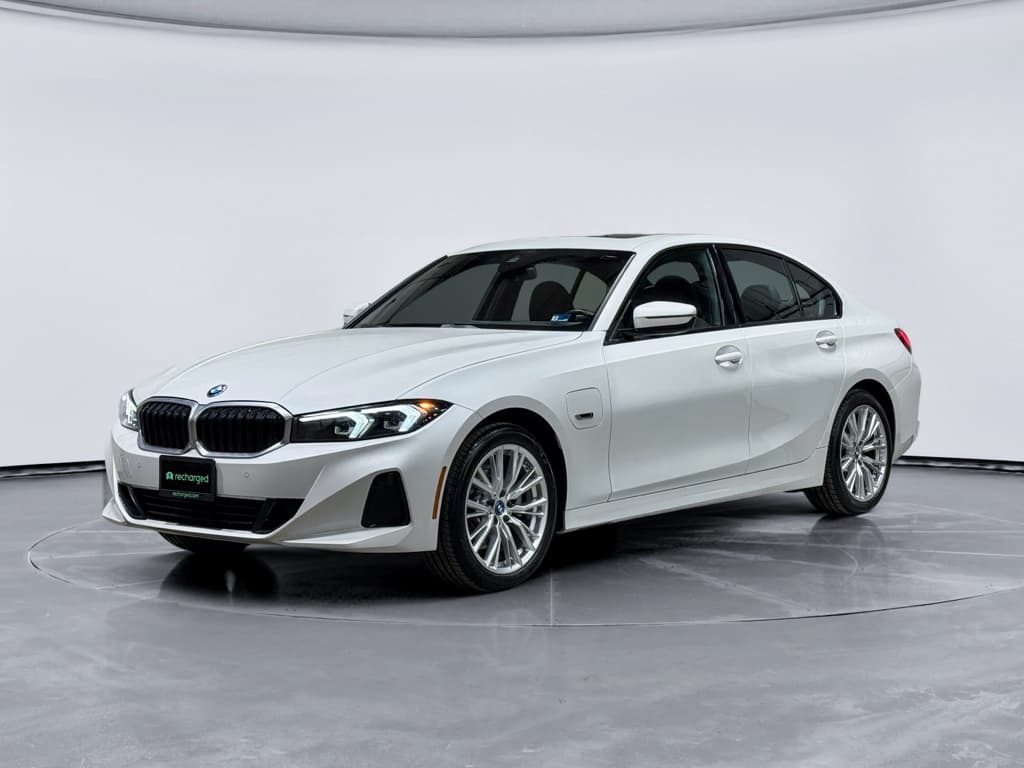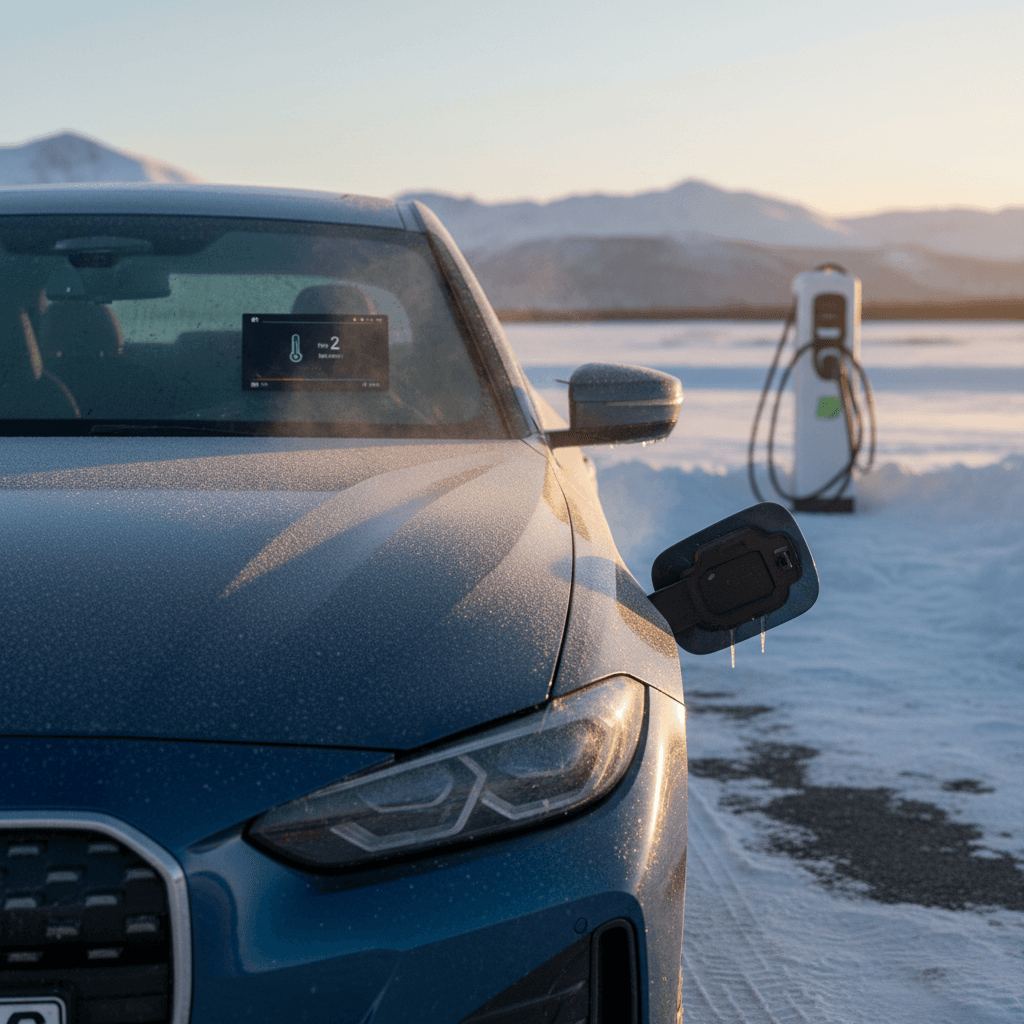
If you live where winter actually feels like winter, BMW i4 range in cold weather is more than a curiosity, it’s the difference between a relaxed commute and watching the remaining miles tick down with white knuckles. The good news is that the i4 is one of the more efficient luxury EVs, but like every electric car, cold temperatures can easily trim 20–40% off its rated range depending on how and where you drive.
Quick answer: BMW i4 winter range
BMW i4 winter range at a glance
Typical BMW i4 winter range (real‑world)
On paper, recent BMW i4 models offer EPA ranges from the low‑ to mid‑300‑mile neighborhood, depending on trim and wheels. In reality, cold weather pushes those numbers down, but how far they fall depends heavily on speed, trip length, and how you use the heat. To make sense of it, you first need to understand why EVs struggle in the cold.
Why the BMW i4 loses range in cold weather
- Battery chemistry: Lithium‑ion cells are less efficient when cold, so it takes more energy to pull the same power out of the pack and to charge it back up.
- Cabin heating: Unlike a gas car that gets “free” heat from engine waste, your i4 has to power an electric heater or heat pump, which can easily draw several kilowatts, similar to cruising at highway speed.
- Drivetrain and tire drag: Thickened lubricants, cold tires, and slushy roads all increase rolling resistance, meaning more energy per mile.
- Auxiliary loads: Heated seats, steering wheel, defrosters, and lights all nibble at the battery, especially on dark winter commutes.
Cold hurts most before you start driving
BMW mitigates some of this with battery preconditioning and, on most trims, a heat pump. Preconditioning uses grid power (when plugged in) to warm the pack and cabin before you leave, so more of your battery is reserved for actually moving the car. But even with the tech working for you, you should assume meaningfully lower range in winter than you’ll see on a pleasant spring day.
How much BMW i4 range you’ll lose in cold weather by trim
To talk about BMW i4 range in cold weather, we need a baseline. Recent model years (with standard wheels) cluster roughly here for EPA‑rated range in ideal test conditions:
Recent BMW i4 trims and EPA-rated range (mild weather)
Approximate EPA ratings for common BMW i4 trims with standard wheels. Exact numbers can vary slightly by model year and wheel choice.
| Trim | Drivetrain | Battery (usable est.) | EPA range (approx.) |
|---|---|---|---|
| eDrive35 | RWD | ~67 kWh | 250–260 miles |
| eDrive40 | RWD | ~80 kWh | 295–301 miles |
| xDrive40 | AWD | ~80 kWh | ~280–290 miles |
| M50 (19" wheels) | AWD | ~80 kWh | ~245–270 miles |
| M50 (20" wheels) | AWD | ~80 kWh | ~225–230 miles |
Use these EPA figures as the starting point before applying typical winter reductions.
Now let’s translate that into what owners and testers typically see around freezing and below. These are ballpark, real‑world expectations on mixed driving with heat in use, not worst‑case, not hyper‑miling:
BMW i4 winter range expectations by trim
Rough real‑world ranges in cold weather with normal driving and heat use
eDrive35 (base)
Mild weather EPA: ~250–260 miles
Typical cold‑weather range: ~165–205 miles
- RWD and smaller battery
- Owners often report 25–35% loss below freezing
- Best suited for shorter commutes in cold climates
eDrive40
Mild weather EPA: ~295–301 miles
Typical cold‑weather range: ~190–240 miles
- One of the most efficient trims
- 20–35% loss is common in winter
- Good buffer for suburban commuting and moderate trips
xDrive40 (AWD)
Mild weather EPA: ~280–290 miles
Typical cold‑weather range: ~180–230 miles
- Extra traction, slight efficiency hit
- Plan on 25–35% loss in steady sub‑freezing temps
- Popular choice for snow‑belt drivers
M50 (performance)
Mild weather EPA: ~245–270 miles (wheel‑dependent)
Typical cold‑weather range: ~160–210 miles
- Dual motors and stickier tires sap efficiency
- 30–40% loss isn’t unusual in harsh cold
- Still fine for most daily driving if you plan ahead
These are ranges you can actually drive
City vs highway: BMW i4 range in the cold
City and suburban driving
In cold weather, the i4 often does better around town than on the interstate. You’re driving at lower speeds, which dramatically cuts aerodynamic drag, and you benefit more from regenerative braking.
- Stop‑and‑go lets the battery and cabin stay warm once up to temperature.
- Heat pump cycles on and off instead of blasting constantly.
- Typical loss vs summer: ~15–30% for many drivers.
Highway driving
Highway driving is where winter hits hardest. At 70–75 mph into cold air, aero drag and heater use stack up.
- Expect 20–40% less range than the EPA figure at typical U.S. highway speeds in real cold.
- Headwinds, wet roads, or heavy snow can trim even more.
- Plan winter road‑trip legs at about 60–70% of EPA range for comfort.
A simple winter highway rule of thumb
Short trips vs road trips in winter
Driving pattern matters just as much as temperature. The same i4 in the same weather can show wildly different efficiency if you’re doing a bunch of short hops versus a single long drive.
How your winter driving pattern changes BMW i4 range
Same weather, very different results
Lots of short trips
- Each cold start uses energy to re‑heat the cabin and battery.
- State of charge drops quickly even if miles stay low.
- Displayed range can look alarming: 10 miles of errands might eat 15–20 miles of indicated range.
- Great use case for preconditioning while plugged in.
Fewer, longer drives
- Warm‑up penalty gets spread over many more miles.
- Once the pack and cabin are warm, efficiency improves.
- You’ll see numbers closer to your car’s "best case" winter range.
- Ideal scenario for road‑trip planning and accurate consumption data.
Don’t panic over the “guess‑o‑meter”
How to protect your BMW i4 range in cold weather
Practical ways to keep BMW i4 range up in winter
1. Precondition while plugged in
Use the BMW app or in‑car departure timer to warm the cabin and battery while you’re still on shore power. You’ll leave with a warm car and fuller battery instead of burning range just to thaw things out.
2. Lean on seat and wheel heaters
Heated seats and steering wheel use much less energy than raising cabin air temperature by several degrees. Set the cabin a bit cooler and rely more on those localized heaters to stretch range without sacrificing comfort.
3. Reduce top speed on the highway
Dropping from 75 mph to 65 mph can save a surprising amount of energy, especially in cold dense air. Over a couple hundred miles, that can be the difference between one stop and two.
4. Use Eco Pro or efficient drive modes
BMW’s Eco‑oriented modes soften throttle response and can temper climate use, nudging you toward smoother, more efficient driving. It’s an easy way to recapture 5–10% of lost range without thinking too hard.
5. Check tire pressures regularly
Tire pressure drops as temperature falls. Running several PSI low increases rolling resistance and hurts both efficiency and braking. Set pressures to the placard spec when tires are cold, especially as seasons change.
6. Limit roof racks and heavy accessories
Exposed racks and cargo boxes add drag, which matters even more in winter. If you’re not actively using them, pulling them off the i4 will help range and cut wind noise.
The easy 3‑step winter routine
Planning winter road trips in a BMW i4
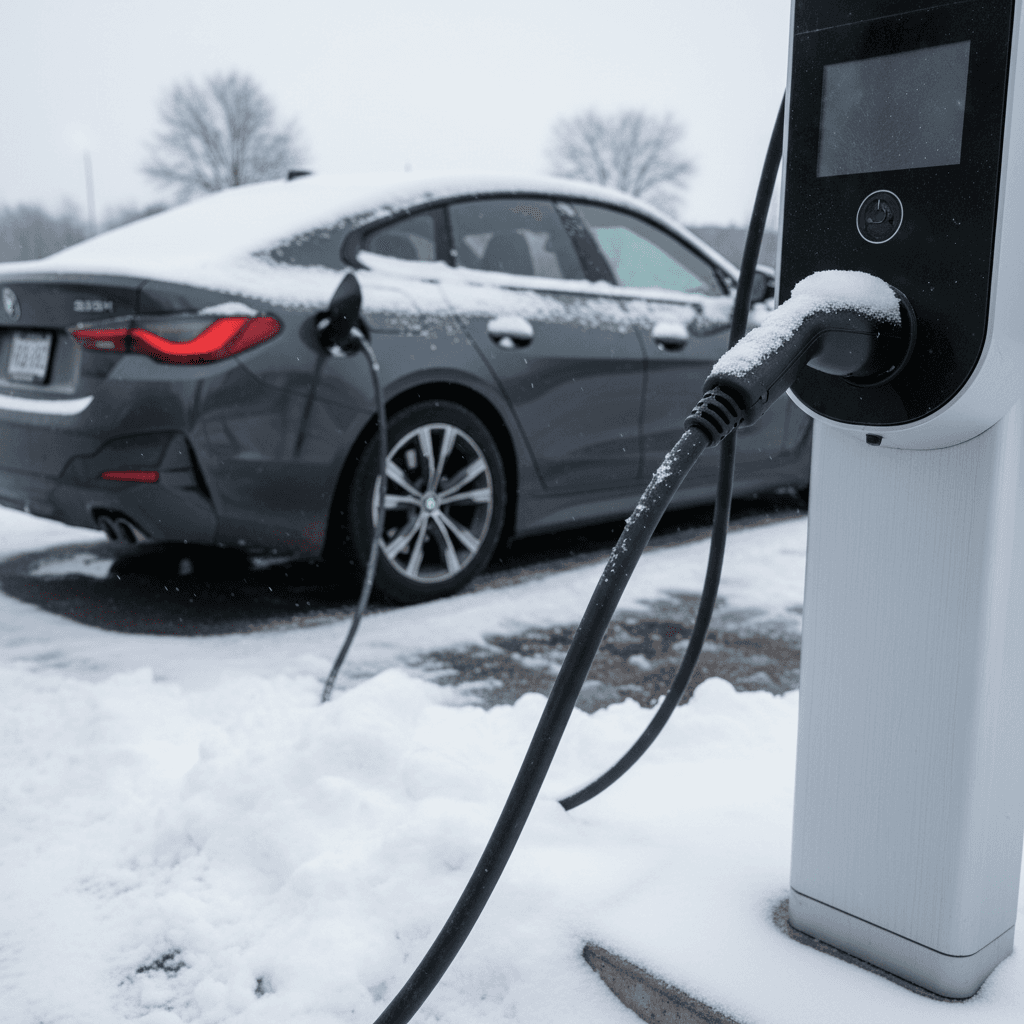
A lot of shoppers worry less about commuting and more about whether BMW i4 range in cold weather can handle a winter road trip to see family or get to the slopes. The answer is yes, if you plan your stops the way you’d plan fuel in a gas car with a small tank.
- Start with conservative leg lengths. In true winter conditions, plan routes assuming 60–70% of EPA range between fast‑charge stops.
- Target high‑speed DC fast chargers. Sites that can reliably deliver 150 kW or better let the i4 take full advantage of its capable fast‑charging curve.
- Arrive with a warm battery. Use built‑in route planning or manual preconditioning (if available) so the pack is warm when you plug in, especially important after a long downhill or gentle cruise.
- Charge in the “sweet spot.” In cold weather, it’s usually more time‑efficient to charge from roughly 10–15% up to 60–70% a couple of times than to push a single session to 90–100%.
- Build in a buffer. On winter trips, give yourself at least 15–20% battery cushion when you roll into a charger in case of unexpected detours, headwinds, or station issues.
Don’t trust a single charger in harsh weather
Battery health, cold weather and used BMW i4s
Cold temperatures themselves don’t permanently damage the BMW i4’s battery; in fact, heat is usually the bigger long‑term enemy. What winter does do is hide usable range behind inefficiency and higher auxiliary loads. That’s important context if you’re shopping a used i4 and test‑driving it in January.
- A winter test drive will almost always show lower projected range than an identical drive in May, even with a perfectly healthy pack.
- The i4’s range estimate is based on recent driving history, so a previous owner who did lots of short, cold trips can make the car look "worse" than it really is.
- You want an objective look at battery health that doesn’t confuse winter inefficiency with actual degradation.
How Recharged separates winter effect from real battery wear
If you’re comparing multiple used i4s, this kind of data matters. Two cars might both show 210 miles of projected range on a frosty day, but one could be a healthy eDrive40 simply coping with cold weather and the other an older M50 with a hard‑driven pack. A proper battery diagnostic, and understanding how cold skews day‑to‑day readings, helps you avoid paying top dollar for a car with a tired battery.
Is the BMW i4 right for you if you live in a cold climate?
When the i4 is an excellent winter choice
- Your daily round‑trip commute is comfortably within half the car’s EPA range, even after a 30–40% winter haircut.
- You can park and charge at home or work, so you’re not relying solely on public chargers in the cold.
- You’re willing to spend 30 seconds thinking about route planning on long winter drives.
- You appreciate the smooth, quiet feel of an EV in snow compared with a traditional gas sedan.
When you might want to think twice
- You routinely drive near the edge of the i4’s rated range with no charging at your destination.
- You live in an area with sparse DC fast‑charging coverage and severe winters (think remote mountain states).
- You’re not interested in using apps, preconditioning, or any range‑management tricks at all.
- You want a track‑day toy first and an all‑weather commuter second, in which case, a used M3 with snow tires might actually suit you better.
Where a used BMW i4 shines
If you’re cross‑shopping EVs and worried about BMW i4 range in cold weather, it pays to zoom out. Yes, you’ll give up some miles when the mercury drops. No, that doesn’t mean the car suddenly becomes impractical. Know your trim’s EPA range, knock off 20–40% for genuine winter driving, and be honest about your daily and occasional long‑trip needs. With that framework, plus smart habits like preconditioning and sane highway speeds, the i4 is a thoroughly capable all‑season companion. And if you’re exploring a used example, tools like the Recharged Score Report can separate seasonal quirks from true battery wear so you can buy confidently.