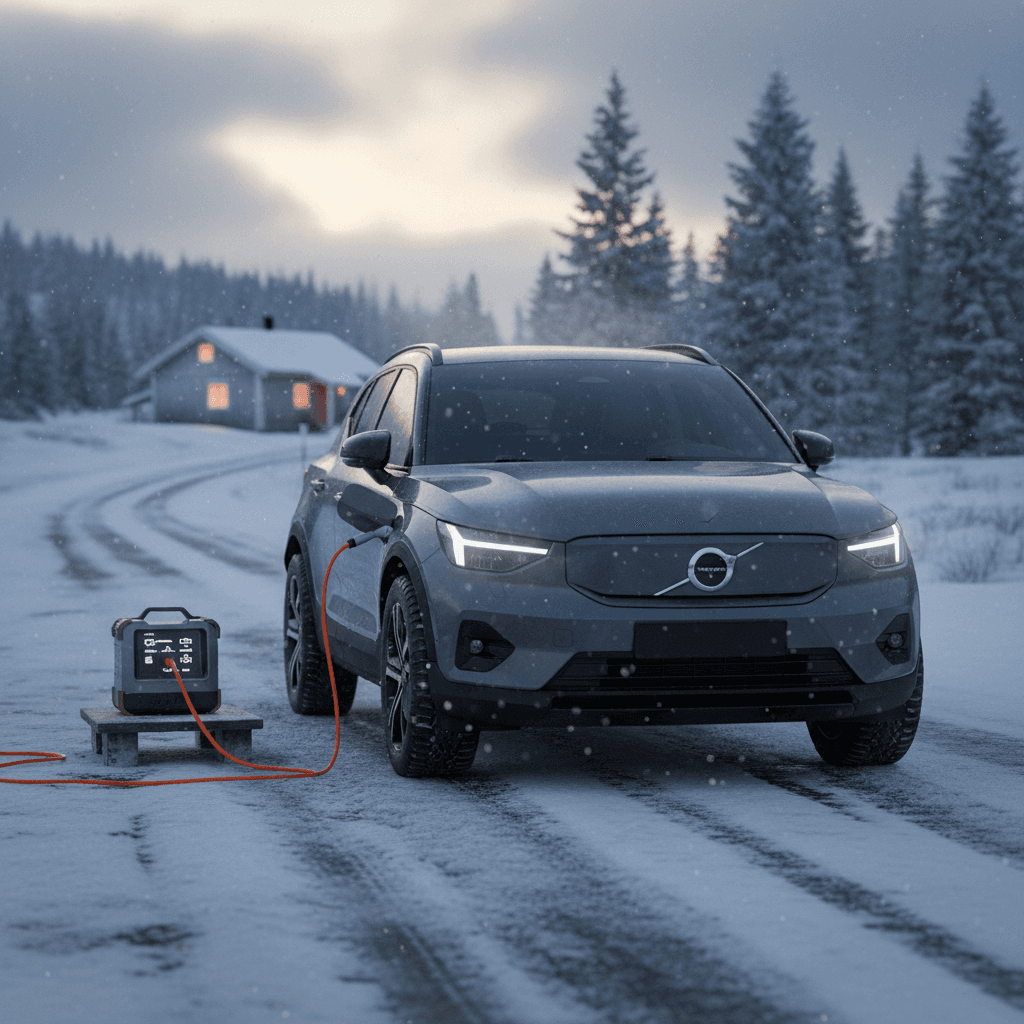
If you live somewhere with real winters, the Volvo EX30’s range in cold weather matters more than the brochure numbers. The EPA rating is one thing; what you actually see on a 20°F morning with the heater running is another. This guide breaks down how winter affects the EX30’s range, what owners and tests are seeing, and how you can get the most miles from every charge.
Quick answer
Volvo EX30 range basics: EPA vs real world
Before we talk about winter, it helps to anchor on the EX30’s official numbers. In the U.S., the 2025 Volvo EX30 lineup offers EPA‑estimated ranges up to 261 miles for the Single Motor variant, around 253 miles for the Twin Motor Performance, and roughly 227 miles for the Cross Country Twin Motor when equipped with 19‑inch wheels and under ideal test conditions.
2025 Volvo EX30 EPA-estimated range (U.S.)
Official EPA figures give you a starting point. Winter conditions will pull these numbers down, sometimes sharply.
| EX30 variant | Drivetrain | Battery (usable) | EPA-est. range (mi) | Typical mild-weather real-world |
|---|---|---|---|---|
| Single Motor | RWD | ~64 kWh | Up to 261 | 230–250 |
| Twin Motor Performance | AWD | ~64 kWh | Up to 253 | 215–240 |
| Cross Country Twin Motor Performance | AWD | ~64 kWh | Up to 227 | 200–215 |
EPA ratings assume mild weather, moderate speeds and no roof boxes or winter tires.
EPA isn’t a winter promise
Why cold weather cuts EX30 range
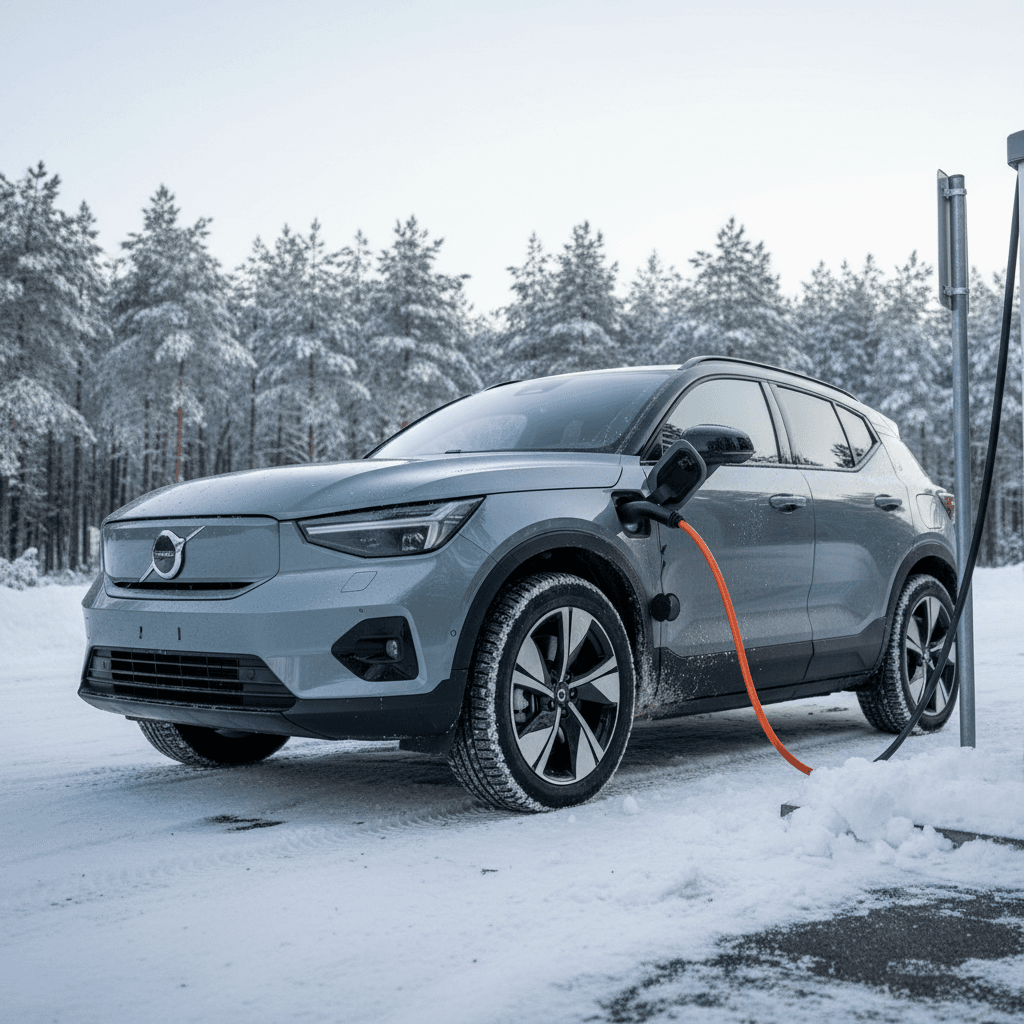
The EX30 behaves like other modern EVs in winter: range drops because the battery stores and releases energy less efficiently in the cold, and because you’re burning a lot of power to keep the cabin and pack warm. Large, instant‑on electric heaters are great for comfort, but they’re a noticeable load on a 64 kWh battery.
- Battery chemistry slows down below roughly 50°F, so the pack can’t deliver as much usable energy until it warms up.
- Cabin heating, seat heaters, defrost and steering‑wheel heat add a constant overhead, especially painful on short trips.
- Snow tires and cold, dense air increase rolling and aerodynamic drag, so the car needs more energy per mile.
- At very low temps, the EX30 limits fast‑charge speeds to protect the pack, which can lengthen winter road‑trip stops.
How much range EVs lose in winter, on average
Heat pump basics
EX30 variants, battery sizes and heat pump availability
Volvo keeps the EX30 lineup fairly simple: all versions use a ~64 kWh usable battery for North America, but the motor layout and battery chemistry differ by trim. That’s relevant for winter range and charging behaviour.
Volvo EX30 variants at a glance (U.S.-focused)
Same pack size, different motors and chemistries.
Single Motor (standard battery)
- RWD, smaller LFP pack in some markets
- EPA up to ~261 miles
- No heat pump on base trims in many regions
Single Motor Extended Range
- RWD, NMC battery (higher energy density)
- Longer official range; common U.S. spec
- Heat pump available or standard in many markets
Twin Motor Performance / Cross Country
- AWD, dual motors with NMC battery
- More power, slightly lower range
- Heat pump and more aggressive battery conditioning to support performance
Check your specific car
How much range the Volvo EX30 loses in winter
So what does all of this mean when you walk out to an EX30 that’s been sitting in a cold driveway overnight? Real‑world tests and owner reports from northern Europe and cold U.S. states paint a fairly consistent picture: plan on 15–35% range loss in typical winter driving, with the upper end of that range at higher speeds and colder temps.
Estimated Volvo EX30 winter range by scenario
Approximate planning numbers using the EPA rating as a baseline and typical owner/test data patterns.
| Scenario | Outside temp | Driving mix | Estimated % of EPA | Example real range (Single Motor, 261-mi EPA) |
|---|---|---|---|---|
| Cool, not brutal | 35–45°F | Mixed 50/50 city & highway | 85–95% | 220–245 miles |
| Typical winter day | 20–32°F | Mixed, moderate speeds | 70–85% | 180–220 miles |
| Cold & mostly highway | 10–25°F | 70–80% highway at 70–75 mph | 65–80% | 170–210 miles |
| Deep cold short hops | 0–15°F | Short trips, lots of pre‑heat | 50–70% | 130–180 miles |
These are estimates for planning, not guarantees. Your results will vary with speed, elevation, wind, snow and HVAC use.
Owner reports line up
Range is as good as the ID.4, far less affected by the cold and the forecasted range is stable, in that I can reliably drive to it.
City vs highway: EX30 winter range differences
In winter, the EX30’s driving pattern matters almost as much as the temperature. The car is relatively efficient around town, but fast, cold‑weather highway work will drain the pack much more quickly than the EPA sticker suggests.
Stop‑and‑go and short trips
- Worst case for range. The car spends a lot of time heating a cold cabin and battery for just a few miles of driving.
- If you take multiple short errands with cooldowns in between, the heater overhead dominates.
- Preconditioning while plugged in helps, but repeated cold starts still cost you range.
Steady highway runs
- Once the pack and cabin are warm, the heater’s share of total energy drops.
- However, at 70–75 mph in freezing temps, aero drag and rolling resistance spike, so consumption still climbs.
- On a long winter highway trip, expect to sit closer to the 65–80% of EPA band, depending on speed and wind.
Plan highway legs, not just daily errands
Charging the Volvo EX30 in cold weather
The EX30 can DC fast charge up to roughly 153–175 kW in ideal conditions, which is strong for its class. In the cold, though, you’ll often see much lower peaks unless the battery is properly warmed.
What to expect when charging the EX30 in winter
Cold batteries charge slower and less efficiently.
Cold-soaked pack
- After sitting outside below freezing, initial DC charge power may be well under 100 kW.
- The car ramps up as the pack warms, but early minutes are slower.
Preconditioning helps
- Using built‑in route‑to‑charger navigation so the car can precondition the battery on the way can restore closer‑to‑spec speeds.
- This is especially important on short drives to a fast charger.
Level 2 at home
- On a 240V home charger, expect more modest winter impact.
- Charging may start slightly slower when the pack is very cold, but will still comfortably refill overnight.
Don’t arrive at 0% in deep cold
10 ways to maximize your EX30’s winter range
You can’t beat physics, but you can stack the deck in your favor. These practical steps will help you squeeze more miles from every winter charge in a Volvo EX30.
Winter range optimization checklist for Volvo EX30 owners
1. Precondition while plugged in
Use the Volvo app or in‑car scheduling to warm the cabin and battery <strong>before you unplug</strong>. That shifts some of the heating load onto the grid instead of your battery.
2. Use seat and wheel heaters
Cabin air heating is energy‑heavy. Set the main climate a few degrees lower and lean on <strong>seat and steering‑wheel heaters</strong>, which are more efficient.
3. Dial back highway speeds
Cutting cruising speed from 75 mph to 65 mph can save a surprising amount of energy in cold, dense air. On long winter legs, this might add 10–30 miles of usable range.
4. Check tire pressures often
Cold air shrinks tire pressure. Under‑inflated winter tires add rolling resistance and chew through range. Check and correct pressures at least monthly in winter.
5. Limit roof boxes and racks
Roof boxes and ski racks hurt aerodynamics. If you must use them, <strong>treat your expected range conservatively</strong> and plan more frequent charging stops.
6. Avoid repeated short cold starts
When possible, chain errands together so the cabin and battery <strong>stay warm between stops</strong> instead of cooling off completely each time.
7. Use Eco/Range modes
If your EX30 trim includes eco or range‑oriented drive modes, use them in winter. They soften throttle response and can tame heater use.
8. Keep the pack between ~20–80% on trips
In winter road‑trip scenarios, many owners find it faster to charge from about 20% to 70–80% more often, instead of slow‑charging from very low to 100%.
9. Learn your car’s consumption
Watch kWh/100 mi or mi/kWh on the EX30’s display over a few cold weeks. That real number is better than any generic estimate when planning routes.
10. Use realistic trip planners
Third‑party route planners and Volvo’s built‑in navigation both assume range loss. Input winter consumption and temps so arrival‑state‑of‑charge estimates stay honest.
Good news for apartment dwellers
Buying a used Volvo EX30: winter-specific checks
If you’re eyeing a used Volvo EX30 in a cold‑weather state, you’ll want to look past the window sticker and think about winter behaviour. Battery health, heat‑pump equipment and prior fast‑charging habits all show up more clearly once temps drop.
- Confirm whether the car has a heat pump and which battery chemistry it uses (LFP vs NMC).
- Review any available service history for HVAC or high‑voltage system work, persistent heating issues are amplified in winter.
- Ask the seller how the car behaved on their coldest days: Did range estimates swing wildly? Did fast charging slow to a crawl?
- Inspect winter tires and wheels. Aggressive tread and larger wheel sizes can both impact range.
- If possible, test‑drive the car from a cold start and watch how estimated range changes during the first 10–15 minutes.
How Recharged helps with winter range
Because Recharged operates as a fully digital used‑EV marketplace with EV‑specialist support, you can compare multiple EX30s, different trims, mileage and histories, and understand how each one might perform in January, not just June. If you’re trading in a current EV, Recharged can also give you an instant offer or consignment option and line up financing and nationwide delivery so you’re not test‑driving a dozen cars in freezing weather.
Volvo EX30 winter range FAQ
Frequently asked questions about Volvo EX30 range in cold weather
Bottom line: Is the EX30 a good winter EV?
If you go in expecting its official numbers year‑round, the Volvo EX30’s range in cold weather will disappoint you. But that’s true of almost every EV on sale today. In practice, the EX30 lands right where we’d expect for a small, efficient crossover with a ~64 kWh battery: strong enough for most daily winter commutes, and perfectly workable for longer trips if you build in extra margin and charging stops.
For shoppers in snowbelt states, the smart move is to treat EPA range as a summer high‑water mark and plan winter around roughly 65–85% of that figure, depending on speeds and temperatures. If you’re comparing new or used EX30s, pay attention to heat‑pump availability, wheel and tire choices and verified battery health, especially on higher‑mileage examples. Recharged can help you sort through those details with a Recharged Score Report, EV‑specialist support, financing and trade‑in options, and even nationwide delivery so your next winter‑ready EV shows up at your door, not at the far side of an icy lot.