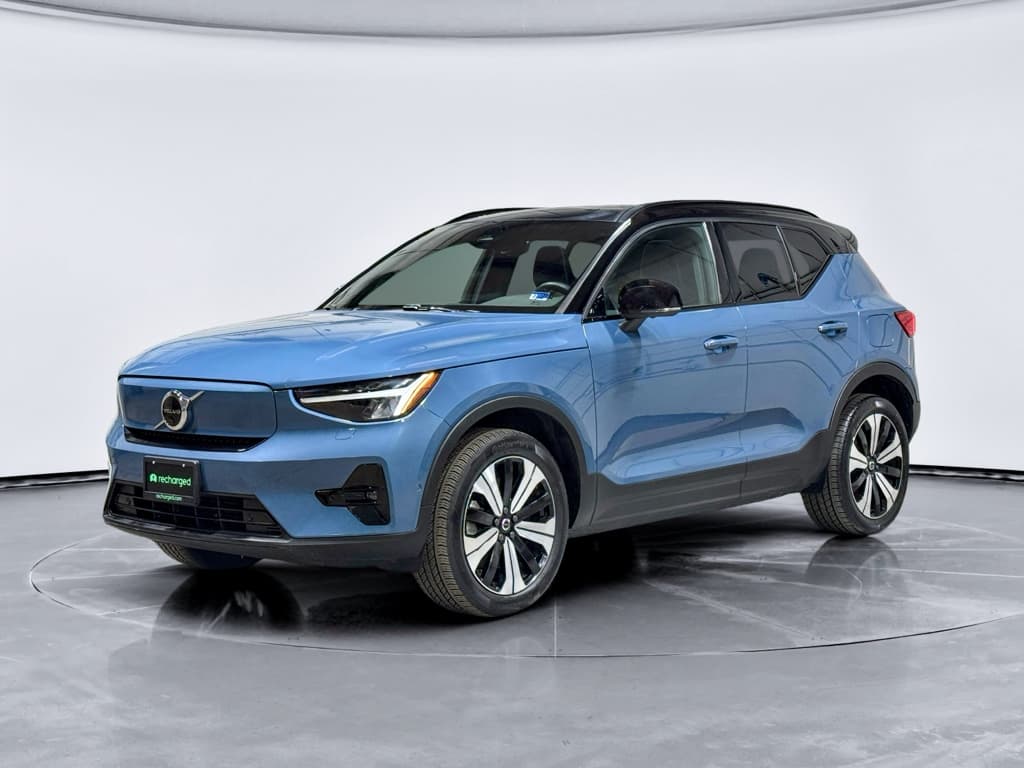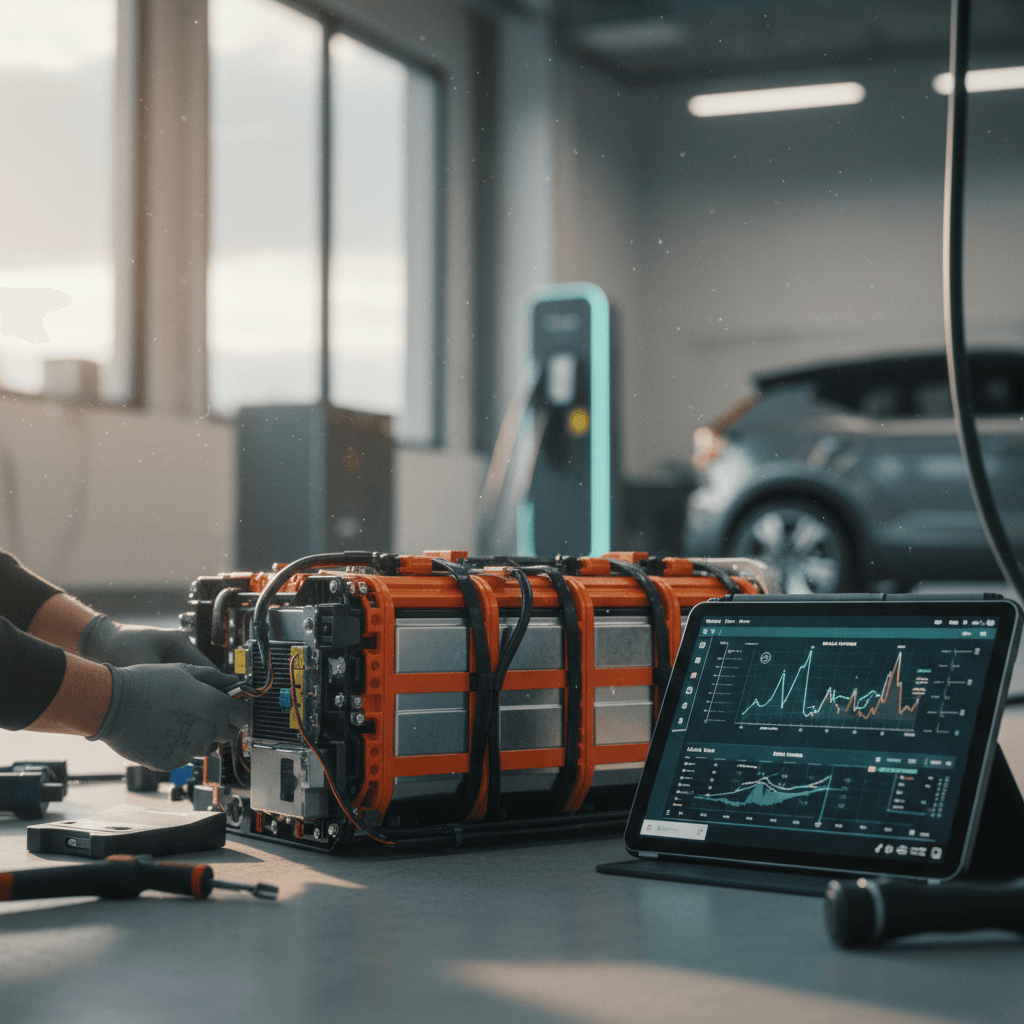
If you own – or are eyeing – a Volvo EX30, learning how to maximize battery life isn’t just a science project. It’s how you keep your real‑world range strong, protect your resale value, and avoid expensive surprises once the new‑car glow wears off. The good news: with a few smart charging and driving habits, you can dramatically slow battery degradation in your EX30.
Quick reality check
Why Volvo EX30 battery care really matters
The battery in your Volvo EX30 is its single most valuable component. Unlike a gas tank, a lithium‑ion pack slowly loses usable capacity over time. You might only notice this as a bit less range on your regular commute, but a few percentage points of degradation each year can add up over a decade of ownership.
- Battery health directly affects range – less usable capacity means fewer miles per charge.
- It also affects charging speed – a stressed or overheated pack may taper earlier at DC fast chargers.
- And it absolutely affects resale value – used‑EV shoppers are learning to ask about real battery health, not just odometer miles.
Think in percentages, not miles
Volvo EX30 battery basics: what you’re working with
Before you tweak settings, it helps to know what’s under the floor. The Volvo EX30 uses a high‑voltage lithium‑ion pack (chemistry varies by trim and market, but the same basic care rules apply). Volvo’s thermal management keeps the pack in a safe temperature range, and the car’s software already protects the very top and bottom of the battery’s capacity so you can’t accidentally “overcharge” it the way you might a phone.
Key Volvo EX30 battery facts that shape your strategy
You don’t need to be an engineer – just know these basics.
High‑voltage pack
Active thermal management
Built for fast charging
Don’t assume software can fix everything
Daily charging habits that maximize EX30 battery life
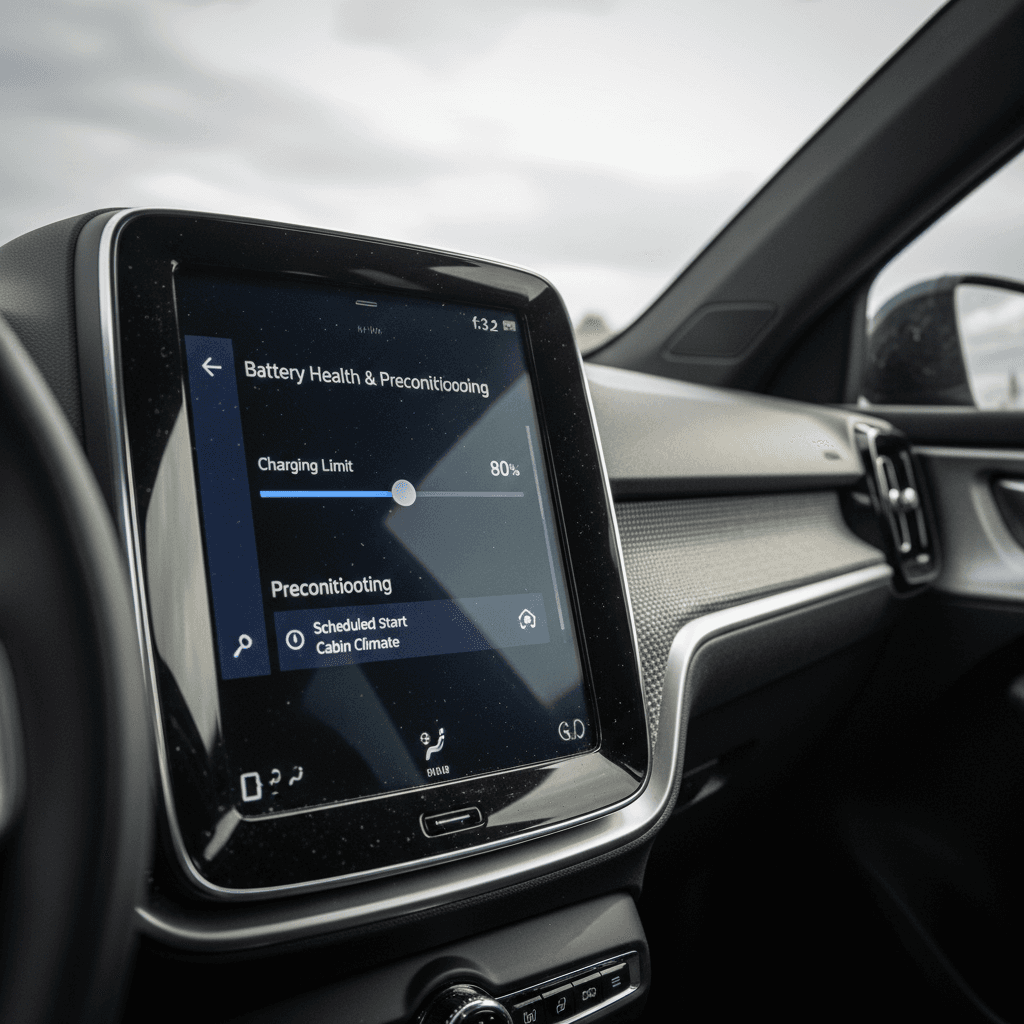
If you remember nothing else, remember this: your daily charging routine has more impact on long‑term battery life than almost anything you do behind the wheel. The EX30 gives you the tools to do this well right in the infotainment system.
Healthy daily charging routine for your Volvo EX30
1. Set a daily charge limit (around 70–80%)
Use the EX30’s charging settings to cap everyday charging below 100%. That upper 10–20% is where lithium‑ion cells experience more stress. Save full charges for road trips or days when you truly need maximum range.
2. Avoid living near 0% or 100%
Running the pack down to the warning light and then charging straight to full may be convenient, but repeating that pattern daily will age the battery faster. Try to operate mostly between about 20% and 80% state of charge.
3. Use scheduled charging at home
If you charge overnight, set a schedule so charging finishes shortly before you depart. That way, the pack doesn’t sit at a high state of charge for hours, and you can also tap cheaper off‑peak electricity in many utility regions.
4. Choose AC charging as your default
Whenever you can, charge the EX30 with AC power at home or work. Level 2 AC charging is slower and gentler on the pack compared with repeated high‑power DC fast charging.
5. Keep your cable and connectors clean
Dust, salt, and moisture can create resistance and heat. Wipe down connectors occasionally and make sure your home charging cable isn’t kinked, pinched, or damaged.
Real‑world rule of thumb
Using DC fast charging on the EX30 without killing your pack
The EX30 is designed to handle DC fast charging for road trips and long days on the move. The risk isn’t using fast charging at all – it’s building your entire lifestyle around it. High‑power charging heats the cells, and repeating that stress multiple times a week is where long‑term degradation creeps in.
Smart fast‑charging habits
- Use it for trips, not for daily commuting. Lean on home or workplace AC charging for routine use.
- Arrive with a warm, low‑ish battery. Fast chargers work best – and most efficiently – when the pack is warm and around 10–40% state of charge.
- Unplug once you reach 60–80%. Charging from 80–100% is slower, more stressful for the pack, and usually not worth the time unless you truly need the extra range.
Habits that accelerate wear
- Frequent back‑to‑back DC sessions. Hitting multiple fast chargers in a day at high power keeps the pack hot for long stretches.
- Fast charging to 100% and then letting it sit. Topping up at a DC station, then parking at full for hours, is harder on cells than finishing at 60–80% and charging again later.
- Relying on DC for everything. If you’re fast charging several times per week year‑round, expect noticeable degradation sooner.
Watch battery temperature on hot days
Driving habits that protect both range and battery health
How you drive your EX30 affects both today’s range and tomorrow’s battery health. High current draw – the kind you see with repeated full‑throttle launches or high‑speed cruising – means more heat inside the cells. Over time, that heat leaves its mark.
Three easy driving tweaks that pay off over time
You don’t need to baby the car – just be intentional.
Smooth acceleration
Moderate highway speeds
Leverage regen, don’t abuse it
Use drive modes strategically
Climate control, preconditioning, and cold-weather range
Battery chemistry is sensitive to temperature. Cold weather temporarily reduces available power and range; extreme heat accelerates long‑term wear. The Volvo EX30’s thermal system and climate features can work in your favor – or against you – depending on how you use them.
Smart EX30 climate and preconditioning habits
1. Precondition while plugged in
On cold or hot days, use the app or in‑car settings to warm or cool the cabin while the EX30 is still plugged into AC power. That energy comes from the grid instead of the pack, preserving range and reducing thermal stress.
2. Don’t overdo cabin temperatures
Extreme HVAC settings – blasting maximum heat or full‑blast A/C – draw more power. Aim for a comfortable but moderate temperature and use heated seats and steering wheel, which are more efficient than heating the entire cabin.
3. Avoid parking in extreme heat
If you live in a hot climate, prioritize shaded or covered parking. A cabin baking in direct sun also heats the pack. Sunshades and garage parking pay off over years of ownership.
4. Expect winter range dips – but don’t panic
Cold weather range loss is largely reversible. When temperatures warm up, much of that temporary loss goes away. Focus on preconditioning, efficient driving, and planning extra charging stops in the dead of winter.
Cold vs. heat: which is worse?
How to store a Volvo EX30 so the battery doesn’t suffer
If your EX30 is going to sit for days or weeks – whether it’s at the airport, a second home, or simply during a slow season – a few small decisions will determine how the battery feels about that downtime.
- Aim to park the EX30 at 40–60% state of charge if it will sit for more than a week. Avoid storing it at 100% or near empty.
- If possible, leave the car plugged into a Level 1 or Level 2 AC charger with a moderate charge limit set. The car can manage its own battery needs without drifting to unhealthy extremes.
- Turn off energy‑hungry features you don’t need while it sits, such as always‑on climate or frequent app polling, so the pack doesn’t slowly drain.
- For multi‑month storage, check in periodically – either in person or from the app – to make sure state of charge remains in that mid‑pack comfort zone.
The worst combination
How to monitor Volvo EX30 battery health over time
You don’t have to guess how your EX30’s battery is doing. While Volvo doesn’t expose every engineering parameter, there are practical ways to keep an eye on long‑term health and catch potential issues early.
Practical ways to track EX30 battery health
From in‑car estimates to third‑party diagnostics.
Watch rated vs. real range
Check the app and software updates
Use professional diagnostics for a deep view
On a used EV, the battery is like the engine, transmission, and fuel tank rolled into one. Objective data on its health is the new benchmark for a fair deal.
Used Volvo EX30: what battery health means for resale value
If you’re thinking about trading your EX30 in a few years down the road – or buying one pre‑owned – battery health moves from a nice‑to‑know to a must‑know. Two EX30s with the same model year and mileage can command very different prices if one has a strong pack and the other has clearly lost usable range.
As an owner today
- Good habits pay back later. A healthier pack makes your EX30 more attractive when you sell or trade it.
- Service records and charging habits matter. Being able to show mostly AC charging and sensible limits builds buyer confidence.
- Battery‑friendly use keeps options open. You’re more likely to qualify for top‑tier offers from retailers and marketplaces that factor in pack condition.
As a future used‑EX30 buyer
- Ask for real battery data, not just a dashboard guess. A structured report gives you more confidence than an estimated range readout on one warm afternoon.
- Consider marketplaces that specialize in used EVs. On platforms like Recharged, every vehicle includes a Recharged Score that verifies battery health and fair pricing.
- Compare pack health, not just price. A slightly more expensive EX30 with a healthier pack can be the better long‑term value.
How Recharged can help
Ready to find your next EV?
Browse VehiclesVolvo EX30 battery life: FAQs
Frequently asked questions about Volvo EX30 battery life
Key takeaways for maximizing your Volvo EX30 battery life
- Use a 70–80% charge limit for daily driving and avoid hovering at 100% or near 0% unless you need to.
- Rely on AC charging at home or work whenever possible; treat DC fast charging as a road‑trip tool, not a lifestyle.
- Drive smoothly at moderate speeds to reduce internal pack stress and stretch range.
- Leverage the EX30’s preconditioning and climate features while plugged in, especially in extreme temperatures.
- If the car will sit, park it around 40–60% state of charge and avoid prolonged exposure to high heat.
- Monitor battery health over time and, when buying or selling used, look for objective diagnostics like the Recharged Score.
The Volvo EX30 gives you a lot of performance and technology in a small package – but like any EV, its battery is the foundation everything else sits on. By pairing the right charging habits, driving style, and climate strategies, you can keep that foundation strong for years, protect your real‑world range, and hold onto more of your EX30’s value. And when it’s time to move into your next EV, marketplaces like Recharged can help you buy or sell with clear, verified insight into battery health – the metric that matters most.