If you’re comparing the Tesla Model 3 Highland vs pre-refresh Model 3, you’re probably wondering whether the redesign is a mild facelift or a full personality change. The truth is somewhere in between: the basic bones are the same, but the way the car feels day in and day out is very different, especially for comfort, noise, and tech.
What counts as “pre-refresh”?
Highland vs pre-refresh Model 3: a quick overview
Highland vs pre-refresh: headline changes
Mechanically, both generations are still a compact, all-electric sedan on the same basic platform. The biggest changes with Highland are in refinement rather than raw performance numbers: quieter cabin, smoother ride, better interior materials, and more screens. If you loved the older Model 3’s efficiency but not its noise or harshness, the Highland directly targets those complaints.
How this impacts used buyers
Exterior styling and aerodynamics
Highland: smoother and sharper
- New front bumper and slimmer headlights give a more aggressive, low-slung look.
- Reworked rear with TESLA script across the trunk and new taillight signature.
- New 18" Photon and 19" Nova wheels with aero-friendly designs to boost efficiency.
- Two fresh colors, often marketed as Ultra Red and Stealth Grey, modernize the palette.
Pre-refresh: the familiar face
- Rounder nose and more upright headlights; looks softer but instantly recognizable.
- Single "T" badge on the trunk instead of full TESLA script.
- 18" Aero and 19" Sport wheels, still efficient but visually older.
- Paint choices like Pearl White and Midnight Silver, but without the Highland’s newest hues.
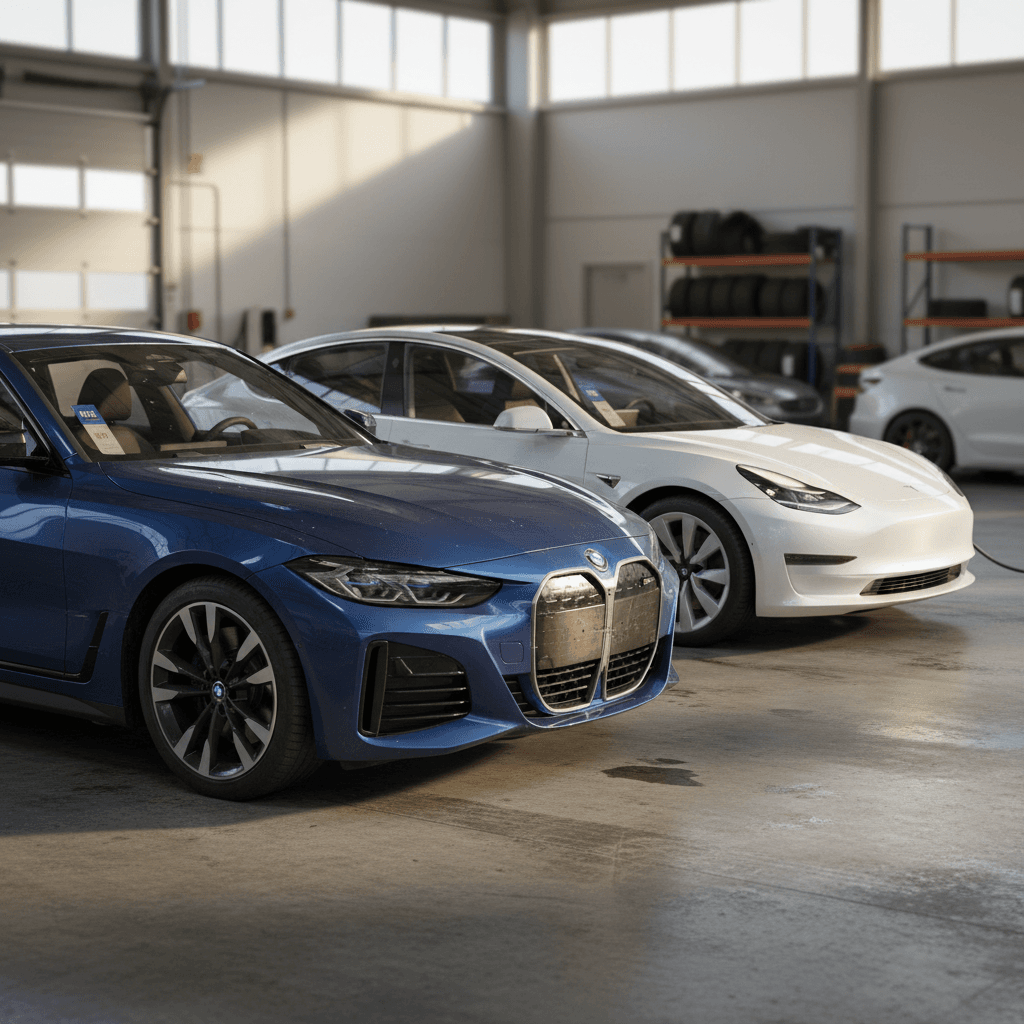
Tesla also used the Highland facelift to quietly improve aerodynamics, which helps both range and wind noise. Think of the new front end and underbody tweaks as a wind-cheating clean-up pass rather than a ground-up redesign. If you park the two side by side, the Highland looks lower, sleeker, and more upscale, while the older car has a friendlier, more minimalist face.
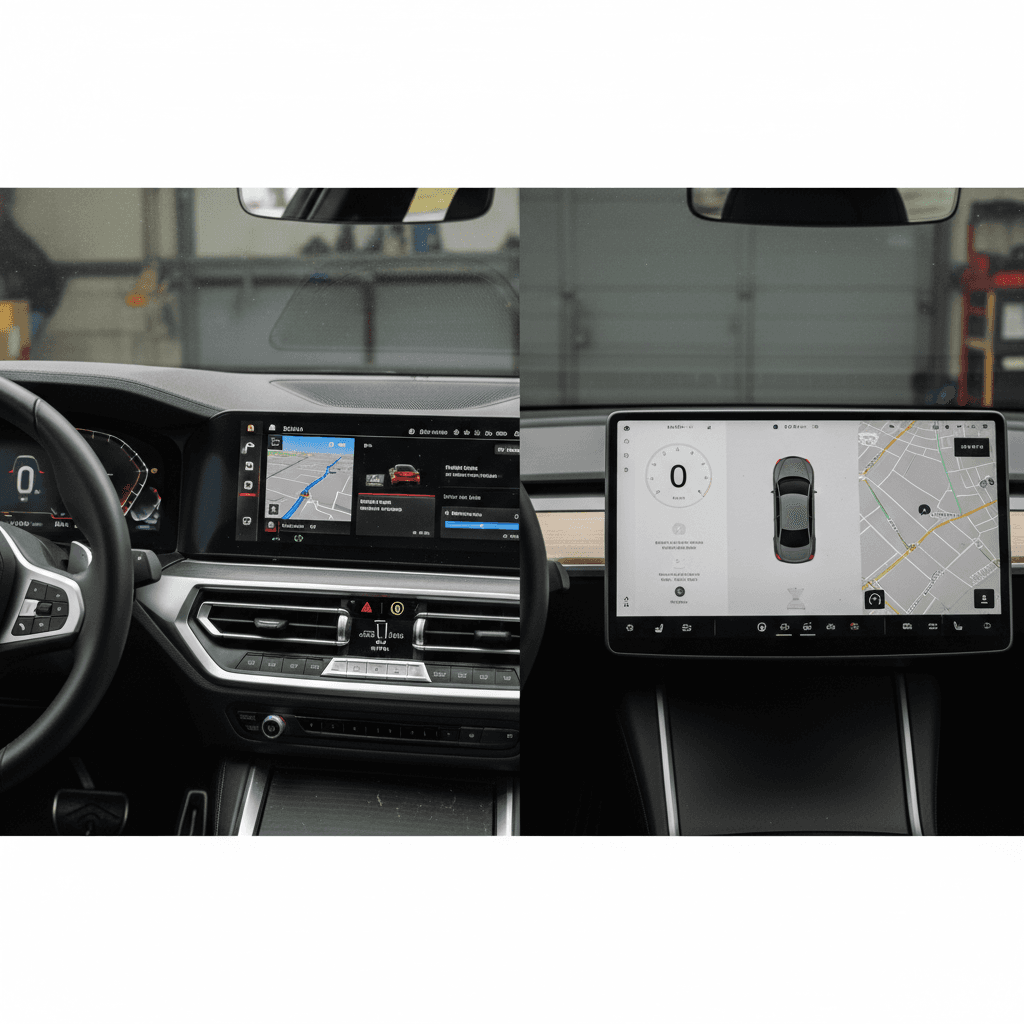
Cabin comfort, materials, and noise
Sit in a Highland, then hop into an early Model 3, and you can feel Tesla’s priorities shift. The original car was brilliant at being an efficient EV, but it often felt a bit bare and noisy for the price. The Highland aims to feel more like a compact luxury car, especially in how it deals with sound and heat.
Interior: Highland vs older Model 3 at a glance
The basics are similar, but the details matter in daily driving.
Materials & design
- Highland swaps the wood dash trim for fabric and adds RGB ambient lighting across the dash and doors.
- Door panels have thicker padding and a new stitch pattern that feels more premium.
Seats & comfort
- Highland brings ventilated front seats and perforated upholstery, plus heated rear seats.
- Earlier cars offered heated seats but no ventilation, and simpler stitching.
Noise & refinement
- Highland uses **360° acoustic glass** (front, sides, and rear) plus extra insulation.
- Owners and testers report roughly **20–30% less wind and road noise** at highway speeds.
What quieter actually feels like
If you’re the type who notices every rattle, you should still treat any individual car, old or new, as its own story. Some owners of 2018–2020 cars report creaks and buzzes as mileage climbs, while early Highland shoppers tend to praise the more solid-feeling doors and tighter structure. On a test drive, use rougher pavement and expansion joints to judge how much noise seeps in and whether any trim buzzes bother you.
Ride quality and handling changes
The original Model 3’s handling has never been the issue, it’s quick, eager, and fun. The complaint has always been the way it rides over broken pavement. Many owners describe the pre-refresh suspension as firm-to-harsh, especially on 19" wheels. The Highland update goes after that harshness without turning the car into a couch.
Suspension and ride: before and after
How the Highland’s chassis updates change the feel behind the wheel.
| Feature | Pre-refresh Model 3 | Model 3 Highland |
|---|---|---|
| Front suspension tuning | Firm, can feel brittle over potholes | Retuned geometry and dampers for smoother, more controlled impacts |
| Bushings & mounts | Simpler, less isolation from sharp hits | Revised bushings and more subframe bonding points cut vibration at the seat |
| Tires | Good grip, but more road roar on coarse asphalt | New Tesla-spec tires tuned for lower noise and softer impact |
| Overall character | Agile but sometimes crashy | Still sporty, but more composed and mature |
Both generations are engaging to drive, but the Highland is less punishing day to day.
Who benefits most from the Highland ride
Range, efficiency, and charging
On paper, the Highland doesn’t blow the doors off the old car’s range figures, but it quietly edges ahead, despite tougher EPA testing rules coming into play in 2024. The biggest story here is efficiency and real-world highway range, not a massive battery-size jump.
Approximate range and performance: pre-refresh vs Highland
Representative U.S. specs for popular trims. Always check the specific car you’re considering.
| Model 3 variant | Generation | EPA range (mi, est.) | 0–60 mph (sec) | Drive |
|---|---|---|---|---|
| RWD / Standard Range | Pre-refresh (2023) | ~272 | ≈5.8 | RWD |
| RWD / Standard | Highland (2024+) | ~272 (similar, but more realistic) | ≈5.8 | RWD |
| Long Range | Pre-refresh (2023) | ~333 | ≈4.2 | Dual-motor AWD |
| Long Range | Highland (2024+) | ~341 | ≈4.2 | Dual-motor AWD |
| Performance | Pre-refresh (2023) | ~315 | ≈3.1 | Dual-motor AWD |
| Performance | Highland (2024+) | ~309–310 | ≈2.9 | Dual-motor AWD |
Numbers vary by wheel size and year, but this gives you the flavor of the changes.
Charging: more alike than different
If you’re comparing a used pre-refresh car to a brand-new Highland, remember that battery health matters as much as the original EPA label. A well-cared-for 2019 Long Range can still be a very strong road-trip partner, but degradation, charging habits, and climate all play a role. This is where a verified battery health report, like the Recharged Score that comes with every vehicle on Recharged, can give you a clear, data-backed look at remaining capacity instead of guessing from the dash.
Tech, controls, and driver experience
If the way you interact with the car matters as much as how it drives, this is where the Tesla Model 3 Highland vs pre-refresh debate gets spicy. Tesla didn’t just tweak the graphics; it changed how you signal a turn, adjust climate from the back seat, and even how the cabin feels at night.
Tech and control changes that matter
From stalkless steering to rear screens, here’s what you’ll notice first.
Stalkless steering
Highland removes the traditional turn-signal and gear-selector stalks.
- Turn signals and wipers move to steering wheel buttons.
- Drive/reverse selection happens via touchscreen or column buttons.
Some drivers adapt quickly; others miss the old setup.
Rear passenger screen
Highland adds an 8" rear touchscreen.
- Rear passengers can adjust climate and media.
- Supports video and games with Bluetooth headphones.
On road trips with kids or teens, this is a big upgrade.
Ambient lighting & UX
A configurable LED light strip sweeps across the dash and into the doors.
Menus are refreshed, and hardware jumps to Tesla’s newer computer (HW4 in many markets), improving responsiveness and future-proofing driver-assistance features.
Try the stalkless controls before you buy
Both generations give you the big central touchscreen, over-the-air software updates, and Tesla’s expanding driver-assistance features. The Highland simply layers in more hardware capability and creature comforts, especially for passengers who aren’t behind the wheel.
Practicality, storage, and everyday usability
On paper, the numbers don’t shift much, both generations offer seating for five, similar cargo space, and the same basic footprint. But Tesla used the Highland refresh to tweak the ownership details owners complain about once the honeymoon is over.
- Both cars offer around 24 cubic feet of total cargo space with the rear seats up, including a useful trunk well and front trunk (frunk).
- Highland reshapes the rear trunk area slightly and often includes two side compartments instead of one, making it easier to organize smaller items.
- Power trunk, tow hook provisions at both ends, and improved door seals make Highland feel more premium and practical to live with.
- Seat comfort improves with perforation and ventilation, which matters if you live in a hot or humid climate.
- Noise isolation upgrades mean less fatigue on long drives, even if the dimensions haven’t changed.
If you road-trip often…
Should you buy a pre-refresh used Model 3 or a Highland?
Now to the heart of it: you’re likely weighing a more affordable, used pre-refresh Model 3 against a pricier but more refined Highland. Both can be excellent choices; the trick is matching the car to your budget, tolerance for noise and ride firmness, and how much you value the latest tech.
When a pre-refresh Model 3 makes more sense
- Budget first: You want the most range and performance per dollar, and you’re willing to accept extra noise and a firmer ride.
- Simple controls: You prefer traditional stalks and are wary of Tesla’s move to wheel buttons.
- Used-market value: You can find a well-kept 2019–2022 Long Range or Performance at a strong discount vs. new.
- DIY-friendly: You don’t mind hunting down squeaks, rattles, or suspension upgrades if needed.
When the Highland earns its premium
- Comfort and refinement matter: You’re sensitive to wind/road noise and want the quieter, smoother car.
- Family use: Rear screen, softer ride, and better NVH make life easier with kids or frequent passengers.
- Long-term ownership: You want the latest hardware and are planning to keep the car for 6–10 years.
- Minimal tinkering: You want to buy once and enjoy, not chase aftermarket fixes for noise or ride.
How Recharged can help you choose
Quick inspection checklist for a used Model 3
Model 3 Highland vs pre-refresh: what to check on a test drive
1. Ride quality on rough pavement
Find a stretch of broken asphalt or concrete and notice how the car handles sharp impacts. Older pre-refresh cars can feel crashy; a well-sorted Highland should stay firm but composed.
2. Cabin noise at 65–70 mph
On a highway test, pay attention to wind noise around the mirrors and roof, plus tire roar. The Highland should be noticeably calmer; a pre-refresh car may vary with tire choice and build quality.
3. Squeaks, rattles, and trim fit
Drive over expansion joints and listen for buzzes in the dash, doors, and rear shelf. Open and close each door, Highland doors should feel more solid, but any individual car can be an outlier.
4. Battery health and range estimate
Check the displayed full-charge estimate against the original EPA rating and ask for a battery health report. On Recharged, the Recharged Score gives you this data up front so you’re not guessing.
5. Control layout and comfort
In a Highland, live with the stalkless wheel and rear screen controls for a bit. In an older car, make sure you’re happy with the simpler, earlier interior and lack of ambient lighting or ventilated seats.
6. Charging behavior and history
If possible, plug into a Level 2 or DC fast charger. Confirm that charging starts cleanly and that the port, cable, and charge door all behave as expected. Ask how often the car has fast-charged and where.
Frequently asked questions: Highland vs older Model 3
Common questions about Tesla Model 3 Highland vs pre-refresh
Bottom line: which Model 3 is right for you?
Lined up side by side, the Tesla Model 3 Highland vs pre-refresh story is less about raw specs and more about maturity. The older car is still quick, efficient, and fun, and in the used market, it can be a bargain. The Highland keeps that core character but finally wraps it in the quieter, smoother, more premium experience many buyers expected from the beginning.
If your budget is tight and you’re willing to accept extra wind noise and a firmer ride, a well-vetted pre-refresh Model 3, especially with a verified battery health report, is an easy recommendation. If you’re stretching to make a new-car payment and plan to live with the car for years, the Highland’s better refinement, updated tech, and subtly longer range make it the smarter long-game choice.
Whichever direction you lean, don’t let the badge do the talking by itself. Drive both generations back to back if you can, focus on how they feel on the roads you actually use, and insist on clear battery and condition data. That’s exactly what Recharged’s EV specialists and Recharged Score reports are built to deliver, so you can pick the Model 3 that fits your life, not just the spec sheet.