If you’re looking at a Volkswagen ID.4, you’re probably the safety officer in your own life: kids in the back, groceries stacked to the ceiling, maybe a dog that refuses to sit still. The good news is that the VW ID.4 safety rating and crash test results are not just respectable, they’re genuinely strong across the major testing programs in the U.S. and Europe. The more complicated news is that a few recalls and battery-related stories have muddied the waters, especially for used shoppers.
Quick take
VW ID.4 safety at a glance
VW ID.4 crash-test snapshot
Model year matters
NHTSA crash tests: 5-star ID.4
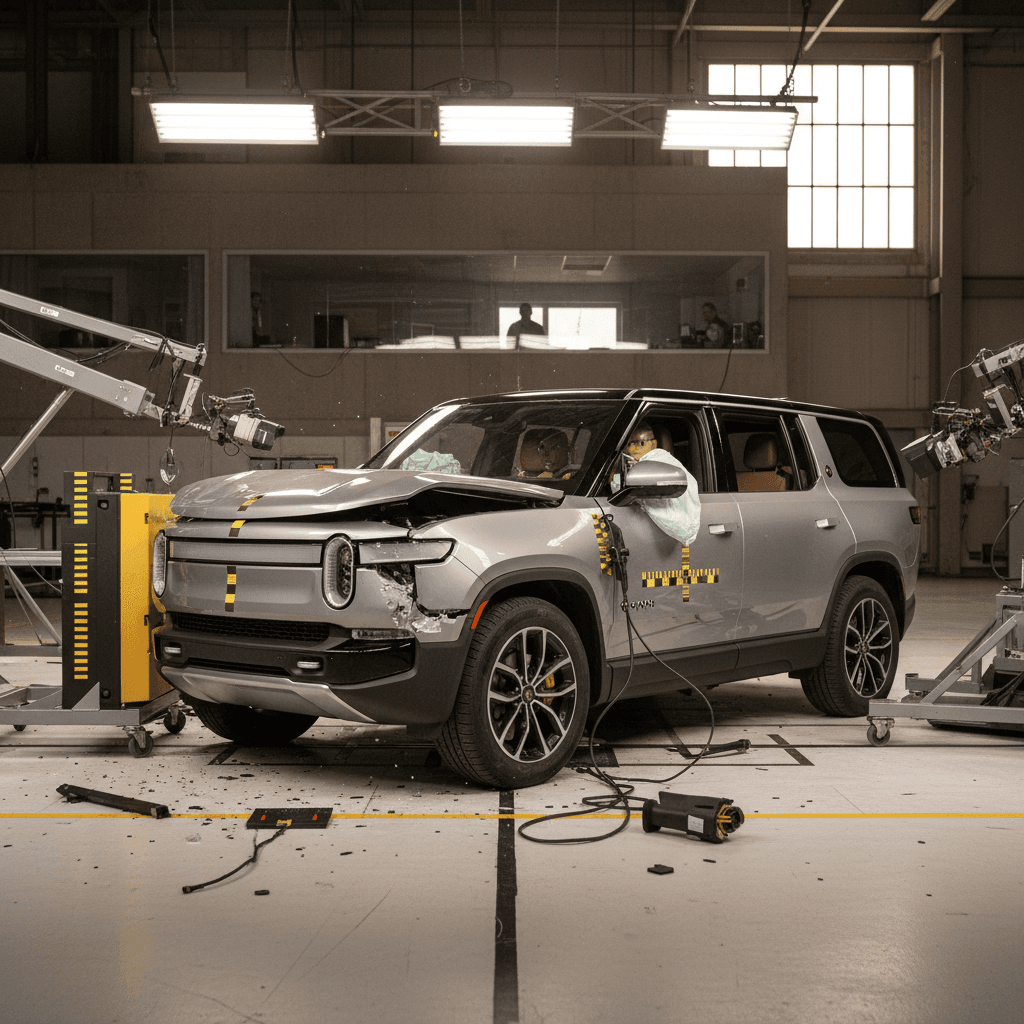
In the U.S., the National Highway Traffic Safety Administration (NHTSA) evaluates vehicles on a 5‑star scale. For model years 2021 through 2025, ID.4 variants tested, both rear‑wheel drive and all‑wheel drive, earn a 5‑star overall safety rating, with 5 stars in frontal and side crash categories and 4 stars for rollover resistance. That’s as good as it gets for a mainstream compact SUV.
- 5★ overall crash rating (RWD and AWD)
- 5★ frontal crash rating for driver and passenger
- 5★ side crash rating for front and rear seats
- 4★ rollover rating, typical for a tall-ish SUV but helped by the low battery placement
How to read the stars
IIHS crash tests and Top Safety Pick
If NHTSA is the blunt instrument of safety testing, the Insurance Institute for Highway Safety (IIHS) is the fine chisel. They run a battery of more nuanced crash tests and rate vehicles on a scale of Good, Acceptable, Marginal, or Poor. The ID.4 performs well enough here that the 2024 Volkswagen ID.4 earns an IIHS Top Safety Pick award for electric midsize SUVs.
IIHS ratings for the Volkswagen ID.4 (key tests)
How the ID.4 performs in major IIHS crash and crash-avoidance evaluations.
| Area | Result (most trims) | What it means |
|---|---|---|
| Small overlap front (driver & passenger) | Good | Strong protection in one of IIHS’s toughest offset frontal crashes. |
| Moderate overlap front (original) | Good | Cabin structure holds up well; low risk of serious injury. |
| Side impact (updated test) | Good | Good performance in the more demanding side test that simulates an SUV striking the ID.4. |
| Roof strength & head restraints | Good | Resists crush in a rollover and reduces whiplash injuries. |
| Headlights | Acceptable to Good | 2024 trims have at least Acceptable headlights; some higher trims earn Good. |
| Front crash prevention: vehicle-to-vehicle | Superior | Standard system avoids or significantly mitigates crashes at typical city speeds. |
| Front crash prevention: pedestrian (day & night) | Advanced | System detects pedestrians in daylight and at night, with meaningful speed reductions. |
Some tests and headlight ratings vary slightly by model year and trim, but the overall pattern is consistently strong.
Why not Top Safety Pick+?
Euro NCAP results for the global ID.4
Across the Atlantic, Euro NCAP, the European New Car Assessment Programme, puts the ID.4 through its own regimen. The result: a 5‑star overall Euro NCAP rating with high marks in adult and child occupant protection as well as safety assist systems. This matters even if you’re in the U.S., because it speaks to a globally engineered safety package, not a market-specific special.
- Adult occupant protection score in the low 90% range, reflecting strong cabin integrity in frontal and side impacts.
- Child occupant protection around the high‑80s to low‑90s, depending on configuration.
- Good scores for vulnerable road user protection thanks to automatic emergency braking and pedestrian detection.
- High marks for assistance systems such as lane keeping and speed assistance.
What these crash scores mean in real life
Crashworthiness: the passive side
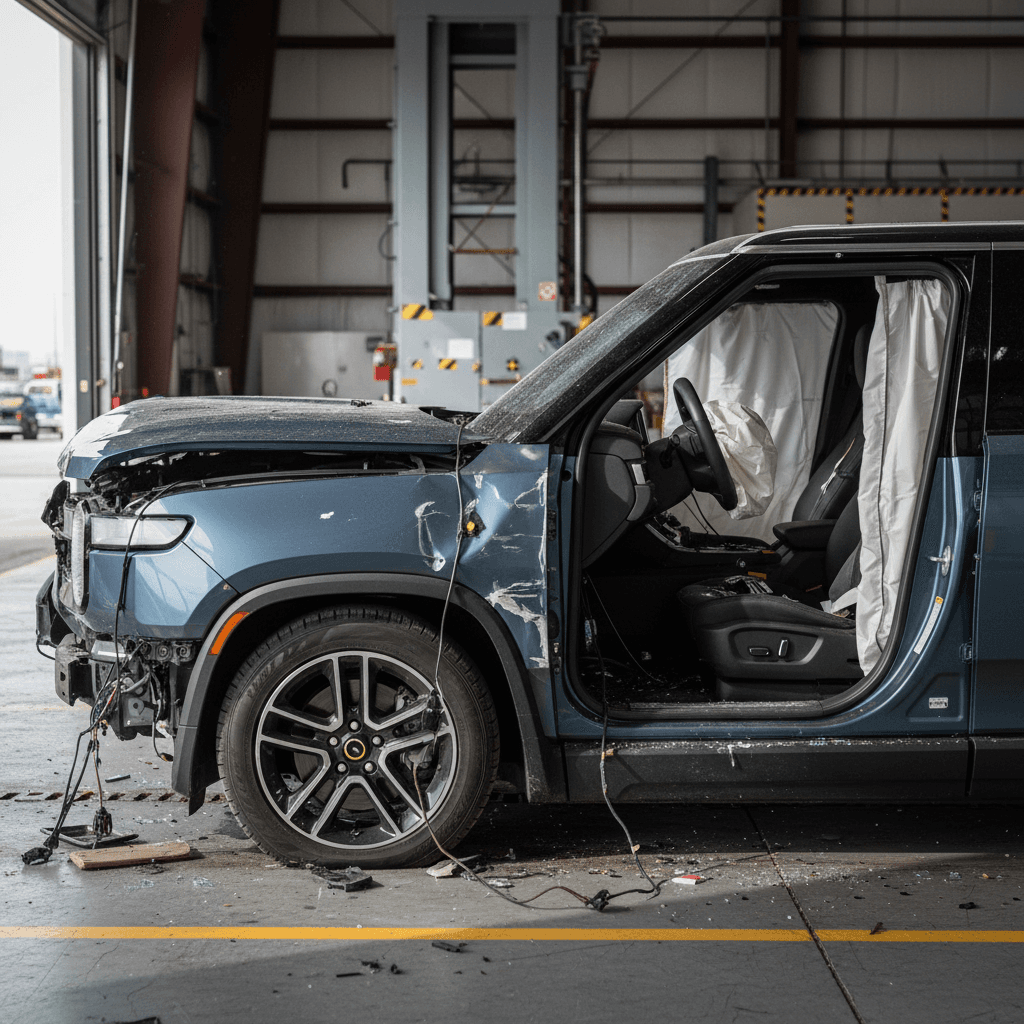
The ID.4’s basic job in a crash is brutally simple: preserve the passenger space and manage energy. The underlying structure, crash beams, and battery enclosure all work together so the cabin doesn’t fold up like cheap lawn furniture. That’s what the strong NHTSA, IIHS, and Euro NCAP results are telegraphing.
- Front and rear crumple zones absorb impact energy before it gets to you.
- A rigid passenger cell helps keep the survival space intact.
- The battery is protected inside the floor and behind substantial subframes.
Crash avoidance: the active side
A modern EV like the ID.4 is also constantly trying to avoid the crash. Standard driver-assistance systems, bundled under Volkswagen’s IQ.DRIVE umbrella, scan the road, help keep the car in its lane, and hit the brakes if you don’t.
- Automatic emergency braking for cars, pedestrians and cyclists.
- Lane-keeping assistance on highways.
- Blind-spot monitoring and rear cross-traffic alert in traffic and parking lots.
Bottom line on safety performance
Standard safety tech on the VW ID.4
Crash tests tell you how the ID.4 behaves when physics has already won. Its standard safety and driver-assistance tech is the part of the story that tries to keep you out of the airbag commercial to begin with. VW wraps most of this under the IQ.DRIVE brand, which, by 2025, is standard on nearly all automatic-transmission models.
Key VW ID.4 safety and driver-assistance features
Most of these features are standard on recent U.S. models; always confirm exact equipment on the specific car you’re considering.
Front Assist (AEB)
Volkswagen’s automatic emergency braking watches for vehicles, pedestrians and cyclists ahead.
- Warns you visually and audibly.
- Can automatically apply the brakes.
- Rated Superior in IIHS vehicle-to-vehicle tests on earlier model years.
Lane Assist
Camera-based lane-keeping that nudges you back between the lines.
- Active above typical city speeds.
- Can provide steering input if you drift.
- Pairs with adaptive cruise in Travel Assist on many trims.
Blind-spot & rear alerts
Active Blind Spot Monitor and Rear Traffic Alert expand your view beyond mirrors.
- Warns if a vehicle sits in your blind spot.
- Detects crossing traffic when backing out of a space.
- Can brake automatically to avoid a parking-lot crunch.
Automatic Post-Collision Braking
After the first hit, the system can automatically apply the brakes to help prevent secondary impacts, like being pushed into oncoming traffic.
Proactive Occupant Protection
If the ID.4 senses a potential impact, it can pre‑tension the front seatbelts, close windows and sunroof to a crack, and prime the restraints so everything is in the best possible position if a crash happens.
Six stability-enhancing systems
Electronic Stability Control, Electronic Brake-pressure Distribution, traction aids and brake boosters continually juggle grip and stopping force to keep the ID.4 calm and controllable when conditions go sideways.
Don’t forget the basics
Battery and fire-safety recalls you should know about
No modern EV conversation is complete without talking about batteries and fire risk. The ID.4’s crash ratings don’t fully capture this dimension, because recalls and manufacturing hiccups tend to arrive on a separate, less glamorous press release.
- Certain 2023–2024 ID.4s were recalled for potential high-voltage battery defects that could, in rare cases, lead to thermal events (fires). Owners were advised to park outside, avoid fast charging, and limit state of charge until battery modules were replaced.
- A small number of early 2026 ID.4s (and related SUVs) received a do‑not‑drive notice because of incorrectly installed wheel bolts that could loosen and cause a wheel to detach.
- Various software updates have targeted infotainment issues, charging behavior, and driver-assistance tuning across model years.
If you own, or are eyeing, a 2023–2024 ID.4
How to check safety recalls on a VW ID.4
1. Run the VIN through NHTSA
Go to the official NHTSA recall lookup, enter the 17‑digit VIN, and see if there are any open recalls. This will surface battery, wheel-bolt, and other safety-related campaigns.
2. Ask for dealer service records
For used examples, request a printout of warranty and recall work from a VW dealer. You want to see line items for battery-module replacement or safety-related repairs, not just oil-change-style visits.
3. Verify software version
VW has pushed multiple software updates related to charging, range estimates, and driver assistance. A dealer can confirm that the car is on the current software branch for its model year.
4. Look for physical clues
Uneven tire wear, mismatched tires, cracked windshields around the camera housing, or warning lights on the dash can all hint at unresolved safety or alignment issues.
5. On a test drive, stress the systems
Safely test adaptive cruise, lane keeping, and automatic braking in a controlled environment. You want smooth, confident responses, not lurchy or inconsistent behavior.
ID.4 safety vs. other electric SUVs
Cross-shopping a VW ID.4 with a Tesla Model Y, Hyundai Ioniq 5, Kia EV6 or Ford Mustang Mach‑E? In broad strokes, they’re all playing in the same safety league, 5‑star NHTSA ratings and strong IIHS scores. The ID.4 distinguishes itself less by being objectively safer and more by the way it feels: heavy, planted, and conservative in its tuning. That’s German parenting for you.
How the ID.4 stacks up on safety
A high-level comparison of safety positioning for popular electric crossovers. Exact scores vary by model year and trim; this table focuses on general patterns.
| Model | NHTSA overall | IIHS recognition (recent MY) | Safety character |
|---|---|---|---|
| Volkswagen ID.4 | 5★ | Top Safety Pick (2024) | Comfort-biased, stable, lots of standard assists. |
| Tesla Model Y | 5★ | Top Safety Pick+ (various years) | Very strong crash scores, but more reliance on camera-only systems and over-the-air updates. |
| Hyundai Ioniq 5 | 5★ | Top Safety Pick+ (recent years) | Excellent crash performance, robust suite of assists, smart interior packaging. |
| Kia EV6 | 5★ | Top Safety Pick+ (recent years) | Sportier tuning with strong active-safety tech. |
| Ford Mustang Mach‑E | 5★ | Top Safety Pick (various years) | Good protection, sporty demeanor, evolving software. |
Use this as a directional guide, and always look up the exact year and trim you’re considering.
Safety is now table stakes
Buying a used VW ID.4: safety checklist
If you’re shopping for a used ID.4, you’re not buying a crash-test dummy, you’re buying one specific machine with one specific history. Two identical-looking SUVs can have very different safety stories depending on where they’ve been and who’s been wrenching on them.
Used VW ID.4 safety checklist for shoppers
Confirm crash-test coverage for your year
Make sure the model year you’re eyeing has published NHTSA and IIHS ratings, and that you understand any differences in headlight or driver-assistance scores by trim.
Pull full recall and service history
Combine a vehicle history report with NHTSA’s VIN lookup and dealer service records. You want proof that battery, wheel, and software campaigns are complete.
Inspect tires, brakes, and suspension
Uneven tire wear or shuddering under braking might mean alignment issues, curb strikes or poorly repaired damage, all of which can compromise safety systems.
Check every airbag and warning light
Turn the car on from a cold start and watch the dash. All warning lights should illuminate briefly, then go out. No persistent airbag or ABS lights allowed.
Test IQ.DRIVE features on real roads
On a calm stretch of highway, gently test adaptive cruise, lane keep and blind-spot systems. They should feel predictable and confidence-inspiring, not jittery or overbearing.
Ask for battery health data
Battery health can be a hidden safety factor, thermal management and cell balance matter. With a <strong>Recharged Score</strong> report, you get verified battery diagnostics and a clear view into how the pack has aged.
How Recharged can help
VW ID.4 safety FAQ
Frequently asked questions about VW ID.4 safety
So, should you feel safe in a VW ID.4?
Taken purely on the numbers, the VW ID.4 safety rating and crash test performance put it firmly in the top tier of family-friendly electric SUVs. It’s not the loudest, flashiest EV in the pack, that’s kind of the point. The ID.4 is more like the overbuilt German wagon of old, quietly acing its exams and getting you home without making a scene.
If you’re buying used, the homework shifts from “Is this model safe?” to “Is this specific car squared away?” That means recall documentation, software updates, clean history, and honest battery-health data. That’s exactly what a Recharged Score report is designed to surface, so you can enjoy all those 5‑star crash scores with a lot less 2 a.m. Googling.