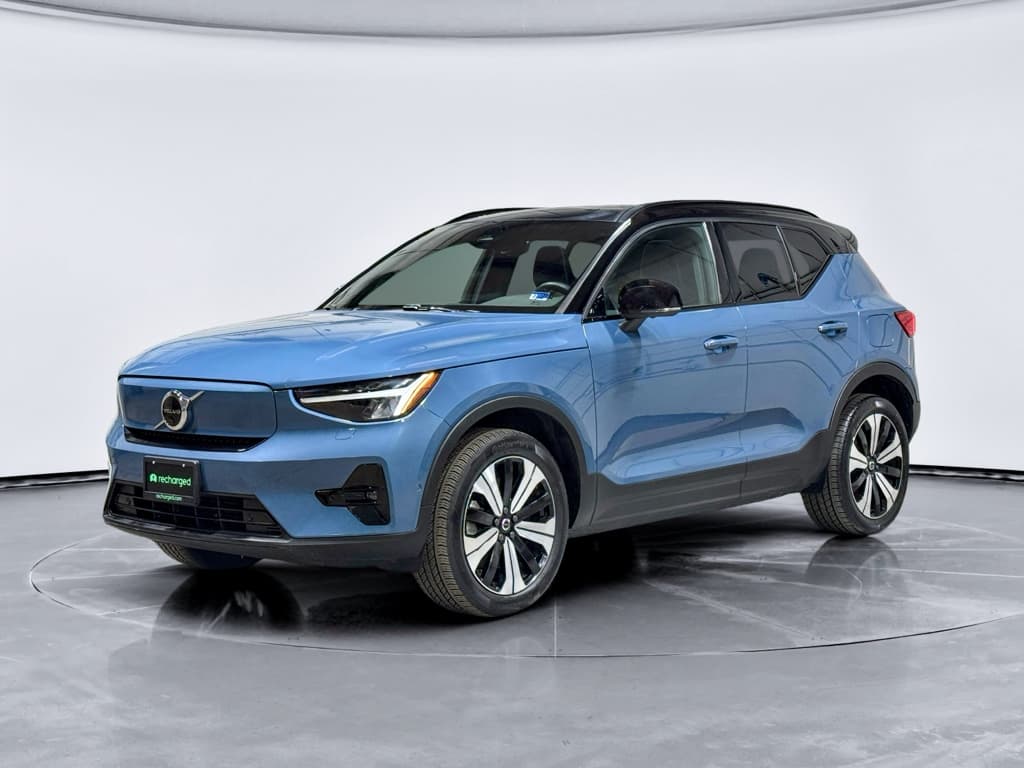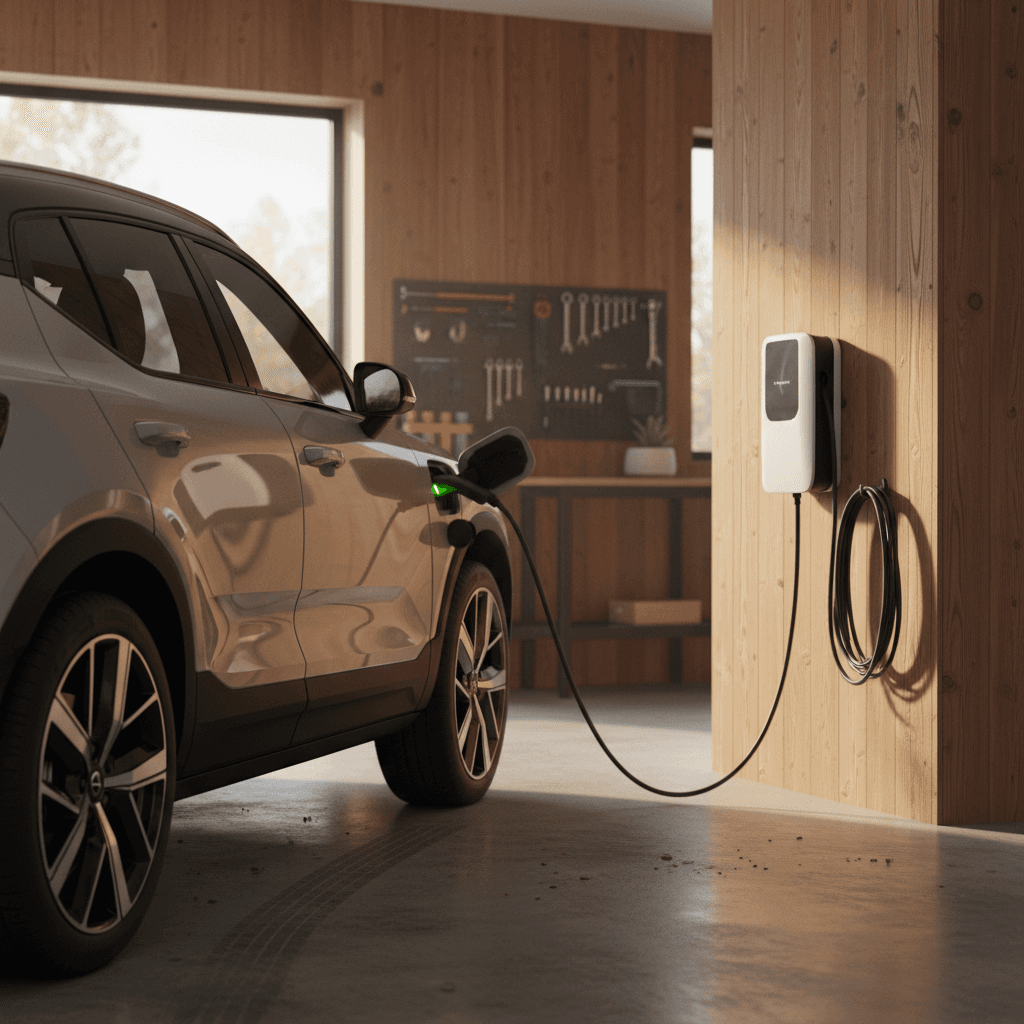
If you’ve just brought home a Volvo EX30, the next question hits fast: what’s the best home charger to actually live with this car every day? The EX30’s battery isn’t huge, but it can charge quickly on Level 2, so picking the right wall box or portable unit is the difference between waking up full and nursing range anxiety all week.
Short answer
Why home charging matters so much for the Volvo EX30
The Volvo EX30 is a small SUV with a usable battery around the mid‑60 kWh range, depending on trim. That’s great for weight and efficiency, but it also means you’ll notice any days you don’t start out fully charged. Home charging turns your driveway or garage into your primary “gas station”, and with the EX30’s modest pack size, even a few hours on Level 2 can make a big difference.
Volvo EX30 home charging by the numbers (approximate)
Think in miles per hour, not kW
Volvo EX30 charging basics: what your SUV can actually take
Before you shop for hardware, you need to know what the EX30 can accept. The car, not the wall box, is in charge of the final number.
- Most U.S. EX30 models have an 11 kW AC onboard charger when connected to a 240V Level 2 source with enough amperage.
- That 11 kW limit is reached around 48 amps at 240V (48A × 240V ≈ 11.5 kW, the car simply caps lower).
- On a typical 32–40A home charger, you’ll see more like 7–9.6 kW going into the pack.
- The EX30 uses the CCS / J1772 style AC inlet in North America today, but the industry is in the middle of a shift toward NACS (the Tesla‑style connector). Many newer chargers are shipping “NACS‑ready” or dual‑standard.
Don’t over‑buy on power
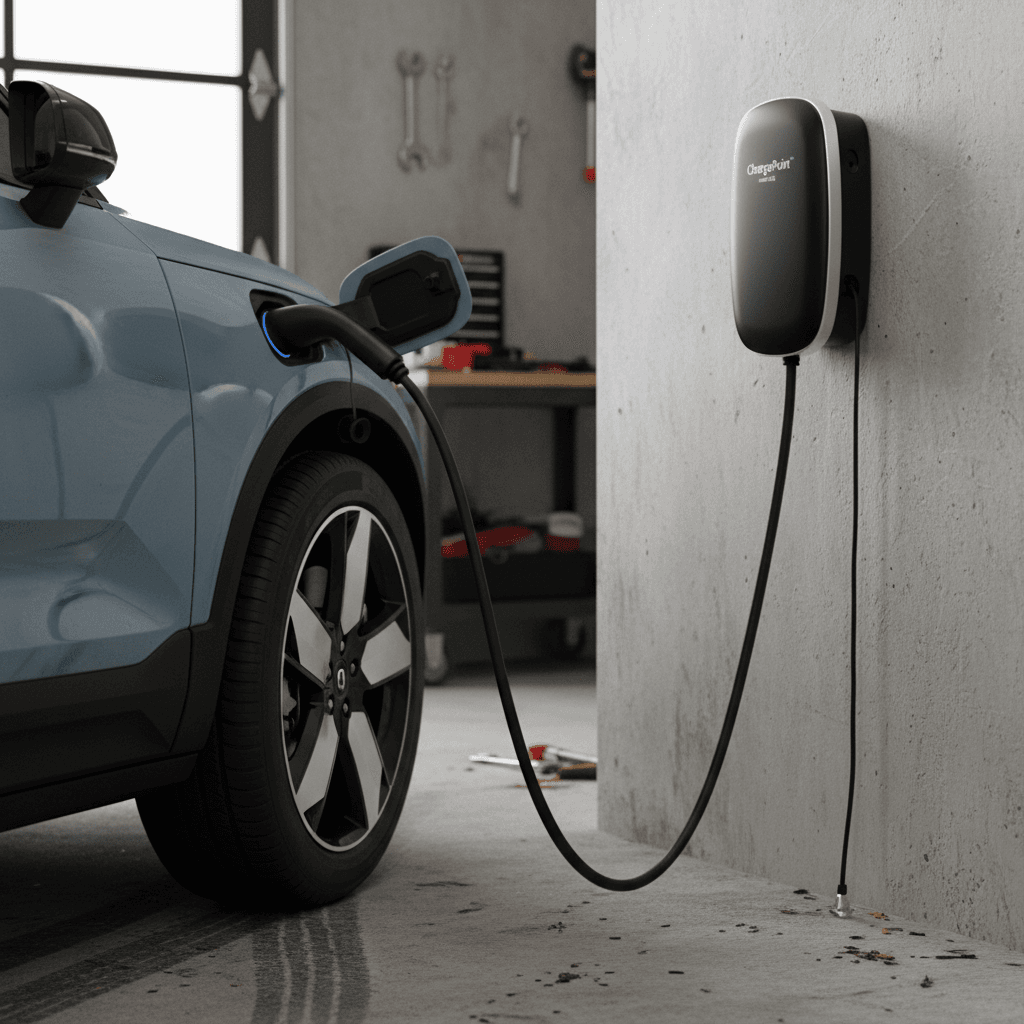
How much charger do you really need?
The right answer depends on your daily miles, your parking situation, and your home’s electrical service. But for the EX30, the good news is that you don’t need anything extreme.
Common home charger sizes for the Volvo EX30
Pick the one that fits your driving and your panel, not just the biggest number on the box
32A Level 2 (7.7 kW)
Good for: Light‑to‑moderate driving (under ~35–40 miles per day).
- Roughly 20–25 miles of range per hour.
- Can often run on a 40A circuit (fairly panel‑friendly).
- Enough to recover a typical commute in 2–3 hours.
40A Level 2 (9.6 kW)
Best fit for most EX30 owners.
- About 25–30 miles of range per hour.
- Runs on a 50A circuit, the most common upgraded line.
- Can take you from low to full in roughly 6–7 hours.
48A Level 2 (11.5 kW)
Maxing out the EX30’s AC hardware.
- About 30–35 miles of range per hour.
- Requires a 60A circuit and sturdier wiring.
- Worth it only if you regularly arrive very low and need fast turnarounds.
Rule of thumb for EX30 owners
Top home charger “profiles” for Volvo EX30 owners
There isn’t one single “Volvo‑branded” box you must buy. In fact, a lot of the best choices are third‑party units that pair nicely with the EX30. Instead of obsessing over brand names, think in terms of use cases.
Example home charger types that work well with the Volvo EX30
These aren’t endorsements of specific models, but realistic examples of what to look for based on how you live and charge.
| Use case | Charger type | Amps / kW | Pros for EX30 | Potential tradeoffs |
|---|---|---|---|---|
| Apartment or shared parking | Portable Level 2 with 240V plug (NEMA 14‑50) | Up to 32A / 7.7 kW | Take it with you, easy to move between outlets, often cheaper. | Needs a compatible outlet nearby, cable storage can be messy. |
| Two‑car household, daily commuter | Wall‑mounted smart Level 2, hard‑wired | 40A / 9.6 kW | Fast enough for busy weeks, cleaner installation, scheduling & usage data. | Requires electrician, higher upfront cost. |
| Future‑proofing for next EV | High‑output 48A smart charger | 48A / ~11.5 kW | Can fully exploit EX30’s onboard charger and support a larger future EV. | Needs 60A circuit and stronger panel; often overkill for mild driving. |
| Budget upgrade from Level 1 | Entry‑level 30–32A Wi‑Fi or “dumb” box | 30–32A / ~7 kW | Huge jump from 120V charging, more affordable hardware. | Slower than 40–48A units if you routinely arrive with low state of charge. |
Always confirm connector type (J1772 vs NACS), amperage rating, and installation requirements before you buy.
Smart Wi‑Fi chargers
- Let you schedule charging for off‑peak rates if your utility offers time‑of‑use pricing.
- Show you how many kWh you’ve used and what it’s costing you.
- Can sometimes respond to utility demand‑response programs for extra savings.
For an EX30 that you drive daily, those data points are handy. You’ll quickly see how much energy you’re using and whether your driving patterns are normal.
“Dumb” or minimal‑feature chargers
- Often cheaper and easier to set up.
- No apps to babysit, fewer software updates to wait for.
- Still safely deliver the same AC power to the car.
If your utility has simple flat‑rate billing and you just want to plug in and walk away, a basic 32–40A box is perfectly fine for the EX30.
App in the wall box, app in the car
Key features to look for in a Volvo EX30 home charger
Checklist: must‑have vs nice‑to‑have features
Use this to sanity‑check marketing claims before you click “buy”
Safety & certification (must‑have)
- UL or ETL listing for North America.
- Indoor/outdoor rating (NEMA 3R or better) if mounted outside.
- Integrated GFCI protection and temperature monitoring.
Your Volvo’s battery isn’t fragile, but it deserves a properly certified power source.
Adjustable amperage (must‑have)
- Let you dial the charger down if your panel is tight.
- Essential if you move or repurpose the unit later.
- Prevents nuisance breaker trips and needless electrician call‑backs.
Connectivity & smart features (nice‑to‑have)
- Wi‑Fi or Ethernet for firmware updates.
- Usage tracking and per‑session data.
- Utility integrations for time‑of‑use or demand response.
Cable length & ergonomics (must‑have)
- Look for at least 20–25 feet of cable, more if you might park nose‑in or nose‑out.
- Easy holster so the connector isn’t on the floor.
- Comfortable handle and easy one‑hand operation.
Weather resistance (must‑have for outdoor)
- Check the temperature rating if you live with real winters or scorching summers.
- Look for a robust cable that doesn’t turn into a frozen rope at 10°F.
Load sharing & future‑proofing (nice‑to‑have)
- Some systems let two chargers share one circuit for multi‑EV households.
- If you plan to add another EV soon, this can save rewiring costs down the road.
Pre‑purchase checklist before you order a charger
Confirm your panel capacity
Have an electrician, or at least a savvy friend, look at your main panel rating and existing large loads (HVAC, oven, dryer). You want to know if a 40–60A EV circuit is realistic before you fall in love with a particular charger.
Decide where the EX30 will normally park
Front‑in or back‑in, left side or right side? That dictates which wall to use, where to mount the box, and how long a cable you’ll need to comfortably reach the EX30’s charge port.
Pick your target amperage
For most EX30 owners, circle <strong>40A</strong> as your target. If your driving is light and the panel is tight, 32A can be plenty. If you road‑trip constantly and have ample electrical capacity, 48A may be worth it.
Choose connector standard wisely
Right now, most non‑Tesla chargers use J1772. The industry is migrating to NACS, but adapters and dual‑standard units will bridge the gap. If you buy a J1772 unit, make sure it supports adapter use cleanly.
Plan for future EVs
If there’s even a chance you’ll add another EV in the next 3–5 years, wiring for a 50–60A circuit and choosing a charger with load‑sharing options can save you a second round of electrical work.
Don’t ignore the humble Level 1 cord
Installation and wiring: getting 240V power to your EX30
A great charger with lousy installation is worse than a basic unit wired right. This is where a good electrician earns their keep, and where many owners are surprised by the real‑world costs.
Hard‑wired installation
- Charger is permanently wired into a dedicated breaker.
- Clean look, often better for outdoor mounting.
- Simplifies code compliance in many jurisdictions.
- Best choice if the charger will live in one spot for years.
For an EX30 that’s your daily family car, hard‑wiring a 40A unit is the most set‑and‑forget solution.
Plug‑in (NEMA 14‑50 or similar)
- Charger plugs into a heavy‑duty 240V outlet.
- Easier to move if you relocate.
- In some areas, can slightly lower install cost.
- Still requires a properly installed, EV‑rated outlet.
If you’re renting or expect to move in the next couple of years, a plug‑in Level 2 paired with a good 240V outlet is a smart compromise.
Safety first, always
Typical installation scenarios for a Volvo EX30 home charger
Rough patterns we see from EX30‑class EV installs, actual prices vary widely by region and labor rates.
| Scenario | Circuit size | Complexity | What it usually involves |
|---|---|---|---|
| Panel in garage, short run | 40–50A | Low | Breaker, a few feet of conduit, and wall‑mounting the charger. |
| Panel in basement, 30–40 ft run | 40–60A | Medium | Running conduit through finished or unfinished space, possibly drilling between floors. |
| Older home, full panel | 40–60A | High | Panel upgrade or sub‑panel, coordination with utility, more permits and inspections. |
Ask for a written quote that includes permits, materials, labor, and any panel upgrades.
Where Recharged fits in
Using your home charger with a used or long‑term EX30
Maybe you’re eyeing a low‑mileage EX30 on the used market, or you plan to keep yours for a decade. In both cases, your home charger isn’t just about convenience today; it’s part of how you care for the battery long‑term.
- Avoid living at the extremes. Try not to bounce between 0% and 100% every day. For most use, charging to around 80–90% and arriving home with 10–30% is kinder to the pack.
- Use scheduled charging. Many EX30 trims and most smart chargers let you start charging late at night. That’s usually when the grid is cleaner and rates are lower, and it gives the pack time to cool before and after fast DC sessions on road trips.
- Right‑size your hardware. There’s no evidence that a 48A Level 2 is “harder” on the battery than a 32A unit, the car manages the charging curve, but overspending for speed you never use doesn’t help anyone.
- Watch your energy use over time. A charger that logs kWh by month makes it easy to see whether your EX30 is aging normally, especially if you’ve also got a Recharged Score report or similar battery‑health check for comparison.
Road‑trip with DC, recover with Level 2
Frequently asked questions: Volvo EX30 best home charger
Volvo EX30 home charger FAQ
Bottom line: choosing the best home charger for your Volvo EX30
The Volvo EX30’s compact battery and strong onboard AC charger mean you don’t need a monster wall box or a six‑figure panel upgrade to make this little SUV easy to live with. For the vast majority of owners, a 32–40A Level 2 charger, safely installed on its own 40–50A circuit, delivers all the overnight range you’ll ever need and keeps your daily driving drama‑free.
Start with your electrical panel, your parking habits, and your daily miles. Then pick a safe, certified charger that matches those realities rather than chasing the biggest number on the box. And if you’re exploring a used Volvo EX30 or other compact EV, remember that Recharged can pair battery‑health insights with EV‑specialist guidance to help you choose both the right car and the right way to charge it at home for years to come.