If you’re thinking about an electric vehicle, or eyeing a used one, the question inevitably comes up: EV battery recycling, what happens when the pack is “done”? Does it get tossed in a landfill, shipped overseas, or turned back into new batteries? The reality is more structured, more technical, and frankly more reassuring than many headlines suggest.
Quick answer
Why EV battery recycling matters
An EV battery pack is essentially a dense bundle of valuable materials: lithium, nickel, cobalt, manganese, copper, aluminum, and graphite. Building packs from freshly mined material is energy‑ and water‑intensive. Recycling reduces the need for new mining, cuts the environmental footprint of each mile you drive, and stabilizes supply for future batteries.
EV battery reuse and recycling by the numbers
Good news for used EV shoppers
From car to recycler: what actually happens
Let’s follow the journey of an EV battery once range has dropped and it’s time for the pack to come out. The details vary by automaker and state, but the overall flow is surprisingly consistent.
Step‑by‑step: what happens to an old EV battery
1. Vehicle shows signs of battery aging
You (or a future owner) notice reduced range, slower fast‑charging, or a battery warning. Modern EVs monitor pack health and trigger diagnostics long before a battery becomes unsafe.
2. Dealer or specialist diagnoses the pack
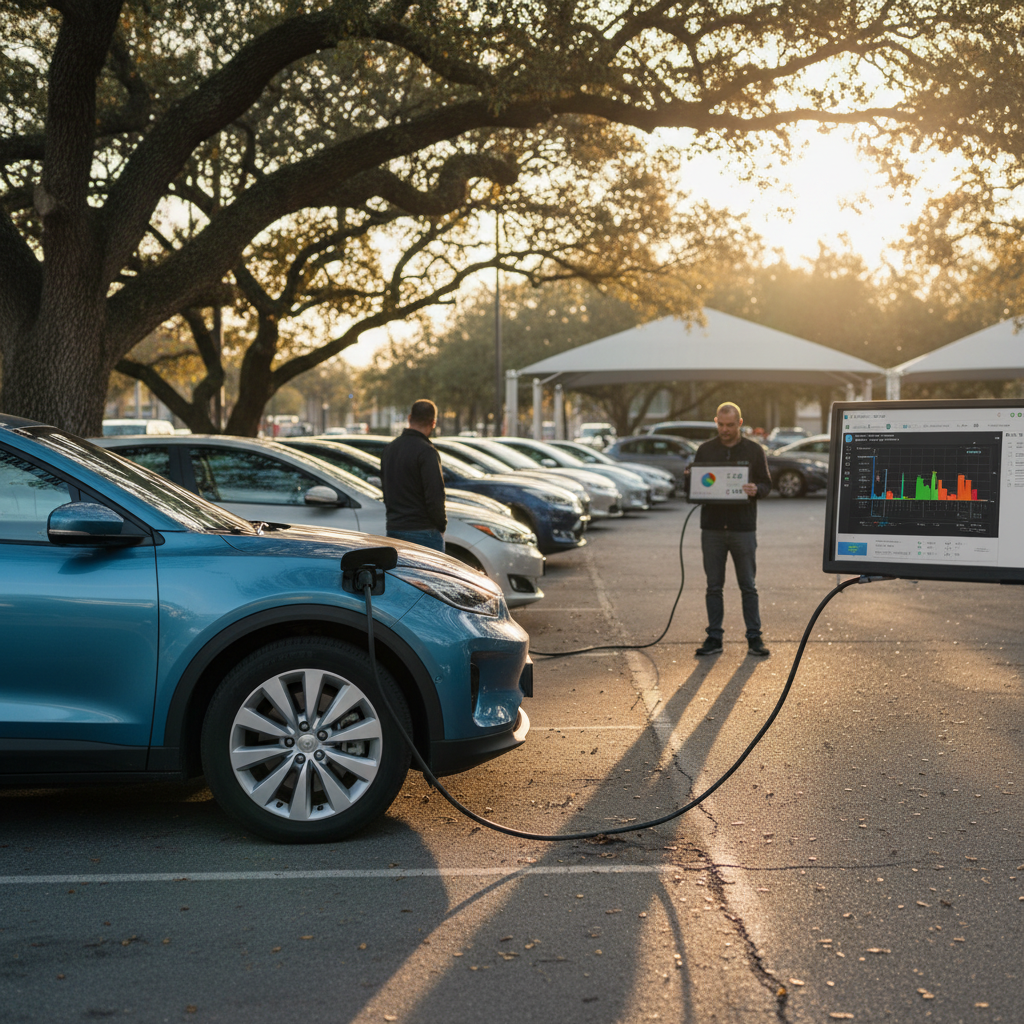
A service center or EV‑qualified shop runs a <strong>state‑of‑health (SoH)</strong> test. This looks at capacity, internal resistance, fault codes, and safety status to decide whether the pack stays in service, is repaired, or is retired.
3. Pack is safely removed and discharged
If it’s coming out, technicians isolate high‑voltage systems, remove the pack, and bring it to a safe charge level. This step is critical to avoid short circuits, shocks, or thermal runaway during transport and disassembly.
4. Ownership and logistics are assigned
Depending on the brand and local rules, the pack may legally “belong” to the automaker, the battery supplier, or the vehicle owner. Many manufacturers now run take‑back programs or partner with recyclers to handle logistics.
5. Pack goes to a testing or repurposing facility
Before full recycling, packs, and sometimes individual modules, are tested again. Units with sufficient capacity and no safety flags can be rerouted into <strong>second‑life</strong> projects like backup storage or microgrids.
6. Remaining material is sent to a recycler
Batteries that can’t be reused move on to a dedicated recycling plant. There, they’re dismantled, shredded, and processed so the metals and active materials can go back into the battery supply chain.
Why you shouldn’t DIY this
Second life: what happens before recycling
A key point most people miss: “end‑of‑life” for your car isn’t necessarily end‑of‑life for the battery. Many EVs retire their packs when capacity falls to around 70–80% of the original rating. That’s noticeable behind the wheel, but still plenty of energy for less demanding jobs.
Common second‑life uses for EV batteries
How “retired” packs keep working before they’re recycled
Grid‑scale storage
Home and building backup
Data centers and industrial sites
How long can a second life last?
Second life isn’t yet the dominant path for every pack, testing, certification, and integration add cost, but it’s growing quickly. That’s why you’re starting to see more news about former EV batteries showing up in solar farms, commercial buildings, and even entire neighborhood microgrids.
Inside an EV battery recycling plant
So what actually happens once a pack reaches a recycling facility? While every company has its own twist, most follow a similar sequence that combines mechanical processing with chemical recovery.
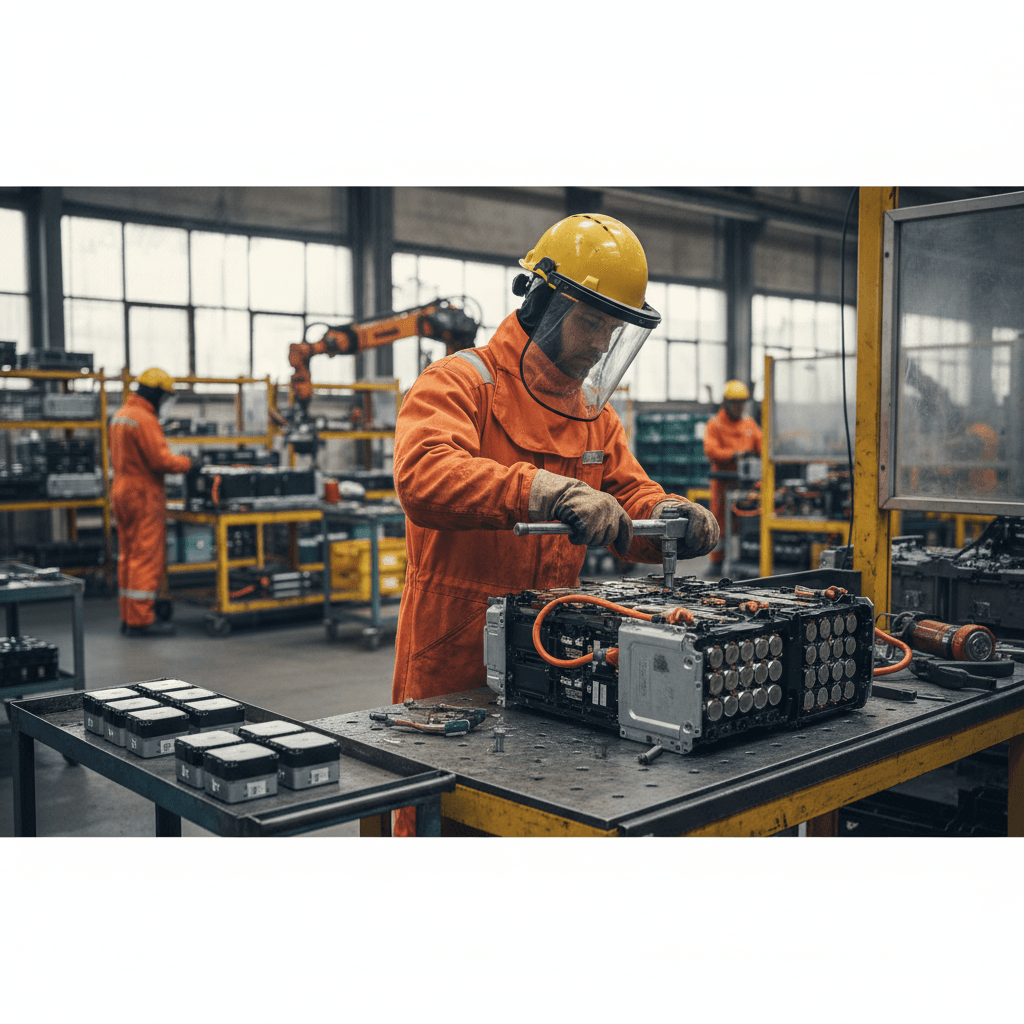
How EV battery recycling works, step by step
The major stages you’ll find in most modern lithium‑ion EV battery recycling operations.
| Stage | What happens | What comes out |
|---|---|---|
| Intake & inspection | Packs arrive, documentation is checked, SoH and safety are confirmed. | Verified packs ready for processing |
| Discharging & de‑energizing | Batteries are safely discharged and voltage is brought down to manageable levels. | Low‑voltage packs with stored energy captured or dissipated |
| Dismantling | Casings, bus bars, and modules are removed, sometimes by robots, often by trained technicians. | Metal housings, wiring, and separated modules |
| Shredding | Modules or cells are shredded into small pieces in an inert or controlled atmosphere. | Mixed “black mass” plus fragments of copper, aluminum, plastics |
| Physical separation | Screens, magnets, and density separation split out plastics, steel, aluminum, and copper foils from active material. | Streams of plastics/metals and concentrated black mass |
| Chemical recovery | Hydrometallurgical or other processes dissolve and separate key elements like lithium, nickel, cobalt, and manganese. | High‑purity battery‑grade materials ready for new cathodes/anodes |
Not every recycler uses every step, but the flow below covers the mainstream approaches in North America and Europe.
The heart of the process is that last step: turning shredded “black mass” back into battery‑grade metals. Modern hydrometallurgical processes can recover the vast majority of critical elements with quality high enough to go right back into new EV cells.
From old packs to new batteries
EV batteries, recycling, and the environment
You’ve probably heard that EVs have a higher manufacturing footprint than gas cars, largely because of the battery. That’s true up front, but it doesn’t tell the whole story.
EV vs. gas over a full lifetime
Studies consistently find that even with today’s energy mix, EVs make up their extra factory emissions within the first few years of driving. After that, lower tailpipe emissions (none, in fact) dominate the equation. As the grid adds more renewables, the advantage of EVs grows.
Where recycling fits in
Battery recycling shrinks the factory side of that equation. Using recycled metals instead of virgin mining can cut greenhouse gas emissions and water use substantially, because you’re skipping ore extraction, long‑distance transport, and some of the most energy‑intensive refining steps.
Water, mining, and local impacts
Who pays for EV battery recycling, and does it raise your costs?
In the U.S., EV batteries are treated as hazardous material, so they can’t just be tossed out with regular scrap. But that doesn’t mean you’ll be stuck with a giant bill when a pack is finally retired.
Who typically handles end‑of‑life battery costs?
The answer depends on whether you’re dealing with a new EV, a used one, or just the pack itself.
Automaker & battery suppliers
Regulators & policy
Owners & used‑vehicle market
As recycling technologies mature and the volume of used packs grows, recyclers are less likely to charge for taking a battery and more likely to pay for it, because the recovered metals are so valuable. That dynamic will increasingly be baked into how vehicles are priced new and used.
How Recharged helps here
Challenges, realities, and myths about EV battery recycling
If you read quick takes on social media, you’ll see two extremes: either “no one knows what to do with EV batteries” or “everything is already perfectly circular.” The truth is in the middle, real progress with real challenges still to solve.
- Myth: EV batteries all end up in landfills. In reality, landfilling high‑value lithium‑ion packs is both risky and economically irrational. The main issue today isn’t that packs are trashed, it’s that collection and recycling aren’t yet universal or standardized everywhere.
- Reality: Infrastructure is still catching up. While large recycling plants are online and expanding, logistics, regulations, and data‑sharing between automakers, dismantlers, and recyclers are still being built out.
- Challenge: Safety and standardization. Packs differ widely in design, chemistry, and software. Safely discharging, transporting, and disassembling them, without fires or worker exposure, is a major engineering and training challenge.
- Opportunity: Better design for recycling. Automakers are increasingly thinking about disassembly and material recovery at the design stage, which will make future packs cheaper and easier to recycle.
Fire risk is real, but manageable
What this all means when you buy a used EV
If you’re shopping the used EV market, you don’t need to become an electrochemist. But understanding the basics of battery lifecycle can help you make a smarter, more confident decision.
Used EV buyers: how to think about the battery’s future
Look at battery health today
Focus on the pack’s current state of health and how it was used. A well‑maintained pack with verified diagnostics is more important than internet horror stories about theoretical replacement costs.
Consider your expected ownership window
If you plan to keep the car for 5–7 years and the pack is in good shape today, end‑of‑life recycling is probably something the next owner, or the automaker’s take‑back program, will handle.
Ask about warranties and coverage
Many EVs still carry battery warranties of 8 years or more from the original in‑service date. That can protect you from rare early failures and clarify who pays for replacement.
Buy from EV‑savvy partners
Working with an EV‑focused retailer like <strong>Recharged</strong> means you get expert guidance, a transparent battery health report, and help comparing options, financing, and even trade‑ins.
Think of the pack as an asset, not toxic waste
At the end of its driving life, the battery retains valuable metals. That makes it more likely to be reused or recycled than abandoned, especially as regulations and recycling capacity grow.
Bottom line: when you ask, “EV battery recycling, what happens?” the answer is far more encouraging than the myths suggest. Packs live long lives in vehicles, often enjoy a second career in stationary storage, and then flow into a growing network of recyclers that turn them back into critical battery materials. As a used‑EV shopper, your biggest job is to buy a car with a healthy pack today, from a seller who can prove it. The recycling ecosystem is evolving fast in the background, and it’s increasingly aligned with your interests as an owner.