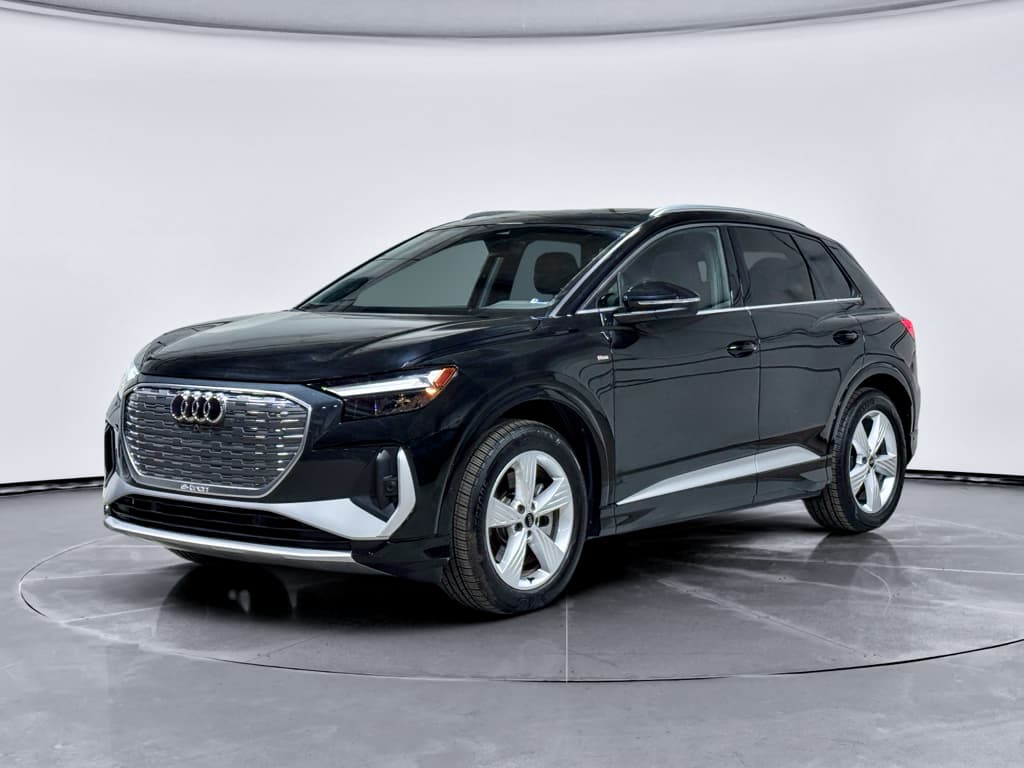
If you’re driving an Audi Q4 e-tron and thinking about moving into your next EV, understanding its trade in value is the difference between leaving thousands on the table and cashing out at the right time. This guide breaks down real-world pricing, depreciation, and the levers you can actually pull to boost what your Q4 e-tron is worth in 2025–2026.
Quick take
Overview: Audi Q4 e-tron trade in value in 2025–2026
The Audi Q4 e-tron arrived in the U.S. for the 2022 model year and sits in a crowded segment of compact luxury EV SUVs. New 2025 pricing for a Q4 e-tron starts in the low‑$50,000s and stretches into the low‑$60,000s depending on trim and options, with 5‑year depreciation estimates around 50–55% from major valuation guides. That puts many current trade in values for clean, average‑mileage examples somewhere in the low‑$30,000s to low‑$40,000s, with outliers above and below that band depending on use and condition.
Audi Q4 e-tron value snapshot (typical U.S. market, early 2026)
How much is my Audi Q4 e-tron worth today?
There’s no single number for “the” trade in value of an Audi Q4 e-tron. Instead, you’ll see a range depending on how, where, and to whom you sell it. Here’s how the landscape usually breaks down in early 2026 for a typical, well‑kept Q4 e-tron in the U.S.
What different buyers typically pay
Understanding the spread between trade in, instant cash offers, and retail pricing
Franchise dealer trade in
Luxury dealers usually offer the lowest but easiest path.
- Convenient if you’re buying another Audi or ICE vehicle.
- Offers often sit at the bottom of book value to leave room for reconditioning and margin.
- They may undervalue EVs if they don’t specialize in them.
Direct sale/marketplace
Listing your Q4 e-tron yourself or via a marketplace often yields the highest price, but with more work.
- Requires pricing research, photos, and handling test drives.
- Private buyers may pay closer to retail book value.
- Takes time; not ideal if you need an immediate transaction.
EV-focused buyer like Recharged
An EV specialist can land in the sweet spot between ease and value.
- Uses EV‑specific diagnostics instead of guessing at battery health.
- More confidence in the product often equals stronger offers.
- With Recharged, you can choose trade in, instant offer, or consignment depending on priorities.
Use ranges, not single numbers
7 key factors that shape Q4 e-tron trade in value
- Model year & trim – Newer is better, but trim matters. All‑wheel drive 45/55 quattro models and well‑optioned Prestige trims typically command more than base rear‑drive variants.
- Mileage – Most pricing tools assume ~12,000 miles per year. If you’re far above that (e.g., 20,000+ annually), expect trade in values to slide; well below that can be a strong premium.
- Battery health & usable range – A Q4 e-tron that still delivers close to its original EPA range is worth substantially more than one that has degraded, even if the odometer is similar.
- Condition (interior, exterior, tires, brakes) – Luxury EV buyers are picky. Curb rash, worn tires, or neglected cosmetic issues will show up in lower offers or reconditioning deductions.
- Accident & service history – Clean CARFAX or equivalent history is a major value support. Structural repairs, airbag deployments, or gaps in maintenance will hurt trade in value.
- Equipment & options – Features like the larger battery, all‑wheel drive, upgraded wheels, premium audio, and driver‑assist packages help values, while unusual or unpopular color combos can hurt.
- Market timing – EV incentives, interest rates, and local inventory swing quickly. When new Q4 e-trons or close substitutes are heavily discounted, your used one has to be priced accordingly.
Don’t ignore software & option codes
Battery health & range: what buyers actually pay for
Every Audi Q4 e-tron left the factory with a lithium‑ion battery pack-sized between the high‑50s and high‑70s kWh usable, depending on trim, and an EPA‑rated range roughly in the mid‑200s miles per charge in U.S. spec. By 2025, newer models gained improved power and DC fast‑charging capability, but for trade in value, what matters most is how much real‑world range your car still delivers today.
Why battery health drives value
- Range is the core promise of any EV; buyers pay up for confidence.
- Two visually identical Q4 e-trons can differ by tens of miles of usable range depending on degradation.
- Most mainstream dealers guess at battery condition using mileage as a proxy, which can punish high‑mileage but healthy packs.
How Recharged measures it
Every vehicle we list receives a Recharged Score with verified battery diagnostics and a detailed health report.
- Deep‑scan battery state of health (SoH), not just dashboard range estimates.
- Charge‑cycle and temperature‑related wear patterns where data is available.
- Transparent reporting that supports stronger resale value if your pack is healthy.
That same data helps us price trade ins more fairly than buyers who only see mileage and a rough “good/fair/poor” checkbox.
Healthy pack? Leverage it
How the used market sees the Q4 e-tron today
By late 2025, the Audi Q4 e-tron has settled into a familiar pattern: a solid, premium‑feeling compact EV SUV that doesn’t dominate any single spec sheet column, but also doesn’t scare used‑car shoppers. Reliability data from European inspection agencies has been encouraging, and the shared MEB platform with VW and Škoda siblings means parts and service are relatively well‑understood.
Market perception of the Audi Q4 e-tron
Strengths and weaknesses that show up in resale value
Strength: balanced package
The Q4 e-tron slots neatly between mass‑market EVs and pricier luxury models.
- Comfortable ride and refined cabin.
- Enough range for most daily drivers.
- Audi badge carries weight in the used market.
Neutral: charging & range
Newer Q4s charge at up to around 165–175 kW DC and offer EPA range in the high‑200‑mile band, which is competitive but not category‑leading.
In resale terms, that means solid but not “halo” status, values track the broader luxury EV SUV pack.
Risk: shifting EV incentives
Fluctuating new‑EV incentives and periodic discounting on new Q4 e-trons and rivals can pull used values down.
If new inventory is being aggressively subsidized, expect more conservative trade in offers until the market rebalances.
Warranty still on your side
Where to sell or trade in your Audi Q4 e-tron
Once you understand what your Q4 e-tron is roughly worth, the next decision is where to sell it. Each channel trades off price, convenience, and risk.
Ways to sell your Audi Q4 e-tron
How different sale channels typically affect your net proceeds and effort level.
| Channel | Typical price vs. market | Speed & convenience | Best for |
|---|---|---|---|
| Franchise dealer trade in | Lowest – often bottom of trade‑in range | Fastest; done during new‑car deal | One‑stop shoppers focused on payment, not maximizing value |
| Non‑EV used car dealer | Low to mid trade‑in range | Fast, but EV expertise varies | Owners wanting cash out with minimal hassle |
| EV specialist like Recharged | Mid to top of trade‑in range, especially for healthy batteries | Fast online process with EV‑specific appraisal | Owners who want a fair, battery‑aware offer and nationwide reach |
| Private sale (DIY) | Top of market if you price well | Slowest; you manage listings and buyers | Value‑maximizers comfortable doing the legwork |
| Consignment with Recharged | Often near retail market pricing after fees | Moderate: we handle marketing, you wait for the right buyer | Owners with time to wait who want more than a standard trade in |
Prices are directional; your actual Audi Q4 e-tron trade in value will depend on your specific vehicle and market.
Match the channel to your goals
Step‑by‑step: how to maximize your trade-in offer
Pre‑trade checklist for your Audi Q4 e-tron
1. Pull valuation benchmarks
Get baseline numbers from 2–3 appraisal tools using your exact year, trim, mileage, and ZIP. Note the <strong>trade in</strong> and <strong>private party</strong> ranges so you know what’s realistic before talking to buyers.
2. Gather service & charging history
Compile Audi dealer records, independent shop invoices, and, if you have them, logs from your home charger or charging apps. Demonstrating consistent maintenance and reasonable fast‑charging habits builds confidence for EV buyers.
3. Get a battery health assessment
If possible, have an EV‑savvy buyer or shop run a <strong>battery diagnostic</strong>. When you trade your Q4 e-tron into Recharged, this happens automatically as part of our Recharged Score process and is included in your offer.
4. Fix easy cosmetic issues
Address low‑cost items, detail the interior, repair obvious curb rash, replace worn wiper blades, and consider fixing minor paint scuffs. Cheap fixes can prevent a buyer from padding their offer with big reconditioning deductions.
5. Shop multiple offers the same week
Timing matters. Request offers from a local Audi dealer, at least one large national buyer, and an EV specialist like Recharged within a few days. Markets move; comparing fresh offers is better than chasing stale quotes.
6. Decide between instant sale and consignment
If cash flow or timing is tight, an instant sale or traditional trade in is sensible. If you have flexibility and a clean, desirable spec, consignment through a marketplace like Recharged can often net you <strong>thousands more</strong> before fees.
Avoid this common EV mistake
Realistic example scenarios for Q4 e-tron trade in values
To make all of this more concrete, here are simplified, directional examples of how Audi Q4 e-tron trade in value can move based on a few key variables. These aren’t quotes, just illustrations of how the math tends to work in the real world.
Scenario A: Low‑mileage 2024 Q4 e-tron 55 Prestige
- Original MSRP: about $60,000.
- Current mileage: 12,000 miles.
- Battery health: excellent; range close to new.
- Condition: no accidents, clean service history, fresh tires.
Typical outcomes:
- Non‑EV dealer trade in: low‑to‑mid $30,000s.
- EV specialist trade in (battery verified): mid‑to‑high $30,000s.
- Consignment/retail sale: low‑$40,000s if you wait for the right buyer.
Scenario B: High‑mileage 2022 Q4 e-tron 40 with average battery
- Original MSRP: about $52,000.
- Current mileage: 60,000 miles.
- Battery health: moderate degradation, noticeable but usable range loss.
- Condition: minor cosmetic wear, one small prior accident repaired properly.
Typical outcomes:
- Dealer trade in: low‑$20,000s.
- EV specialist trade in: mid‑$20,000s, if diagnostics show stable health.
- Private sale: upper‑$20,000s if priced sharply and marketed honestly.
Think in bands, not precision
FAQ: Audi Q4 e-tron trade in value
Frequently asked questions
Bottom line: is now a good time to trade your Q4 e-tron?
If you own an Audi Q4 e-tron today, your trade in value sits at the intersection of rapidly evolving EV technology and a maturing used‑EV market. The model isn’t depreciating out of step with its peers, but like every modern EV, its future value will depend heavily on how well its battery ages and how new incentives reshape the new‑car landscape.
The smartest move is to stop thinking in terms of a single magic number and instead focus on the range of fair outcomes available to you. Document your Q4 e-tron’s condition and battery health, clean up the easy stuff, and get multiple fresh offers from different types of buyers, including at least one EV specialist.
If you’d like a trade in or sale path that actually understands what your EV is worth, Recharged can help. Every vehicle we sell comes with a Recharged Score battery health report, and that same diagnostic rigor underpins how we value and purchase used EVs. Whether you want an instant offer, to trade into another EV, or to maximize value through consignment, you can start the process online and complete it fully digitally, backed by EV specialists who look beyond the odometer.