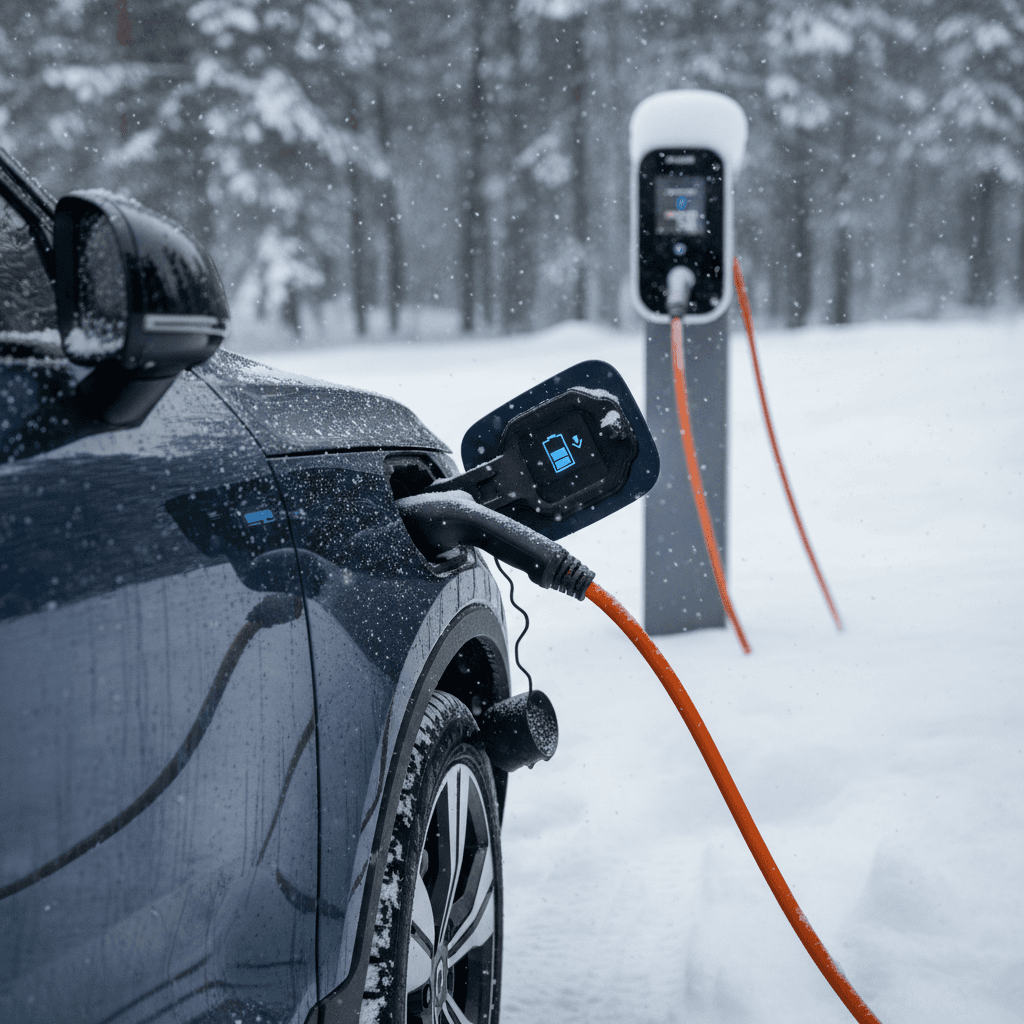
If you own a Volvo C40 Recharge and your first real cold snap just slashed your range, you’re not imagining things. Winter is where EVs show their quirks, and the C40 is no exception. The good news: once you understand the typical Volvo C40 Recharge winter range loss percentage and what drives it, you can plan confidently and claw back a surprising number of miles.
Fast answer
C40 Recharge winter range loss at a glance
Volvo C40 Recharge winter range, in real percentages
Those are real‑world style figures, not lab numbers, pulled from independent winter tests, owner reports, and Recharged’s own C40 range analysis. They line up closely with winter results for the closely related XC40 Recharge, which shares the same platform and powertrains.
How much range does the Volvo C40 Recharge lose in winter?
Let’s turn percentages into miles, because that’s what you feel from behind the wheel. Depending on model year and motor configuration, a C40 Recharge is rated roughly in the 245–300‑mile EPA range band. In real life, most owners don’t see those numbers even in perfect weather, but they’re a useful reference point.
Volvo C40 Recharge winter range loss – rough guide
Approximate winter range loss percentages and resulting mileage for typical U.S. highway usage. Assumes a healthy battery and sensible driving.
| Scenario | Ambient temp & conditions | Typical loss % | Example rated range | Approx. real winter range |
|---|---|---|---|---|
| Cool fall day | 40–55 °F, light heat, mixed driving | 10–15% | 260 mi | 220–235 mi |
| Normal winter | 25–32 °F, heat on, mixed driving | 20–30% | 260 mi | 180–210 mi |
| Freezing highway | 25–32 °F, 70–75 mph, heat on | 25–35% | 260 mi | 170–195 mi |
| Deep‑cold snap | Single digits to teens °F, short trips, heavy heat | 35–45% | 260 mi | 140–170 mi |
Use this as a planning guide, not a promise – your actual range will vary with speed, elevation, load, and wind.
Don’t confuse the guess‑o‑meter with the battery
In other words, a 30–35% winter range loss in a C40 Recharge is usually normal, especially if you’re running at interstate speeds in real winter, not just a chilly morning. The trick is separating “this is physics” from “something might be wrong,” which we’ll get to in a bit.
What the lab tests and real-world data say
You can think of C40 winter performance in three layers: official test cycles, independent winter tests, and what real owners report after living with the car for a season or two.
- Official data with climate load – Independent spec aggregators that model Volvo’s WLTP numbers show that simply turning on a 2 kW heater or A/C load cuts C40 range by about 23–25% compared with the no‑climate test. That’s before you add wind, wet roads, or winter tires.
- Controlled winter range tests – In a well‑known Nordic winter test that ran dozens of EVs in the cold, the early C40 Recharge posted roughly a 24% drop from its WLTP rating in steady sub‑freezing driving. That’s right in line with the average modern EV.
- Owner and reviewer experience – U.S. highway testing by Recharged on the updated C40 Recharge suggests that below freezing, it’s realistic to expect about 20–35% less highway range depending on speed and wind. Scandinavian owners on winter tires often talk about 30–40% loss once you mix in short trips, snowpack, and cabin heat.
How C40 compares to other EVs
Why the C40 Recharge loses range in the cold
Every EV gives up range in the cold, but a few design choices make the C40 feel the hit a bit more in some situations. You don’t have to be an engineer to understand the main culprits.
The main drivers of C40 Recharge winter range loss
Most of what you’re seeing is normal EV behavior, amplified by winter driving habits.
Battery chemistry
Cabin & battery heating
Air density & rolling resistance
Heat pump vs resistive heater
Many C40 Recharge configurations include a heat pump, which uses a refrigerant circuit to move heat rather than create it outright. In moderate cold (say 20–40 °F), that can drastically cut the energy needed to heat the cabin compared with older resistive‑only systems.
Not every early C40 had the heat pump standard in every market. If you’re shopping used in a snowbelt state, it’s worth finding out how the particular car you’re eyeing is equipped.
Short trips are the silent killer
From a range perspective, your C40 would rather do one 50‑mile drive than ten 5‑mile hops. Each cold start means reheating the cabin and nudging the battery back into its comfort zone. That energy is spread over very few miles, so your percentage loss looks huge even though the car is technically behaving normally.
Single Motor vs Twin Motor – and what changed for 2024+
Volvo has already updated the C40 Recharge once in a meaningful way, and it matters for winter range. Early cars used a dual‑motor setup and a smaller battery. Later cars added a more efficient rear‑drive Single Motor variant and, for 2024+, a larger battery and revised motors.
C40 Recharge variants and winter range behavior (high level)
Overview of how different C40 powertrains tend to behave in winter, based on ratings and early testing trends.
| Variant | Battery & drive | Rated range ballpark | Winter loss tendency |
|---|---|---|---|
| Early Twin Motor (2022–early 2023) | Smaller pack, AWD | ~220–230 mi EPA | Can feel the biggest winter hit at highway speeds; think 30–40% loss on bad days. |
| Updated Twin Motor (2024 MY) | Larger ~82 kWh pack, revised AWD | Mid‑ to upper‑200s EPA | More efficient hardware reins in the worst losses a bit, but still sensitive to speed and cold. |
| Single Motor (various years, RWD or FWD depending on market) | Efficiency‑focused | High‑200s to low‑300s WLTP/EPA equivalent | Often shows slightly better % retention in cold thanks to lower consumption. |
Think of these as tendencies, not hard rules. Tire choice, wheel size, and driving style still dominate the story.
If you live where it snows, favor efficiency
City vs highway: how your route changes winter loss
The percentage hit you see from winter doesn’t just come from the thermometer; it also depends heavily on how and where you drive. The C40 is especially sensitive to speed and trip length when it’s cold.
How different driving patterns change C40 winter range loss
Same weather, very different results depending on what your day looks like.
Urban & suburban loops
- Lower aero drag helps efficiency.
- But repeated cold starts and reheating the cabin amplify losses.
- Plan on ~25–35% loss if you do many short errands on a frigid day.
Long highway runs
- Higher aero drag and cold air work against you.
- Battery and cabin stay warm, so thermal overhead is spread over more miles.
- On a long trip, you might see 20–30% loss in moderate winter, 30–35% in deep cold.
The sweet spot: warm up, then cruise
How to cut your C40 Recharge winter range loss
You can’t negotiate with physics, but you can stack the deck in your favor. Think in terms of three levers: how you heat the car, how you charge it, and how you drive it.
Practical ways to reduce C40 Recharge winter range loss
1. Precondition while plugged in
Use the Volvo Cars app or in‑car scheduling to warm the cabin and battery while you’re still connected to home charging. That way, the grid pays the heat bill and you leave with a toasty car and a warmed‑up pack.
2. Lean on seat and wheel heaters
Resist the urge to blast hot air. Drop the cabin setpoint a few degrees and rely on seat and steering‑wheel heaters, which sip energy compared with full‑bore cabin heat.
3. Avoid back‑to‑back short, cold trips when you can
Batch errands into a single run instead of multiple cold starts. Each fresh start from a frozen car means paying the warm‑up penalty again, which murders efficiency on a miles‑per‑kWh basis.
4. Keep speeds in check on the highway
The difference between 65 and 75 mph in winter can easily be another 10–15% of your usable range. If you’re nervous about making the next fast charger, slower is almost always better than gambling at high speed.
5. Use Eco or Range‑friendly drive modes
If your C40 offers a more efficient drive profile, use it in winter. Softer throttle mapping and reduced climate output can gently rein in wasted energy without making the car feel like a slug.
6. Watch tire choice and pressures
Winter tires are often essential for safety, but they do add rolling resistance. Run the correct pressure and know that aggressive tread patterns can cost you a few percentage points of range.
When big winter loss might signal a problem
Planning trips in winter: realistic mileage targets
Range loss percentages are helpful, but when you’re staring at a map on your phone, you need real numbers. Here’s a conservative way to plan C40 winter trips so you’re not sweating the last 10 miles to a charger.
Day‑to‑day commuting
If your round‑trip commute is under 50–60 miles, winter is mostly a non‑issue. Even with a 35% hit, a healthy C40 Recharge has plenty in reserve. Just plug in at home when you can, use preconditioning, and don’t panic if the displayed estimate swings when the first cold snap hits.
For a 70–90‑mile daily pattern, you’ll want reliable Level 2 at home or work, plus smart use of preconditioning. It’s very doable – you’ll just keep a closer eye on weather and speed.
Road‑trips and weekend drives
On winter road‑trips, pretend your C40 is a smaller‑tank gasoline car. Instead of banking on the full EPA rating, plan stops as if your usable highway range is 60–70% of the sticker number.
On a 260‑mile rated car, that means about 160–185 winter highway miles between fast‑charges, especially if it’s below freezing. Set the next charger as your destination so the car can pre‑warm the battery on the way, which improves DC fast‑charge speeds when you arrive.
Leave a 10–15% winter buffer
Shopping used? What to ask about winter range
If you’re looking at a used Volvo C40 Recharge, winter behavior should be part of the conversation just like tread depth or brake wear. A healthy C40 tends to hold its battery well so far; what you’re mostly screening for is abnormal loss or a driver whose pattern makes the car look worse than it is.
Winter‑range questions to ask about a used C40
These help separate a tired car from normal cold‑weather behavior.
What range do they see in winter?
How is the battery health documented?
Any warnings or odd charging behavior?
If you’re buying through Recharged, our specialists can walk you through how a specific C40 Recharge performed in prior winters based on owner history and our own testing. We can also help you think through whether its real‑world winter range fits your actual routes, not just the EPA label.
FAQ: Volvo C40 Recharge winter range loss
Common questions about C40 Recharge winter range
Winter doesn’t make the Volvo C40 Recharge a bad EV – it just makes it an honest one. Once you accept that a 20–35% winter range loss is normal and learn a few tricks to tame the worst of it, the C40 settles into a predictable, capable cold‑weather companion. Whether you already own one or you’re shopping used, the key is to look past the scary first cold‑snap numbers and judge the car by how it behaves over a full season. And if you want help finding a C40 whose battery and winter manners are already vetted, Recharged was built for exactly that.