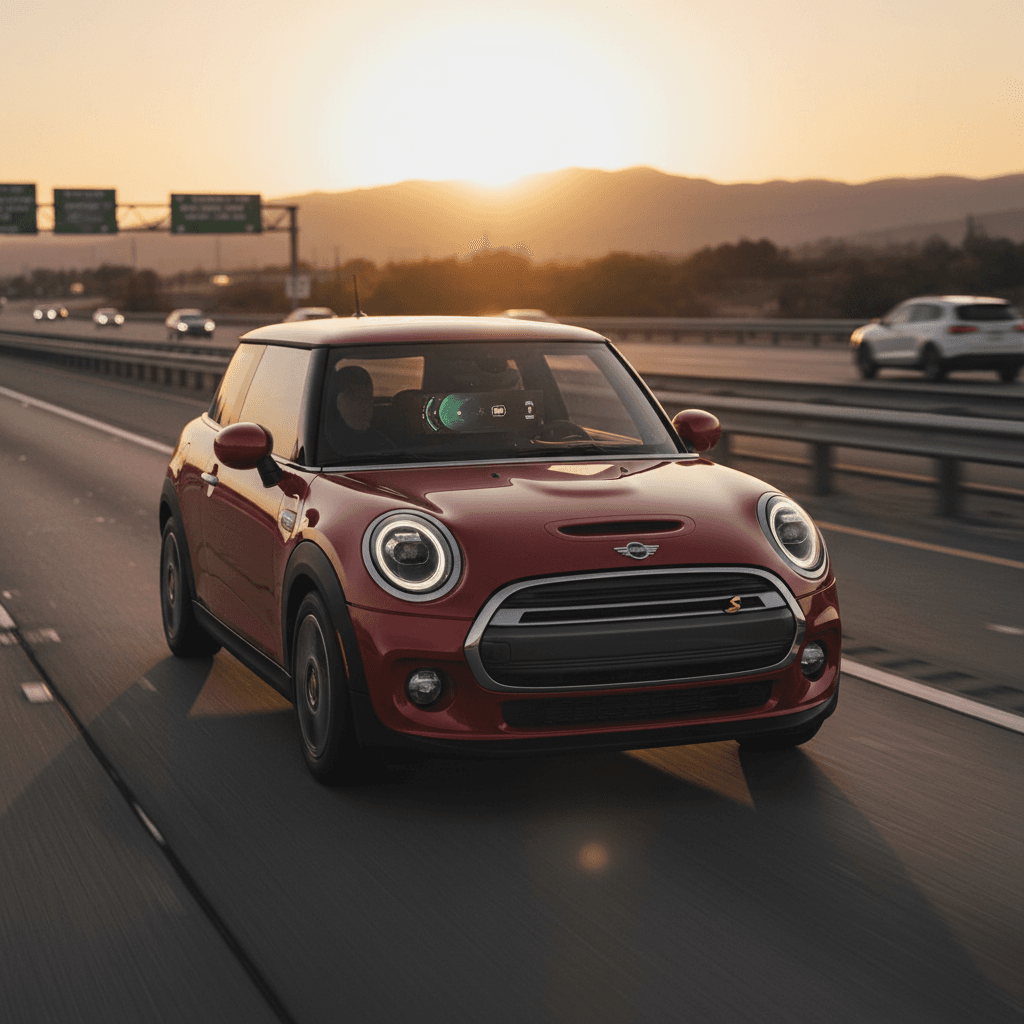
If you’re looking at a Mini Cooper Electric, you’ve probably noticed a big gap between the official range numbers and what owners report on the highway. EPA or WLTP ratings are a nice starting point, but what really matters is real-world highway range at 65–75 mph, especially if you commute or take the occasional road trip.
Two very different Mini Electrics
Mini Cooper Electric range basics: old vs new
Mini Cooper Electric: key range and battery numbers
The core reason real-world highway range is such a hot topic with the Mini Electric is simple: the first-generation F56 Cooper SE has one of the smallest batteries of any modern EV. Its official EPA combined rating is just 110–114 miles, and the EPA highway figure is a bit lower than that. In practice, that makes it an outstanding city car but a more compromised highway cruiser.
By contrast, the new-generation J01 Mini Cooper Electric (Cooper E and Cooper SE) launches with much larger packs, around 40 kWh and 54 kWh, and European WLTP ranges of roughly 190 and 250 miles. That pushes expected EPA ratings to about 148 and 195 miles and dramatically improves highway usability, even though top-end range still lags some rivals.
City vs highway mindset
Real-world highway range: 2020–2023 F56 Mini Cooper SE
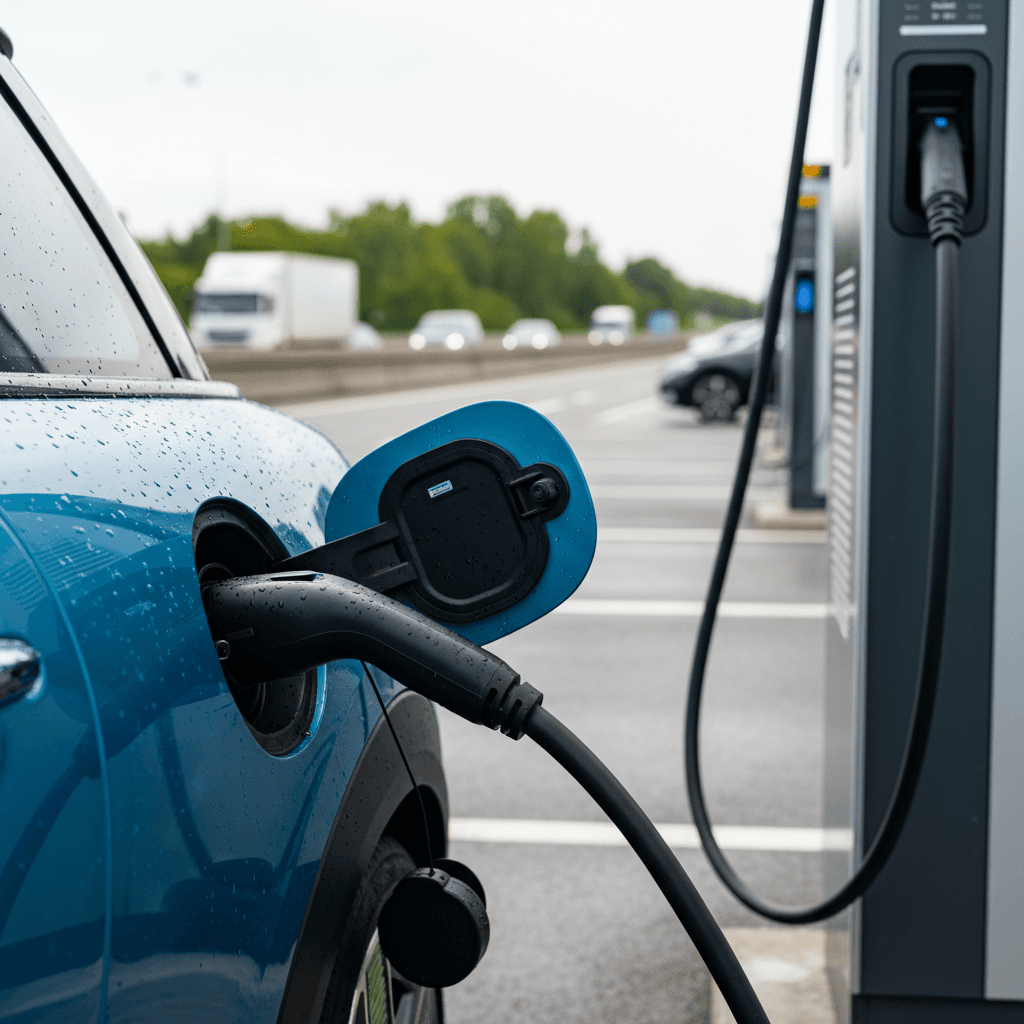
Let’s start with the car you’re most likely to see used in the U.S. today: the 2020–2023 F56 Mini Cooper SE. Officially it has 110–114 miles of EPA combined range and an EPA highway figure just over 100 miles. Owner data and independent testing line up pretty well with that, especially once you factor in speed.
Approximate real-world highway range: F56 Mini Cooper SE
These are realistic planning numbers for a healthy-battery F56 Mini Cooper SE in mild weather, starting from a full charge down to near empty. Always build in a 10–20% buffer in the real world.
| Cruising speed | Typical efficiency | Usable battery used | Approx highway range |
|---|---|---|---|
| 60 mph | ~4.0 mi/kWh | ~28 kWh | ~110–115 miles |
| 70 mph | ~3.4–3.6 mi/kWh | ~28 kWh | ~95–100 miles |
| 75 mph | ~3.0–3.2 mi/kWh | ~28 kWh | ~85–95 miles |
Assumes stock tires, no roof box, 60–70 °F, relatively flat terrain.
Those numbers line up with what many owners report: around 100–115 miles on the highway depending on speed and weather, with some drivers seeing a bit over 4 mi/kWh at 70 mph on flat ground in warm conditions and others closer to 3 mi/kWh at higher speeds or in cold weather.
Cold weather penalty
The other constraint on the F56 is charging. DC fast charging tops out around 50 kW, and real-world charging curves mean you’re typically looking at 30–35 minutes to go from ~10% to 80% on a good DC fast charger. On a road trip, that can feel like a lot of stopping for not a lot of miles, which is why many owners treat it as a brilliant city/commuter car rather than a primary interstate cruiser.
How to stretch F56 Mini SE highway range
Keep it closer to 65 than 80
Aerodynamic drag rises quickly with speed. Dropping from 75–80 mph down to 65–70 mph is the single biggest lever you have to extend range by 10–20%.
Start preconditioned and full
If you can, charge to 100% right before departure and precondition the cabin while plugged in so the heater or AC draws less from the battery once you hit the road.
Use Eco (Green) mode on long runs
Green mode softens throttle response and can rein in unnecessary acceleration. Over a 90–100 mile stint that can mean several extra miles of cushion.
Plan DC fast charges early and often
On an F56, don’t stretch to 5% if you can avoid it. Plan stops with 15–25% remaining so you’re never sweating the last few miles to a charger.
Highway range expectations for the new J01 Mini Electric
The new J01 Mini Cooper Electric, sold as Cooper E and Cooper SE, changes the math completely. With WLTP ranges of about 190 miles (E) and 250 miles (SE), and estimated EPA combined ratings around 148 and 195 miles, its real-world highway range roughly doubles versus the old car.
Mini Cooper E (J01)
- ~40 kWh pack with WLTP range around 190 miles.
- Expected EPA combined figure around 145–150 miles.
- Realistic 70 mph highway range: 120–135 miles in mild weather.
Mini Cooper SE (J01)
- ~54 kWh pack with WLTP range around 250 miles.
- Estimated EPA combined rating around 190–200 miles.
- Realistic 70 mph highway range: 160–190 miles depending on conditions.
Because the J01 platform is more efficient and carries more energy on board, you can think in full road-trip legs instead of short hops between chargers. At 70 mph, being able to comfortably plan for 160–180 miles per stint in the SE with a healthy buffer is the difference between “range-managed” and “pretty easy” road tripping.
Charging is less of a compromise
How speed, weather, and driving style change your Mini’s range
Four main levers that change your Mini’s highway range
Understanding these variables matters more than obsessing over EPA labels.
Speed
Jumping from 65 mph to 80 mph can easily cost you 15–25% of your range, regardless of generation. In a small-battery car like the F56, that’s the difference between a relaxed 100-mile leg and nervously watching the battery roll down.
Temperature & climate use
Cold batteries are less efficient and heating the cabin draws a lot of power. Expect 20–30% less range in sub-freezing conditions, and be conservative with your planning on winter highway trips.
Load, wheels & aero
Big wheels, sticky tires, passengers and cargo, or a roof box all hurt efficiency. With the F56’s small pack, that can knock another 5–10% off your real-world highway range.
Driving style & regen
Hard acceleration and late braking waste energy you could recapture. Using strong regenerative braking and a smoother pace can add several miles of cushion to each stint.
Think in buffers, not absolute numbers
Is the Mini Cooper Electric good for commuting and road trips?
Range isn’t just a number; it’s about use case. The same Mini that feels range-starved on a 300‑mile highway run can feel overkill for an urban commute. The key is matching the right version of the car to the way you actually drive.
Daily commuting & city driving
- F56 Mini SE is excellent up to ~60–70 miles/day round trip, especially if you can plug in at home or work.
- Stop‑and‑go and lower speeds favor its efficiency; you may see 120–130+ miles of mixed-use range.
- Parking, maneuverability, and fun factor are all big wins in urban cores.
Weekend trips & highway-heavy use
- The J01 Cooper SE is the better fit thanks to its ~160–190 mile realistic highway legs.
- The F56 can do road trips, but expect frequent 30‑minute DC fast-charge stops every 70–90 miles and plan carefully.
- If you routinely do 200‑ to 300‑mile days, a larger-battery EV or plug‑in hybrid may be less stressful.
Don’t overestimate workplace charging
Buying a used Mini Cooper SE: range and battery health
Because the first-gen F56 Mini Cooper SE has been on sale for several years and often at attractive prices, it’s a popular used EV candidate. That makes real-world highway range and battery health central to your buying decision.
Used Mini Cooper SE: range questions to ask
These conversations will tell you far more than just reading the EPA label.
Owner’s typical range
Ask the seller what they realistically see on a full charge at 65–70 mph in mild weather. You’re listening for answers in the 90–110 mile range, not guesses or EPA numbers.
Battery usage habits
Did they routinely fast-charge to 100% and run it to near‑zero, or mostly charge at home to ~80–90%? Gentler use tends to preserve more range over time.
Software & recall history
Confirm the car is up to date on software and campaigns. Range estimates and charging behavior can improve with later software builds.
How Recharged approaches Mini battery health
Range-focused checklist for a used Mini Cooper SE
1. Do a real highway test if possible
If the seller is local, try for a 20–30 mile freeway loop at your normal cruising speed. Note energy use (mi/kWh) and extrapolate to a full charge instead of trusting the guess‑o‑meter.
2. Inspect tires and wheels
Oversized wheels or aggressive tires look great but can shave off several miles of range. Factor that into your expectations or budget for a wheel/tire swap.
3. Check DC fast-charging behavior
If you can, plug into a DC fast charger and see how quickly the car ramps up. Very slow charging may indicate battery or thermal-management issues that will hurt long-distance usability.
4. Verify charging equipment
Make sure the included Level 1 or Level 2 charger works properly. Reliable home charging is the foundation for making a short‑range EV like the F56 painless to live with.
Mini Cooper Electric range: common questions
Mini Cooper Electric real-world range FAQ
Bottom line: what to expect from Mini Electric highway range
If you distill all the lab cycles, owner anecdotes, and road tests down to something you can actually plan around, it looks like this: the F56 Mini Cooper SE is a roughly 90–110 mile highway car in real-world use, while the new J01 Mini Cooper SE is closer to a 160–190 mile highway car. Both can be fantastic to live with when their limitations line up with your driving pattern.
The important step is to be honest about how you really use your car. If most of your life happens within 30 miles of home, a used Mini SE can be a joyfully efficient runabout, as long as you verify battery health and understand its highway compromises. If you regularly disappear down the interstate for hours at a time, the newer J01 or a larger‑battery EV may be a more relaxed fit.
Where Recharged fits in
Ready to find your next EV?
Browse Vehicles