If you live in the District, you’ve probably heard about EV rebates in Washington DC, and also that some of them have changed or vanished in the last couple of years. Between shifting federal rules and local budget pressure, it’s hard to tell what’s actually available in 2026, especially if you’re eyeing a used EV rather than something brand new.
Dates matter right now
Overview: EV rebates in Washington DC in 2026
Washington DC has never had a simple, single “$X off your EV” rebate. Instead, the District offers a patchwork of tax credits, reduced fees, and utility programs that can trim thousands off the lifetime cost of driving electric, especially if you combine them with today’s softer used EV prices.
What’s still strong in 2026
- Alternative Fuel Infrastructure Credit for home and workplace chargers (up to $1,000 for a home unit).
- Alternative Fuel Conversion Credit for converting vehicles to alternative fuels, including electricity, through December 31, 2026.
- Reduced registration fee for new EVs for their first two years on the road.
- Local and regional education and support from DOEE and Drive Electric DC.
What has changed or disappeared
- The generous excise tax exemption for EVs has been repealed for new titles issued after the 2025 budget changes, with EVs now subject to weight‑based excise tax.
- Federal clean vehicle credits for new and used EVs end for purchases after September 30, 2025, and charger credits phase out after June 30, 2026, under the One Big Beautiful Bill Act.
- DC’s budget pressure has frozen or slowed some grant-funded infrastructure programs.
Why incentives matter for DC drivers
Quick look: What EV incentives DC still offers
Key EV incentives available to DC residents in 2026
Exact savings depend on your tax situation, vehicle choice, and timing.
Alternative Fuel Infrastructure Credit
Credit for 50% of the cost of purchasing and installing a charging station.
- Up to $1,000 per station at a private residence.
- Up to $10,000 per station on publicly accessible non‑residential property.
- Unused credit can roll forward for two years.
Alternative Fuel Conversion Credit
Credit for 50% of costs to convert a vehicle to an alternative fuel, including electricity.
- Capped at $19,000 per vehicle.
- Available to individuals and businesses.
- Scheduled to expire December 31, 2026.
Reduced EV registration fees
New EVs (other than motorcycles or motorized bicycles) qualify for a reduced registration fee.
- $36 total for the first two years of registration.
- After that, your EV is treated like other vehicles based on its class.
Federal credits are on a tight clock
DC alternative fuel infrastructure credit (home and workplace chargers)
For most DC residents, the single most practical local incentive is the Alternative Fuel Infrastructure Credit. This applies to Level 2 home chargers in a rowhouse alley just as much as it does to a bank of chargers in an office garage, as long as the equipment is new, qualified, and installed correctly.
Alternative Fuel Infrastructure Credit: Key details for DC residents
How much you can get back and what qualifies.
| Feature | Home (private residence) | Public/non-residential property |
|---|---|---|
| Maximum credit amount | Up to $1,000 per charging station | Up to $10,000 per charging station |
| Credit percentage | 50% of allowable purchase and installation costs | 50% of allowable purchase and installation costs |
| Eligibility | Property must be in DC; equipment must be new and used to charge alternative fuel vehicles (including EVs) | Property must be in DC, and the station must be designed for use by the public |
| Carryforward | Unused credit may be carried forward for up to two years | Unused credit may be carried forward for up to two years |
Always confirm rules with the DC Office of Tax and Revenue before you file, as incentive details can change.
Stack with smart shopping on hardware
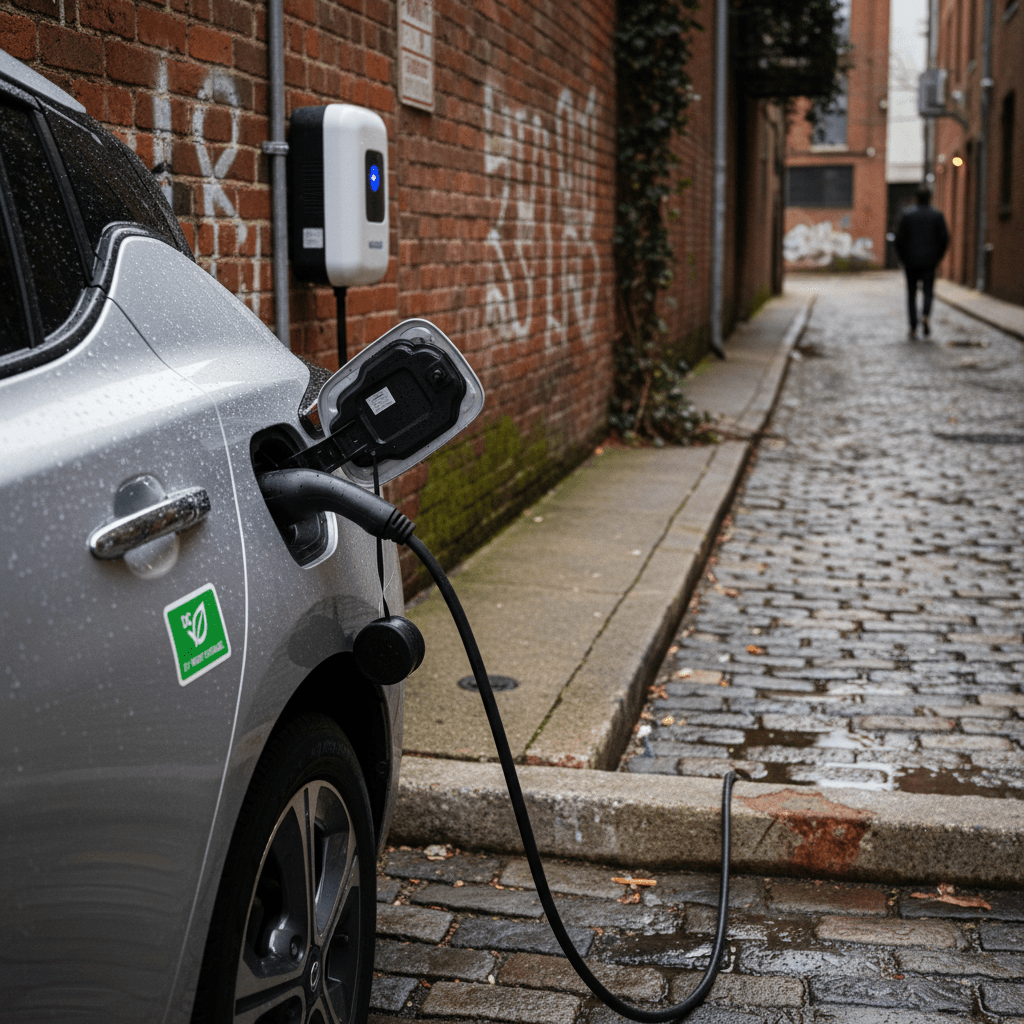
To qualify, your charger must be new equipment, installed in accordance with DC code and electrical standards. Used or refurbished chargers don’t qualify, and you’ll need documentation of both the hardware purchase and the licensed electrician’s labor to support your claim.
Checklist: Making your DC charger project rebate-ready
1. Confirm you own or lease eligible property in DC
You must be a DC taxpayer installing the charger at a property located in the District, either your home, a rental you own, or non‑residential property you control.
2. Choose a qualifying Level 2 charger
Select a new Level 2 EVSE (Electric Vehicle Supply Equipment) from a reputable brand. Look for UL listing and Wi‑Fi or smart‑charging features if you want better monitoring and load control.
3. Get a licensed DC electrician
Use a contractor with active DC licensing. DOEE maintains a list of EVSE service providers verified to do this work; starting there reduces the risk of denied permits or insurance issues.
4. Pull permits and complete installation
Your electrician should handle permits and inspections. Keep copies of permit approvals and final inspection sign‑off; they help if your credit is ever reviewed.
5. Save itemized invoices and proof of payment
You’ll need documentation that clearly separates hardware and labor costs, with the address of the installation site and the date work was completed.
6. Claim the credit on your DC return
At tax time, complete the appropriate DC tax form for the Alternative Fuel Infrastructure Credit, attach supporting documentation, and be prepared to mail your return if e‑file doesn’t support the form yet.
Alternative fuel conversion credit (less common, but lucrative)
Most private drivers will never use the Alternative Fuel Conversion Credit, but if you manage a fleet or are considering specialized vehicles, it can be substantial. DC offers an income tax credit equal to 50% of equipment and labor for converting a qualified vehicle to an alternative fuel, including electricity, up to $19,000 per vehicle.
Where this usually applies
- Qualified fuels include high‑blend ethanol, natural gas, propane, biodiesel, electricity, and hydrogen.
- The credit can significantly offset the cost of an EV conversion kit and professional installation.
- The incentive is currently scheduled to expire December 31, 2026, so long planning timelines should account for that date.
Registration fees, excise tax changes & what they mean for EVs
Historically, DC sweetened the deal for EV buyers with both an excise tax exemption and reduced registration fees. Budget support legislation for fiscal year 2025 changed that equation: the excise tax exemption for EVs was repealed, and EVs are now subject to weight‑based excise tax rates, while the reduced registration fee remains for new EVs.
How DC fees treat EVs in 2026
Where you still save money, and where you no longer do.
| Cost type | What changed | How it works for EVs now |
|---|---|---|
| Vehicle excise tax | EV exemption repealed; EVs now taxed by unladen weight tiers. | A new EV pays 1–3% of fair market value based on weight, similar to efficient gas cars, so this is no longer a core EV-only benefit. |
| Registration fee | Reduced registration fee for new EVs remains in place. | A new EV (excluding motorcycles and motorized bicycles) pays $36 total for the first two years of registration, then moves into the standard class-based fee schedule. |
Exact tax amounts depend on your vehicle’s weight and fair market value at the time of titling.
Don’t assume your EV is tax‑exempt at the DMV
Utility and local programs: Pepco, DCSEU and curbside pilots
On top of formal tax credits, DC residents benefit from utility programs and pilots that lower the cost, or increase the convenience, of driving electric. These aren’t always “rebates” in the strict sense, but they materially change your ownership experience.
Key local programs that complement DC EV rebates
These programs focus more on charging access and operating costs than on purchase price.
Pepco EVsmart (DC)
Pepco’s EVsmart initiative offers education, rate options, and occasionally charger‑related incentives for DC customers.
- Time‑of‑use or EV‑friendly rates can reduce overnight charging costs.
- Rebate availability for residential Level 2 chargers has varied over time, check Pepco’s latest DC‑specific EVsmart page.
DC Sustainable Energy Utility (DCSEU)
DCSEU runs efficiency rebate programs with program years (for example, October 1, 2025 to September 30, 2026).
- Most offers focus on HVAC, appliances, and building efficiency but can intersect with EV‑ready upgrades.
- All equipment must be new and installed to code to qualify.
Neighborhood curbside charging pilot
As of February 2026, DDOT and DOEE are piloting curbside EV chargers in residential neighborhoods.
- The pilot doesn’t put cash in your pocket, but it makes EV ownership more feasible without off‑street parking.
- Early pilots also help shape future regulations and permitting for private vendors installing curbside chargers.
If you rent or lack parking, watch the curbside pilot
How to stack DC incentives with used EV savings
With the most generous tax breaks gone or time‑boxed, the real savings opportunity in DC is combining modest local incentives with today’s softer used EV prices. This is where marketplaces like Recharged come in: you’re starting from a lower sticker price, then using DC’s remaining tools to push your total cost of ownership down further.
Example: Used EV in DC with home charging
Imagine you buy a used Nissan Leaf, Chevy Bolt EUV, or Tesla Model 3 through Recharged at a competitive market price, with a verified Recharged Score showing strong battery health.
- You save thousands versus a comparable new EV, before any incentives.
- You install a Level 2 charger at home and claim the DC Alternative Fuel Infrastructure Credit.
- You may still catch the federal home‑charger credit if you install before June 30, 2026.
Why this often beats chasing new‑car credits
- Used EV prices dropped sharply after 2022, so the market is doing a lot of the discounting for you.
- Recharged’s digital process and nationwide delivery mean you can shop broadly without wasting Saturdays at dealers.
- Battery‑health transparency through the Recharged Score helps you avoid cars whose value has been eroded by hidden degradation.
In practice, shaving $5,000–$10,000 off the purchase price of a used EV, then adding a four‑figure tax credit on your home charger, often beats whatever’s left of the new‑EV incentive stack.
Financing and trade‑ins still matter more than rebates
Step-by-step: How to actually claim DC EV benefits
Five steps to capturing DC EV savings
1. Decide: new vs. used, and your timing
Because federal EV purchase credits end for buys after September 30, 2025, your timing relative to that date matters. In 2026, assume no federal purchase credit and focus on <strong>used EV pricing plus local benefits</strong> instead.
2. Map out your charging plan
If you have or can create off‑street parking, a home Level 2 charger unlocks the DC Alternative Fuel Infrastructure Credit. If not, pay attention to Pepco’s public options and DDOT’s curbside pilot when choosing an EV with the right range and charging speed.
3. Collect documentation as you go
For vehicles: keep the bill of sale, finance documents, and DMV paperwork. For chargers: save itemized invoices, permits, inspection reports, and proof of payment. You’ll need these to claim DC credits and justify them if the Office of Tax and Revenue asks questions later.
4. Work with a tax pro (or carefully follow DC forms)
DC’s credits live on <strong>specific tax forms</strong> that may not be fully supported in e‑file software. Some residents still need to print and mail DC returns to claim charger credits. A tax preparer familiar with DC’s EV incentives can keep you from leaving money on the table.
5. Re‑check rules each filing season
Local and federal incentive rules are changing fast. Before you file, or buy, take 10 minutes to check DOEE’s EV resources page, the DC Office of Tax and Revenue, and any Pepco or DCSEU program pages for updates.
Common pitfalls to avoid with DC EV rebates
Don’t get burned by outdated information
- Assuming every EV still gets a DC excise tax exemption, new titles no longer do.
- Installing a used or refurbished charger and expecting it to qualify for the Alternative Fuel Infrastructure Credit.
- Failing to use a licensed DC electrician, which can lead to failed inspections and jeopardize both safety and tax benefits.
- Waiting too long on a charger install and missing the federal home‑charger credit cutoff of June 30, 2026.
- Budgeting around a federal purchase credit that no longer exists for deals signed after September 30, 2025.
FAQ: EV rebates in Washington DC
Frequently asked questions about EV rebates in Washington DC
Bottom line: Are EV rebates in DC still worth it?
In 2026, EV rebates in Washington DC look less dramatic on paper than they did a few years ago. The excise tax exemption is gone, federal purchase credits have a hard cutoff date behind us, and budget reality has forced the District to be choosier about subsidies. But if you approach this the right way, leveraging the Alternative Fuel Infrastructure Credit, planning your charging setup, and shopping intelligently for a used EV with known battery health, DC can still be one of the better places in the country to run an electric car day‑to‑day.
The smartest play for most District drivers now is to start with the fundamentals: figure out your daily miles, your access to parking and power, and your comfort with public charging. Then work backwards from there into vehicle choice and incentives. If you’re considering a used EV, Recharged can help you compare options, understand real‑world range through the Recharged Score, explore financing and trade‑in options, and make sure that the incentives DC still offers are the icing on the cake, not the entire business case for going electric.