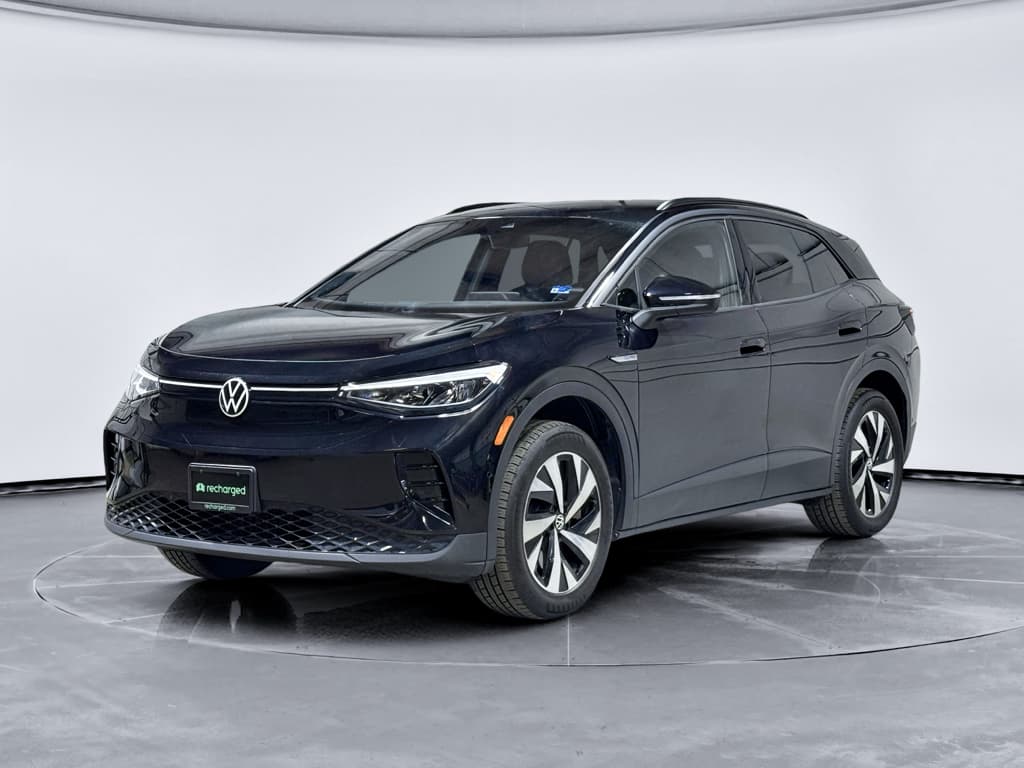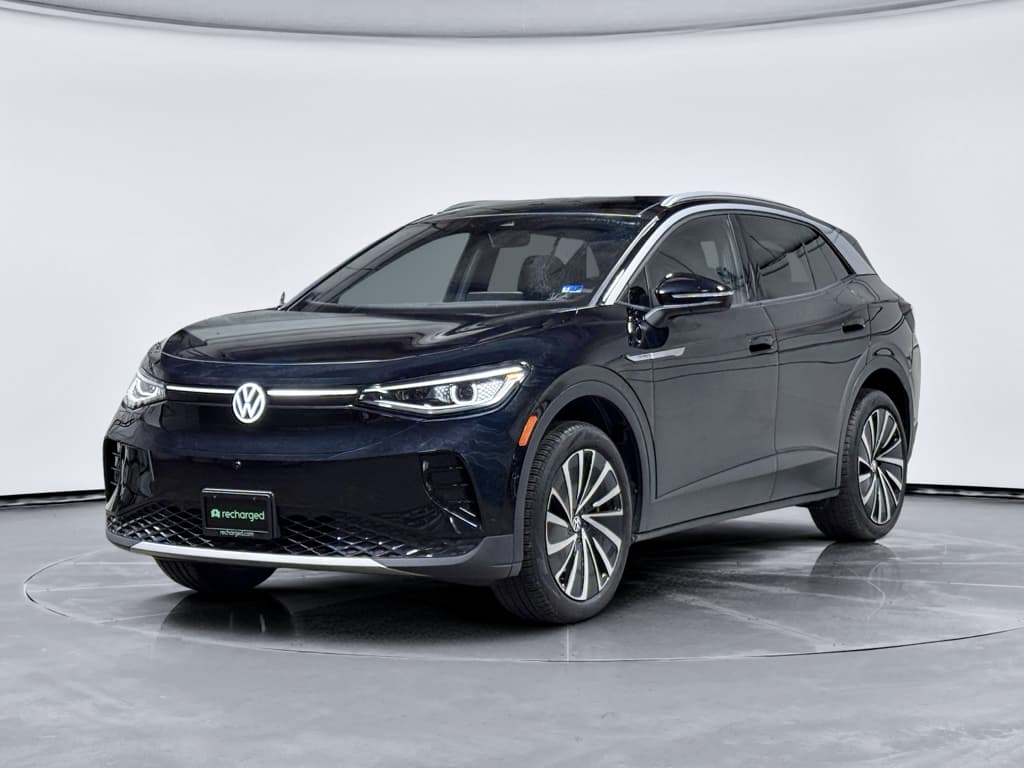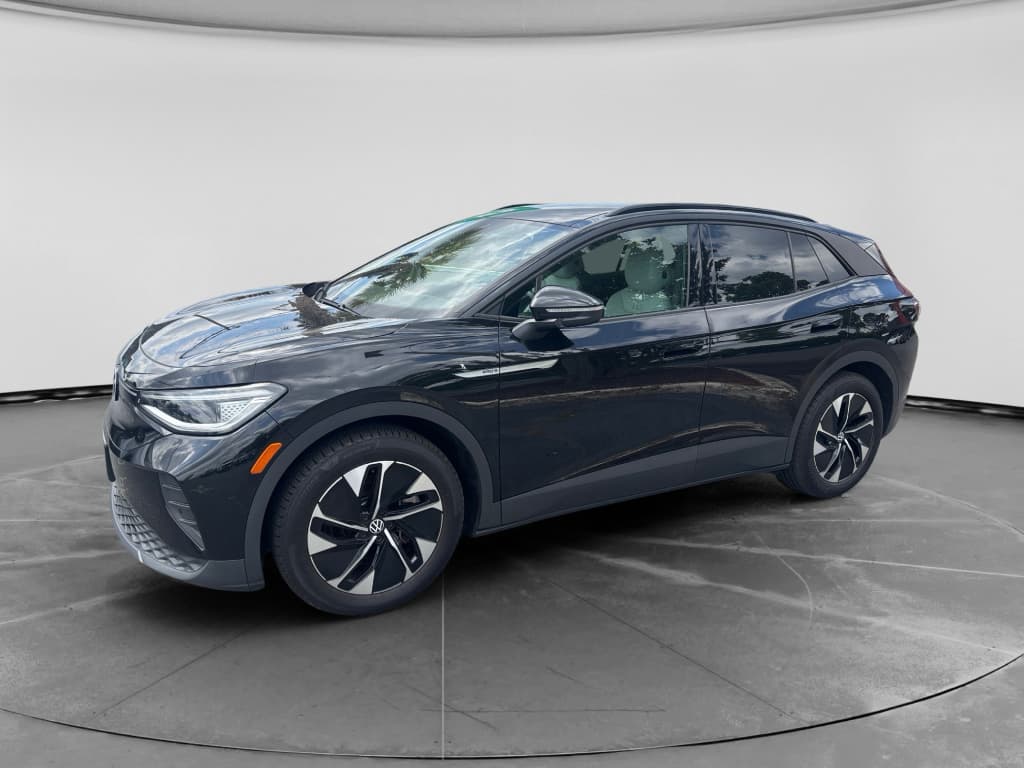
If you own or are considering a used Volkswagen ID.4, it’s natural to wonder what a Volkswagen ID.4 battery replacement might cost in 2026, and how likely you are to ever face that bill. The high‑voltage pack is the most expensive component in the car, but warranty coverage, improving chemistry, and growing repair options mean the story is more nuanced than “$20,000 or bust.”
Quick takeaway for 2026
Overview: 2026 Volkswagen ID.4 battery replacement costs
Volkswagen ID.4 battery cost snapshot for 2026
Those ranges are broad on purpose. In 2026, ID.4 battery work sits in the same ballpark as other mainstream electric crossovers: not cheap, but no longer the mystery‑box, five‑figure shock it was a decade ago. What really matters is whether your specific ID.4 is still under Volkswagen’s high‑voltage battery warranty, what kind of failure you’re dealing with, and whether you’re buying new or used.
Don’t confuse the two batteries
Volkswagen ID.4 battery specs, sizes, and warranty basics
To understand Volkswagen ID.4 battery replacement cost, it helps to know what’s actually in the car. Across U.S. model years, the ID.4 has been offered with batteries roughly in the 55–82 kWh total capacity range, with most U.S.‑market models using packs in the low‑60 kWh or high‑70 kWh neighborhood. Larger packs cost more to replace simply because they contain more cells.
- Early U.S. ID.4s (2021–2022) typically used packs in the ~82 kWh gross range for Pro/Pro S trims.
- Later model years added smaller‑capacity variants alongside the larger pack, with trims and output evolving for 2023–2026.
- Regardless of size, the pack is a structural, liquid‑cooled lithium‑ion unit mounted under the floor between the axles.
On the warranty side, Volkswagen advertises an 8‑year/100,000‑mile high‑voltage battery warranty for the ID.4 in the U.S., plus a minimum capacity guarantee (typically around 70% of original usable capacity, check your specific warranty booklet for the exact figure for your model year). This coverage is separate from the 4‑year/50,000‑mile bumper‑to‑bumper new‑vehicle warranty and often transfers to subsequent owners, which is critical for used‑ID.4 shoppers.
How the capacity guarantee works
How much does it cost to replace a Volkswagen ID.4 battery in 2026?
Let’s get to the number everyone searches for: the Volkswagen ID.4 battery replacement cost in 2026. There isn’t a single MSRP for “an ID.4 battery” that applies everywhere; dealer quotes bundle together pack price, shipping, shop supplies, diagnostic time, and labor hours that vary with region and model year. But based on 2025–2026 dealer estimates, industry data, and typical pricing for 60–80 kWh crossover packs, here’s what most U.S. owners can realistically expect.
Typical 2026 Volkswagen ID.4 battery replacement cost ranges (U.S.)
Approximate, out‑of‑warranty pricing for the high‑voltage pack on a healthy chassis. Real quotes vary by dealer, region, and pack size.
| Scenario | What’s being replaced | Estimated parts cost (2026) | Estimated labor & fees | Typical total quote |
|---|---|---|---|---|
| Full pack, new OEM, smaller ID.4 battery | Complete high‑voltage battery pack (smaller kWh trims) | $8,000–$11,000 | $2,000–$4,000 | ~$10,000–$15,000 |
| Full pack, new OEM, larger ID.4 battery | Complete high‑voltage battery pack (larger kWh trims) | $10,000–$14,000 | $2,000–$4,000 | ~$12,000–$18,000 |
| Full pack, refurbished/remanufactured | Factory‑reman or high‑quality rebuilt pack, where available | $6,000–$10,000 | $2,000–$4,000 | ~$8,000–$14,000 |
| Module‑level repair (1–3 modules) | Only failed modules plus sealing/hardware | $1,000–$4,000 | $1,000–$3,000 | ~$2,000–$7,000 |
These ranges are directional, not guaranteed. Always get a written quote for your VIN before making a decision.
Warranty often makes the real cost $0
Why such a wide spread? Under the skin, the ID.4 has used cells from different suppliers over the years, and service departments quote labor using time standards that assume a careful, multi‑hour disassembly and resealing process. Then there’s shipping and hazardous‑materials handling for the pack itself, moving a 1,000‑pound lithium‑ion battery is not like ordering brake pads on Amazon.
Module repair vs. full ID.4 battery replacement
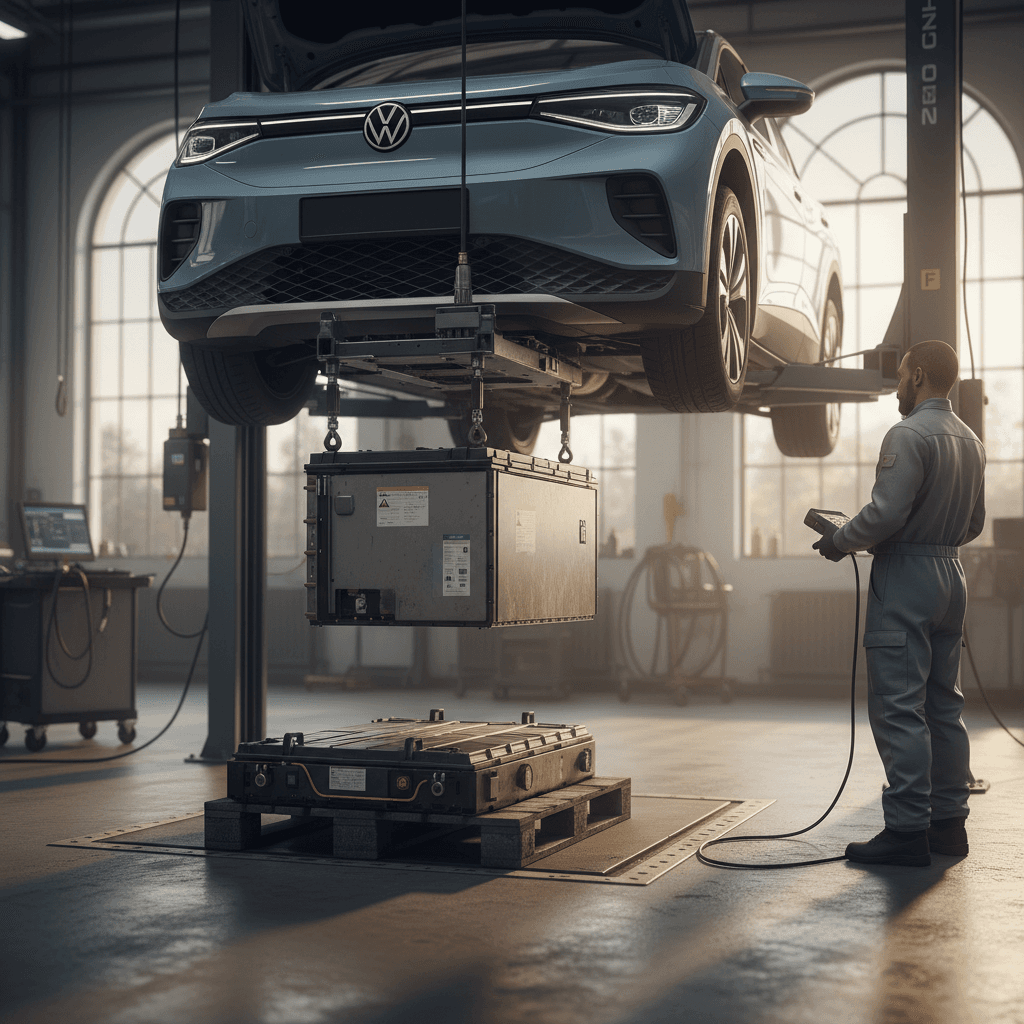
When owners talk about “battery replacement,” they’re often lumping two very different things together: module‑level repairs and full pack swaps. In 2026, Volkswagen and many independent EV specialists are far more likely to replace the few modules that are actually out of spec than to throw away an entire pack that’s otherwise healthy.
Module‑level repair
- Targets specific cell modules that have failed or drifted out of balance.
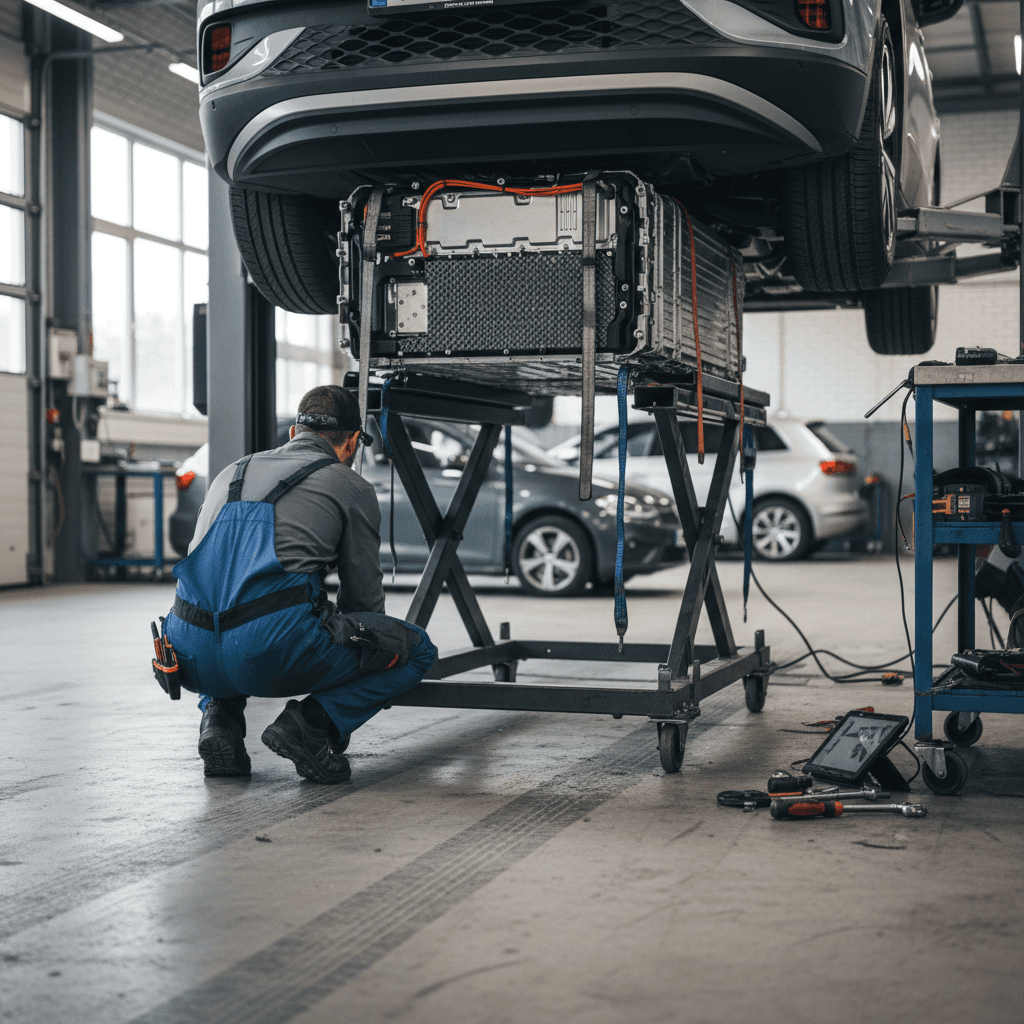
- Requires dropping the pack, opening it, replacing modules, then resealing and testing.
- Typical out‑of‑warranty cost in 2026: roughly $2,000–$7,000 depending on how many modules are involved.
- Usually preserves the rest of the pack, so it’s less resource‑intensive than a full replacement.
Full pack replacement
- Swaps the entire high‑voltage battery assembly for a new or remanufactured unit.
- Best option when there is severe damage, widespread cell issues, or evolving recall campaigns.
- Typical 2026 dealer quote: around $10,000–$18,000, depending on pack size and parts sourcing.
- Often covered under warranty or recall campaigns during the first 8 years for qualifying failures.
Why independent EV shops matter
7 factors that move your ID.4 battery quote up or down
Even within the same city, two ID.4 owners can see very different battery quotes. Here are the levers that typically push a Volkswagen ID.4 battery replacement cost in 2026 higher or lower:
Key drivers of 2026 ID.4 battery replacement cost
1. Pack size and model year
A larger‑capacity ID.4 pack has more cells and a higher replacement cost. Early‑build cars with older cell suppliers may also have different parts pricing than later, Chattanooga‑built ID.4s.
2. Warranty and recall status
If your VIN is covered by the 8‑year/100,000‑mile battery warranty or an open recall, major repairs could be free or heavily discounted. Always ask the service advisor to check warranty and campaign status before authorizing out‑of‑pocket work.
3. Dealer vs. independent shop
Franchised Volkswagen dealers generally charge higher labor rates and are more likely to quote full pack replacements using only new OEM parts. Independent EV shops may offer module‑level repairs and remanufactured packs with lower overhead.
4. Labor rates and regional costs
Hourly shop rates vary widely. The same repair that’s $3,000 in labor in California might be closer to $1,800 in a lower‑cost region, even if the parts bill is identical.
5. Diagnostic complexity
Chasing down intermittent cell faults, CAN‑bus errors, or thermal‑management issues can add diagnostic hours up front, especially if the pack has to be dropped more than once to confirm a borderline module.
6. Shipping and core handling
High‑voltage packs are heavy, hazardous cargo. Shipping a new pack in and returning the old unit for recycling or remanufacture adds freight and core‑handling fees to the final invoice.
7. New vs. remanufactured vs. used
A brand‑new OEM pack is the most expensive option. Remanufactured packs and high‑quality salvage units (installed by a qualified EV tech) can trim thousands from the bill, but warranties and availability vary.
Salvage packs are not plug‑and‑play
Shopping used? How to judge ID.4 battery health in 2026
For many readers, the more relevant question than “What if the battery fails?” is “How do I know the battery is healthy on the used ID.4 I’m about to buy?” With ID.4s from 2021 now five model years old, the 2026 used market is full of cars at very different points in their warranty and battery‑life curve.
What to look for in a used ID.4’s battery
Questions that matter more than odometer alone
Remaining battery warranty
Check the in‑service date and mileage to see how much of the 8‑year/100,000‑mile battery warranty is left. A 2021 ID.4 sold in early 2021 will hit its time limit in early 2029, but a later‑titled example could buy you extra coverage.
Objective health report
Ask for a formal battery health report, not just “it charges fine.” At Recharged, every vehicle comes with a Recharged Score Report that includes verified battery state of health, so you’re not guessing about capacity.
Usage pattern and climate
High mileage isn’t automatically bad if most of those miles were steady highway driving in mild weather. A low‑miles car that sat fully charged in very hot climates can see more degradation than you’d expect.
If you’re shopping private‑party or at a non‑EV‑specialist dealer, you may not get much more than “the range seems fine.” That’s not enough for a five‑figure battery. Consider having the car inspected by a Volkswagen dealer or independent EV shop that can pull battery data, or buy from a marketplace like Recharged that provides transparent battery‑health diagnostics upfront.
How Recharged helps de‑risk used ID.4 shopping
When does an ID.4 battery actually need replacement?
Most ID.4 batteries will never “die” overnight. Instead, range and performance gradually decline as the pack ages. In 2026, there simply aren’t many real‑world cases of ID.4s that are old enough and abused enough to be down to 50–60% capacity, especially in normal use. So when does replacement start to make sense?
- If usable capacity has dropped well below Volkswagen’s warranty threshold and you’re still within the 8‑year/100,000‑mile window, replacement under warranty is a straightforward call.
- If the car is out of warranty but capacity has fallen to the point that you can’t complete your daily routine or regular trips without frequent fast charging, you’re into repair‑or‑replace territory.
- If the pack has suffered physical damage (for example, a severe impact or flood), your insurer, not Volkswagen, may decide whether to repair, replace, or total the vehicle.
- If one or two modules have failed but the rest of the pack is healthy, module‑level repairs may restore full function without a complete swap.
Don’t ignore HV battery warnings
How to extend your ID.4 battery life and avoid big repair bills
The cheapest battery replacement is the one you never need. Fortunately, modern packs like the ID.4’s are far more robust than early‑generation EV batteries, and a few simple habits can materially improve long‑term health. These tips apply whether your ID.4 is new in 2026 or already a few years old.
Practical ID.4 battery‑care habits
Avoid living at 100% charge
Charging to 100% for a long road trip is fine. Parking at or near full regularly, especially in hot weather, accelerates cell aging. For daily driving, using a 70–80% charge limit is a good compromise.
Use fast charging strategically
DC fast charging is a great tool, but constant high‑power charging, especially from very low state of charge, adds stress. On a home Level 2 charger, slower overnight charging is friendlier to the pack.
Keep the car cool when you can
The ID.4’s liquid cooling helps, but avoiding long periods parked in direct summer sun at very high state of charge is still wise. A shaded spot or garage helps the battery as much as the cabin.
Stay on top of software updates
Software updates can refine how the ID.4 manages charging, cooling, and cell balancing. Keeping your car up to date ensures you benefit from those improvements.
Address warning lights quickly
If the car flags a high‑voltage or cooling‑system issue, getting it checked early can mean a quick repair rather than cascading damage that affects more modules.
Good news on degradation
Financing, insurance, and total cost of ownership implications
A potential five‑figure battery bill understandably spooks some first‑time EV shoppers, but it needs to be weighed against the rest of the cost‑of‑ownership picture. An ID.4 doesn’t have oil changes, timing belts, spark plugs, or multi‑speed automatic transmissions. Brake wear is low thanks to regeneration. For most owners, savings on routine maintenance and fuel more than offset the low probability of an out‑of‑warranty pack replacement.
How financing fits in
In 2026, many buyers finance used ID.4s over 60–72 months. If you’re worried about long‑term battery risk, consider:
- Choosing a loan term that doesn’t dramatically outlast the remaining battery warranty.
- Building a small “EV repair fund” into your budget instead of stretching to the max payment the lender offers.
- Buying from a retailer that stands behind battery health with transparent diagnostics, like the Recharged Score you get on every vehicle from Recharged.
Insurance and catastrophic failures
For collision or flood damage to the pack, your insurer is the key player, not the Volkswagen warranty. In some cases, the cost of pack replacement will lead to a total‑loss payout even if the rest of the vehicle looks repairable. Make sure your comprehensive and collision coverage limits are appropriate for the actual cash value of your ID.4.
Pre‑qualify without hurting your credit
FAQ: Volkswagen ID.4 battery replacement cost in 2026
Volkswagen ID.4 battery replacement FAQs for 2026
Bottom line: What 2026 ID.4 owners should plan for
When you strip away the forum rumors, the Volkswagen ID.4 battery replacement cost in 2026 is big enough to respect but not so unpredictable that it should scare you away from the car. Most owners will spend the first 8 years protected by Volkswagen’s high‑voltage battery warranty. After that, module‑level repairs, remanufactured packs, and a growing ecosystem of EV specialists give you more options than a single, sky‑high dealer quote.
If you’re shopping used, the real differentiator isn’t just mileage, it’s verified battery health. That’s why every ID.4 and other EV sold through Recharged comes with a Recharged Score Report that puts battery state of health, pricing, and expected longevity front and center. Combine that transparency with healthy charging habits, and the odds are good that you’ll enjoy many years of ID.4 ownership without ever needing to buy a new pack.