If you’re eyeing a retro‑cool **Volkswagen ID. Buzz**, or already have one in the driveway, understanding the official **ID. Buzz service schedule** is one of the easiest ways to protect your battery, your warranty, and your resale value. The good news: as an EV, the Buzz needs far less maintenance than a gas van, but it still has critical time‑ and mileage‑based checks you shouldn’t ignore.
EVs need less, but not zero, maintenance
Why the Volkswagen ID. Buzz service schedule matters
Volkswagen structures its EV maintenance around **regular inspection intervals** (usually in 10,000‑mile chunks for North America) plus a handful of **multi‑year items** like brake fluid and coolant checks. Sticking to this schedule helps you:
- Keep your **8‑year high‑voltage battery warranty** intact by documenting regular care and battery health checks.
- Catch tire, suspension, and brake issues early on a vehicle that’s heavier than a typical gas minivan.
- Stay current on software updates that can improve range, charging behavior, and driver‑assist performance.
- Protect resale value, buyers and dealers will pay more for an ID. Buzz with clear service history.
Don’t rely only on the dash reminder
How often to service your ID. Buzz: core intervals
Volkswagen EVs like the ID.4 and ID. Buzz generally follow a **10,000‑mile service rhythm** in the U.S., paired with multi‑year items. For most ID. Buzz owners, you can think in three layers:
Three layers of ID. Buzz maintenance
Mileage, time, and special EV checks work together
Mileage-based
Every 10,000 miles or so you’ll have inspections, tire rotations, and simple replacements like cabin filters.
Time-based
Even with low miles, expect service about every 12–24 months, plus brake fluid changes every few years.
EV-specific
Periodic battery state‑of‑health checks, software updates, and cooling‑system inspections are unique to your ID. Buzz.
Leverage VW Carefree Maintenance early
Volkswagen ID. Buzz service schedule at a glance
Exact items vary by model year and market, but this table gives you a **typical ID. Buzz service schedule** pattern based on Volkswagen’s EV guidance and similar ID‑family vehicles. Always confirm specifics in your maintenance booklet, but you can use this as a planning roadmap:
Typical Volkswagen ID. Buzz service intervals
Approximate U.S.‑style maintenance pattern for a new ID. Buzz. Check your maintenance booklet or myVW app for the official schedule for your VIN.
| Interval | Approx. miles | Approx. time | Typical focus |
|---|---|---|---|
| 1st service | 10,000 | 1 year | General inspection, tire rotation, cabin filter check, software/recall updates |
| 2nd service | 20,000 | 2 years | Repeat inspection and rotation; additional checks of suspension, steering, and brakes |
| Brake fluid | , | 3 years, then every 2 years | Replace brake fluid; inspect lines, hoses, and ABS components |
| 30,000/3‑year | 30,000 | 3 years | Inspection/rotation again; cabin filter replacement if not already done; check 12V battery |
| 40,000/4‑year | 40,000 | 4 years | Comprehensive inspection; brake components measured; coolant and charging components checked |
| Battery check | , | Every scheduled service | High‑voltage battery health report and cooling‑system inspection |
| HV coolant (if specified) | , | Long‑interval (e.g., 8–10 years) | High‑voltage coolant inspection and potential replacement per VW guidance |
Mileage figures shown are approximate; time limits always apply even if you drive less.
Don’t skip time‑based items if you drive very little
What’s actually done at each ID. Buzz service
One surprise for new EV owners: a scheduled service might not feel like much happens compared with a gas car. No oil change, no spark plugs, no belts. That doesn’t mean the visit is pointless. Here’s what you can usually expect at the major intervals.
10,000‑mile / 1‑year service
- Full visual inspection of underbody, suspension, and steering.
- Tire rotation and tread/wear check (important on a heavy EV van).
- Brake pad and rotor inspection; parking brake check.
- Fluid checks: brake fluid level, washer fluid, and coolant level/condition.
- Check lights, wipers, horn, and safety systems.
- Scan for diagnostic trouble codes; apply any software updates or campaigns.
20,000‑mile / 2‑year service
- Repeat 10,000‑mile checks and tire rotation.
- More detailed inspection of suspension bushings, steering joints, and driveshafts.
- Cabin air filter check or replacement (often every 20k–30k miles).
- Close look at brake lines and hoses for corrosion or leaks.
- Update service record in the VW system and reset service indicator.
Note: exact tasks can differ by region and model year. Ask your service advisor to show you the official checklist for your VIN.
Ask for the checklist, not just the invoice
Brake fluid, tires and other time-based items
Beyond the 10,000‑mile cadence, a few **time‑based services** matter a lot on the ID. Buzz, especially as the van ages or changes owners.
Key time-based maintenance items
These matter even for low‑mileage ID. Buzz vans
Brake fluid: 3 years, then every 2
Brake fluid absorbs moisture, which can corrode components and reduce stopping power. VW typically calls for a change 3 years after first registration, then every 2 years regardless of miles.
Tires & alignment
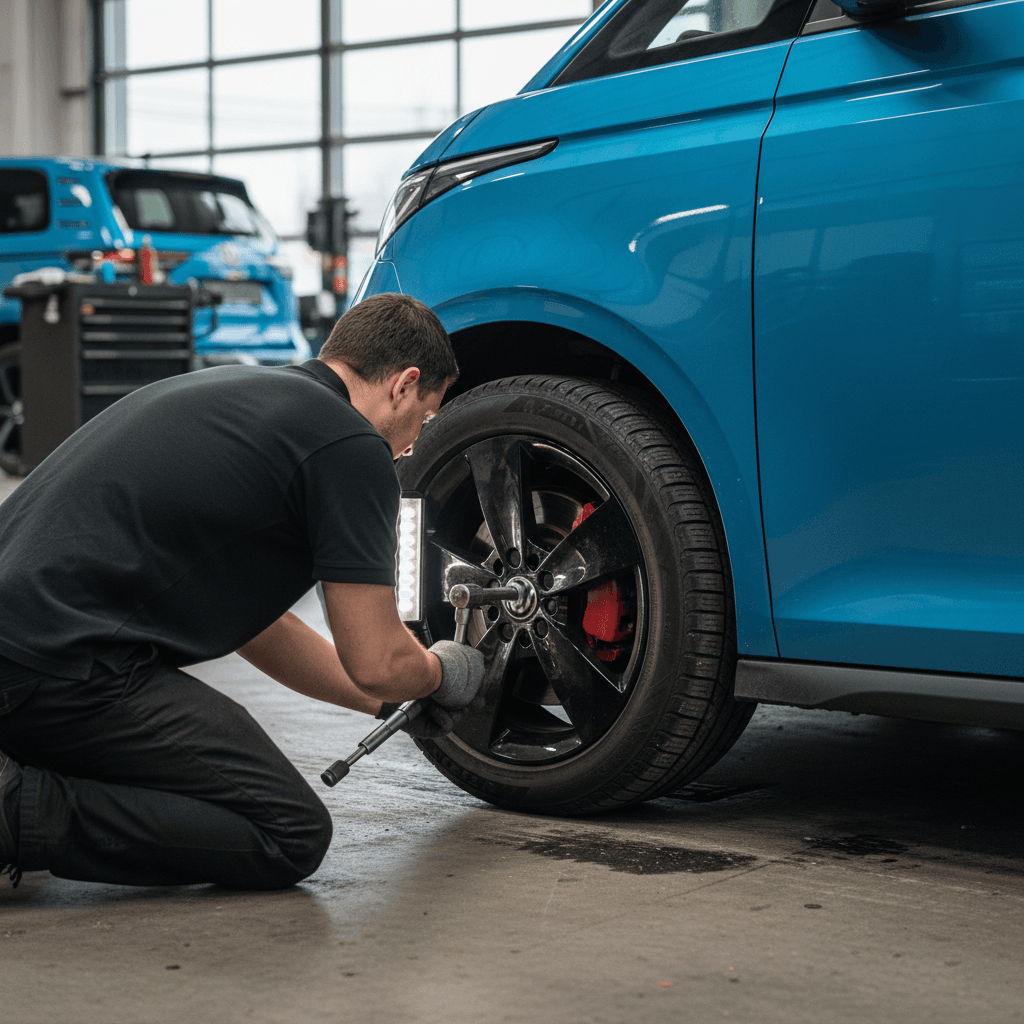
The ID. Buzz is heavy and torquey. Expect more frequent tire wear than on a compact car. Rotate regularly and consider an alignment check every 20,000–30,000 miles or after pothole hits.
12V battery checks
Like all modern EVs, the Buzz uses a traditional 12‑volt battery for electronics. It’s usually tested at scheduled services and may need replacement around the 4–6 year mark.
Beware of upsells not in the VW schedule
Battery health and software updates
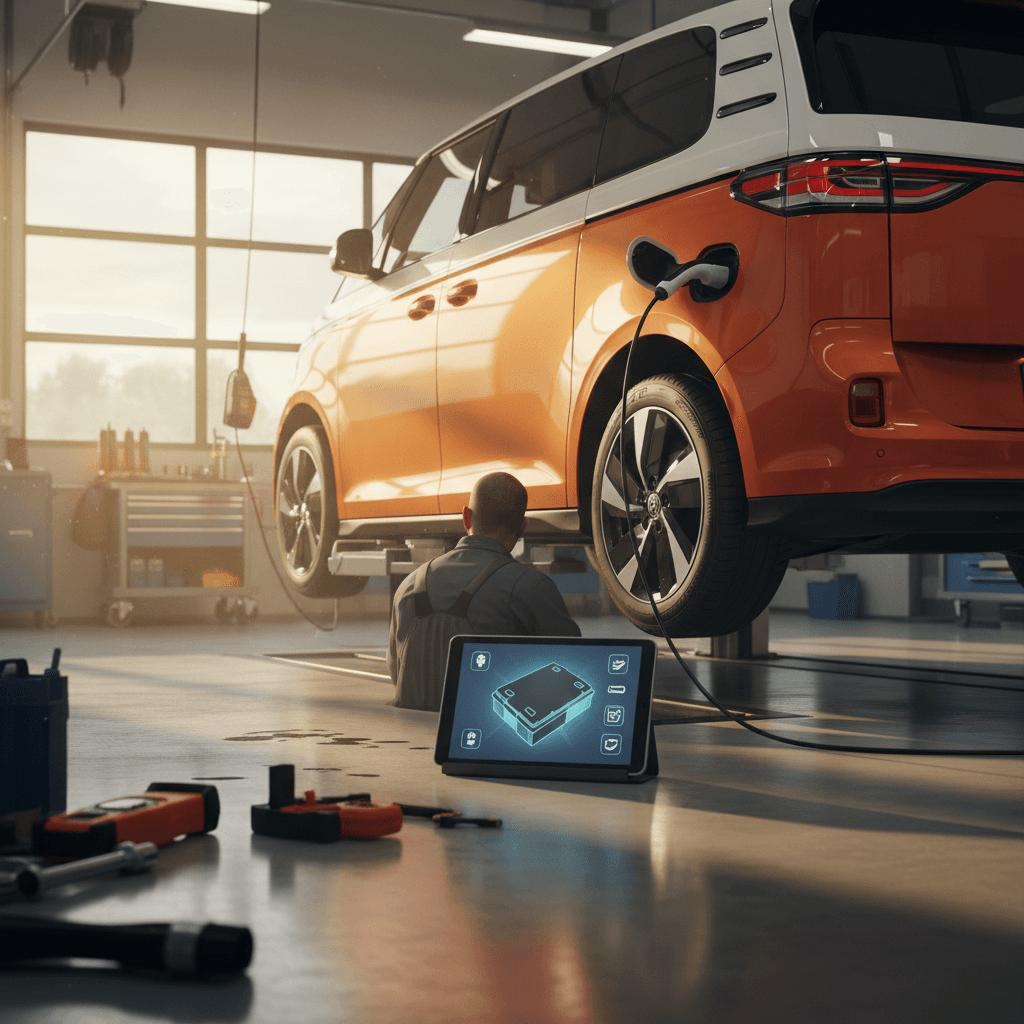
While you don’t “service” the high‑voltage battery like an engine, **battery‑related checks** are baked into the ID. Buzz service schedule and are increasingly important for long‑term ownership and resale.
- A **battery state‑of‑health (SOH) check** during inspection services to confirm capacity is within VW’s expected range.
- Verification that the **high‑voltage coolant system** is leak‑free and operating within temperature targets.
- Review of **DC fast‑charging behavior** and any error codes that might indicate connector or module issues.
- Application of the latest **software updates** that can refine thermal management, charging curves, and driver‑assist systems.
How this ties into warranties and resale
New vs. used ID. Buzz maintenance
If you’re buying a **brand‑new** ID. Buzz, the first couple of years are easy: Volkswagen’s Carefree Maintenance usually covers the scheduled 10,000‑ and 20,000‑mile services. After that, you’ll pay out of pocket or via a prepaid plan. Used‑vehicle buyers need to approach the schedule a little differently.
For new ID. Buzz owners
- Confirm which complimentary services are included (typically 10k and 20k miles or 2 years).
- Use the myVW app to book service on time, don’t let free visits expire.
- Ask your dealer to walk you through upcoming brake‑fluid and coolant milestones.
- Keep digital and paper copies of all service records.
For used ID. Buzz buyers
- Check which services have already been completed and what’s overdue by time (often brake fluid on 3–5‑year‑old vans).
- Plan an immediate baseline service if history is incomplete: inspection, tire rotation, brake check, and cabin filter.
- Review remaining battery warranty coverage and get a fresh SOH report.
- Budget ahead for the next major interval (for example, a 40,000‑mile inspection).
Where Recharged fits for used ID. Buzz shoppers
Saving on ID. Buzz service costs
EV service for a large van like the ID. Buzz doesn’t have to be painful, but the bills can still add up, especially for tires and big interval services. A few smart habits help keep costs predictable.
Cost‑smart habits for ID. Buzz maintenance
1. Use complimentary VW services first
If your ID. Buzz is still within the Carefree Maintenance window, always schedule the 10k and 20k services before they expire. You’re leaving money on the table if you skip them.
2. Compare dealer vs. EV‑savvy independents
After the initial period, some owners move routine items, tire rotation, cabin filters, basic inspections, to trusted independent shops familiar with high‑voltage safety.
3. Keep tires properly inflated
Underinflated tires wear faster and hurt range. Check pressures monthly and before long trips, especially with a loaded van or when towing.
4. Bundle time‑based items
If you’re coming up on a brake fluid change and an inspection, ask if they can be done in the same visit to avoid extra shop fees and time off work.
5. Use the myVW app or online schedulers
Booking service online lets you see pricing, loaner availability, and recommended services, and reduces the chance of surprise add‑ons when you arrive.
Ask for line‑item pricing
How Recharged helps with ID. Buzz maintenance
If you’re shopping for a **used Volkswagen ID. Buzz**, the big question isn’t just “Has it been serviced?” It’s “Has it been serviced on time, and what’s coming next?” That’s where Recharged comes in.
- Every vehicle on Recharged comes with a **Recharged Score Report** that includes verified battery health, odometer readings, and service‑history insights when available.
- Our EV‑specialist team can help you interpret the **factory maintenance schedule** for a specific VIN so you know which intervals are still ahead.
- If you trade in or sell your ID. Buzz through Recharged, clear documentation of timely services can **raise its appeal and value**.
- Nationwide delivery and a digital buying experience make it easy to line up your next service visit with a local Volkswagen dealer or EV‑savvy shop as soon as the vehicle arrives.
Make maintenance part of your purchase decision
Volkswagen ID. Buzz service schedule FAQ
Volkswagen ID. Buzz service schedule FAQ
Key takeaways for ID. Buzz owners
If you remember nothing else about the **Volkswagen ID. Buzz service schedule**, remember this: plan on an inspection about every **10,000 miles or 1–2 years**, a **brake‑fluid change around year three**, and regular check‑ins on tires, software, and battery health. Compared with a gas van, that’s a light workload, but it’s still critical for safety, warranty protection, and long‑term value.
Whether you’re ordering a new ID. Buzz or shopping used, build maintenance into your ownership plan from day one. And if you’re exploring pre‑owned options, consider browsing ID‑family EVs on Recharged, where every vehicle comes with transparent battery data and guidance on the service intervals still ahead.