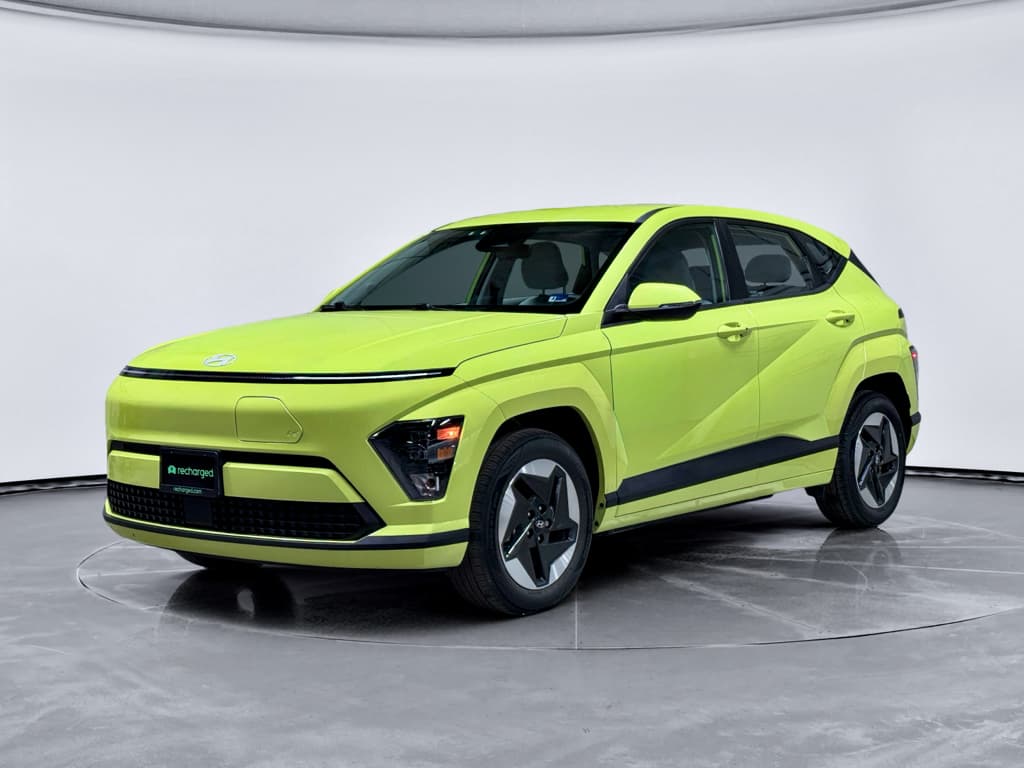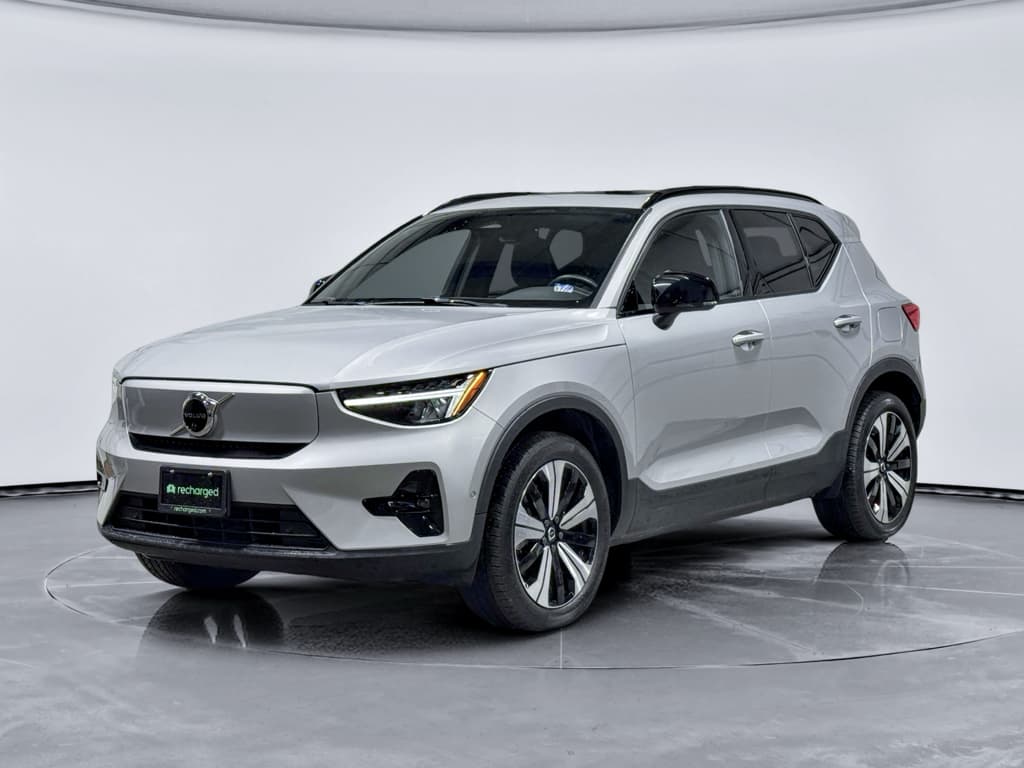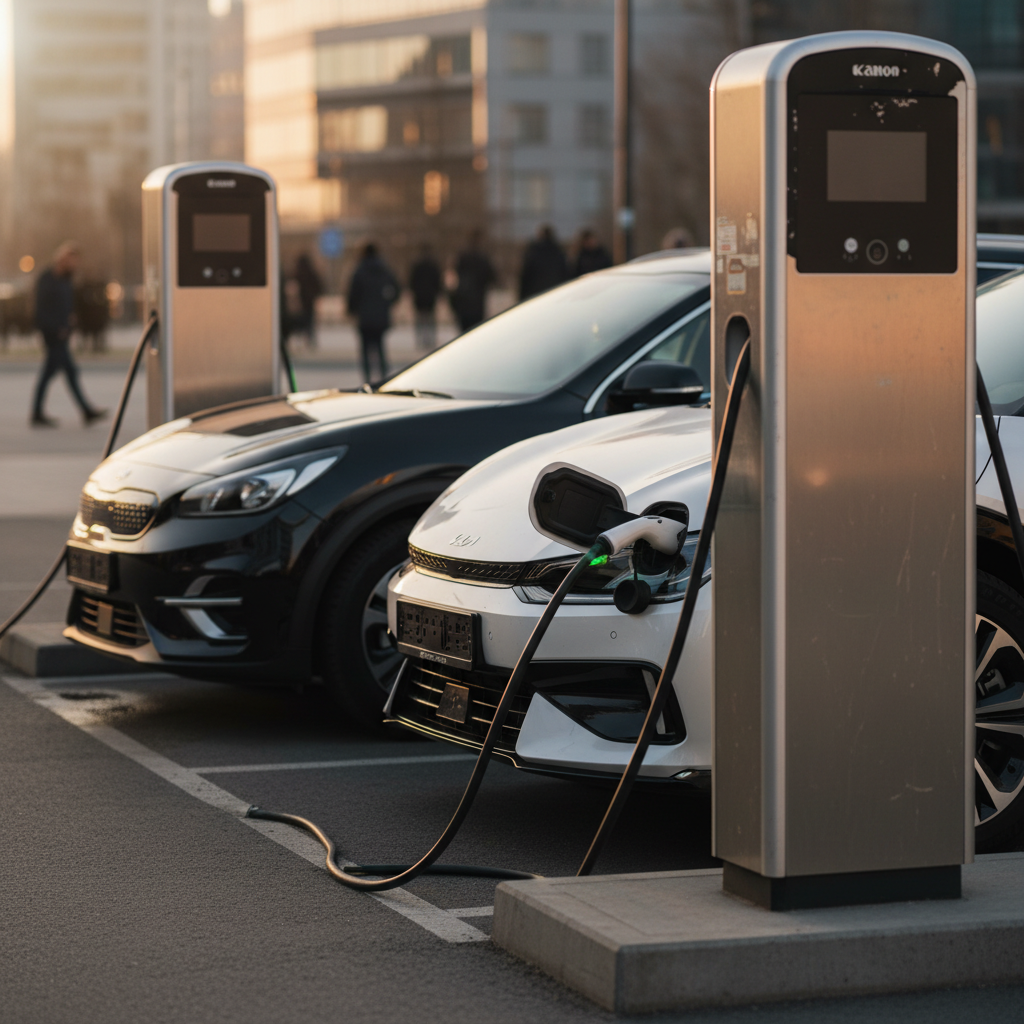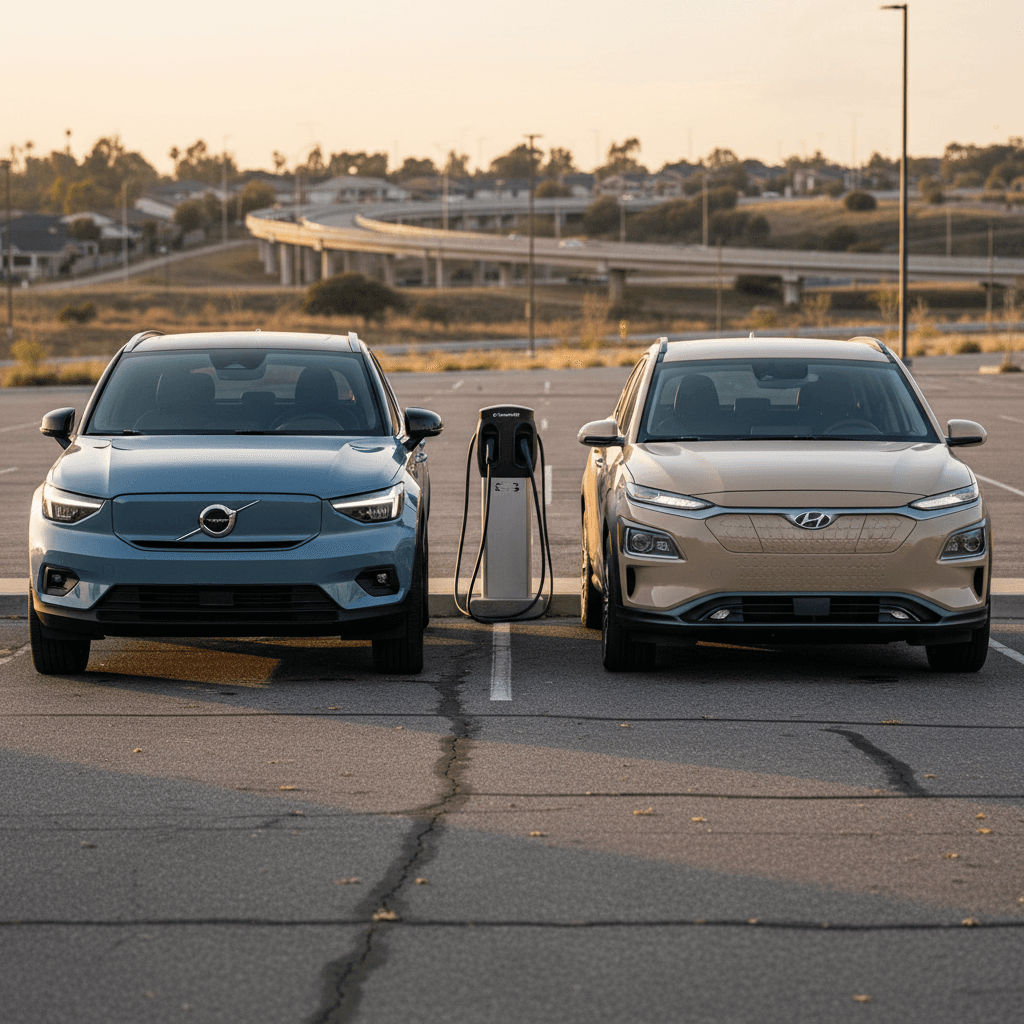
If you’re shopping for a small electric SUV, the used Volvo EX30 vs Hyundai Kona Electric matchup is one of the most interesting on the market. Both are compact, city‑friendly EVs with real highway range, but they bring very different personalities, and ownership stories, to your driveway when you buy used.
Two EVs, Two Very Different Histories
Overview: Volvo EX30 vs Hyundai Kona Electric as Used EVs
At a glance, the Volvo EX30 is the design‑forward, premium‑feeling choice: quick, stylish, and packed with big‑screen tech. The Hyundai Kona Electric is the proven workhorse: efficient, practical, and backed by one of the best warranties in the business.
Quick Take: Who Each Used EV Suits Best
Match the Volvo EX30 or Hyundai Kona Electric to your life, not just the spec sheet.
Volvo EX30
Best for: Drivers who want premium feel and strong performance in a tiny footprint.
- Sporty acceleration (up to 422 hp in Twin Motor)
- Minimalist Scandinavian interior, big central screen
- Newer to the market, less supply, higher prices used
Hyundai Kona Electric
Best for: Efficiency‑minded buyers who want range and value.
- EPA range up to about 261 miles on newer models
- Excellent real‑world efficiency and low running costs
- Long warranty and more years of reliability data
Used‑EV Shopper
Your priorities:
- Battery health and remaining range
- Total cost to own over 5–8 years
- Future‑proof charging and safety tech
Tools like the Recharged Score help you see these clearly, side by side.
Key Specs: Used Volvo EX30 vs Hyundai Kona Electric
Let’s level‑set the basics. Exact specs vary by model year and trim, but here’s what you’ll typically find when cross‑shopping a used Volvo EX30 and a used Hyundai Kona Electric.
Core Specs Comparison: Typical U.S. Models
High‑level differences you’ll feel every day when you drive or charge.
| Spec | Volvo EX30 (Single Motor Extended Range) | Volvo EX30 (Twin Motor Performance) | Hyundai Kona Electric (Smaller Battery) | Hyundai Kona Electric (Larger Battery) |
|---|---|---|---|---|
| EPA Range (approx.) | ≈261 miles | ≈253 miles | ≈200 miles | ≈260–261 miles |
| Battery (gross capacity) | 69 kWh | 69 kWh | 48.6 kWh | 64.8 kWh |
| Power | 268 hp (RWD) | 422 hp (AWD) | 133 hp (FWD) | 201 hp (FWD) |
| 0–60 mph (manufacturer / tests) | ≈5.1 sec | ≈3.4–3.6 sec | Slow but adequate | ≈7.0 sec |
| DC Fast‑Charge Peak | ≈150 kW | ≈153 kW | 100 kW | 100 kW |
| Body Size | Subcompact SUV | Subcompact SUV | Subcompact SUV | Subcompact SUV |
| Cargo Space (rear seats up, approx.) | Low‑30s cu ft | Low‑30s cu ft | Mid‑20s cu ft | Mid‑20s cu ft |
Always confirm exact specs for the specific used EV you’re considering, since battery size and range can vary by year and trim.
Look Beyond the Brochure Numbers
Space, Comfort, and Design
Volvo EX30: Tiny Outside, Surprising Inside
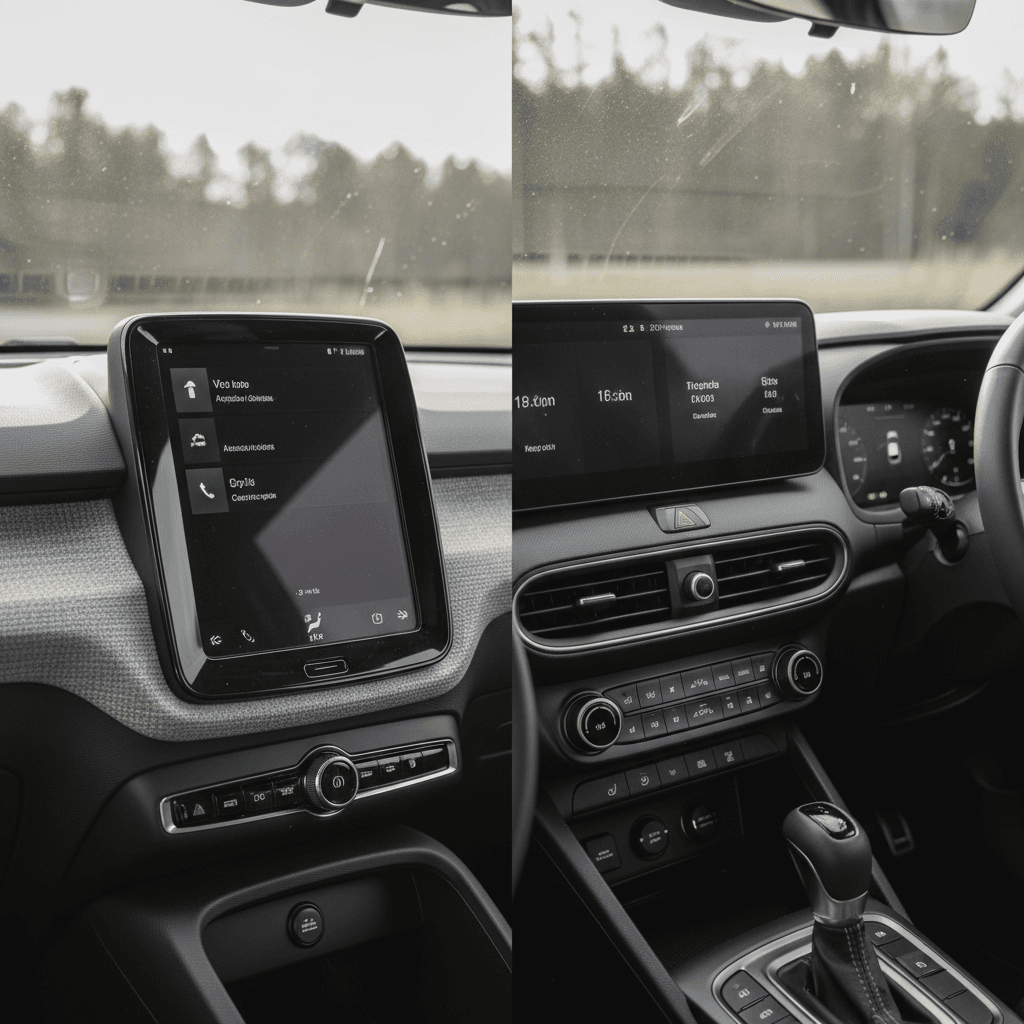
Volvo calls the EX30 a small SUV, but it’s closer to a tall hatchback. The footprint is shorter than many compact crossovers, which makes it fantastic for city parking and tight garages. Inside, the design is pure Scandinavian: clean lines, recycled materials, and a big portrait‑style center screen that controls almost everything.
- Front seats: Supportive, with a premium feel and good adjustability.
- Rear seats: Adequate for adults on shorter trips; tight if you regularly carry taller passengers.
- Cargo: Enough for weekly groceries or a weekend bag, but not a family road‑trip hauler.
Hyundai Kona Electric: Practical Everyday Hatchback
The Kona Electric is also subcompact, but it feels more like a conventional small SUV inside. The driving position is natural, the controls are straightforward, and newer model years get a modern dual‑screen layout while keeping physical buttons for climate and key functions.
- Front seats: Comfortable, with good headroom for taller drivers.
- Rear seats: Tight for three adults, but fine for kids or occasional adult use.
- Cargo: Slightly more usable space and a more conventional shape than the EX30, which helps with strollers, pet crates, or bulky items.
If You Care Most About Interior Wow Factor…
Range, Efficiency, and Battery Health
Both the Volvo EX30 and Hyundai Kona Electric deliver usable, road‑trip‑capable range in their larger‑battery versions, but they get there in different ways, and that matters in the used market.
Range & Efficiency Snapshot (New, Ideal Conditions)
Battery chemistry and degradation on the used market
The Volvo EX30 offers two main battery chemistries globally: a smaller lithium‑iron‑phosphate (LFP) pack and a larger nickel‑manganese‑cobalt (NMC) pack. In the U.S., you’re most likely to see the larger NMC pack in early used EX30s. LFP is generally more tolerant of frequent 100% charges, while NMC prefers living between about 20–80% for longevity. Recent news has also highlighted a limited fire‑risk recall on certain EX30s with the 69 kWh NMC pack, which is something to confirm has been addressed on any used example you’re considering.
The Hyundai Kona Electric uses NMC chemistry as well, but it has been on the road for years, and real‑world experience suggests that, when properly cared for, degradation has been modest. Many owners still report very usable range after several years and tens of thousands of miles, especially when they mostly AC‑charge at home and avoid living at a constant 100%.
Battery Health Matters More Than Original EPA Range
Real‑world efficiency and weather
In mixed reviews and owner reports, the Kona Electric consistently punches above its weight for efficiency, squeezing more miles from each kilowatt‑hour than many rivals. That translates into lower charging costs and better winter range retention than you might expect for a small SUV.
The EX30’s Twin Motor versions deliver thrilling performance, but at a cost to efficiency, especially at highway speeds. The Single Motor Extended Range trims fare better, but if you’re primarily a highway commuter in a colder climate, the Kona Electric’s efficiency advantage can make it feel like the “bigger tank” even when rated ranges look similar.
Charging Experience: Home and Road Trips
Both the used Volvo EX30 and Hyundai Kona Electric are easy to live with if you do most of your charging at home. Where they diverge is in DC fast‑charging speed and how future‑proof they are for North America’s shift toward the Tesla‑style NACS connector.
Charging: Daily Convenience vs Road‑Trip Speed
Think about how you really drive before you obsess over peak kW numbers.
Home & Workplace Charging
- Level 2 at home will easily refill either EV overnight, even from a low state of charge.
- The Kona Electric’s onboard charger is around 11 kW on newer models, similar to what you’ll find in the EX30, so both pair well with a 40–48 amp home charger.
- If your commute is under 50 miles a day, either car may only need a full charge every few days.
DC Fast Charging & Networks
- Volvo EX30: DC fast‑charging peaks around the mid‑100 kW range and can go from about 10–80% in roughly half an hour on a strong charger.
- Hyundai Kona Electric: Peaks around 100 kW; realistic 10–80% times of ~40–45 minutes when new.
- Both will rely mainly on CCS fast‑charging today, but future used models may support NACS adapters or ports as the standard evolves.
Plan for How You’ll Really Charge
Safety Tech and Driver Assistance
Safety is a big reason many drivers move into EVs at all, and here both automakers bring strong reputations, but with different flavors.
Volvo EX30: Big Tech in a Small Package
Volvo leans hard on its safety brand image, and the EX30 is packed with active safety tech: collisions warnings, lane‑keeping assistance, rear cross‑traffic alerts, and typically some form of adaptive cruise and lane‑centering on better‑equipped trims.
On a used EX30, pay attention to:
- Software updates: Infotainment and driver‑assist features can improve (or occasionally glitch) with over‑the‑air updates.
- Calibration history: Has the windshield or front bumper been replaced? Camera and radar sensors may need proper recalibration.
Hyundai Kona Electric: Mature and Predictable
Hyundai’s SmartSense suite includes essentials like automatic emergency braking, lane‑keeping assist, and blind‑spot monitoring on many trims, with higher trims adding surround‑view cameras, advanced parking aids, and more refined adaptive cruise.
On a used Kona Electric, focus on:
- Feature content by trim: Some earlier or lower trims may lack the advanced features you see in reviews.
- Warranty status: Check how much of the original 5‑year/60k basic and 10‑year/100k powertrain/battery coverage is still in play.
Always Inspect Driver‑Assist Hardware on a Used EV
Ownership Costs and Depreciation
The best used EV isn’t always the one with the longest range or the flashiest interior. It’s the one that fits your budget today and doesn’t surprise you with big costs over the next 5–8 years.
Cost Picture: Used Volvo EX30 vs Hyundai Kona Electric
Think in total‑cost‑of‑ownership, not just the asking price.
Purchase Price & Depreciation
- Volvo EX30: New U.S. pricing landed higher than first promised, and early used models are likely to stay pricey because supply is tight and the car is still fresh.
- Kona Electric: Has already taken the steepest depreciation hit on older model years, so you can often find very approachable used pricing.
Maintenance & Repairs
- Neither car has oil changes or traditional engine maintenance, but consumables (tires, brakes, cabin filters) still add up.
- Premium parts and labor on a Volvo can be pricier than a Hyundai in many U.S. markets.
- Hyundai’s long factory warranty can still be active on relatively young used Konas, cushioning risk.
Energy & Charging Costs
- The Kona Electric’s excellent efficiency often means lower electricity bills per mile.
- EX30 Single Motor trims can be competitive, but Twin Motor models will use more energy, especially at highway speeds.
- Either way, home charging on off‑peak rates usually undercuts gas costs by a wide margin.
Cost Checklist Before You Choose
1. Compare Real Transaction Prices, Not Just MSRP
Used EX30s may still carry "new toy" pricing, while Konas can often be found at substantial discounts versus their original window stickers. Look at actual sold prices in your area, not just asking prices.
2. Check Remaining Warranty Coverage
On a Kona Electric, see how much time and mileage you have left on Hyundai’s battery and powertrain warranty. On an EX30, confirm any open recalls have been completed and what EV‑specific coverage remains.
3. Evaluate Tire and Brake Condition
Instant‑torque EVs are harder on tires, and heavy curb weight can wear brakes differently than in a gas car. An EX30 on wide performance tires may be more expensive to re‑shoe than a Kona Electric.
4. Get a Battery Health Report
Instead of guessing at range, use objective diagnostics. Every EV sold through Recharged includes a <strong>Recharged Score Report</strong> with verified battery health so you know exactly what you’re buying.
Which Used EV Fits You Best?
Who Should Buy a Used Volvo EX30 vs Hyundai Kona Electric?
You Want a Small Luxury Feel
The Volvo EX30’s design, materials, and minimalist cabin make every commute feel a bit special.
Strong acceleration, especially in Twin Motor form, keeps it engaging even at everyday speeds.
If you mainly drive in town, have access to reliable charging, and are okay paying more for a newer, less common EV, the EX30 is an appealing choice.
You Prioritize Value and Range
The Hyundai Kona Electric offers excellent efficiency and very usable real‑world range, especially with the larger battery.
It benefits from years of on‑road experience, dealer familiarity, and generous Hyundai warranties on younger used examples.
If you want predictable costs and don’t need luxury‑brand cachet, the Kona Electric is often the smarter, calmer buy.
You’re Nervous About Used EV Unknowns
Focus on whichever car gives you the clearest picture of its battery and history, service records, recall documentation, and third‑party diagnostics.
That’s where Recharged’s <strong>EV‑specialist support</strong> and the <strong>Recharged Score</strong> make life easier: every car comes with a verified battery‑health report and fair‑market pricing analysis.
If range, price, and health are similar, choose the one that feels better in your hands and fits your daily life, parking, kids, pets, and road‑trip style.
How Recharged Can Simplify the Choice
Ready to find your next EV?
Browse VehiclesFAQ: Used Volvo EX30 vs Hyundai Kona Electric
Frequently Asked Questions
In the end, the used Volvo EX30 vs Hyundai Kona Electric decision isn’t about which EV is "better" in the abstract. It’s about how you drive, where you charge, and how comfortable you are betting on a newer, tech‑heavy Volvo versus a more proven, efficient Hyundai. Use verified battery‑health data, real transaction prices, and a clear picture of your daily life to choose, and if you’d like a partner in that process, Recharged is built to make used‑EV shopping as simple and transparent as it should be.