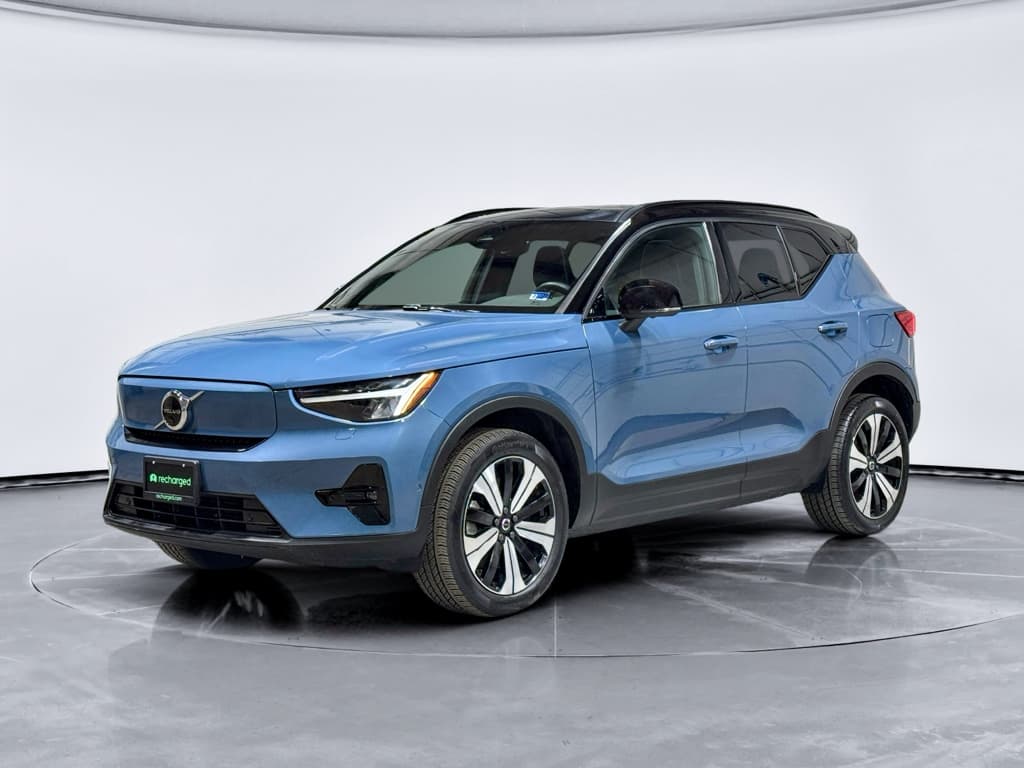
If "sell my Volvo EX30" has turned from a vague idea into a serious plan, you’re in a very modern dilemma. The EX30 is a brand‑new kind of Volvo: compact, fully electric, tech‑heavy, and still rare enough that many pricing tools are guessing. That makes how you sell it just as important as where you sell it.
Quick take
Why selling a Volvo EX30 feels different from a gas car
New EV math
The EX30 is a young model, with US deliveries really ramping in 2025. That means there isn’t a decade of used‑car history for pricing tools to lean on the way there is for, say, a Honda CR‑V. Forecast models and a thin stream of early used sales drive most of today’s values.
On the plus side, the EX30 launched with relatively approachable pricing for a premium EV. On the downside, EV prices can move fast when manufacturers adjust MSRPs, incentives, or lease programs. Those shifts ripple directly into what your used EX30 is worth.
Battery and software matter
With the EX30, you’re not just selling sheet metal. You’re selling a battery pack, a charging profile, and a big software stack that controls everything from climate to safety aids. Buyers will care about:
- How the battery has been treated (fast‑charging vs home L2)
- What kind of real‑world range you get today
- Whether it’s on current software and bug‑free enough to live with
That’s where a structured EV‑focused inspection, like a Recharged Score battery health report, can separate your EX30 from a sea of "trust me, it’s fine" listings.
Volvo EX30 value snapshot for sellers
What is my Volvo EX30 worth today?
To answer "what can I sell my Volvo EX30 for," you need to start with where it began. New EX30s in the US have typically stickered in the mid‑$30,000s to upper‑$40,000s range depending on motor, trim, and options. Forecast models suggest a typical EX30 loses about half its value over the first five years, which is normal for a premium EV.
Key factors that shape your EX30 sale price
Think like a buyer: these are the levers that push your Volvo EX30’s value up or down.
| Factor | Helps value if… | Hurts value if… |
|---|---|---|
| Battery health | Documented with a recent test; range close to original EPA estimate | Noticeably reduced range; no proof of battery condition |
| Mileage | Under 10,000–12,000 miles per year | High annual mileage or visible rideshare/commercial use |
| Trim & options | Twin Motor, Plus/Ultra, desirable colors and wheels | Least‑popular colors, base audio, obvious curb rash |
| Accident history | Clean Carfax/AutoCheck; no bodywork | Structural damage, airbag deployment, or poor repairs |
| Charging history | Mostly home Level 2; occasional DC fast charges | Heavy fast‑charging, especially in hot climates |
| Software & features | Up‑to‑date software, all driver‑assist working properly | Persistent bugs, warning lights, or disabled safety systems |
Two EX30s with the same model year can be thousands of dollars apart in value depending on their history and condition.
Use multiple value sources
Pros and cons of the main ways to sell a Volvo EX30
Where should I sell my Volvo EX30?
Each path trades convenience for cash. The right choice depends on your timeline and risk tolerance.
Instant online offer
Think CarMax, Carvana, or a local dealer’s online form.
- Pros: Fast, low effort, usually no haggling. Often includes free pickup.
- Cons: They’ll price in risk around battery and software, so EX30 offers can be conservative.
- Best for: When you value time, simplicity, and a guaranteed buyer over squeezing every last dollar.
Dealer trade‑in
Roll your EX30 straight into your next car deal.
- Pros: One transaction, potential sales‑tax savings when you trade in, no strangers at your house.
- Cons: Trade value is often the lowest number in the room; EV expertise varies wildly by store.
- Best for: Swapping into another car immediately, especially at the same brand.
Private sale or EV marketplace
Sell directly to another driver or through an EV‑focused platform.
- Pros: Usually the highest sale price if you market it well and have documentation.
- Cons: More work, test drives, paperwork, and potential safety concerns.
- Best for: Maximizing value on a clean‑history EX30 with good battery health.
Where Recharged fits
Ready to find your next EV?
Browse VehiclesStep‑by‑step: how to sell your Volvo EX30
Your EX30 selling checklist
1. Decide why you’re selling (and your deadline)
Are you freeing up cash, downsizing, or switching to a longer‑range EV? If you need the money this month, a trade‑in or instant offer is safer. If you have 30–60 days, a properly marketed sale, especially via an EV marketplace, can net more.
2. Gather your paperwork
Pull your title or payoff statement, registration, service records, purchase or lease documents, and EV charging receipts if you have them. A tidy folder silently tells buyers you’ve been on top of ownership.
3. Check your EX30’s battery and software
Schedule a battery health check and make sure your car is on the latest stable software. On Recharged, this shows up in your Recharged Score report and reassures buyers that range and charging performance match expectations.
4. Fix the easy stuff first
Small curb rash, a cracked windshield, worn wipers, or missing floor mats give buyers leverage. Handle the inexpensive fixes; skip big cosmetic projects that won’t come close to paying for themselves.
5. Detail it like a dealer would
A proper wash, clay, and interior detail transform first impressions. Clean the charging port, cable, and frunk/trunk. Photograph it in good light so the EX30’s design and color pop on a screen.
6. Get 2–3 real offers
Before you list, grab instant offers from an online buyer, at least one local dealer, and an EV‑specialist platform such as Recharged. Those numbers become your floor and your reality check before you name a private‑sale price.
7. Choose your selling channel
If the gap between a trade‑in and your ideal private‑sale price is only a few hundred dollars, take the easy exit. If it’s thousands, and your EX30 is clean with strong battery health, listing through an EV marketplace or consignment partner often makes sense.
How battery health impacts your EX30 sale price
On an EV like the Volvo EX30, battery condition is the beating heart of your resale value. Shoppers are still learning how to read SoC (state of charge), DC fast‑charging curves, and real‑world range. Anything you can do to turn the unknown into a number will help your car stand out, and justify your asking price.
What buyers quietly worry about
- Range loss: Will this EX30 still cover my commute in winter with the heat on?
- Charging speed: Does it taper early on DC fast chargers because the pack is tired or software is outdated?
- Future repairs: If there’s a battery issue, how much could I be on the hook for once the warranty ends?
If you can’t answer these questions confidently, a buyer will assume the worst, and their offer will reflect that.
How to prove your battery is healthy
- Get a third‑party battery health assessment or EV‑specific inspection.
- Document real‑world range from 100% to, say, 10–15% during typical driving.
- Show that you mostly charged on Level 2 at home or work, not exclusively on DC fast chargers.
- On Recharged, your EX30 receives a Recharged Score that translates this data into a clear report buyers can trust.
That’s the difference between "trust me" and a documented reason to pay more.
Don’t hide battery issues
Timing your sale: market factors specific to the EX30
Because the EX30 is still relatively new, the used market is a little jittery. Prices are influenced by how aggressively Volvo prices new inventory, what happens with tariffs and incentives on imported EVs, and how the car fares in long‑term reliability and software updates.
When to lean toward selling vs holding your EX30
You can’t time the market perfectly, but you can avoid the obvious potholes.
Good signals to sell now
- Your local dealer has strong EX30 demand but limited inventory.
- You’re still within basic warranty and software support, which boosts buyer confidence.
- Interest rates are steady or dropping, so more shoppers can afford financing.
- Your usage is about to change, longer commute, new climate, or need for more space or range.
Reasons to hold a bit longer
- You just bought or leased the EX30 and would be deep underwater on a loan payoff.
- Volvo is about to refresh software or add a major feature that could improve desirability.
- You’re only selling because of a minor annoyance that might be fixed in a future update.
- You haven’t yet hit your region’s sweet spot for tax or insurance advantages on keeping an EV.
Watch new‑car pricing
Documents, photos, and disclosure for a smooth sale
The EV world moves fast, but paperwork still wins or loses deals. A buyer trying to wire tens of thousands of dollars for a nearly new Volvo wants to see proof that everything is what you say it is, and that they won’t inherit a headache.
What to prepare before you list your EX30
Treat your EX30 listing like a professional ad. It pays off in higher quality buyers and cleaner negotiations.
| Item | Why it matters | Pro tip |
|---|---|---|
| Title or payoff letter | Proves you can legally sell the car | Call your lender early so you know exact payoff and process. |
| Service & repair records | Shows careful maintenance and honest disclosure | Organize chronologically and highlight EV‑specific work. |
| Charging history & habits | Signals a gently used battery | Note if you mostly charged at home, and your average state of charge. |
| High‑quality photos | Gets you more clicks and serious inquiries | Shoot in soft light, include the charging port, cable, and main screen. |
| Full VIN and feature list | Clarifies trim, options, and safety tech | Screenshot your build page or window sticker if you still have it. |
| Vehicle history report | Builds trust before anyone sets foot in your driveway | Pull your own report so you’re not surprised by an old incident. |
If you’re consigning or selling through Recharged, our team helps you collect and present most of this information for you.
What not to fudge
When it makes sense to trade your EX30 instead
Sometimes the math and the hassle just don’t pencil out for a private or marketplace sale, and that’s okay. A trade‑in is essentially you paying a dealer to handle pricing risk, reconditioning, and finding the next owner. With an EX30, that can still be the right call in a few common scenarios.
Trade‑in is usually smarter when…
- You have significant negative equity and need your next lender to roll it into a new loan or lease.
- You’re swapping into another vehicle immediately and want to keep taxes and paperwork simple.
- Your EX30 has cosmetic or minor mechanical issues you don’t want to fix or explain to multiple buyers.
- You’re uncomfortable with test drives, meeting strangers, or managing electronic payments on a big‑ticket sale.
Why an EV specialist can beat a generic trade‑in
A dealer who truly understands EVs is more likely to value your EX30’s battery health, options, and software status correctly.
At Recharged, we buy and sell used EVs all day long. That means:
- We look beyond generic book values to real EV market trends.
- We rely on the Recharged Score to price battery health and condition accurately.
- We can give you an instant offer, help you trade into another EV, or consign your EX30 so you capture more of its true value.
FAQs about selling a Volvo EX30
Frequently asked questions about selling a Volvo EX30
Bottom line on selling your Volvo EX30
Selling a Volvo EX30 in 2026 isn’t quite like selling a used gas crossover. You’re selling modern safety tech, a still‑evolving software experience, and, above all, a lithium‑ion battery pack whose health will make or break your price. The more you can replace guesswork with documentation, the more confident and serious your buyers will be.
Start by understanding where your EX30 sits in the market, then get a real battery health report, tidy up the car, and compare multiple offers. If the spread between an easy trade‑in and a well‑marketed sale is big, an EV‑focused partner like Recharged can shoulder most of the work while helping you keep more of your EX30’s true value.