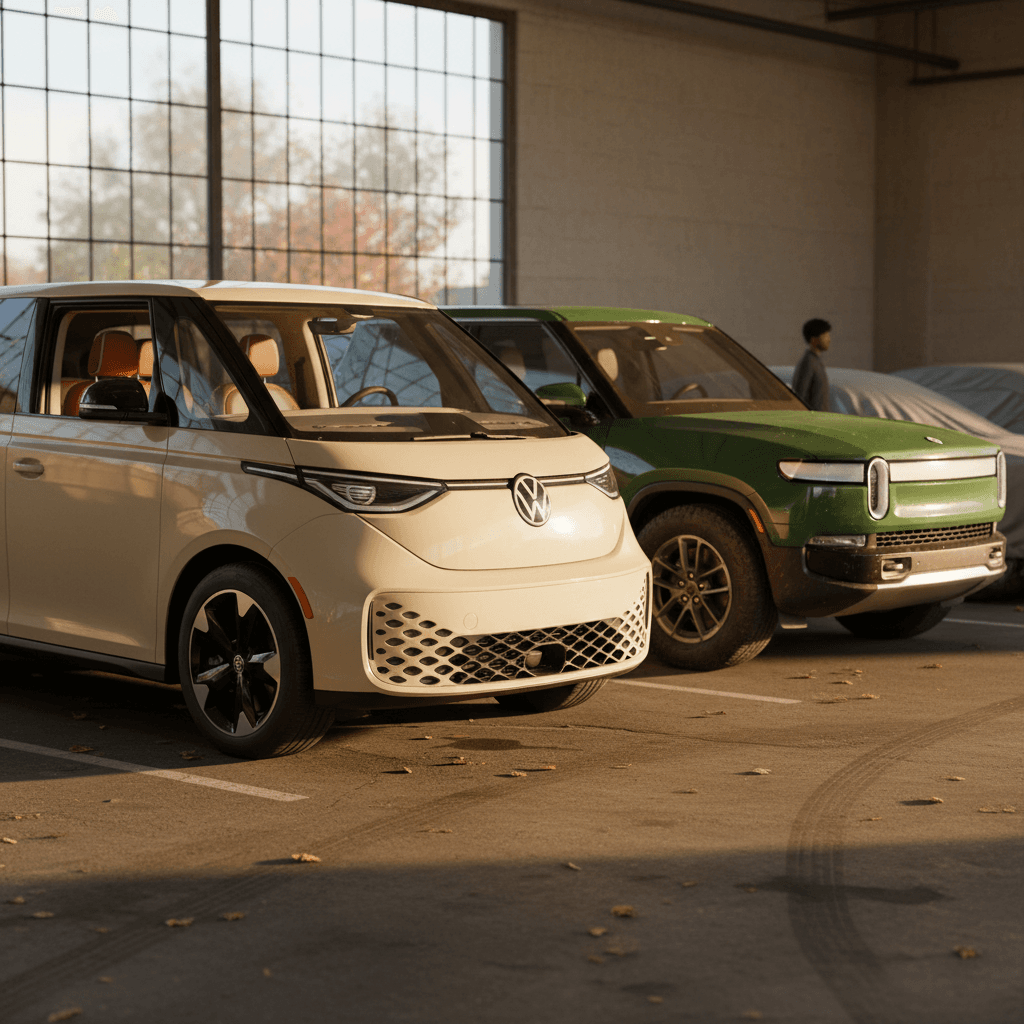
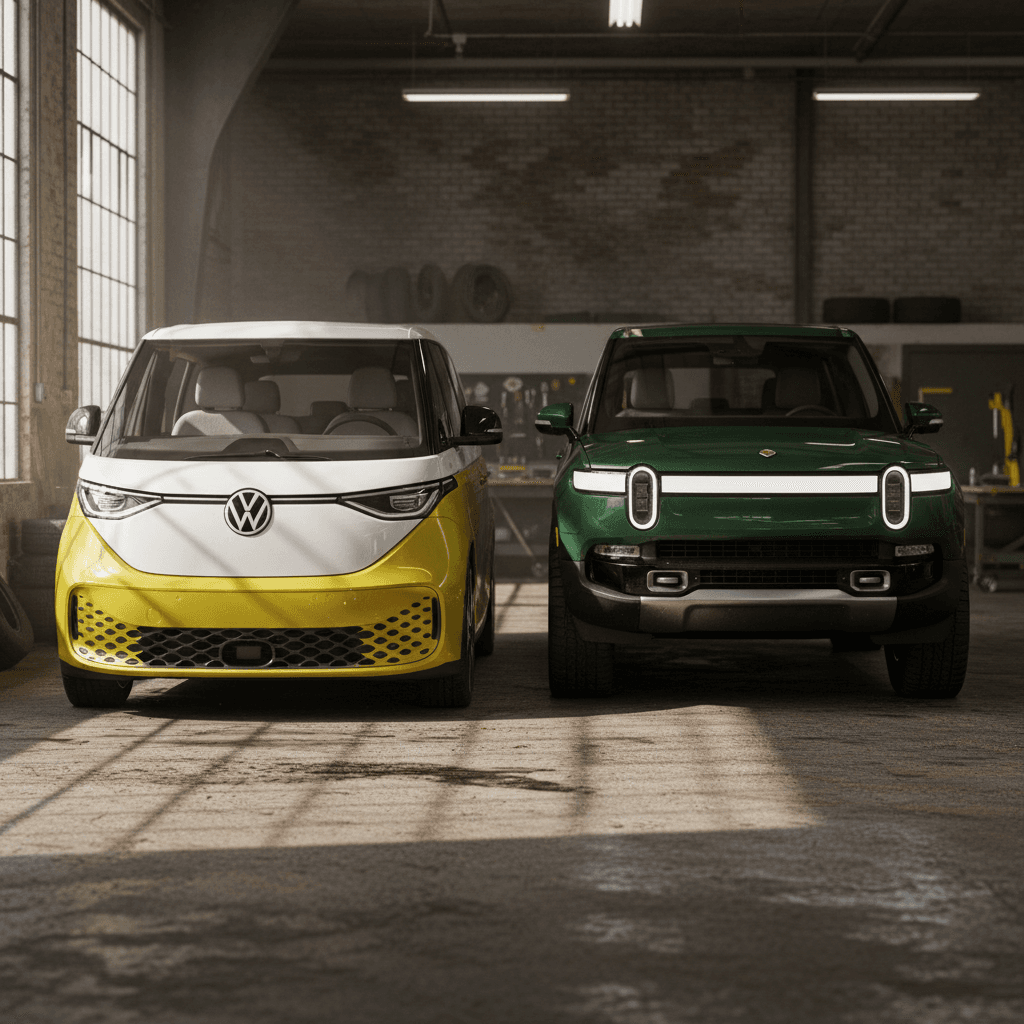
If you’re shopping the used EV market in 2026 and want a roomy, three‑row people mover, two names keep popping up: the Volkswagen ID. Buzz and the Rivian R1S. One is a retro‑styled electric bus with a lovable face; the other is a burly, go‑anywhere SUV. Both promise family space, all‑electric driving, and serious curb appeal, but they deliver it in very different ways.
Context for 2026 shoppers
Why this used ID. Buzz vs Rivian R1S comparison matters in 2026
Three‑row electric vehicles are still rare, and new ones often carry eye‑watering MSRPs. A well‑chosen used Volkswagen ID. Buzz or Rivian R1S can give you the space and capability you need at a meaningful discount, if you understand how these two approach practicality, range, and long‑term costs.
- You want one vehicle that can haul kids, dogs, and gear without burning gasoline.
- You’re cross‑shopping used EVs instead of a new gas SUV or minivan.
- You’re curious whether the playful ID. Buzz or the adventurous R1S will age better as a used EV purchase.
- You care about battery health, charging options, and real‑world range, especially several years down the road.
How to use this guide
Quick take: which used EV suits you?
Personality check: used ID. Buzz vs Rivian R1S
Both are three‑row electric family haulers, but they serve different lifestyles.
Volkswagen ID. Buzz: the electric family van
Best if you want:
- A bright, friendly family shuttle that kids and neighbors adore.
- Comfortable seating, big windows, and easy access for car seats.
- Mostly urban and suburban driving with moderate road‑trip needs.
Think of it as: A modern electric minivan with style, not a rock‑crawling SUV.
Rivian R1S: the electric adventure SUV
Best if you want:
- Real off‑road ability and big‑battery road‑trip range.
- Serious towing (up to around 7,700 pounds when properly equipped).
- Premium interior, strong performance, and tech‑forward feel.
Think of it as: A luxury adventure rig that can also play family hauler.
Reality check on availability
Core specs: used Volkswagen ID. Buzz vs Rivian R1S
Key specs: used Volkswagen ID. Buzz vs Rivian R1S (U.S. models)
Approximate specs for common configurations you’re likely to see on the used market in 2026. Always confirm exact equipment on the specific vehicle you’re considering.
| Spec | Used VW ID. Buzz (U.S. 2025 LWB) | Used Rivian R1S (2023–2025) |
|---|---|---|
| Seating | 3 rows, 6 or 7 seats | 3 rows, 7 seats |
| Drive layout | RWD or AWD (4MOTION) | Standard dual‑motor AWD; some tri‑motor/quad‑motor builds |
| Battery size (approx.) | High‑70s to low‑80s kWh usable | Standard, Large, and Max packs (roughly mid‑80s to >130 kWh usable) |
| EPA range (typical builds) | Roughly mid‑200s miles | About 270–410 miles depending on pack and wheels |
| Towing capacity | Light towing; more people‑mover than tow rig | Up to ~7,700 lb when properly equipped |
| DC fast‑charge peak | Around 170 kW (varies by market and software) | Up to ~220+ kW on newer packs; strong mid‑curve speeds |
| Length | Long‑wheelbase van, larger overall footprint | Shorter than the Buzz LWB, more SUV‑like stance |
| Ground clearance | Relatively low, car‑like | Height‑adjustable air suspension, much higher clearance in off‑road modes |
Specs vary by battery pack, drive layout, wheels, and software updates. Treat these as ballpark numbers, not promises.
Specs vs lived experience
Price and value on the used market
How used pricing typically stacks up in 2026
In 2026, a used Volkswagen ID. Buzz will likely behave more like a specialty vehicle than a commodity. Low volume, emotional design, and limited trims can keep prices sticky, even if it’s not objectively better than other three‑row EVs. Shoppers paying a premium are often buying with their hearts as much as their spreadsheets.
A used Rivian R1S is a different story. Rivian has expanded production, adjusted new‑vehicle pricing over time, and offered various incentives. That creates a strange used market where some listings are priced uncomfortably close to new builds. As a buyer, that’s an opportunity: you can sometimes negotiate harder on a used R1S that’s been sitting, or decide a new order is smarter if pricing overlaps too much.
Where Recharged fits in on value
Space, practicality, and family usage
Volkswagen ID. Buzz: the rolling living room
- Cabin feel: Bright, open, and playful. Huge glass area, upright seating, and clever storage create a lounge‑like vibe.
- Access: Sliding side doors (where equipped) and a low floor are a gift if you’re wrestling multiple car seats or boosters.
- Cargo: Boxy shape makes it easy to stack strollers, sports gear, and Costco runs behind the third row.
- Seating comfort: Second‑row comfort is excellent; the third row is usable for adults on shorter trips, especially thanks to the high roof.
Rivian R1S: the adventure family hauler
- Cabin feel: More cocooned and premium, with a big central screen and warm materials. Less airy than the Buzz, more like a luxury SUV.
- Access: Conventional doors and a higher step‑in height; kids might need a hand, especially when the air suspension is in its taller settings.
- Cargo: Excellent space with the third row folded, plus a front trunk for messy gear or charging cables.
- Seating comfort: First and second rows are plush; the third row fits kids and occasional adults, but the roofline and wheelbase make it cozier than the Buzz.
Family‑first verdict
Range, battery, and road‑trip manners
When you buy used, you’re not just buying today’s range, you’re buying what’s left after a few years of charging, road trips, and software updates. That’s where understanding battery size and pack options really matters in this used ID. Buzz vs Rivian R1S comparison.
Range reality: what to expect used
Ballpark expectations for healthy examples with typical wheels and tires.
ID. Buzz daily range
With its modest‑size pack, many U.S.‑spec ID. Buzz vans land in the mid‑200‑mile EPA range when new. Used, you should mentally budget a bit less, especially in winter or at highway speeds.
R1S range span
The R1S offers multiple battery choices. A used Standard pack is fine for families who stick closer to home; Large and Max pack R1S builds are genuine road‑trip vehicles, with EPA numbers stretching roughly from the high‑200s into the 400‑mile neighborhood.
Highway and towing penalty
Buzzworthy or not, both of these bricks push a lot of air. Expect lower real‑world range at 75 mph, and a more dramatic hit in an R1S when towing a big trailer.
Don’t ignore battery health
This is where Recharged leans in: the Recharged Score battery‑health diagnostics give you a clear, data‑driven picture of how much usable capacity remains. For a used ID. Buzz or R1S, that can be the difference between a car that comfortably does your weekly routine and one that constantly feels on the edge of its range envelope.
Driving character: ride, performance, and off‑road ability
How a used ID. Buzz drives
- Ride and handling: Tuned more like a comfortable family car than a sports machine. The long wheelbase helps it feel planted, but you’ll feel its height in crosswinds.
- Acceleration: Respectable, especially in dual‑motor versions, but the goal is smoothness rather than speed.
- Noise and comfort: Quiet, easygoing, and friendly, ideal for passengers who don’t care how quickly you can pass on a two‑lane.
- Off‑road: Think gravel roads and campsite parking, not rock gardens.
How a used Rivian R1S drives
- Ride and handling: Height‑adjustable air suspension and sophisticated damping help the R1S feel confident on the highway and surprisingly composed off‑pavement.
- Acceleration: Dual‑motor versions are already brisk; tri‑motor and quad‑motor builds can be genuinely startling.
- Noise and comfort: A bit more solid and buttoned‑down than the Buzz, with the heft and confidence of a proper SUV.
- Off‑road: One of the very few EVs that can genuinely play in Jeep and Land Rover territory.
Performance vs passengers
Charging experience and networks
In 2026, both a used ID. Buzz and a used R1S benefit from the charging landscape maturing quickly, especially as more non‑Tesla EVs gain access to the Supercharger network through adapters and native NACS ports.
Living with each EV on the plug
Home charging is similar; road‑trip charging is where they diverge.
Home charging
Both the Buzz and R1S are happy on a 240‑volt Level 2 home charger. Figure on a full overnight refill from a typical daily state‑of‑charge window. If you don’t have home charging yet, plan that project as part of your budget.
Public DC fast charging
The R1S, with its bigger packs and strong peak rates, is better suited to long‑distance DC fast‑charging. On a healthy Max‑pack R1S, you can cover serious highway miles with fewer stops than in an ID. Buzz.
Connector and network access
By 2026, many R1S and ID. Buzz owners will rely on a mix of CCS and NACS infrastructure, depending on the adapter and model year. When you evaluate a used example, confirm what connector it has and whether an adapter or future retrofit is part of the deal.
Road‑trip planning homework
Reliability, ownership costs, and depreciation
Both the ID. Buzz and the Rivian R1S are relatively young products, which means long‑term reliability histories are still being written. You’re not buying a decade‑old Camry here; you’re buying early‑generation EV technology from companies still iterating quickly.
Ownership themes with used ID. Buzz and R1S
What you’re likely to see in the first 5–8 years of ownership.
Service and repair realities
Volkswagen ID. Buzz: You benefit from VW’s existing dealer network, but not every store will be deeply experienced with Buzz‑specific quirks yet. Parts for low‑volume models can involve more waiting.
Rivian R1S: Rivian leans on mobile service and a smaller physical footprint. That can be great if they’re active in your region, but less convenient in remote areas.
Long‑term costs and depreciation
Both vehicles avoid oil changes and many traditional wear items, but tires, brakes, and suspension bits still age. Expect higher tire costs on the heavier, more powerful R1S.
Depreciation will likely be steeper on the Rivian in pure dollars (because it starts higher), while the ID. Buzz may hold onto a niche premium if demand outstrips supply in the U.S.
Use data, not guesswork
How Recharged helps with used ID. Buzz and R1S shopping
Shopping a low‑volume EV like the ID. Buzz or a high‑tech SUV like the R1S can feel like walking into a maze of specs, software updates, and seller claims. Recharged is built to flatten that learning curve.
- Battery‑health transparency: Every vehicle comes with a Recharged Score battery report, so you can compare a used ID. Buzz and R1S on more than just odometer readings.
- Fair‑market pricing: We analyze current market data so you can see when a quirky Buzz or heavily optioned R1S is priced in line with reality.
- Financing and trade‑in support: You can finance your purchase, get an instant offer for your current car, or consign it, all within the same digital experience.
- Expert EV guidance: Recharged EV specialists can walk you through whether a three‑row EV really fits your daily and road‑trip needs, or whether a smaller used EV might serve you better.
- Nationwide access: With nationwide delivery and an Experience Center in Richmond, VA, you’re not limited to what happens to be on your local lot this week.
Checklist: which model actually fits your life?
Used Volkswagen ID. Buzz vs Rivian R1S: decision checklist
1. Map your real seating and cargo needs
How often do you truly need three rows occupied, and how big are the humans in row three? If you regularly carry adults in the third row, the ID. Buzz’s extra headroom can be a real asset. If third‑row use is occasional and cargo is king, the R1S has the edge with its more flexible SUV layout and front trunk.
2. Be honest about off‑road and towing plans
If the roughest thing you’ll see is a gravel campground, the Buzz is fine. If your dream weekends involve forest roads, snow‑covered trailheads, or pulling a small camper or boat, the R1S is the safer bet.
3. Decide how far you really drive
Look at your last six months of driving. If most days are under 80 miles with a few 200‑mile weekends, the ID. Buzz’s pack is plenty, especially with reliable home charging. If you want 300‑plus‑mile legs and fewer charging stops, prioritize a Large or Max‑pack R1S on the used market.
4. Test‑drive both personalities
On paper, they’re both three‑row EVs. On the road, one feels like a cheerful living room and the other like a high‑tech mountain goat. Drive them back‑to‑back if you can, your gut reaction will tell you more than any spec sheet.
5. Compare total ownership cost, not just sticker price
Factor in insurance quotes, expected tire and brake costs, home‑charging installation, and any necessary accessories (like a NACS adapter). A slightly cheaper purchase price can disappear quickly if running costs surprise you later.
6. Insist on transparent battery data
Whether you shop on Recharged or elsewhere, make battery health non‑negotiable. You’re buying an energy storage system as much as a car, know what you’re getting.
FAQ: used Volkswagen ID. Buzz vs Rivian R1S
Frequently asked questions about used ID. Buzz vs Rivian R1S
Bottom line: choosing between a used ID. Buzz and Rivian R1S
The used Volkswagen ID. Buzz vs Rivian R1S comparison in 2026 isn’t about which EV is “better” in the abstract, it’s about which one matches the life you actually live. The Buzz is the charismatic family lounge on wheels: easy to load, easy to see out of, and endlessly charming. The R1S is the electric Swiss Army knife: more range, more muscle, more capability, and a cabin that feels ready for the long way home.
If you start with your day‑to‑day needs, then layer on honest road‑trip and budget expectations, the choice usually comes into focus quickly. And if you want help weighing a specific used ID. Buzz or R1S, battery health, price, and all, Recharged’s combination of Recharged Score Reports, expert EV specialists, financing, and nationwide delivery is built to make that decision clearer, and ownership a lot less stressful.