If your daily drive is only about 10 miles round‑trip, it’s natural to wonder whether an electric vehicle actually saves you money over a gas car. The headline answer: **for a 10‑mile commute, an EV usually costs about half as much per mile as gas** when you charge at home, even with today’s higher electricity prices. Let’s walk through simple, reusable math using current 2026 U.S. averages so you can see exactly what EV vs gas costs look like for your own routine.
The quick takeaway
How much does a 10‑mile commute cost in an EV vs gas?
Typical 2026 U.S. energy costs for commuters
To compare **EV vs gas cost for a 10‑mile commute**, you only need three pieces of information: 1. **Energy price** – $/gallon for gas, $/kWh for electricity. 2. **Vehicle efficiency** – miles per gallon (mpg) or kWh per 100 miles / miles per kWh. 3. **Distance** – here we’ll use a 10‑mile round‑trip commute (5 miles each way). We’ll start with **transparent assumptions** based on recent national averages, then show you how to swap in your own numbers.
Assumptions and simple formulas you can reuse
- Gas price: $3.10 per gallon (recent national average for regular unleaded).
- Electricity price (home): $0.18 per kWh (typical 2026 residential average).
- Average gas car efficiency: 26 mpg.
- Average EV efficiency: 30 kWh/100 miles (about 3.3 miles per kWh).
- Commute distance: 10 miles per workday (round‑trip).
Key formulas for EV vs gas commute cost
Use these formulas to calculate cost for any commute distance, energy price, or vehicle.
| Vehicle type | Inputs you need | Cost per mile formula | Cost for 10 miles |
|---|---|---|---|
| Gas car | Gas price ($/gal), mpg | (Gas price ÷ mpg) | Gas price ÷ mpg × 10 |
| EV (home charging) | Electricity price ($/kWh), kWh/100 mi | (kWh/100 ÷ 100) × price | (kWh/100 ÷ 100) × price × 10 |
| EV (fast charging) | Fast‑charge price ($/kWh), kWh/100 mi | Same as above | Same as above, using fast‑charge price |
You can reuse these formulas whether your commute is 5 miles or 50 miles.
Pro tip: Convert EV consumption once
Example 1: Average driver, average U.S. energy prices
Gas car: 26 mpg, $3.10/gal
Step 1: Cost per mile
- Cost per mile = $3.10 ÷ 26 ≈ $0.12/mi
Step 2: 10‑mile commute (round‑trip)
- Daily cost = $0.12 × 10 ≈ $1.19 per day
- Assume 5 days/week × 50 work weeks ≈ 250 commute days/year
- Annual commute fuel cost ≈ $1.19 × 250 ≈ $298/year
EV: 30 kWh/100 mi, $0.18/kWh at home
Step 1: Convert to kWh per mile
- 30 kWh/100 mi ÷ 100 = 0.30 kWh/mi
- Cost per mile = 0.30 × $0.18 ≈ $0.054/mi
Step 2: 10‑mile commute
- Daily cost = $0.054 × 10 ≈ $0.54 per day
- Annual commute fuel cost ≈ $0.54 × 250 ≈ $135/year
With completely ordinary assumptions, your **10‑mile commute costs about $298/year in gas** vs **$135/year in electricity** if you charge at home. That’s roughly **$160 per year in fuel savings** just on commuting, before you factor in weekend driving, errands, or the lower maintenance costs that come with EVs.

Example 2: Efficient EV vs thirsty SUV
National averages hide the spread between **efficient** and **inefficient** vehicles. Let’s compare a popular scenario: a reasonably efficient EV against a mid‑size SUV that only manages 20 mpg.
10‑mile commute: EV hatchback vs gas SUV
Same commute, different vehicles, very different fuel bills.
Efficient EV (e.g. compact hatchback)
- Efficiency: 26 kWh/100 mi (≈3.8 mi/kWh)
- Cost per mile: 0.26 kWh × $0.18 ≈ $0.047/mi
- Daily 10‑mile commute: ≈ $0.47
- Annual (250 days): ≈ $118/year
Gas SUV (20 mpg)
- Gas price: $3.10/gal
- Cost per mile: $3.10 ÷ 20 ≈ $0.155/mi
- Daily 10‑mile commute: ≈ $1.55
- Annual (250 days): ≈ $388/year
Spread gets wider with inefficient gas vehicles
What if you rely on public fast charging?
Not everyone can plug in at home. If you live in an apartment or rely heavily on road‑trip fast charging, your electricity rate might look more like **$0.30–$0.45/kWh**. That narrows the fuel‑only gap between EVs and gas, especially on **short commutes**.
10‑mile commute: home charging vs fast charging vs gas
Illustrative comparison using an average EV and gas car, with different electricity prices.
| Scenario | Energy price | EV cost per mile (30 kWh/100 mi) | Cost for 10‑mile commute | Annual commute cost (~250 days) |
|---|---|---|---|---|
| Gas car (26 mpg) | $3.10/gal | ≈ $0.12/mi | ≈ $1.19/day | ≈ $298/year |
| EV – home charging | $0.18/kWh | ≈ $0.054/mi | ≈ $0.54/day | ≈ $135/year |
| EV – expensive fast charging | $0.40/kWh | ≈ $0.12/mi | ≈ $1.20/day | ≈ $300/year |
Home charging keeps EV cost per mile low; heavy DC fast charging can approach gas costs in some markets.
Beware heavy reliance on pricey fast charging
The good news is that most EV owners still do **80–90% of their charging at home or at low‑cost workplace chargers**. If that’s your situation, fast charging becomes an occasional convenience, not a budget‑killer.
Five factors that matter beyond fuel cost
- 1. Maintenance and repairs: EVs have no oil changes, fewer moving parts, and typically lower brake wear thanks to regenerative braking. Multiple studies put EV maintenance at roughly 30–40% cheaper per mile than comparable gas cars over several years.
- 2. Time savings: Plugging in at home effectively replaces trips to the gas station. On a 10‑mile commute, that convenience often matters more than the raw dollars.
- 3. Local fuel price volatility: Gas prices are highly volatile and react to global events. Electricity rates move more slowly and are regulated in most markets, so your per‑mile cost is more predictable.
- 4. Climate and driving style: Cold winters, high speeds, and lots of short trips can reduce both EV efficiency and MPG. The relative advantage usually stays with the EV, but your exact numbers will shift.
- 5. Purchase price and depreciation: Fuel savings on a short commute are modest in absolute dollars, so the purchase price of the car itself still dominates your total cost of ownership. That’s where a well‑priced used EV with verified battery health can change the equation.
Why Recharged focuses on total ownership cost
How a short commute affects EV battery health
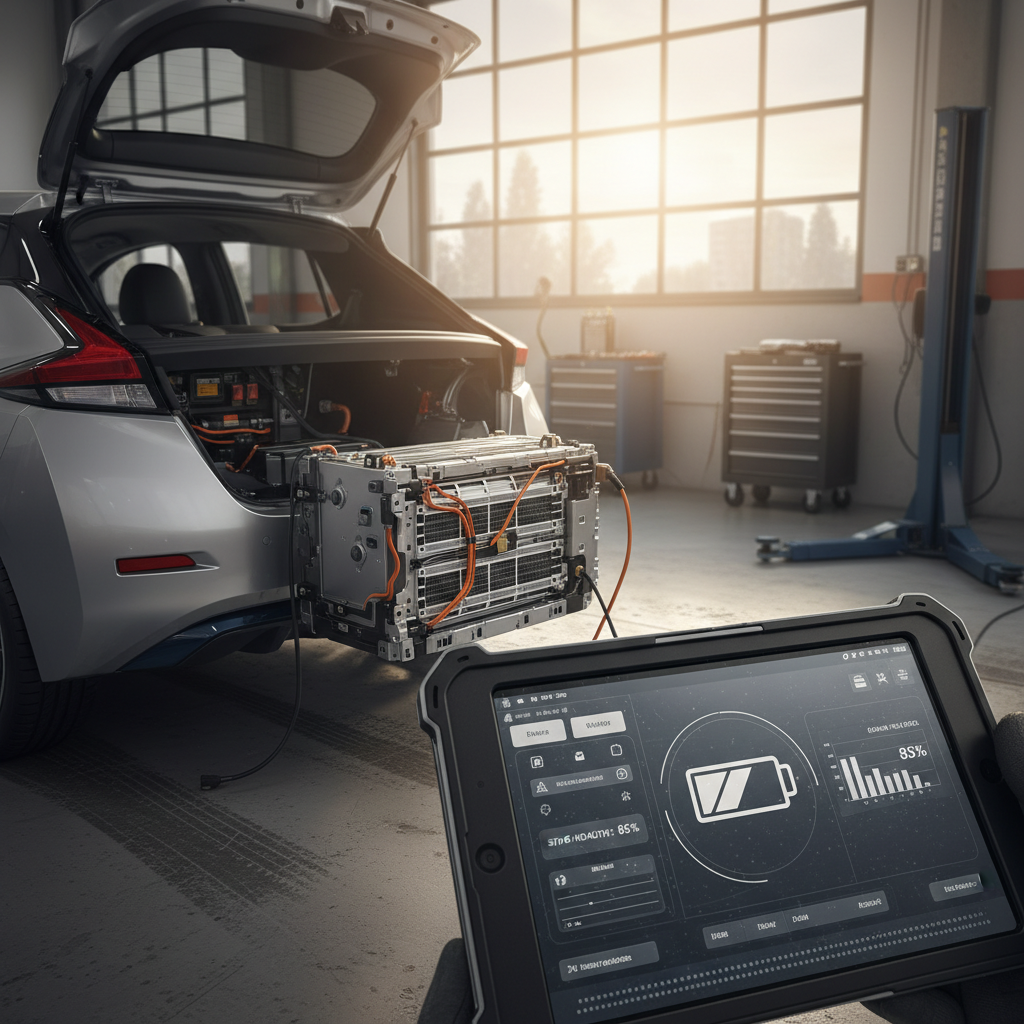
A 10‑mile daily commute is actually a **gentle use‑case for an EV**, as long as you avoid a few common pitfalls. Where gas cars struggle with too many cold starts and short trips, EVs happily handle low‑mileage routines, but how you charge and store the car still matters.
Short commute, EV battery: best practices
1. Avoid charging to 100% every night
For most modern EVs, daily charging to about **70–90%** is ideal if your range allows it. With a 10‑mile commute, you rarely need a full charge except before road trips.
2. Don’t let it sit at very low charge
Try not to leave the car parked for days below ~10–15% state of charge. On a short commute it’s easy to top up once or twice a week instead of every single night.
3. Use scheduled or off‑peak charging
Many utilities offer cheaper **off‑peak rates at night**. Scheduled charging lets you plug in when you get home but start charging later, saving money and easing grid demand.
4. Minimize unnecessary DC fast charging
Occasional fast charging won’t kill the pack, but making high‑power DC fast charging your daily routine can accelerate battery wear. For a short commute, Level 1 or Level 2 at home is usually sufficient.
5. Park in moderate temperatures when possible
Garages or shaded parking help limit extreme heat or cold exposure, which is helpful for long‑term battery health regardless of mileage.
How Recharged derisks used EV batteries
Ready to find your next EV?
Browse VehiclesStep‑by‑step checklist to plug in your own numbers
Let’s turn this into a quick workflow you can complete with a gas receipt, your utility bill, and your car’s specs. You can adapt these same steps for any commute distance, 10, 20, or 50 miles.
DIY commute cost calculator (no spreadsheet required)
1. Write down your actual commute distance
Use your car’s trip odometer or a maps app for a week to confirm your **real daily round‑trip distance**. If your “10‑mile commute” is actually 14 miles with detours, use the real number.
2. Find your gas price and MPG
Use the price on your last fuel receipt and your car’s <strong>realistic mpg</strong>. If your dashboard long‑term average says 24 mpg, use that, not the optimistic window‑sticker number.
3. Find your electricity rate and EV efficiency
Your utility bill lists your **$/kWh** (often in cents/kWh). Your EV’s window sticker or on‑screen stats show **kWh/100 mi** or **mi/kWh**. Convert to cost per mile using the formulas above.
4. Compute daily and annual fuel costs
Multiply cost per mile by your commute distance for a **daily cost**, then multiply by your commute days per year (250 is a good working estimate if you work 5 days/week most weeks).
5. Stress‑test with high gas prices
Run the same math using a hypothetical **$4.00/gal gas price** or whatever you remember from the last price spike. That shows how much the EV insulates you from future volatility.
6. Compare against total cost of ownership
Finally, look beyond fuel: compare **monthly payment + insurance + fuel + maintenance** for your current car vs a candidate EV. A well‑priced used EV can sometimes beat a paid‑off but thirsty SUV purely on running costs.
FAQ: EV vs gas for a 10‑mile commute
Frequently asked questions
So should you switch to an EV for a 10‑mile commute?
For a 10‑mile daily commute, an EV almost always **wins on energy cost** if you have access to reasonably priced home or workplace charging. Expect fuel savings on the order of **$10–$25 per month** versus an average gas car, and much more if you’re replacing a thirsty SUV or van. On their own, those numbers won’t make or break your finances, but paired with lower maintenance, better stop‑and‑go performance, and the convenience of charging at home, they’re a substantial nudge toward electric.
Whether an EV is the right move for you ultimately comes down to the **whole‑car economics**: purchase price, incentives, insurance, expected depreciation, fuel and maintenance. If you’re EV‑curious and your commute is short, that’s actually a great position to be in, you can buy a **used EV with some miles on the clock**, enjoy very low running costs, and not worry about squeezing every last mile of range out of the pack each day.
If you’re ready to explore numbers for specific models, you can browse used EVs on Recharged, where every vehicle includes a Recharged Score battery health report, transparent pricing, and optional financing. That way, you’re not just guessing whether your 10‑mile commute is cheaper in an EV, you’re building a full ownership picture before you ever hit “buy.”