When people search for a used Tesla truck in 2025, they almost always mean one thing: the Tesla Cybertruck. It’s the most polarizing vehicle on the road, and that’s before you factor in early‑production quirks, multiple recalls, and a fast‑moving electric pickup market. This guide walks you through what it really means to buy a used Cybertruck, how to evaluate one, and when you might be better off in a different used EV truck instead.
Quick reality check
Why shoppers are eyeing a used Tesla truck
Electric pickup market snapshot, 2025
So why consider a used Tesla Cybertruck instead of a new one or a more conventional electric pickup? There are three main reasons: price, availability, and curiosity. Early buyers paid hefty premiums for Foundation Series trucks; as those vehicles hit the secondary market, depreciation is finally catching up with the hype. On top of that, Tesla’s ongoing price changes and frequent promotions have created a confusing value picture, pushing many shoppers to look at the used market where the real transaction prices are easier to see. And finally, there’s simple curiosity: a used Cybertruck lets you experience the stainless‑steel spaceship without committing six figures to a brand‑new experiment.
Top reasons shoppers consider a used Cybertruck
The draw of Tesla’s truck isn’t just the styling
Access to Superchargers
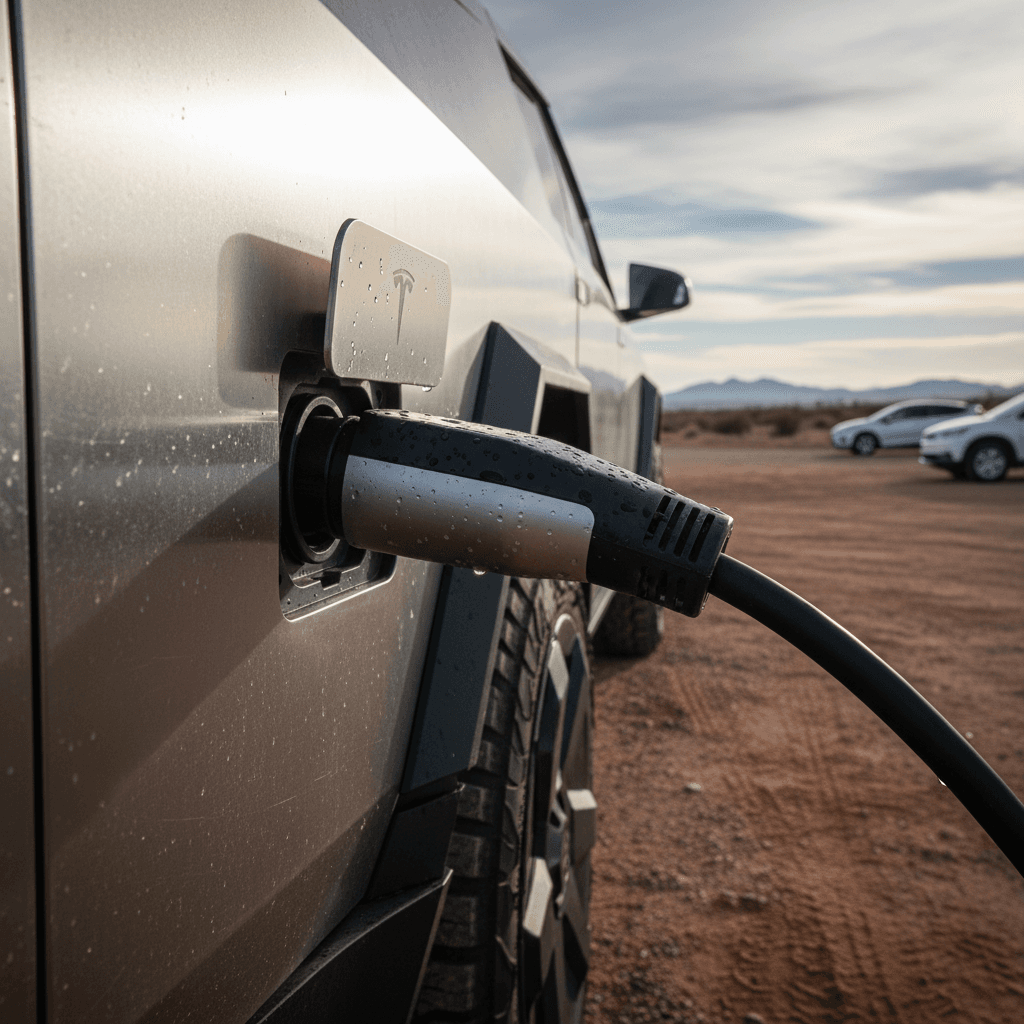
The Cybertruck uses Tesla’s NACS connector, giving you native access to the Supercharger network without adapters. For road‑trippers who tow, that charging footprint still matters.
Real truck capability
On paper, the Cybertruck offers competitive payload and towing, plus adjustable air suspension on many trims. It’s closer to a real work truck than an electric fashion accessory.
EV powertrain benefits
Instant torque, one‑pedal driving, reduced maintenance, and strong software features make a used Tesla truck feel more like a rolling device than a traditional pickup.
Tesla Cybertruck basics: trims, range, and capabilities
Before you evaluate a specific used Tesla truck, you need a clear picture of what was actually built. Cybertruck specs have shifted since launch, with Tesla introducing and then canceling trims, tweaking range estimates, and bundling features into pricey packages.
Common 2025 Cybertruck trims you’ll see used
Actual features can vary based on build date and whether it’s a Foundation Series truck.
| Trim | Drive | EPA range (est.) | 0–60 mph (approx.) | Max towing | Notable notes |
|---|---|---|---|---|---|
| Long Range RWD | RWD | ~335 mi | ~6.2 sec | ~7,500 lb | Longest range but fewer luxury features; some trucks lack air suspension and power outlets. |
| Dual Motor AWD | AWD | ~325 mi | ~4.1 sec | 11,000 lb | The “sweet spot” for most buyers; strong performance and full towing capability. |
| Cyberbeast | Tri‑motor AWD | ~300 mi | ~2.6 sec | ~11,000 lb | Wild performance, heavier wheels/tires; some early trucks were pricey Foundation Series builds. |
Use this as a starting point; always verify the exact build in the Tesla app or window sticker.
Decode the exact truck you’re buying
What the used Cybertruck market looks like in 2025
By late 2025, used Cybertrucks are still a niche, but they’re no longer unicorns. Early Foundation Series builds have started showing up with meaningful miles, and some first‑wave owners are trading out of the experiment after living with the truck for a year or two. At the same time, sales shortfalls and multiple recalls have dented demand, which is softening used prices faster than Tesla probably hoped.
Where used Tesla trucks show up
- Direct resale through the Tesla app or trade‑ins at Tesla stores.
- Online EV marketplaces like Recharged, where listings include independent battery health data.
- Franchise dealers taking Cybertrucks as trades on conventional trucks or SUVs.
Typical used price behavior
- Early Foundation Series trucks often list well below their original inflated price.
- Higher‑mileage work trucks drop quicker than low‑mile commuter trucks.
- Location matters: coastal EV‑dense markets see more inventory and sharper pricing.
Watch for headline pricing tricks
Pros and cons of a used Tesla truck
Used Tesla Cybertruck: upside vs trade‑offs
The debate is less about whether it’s cool and more about whether it fits your use case.
Pros of a used Tesla truck
- Depreciation discount: Foundation Series buyers absorbed the steepest drop.
- Supercharger access: no adapters, no app gymnastics, just plug into Tesla’s network.
- Serious performance: even the mid‑tier Dual Motor AWD is quicker than many sports cars.
- Over‑the‑air improvements: software updates can refine driving dynamics, UI, and features.
Cons and risks to weigh
- Recall history: multiple hardware recalls for items like trim panels, pedals, and wipers.
- Repair ecosystem: limited body‑shop capacity and stainless steel complexity can mean long wait times.
- Polarizing design: great for some, resale‑limiting for others and certain fleets.
- Unproven long‑term durability: no one has a 10‑year real‑world data set yet.
Where Recharged fits in
Ready to find your next EV?
Browse VehiclesUsed Tesla truck inspection checklist
What to inspect on a used Cybertruck before you buy
1. Panel alignment and trim
Walk the truck in good light and look closely at door gaps, fender trims, and the bed sail panels near the windshield. Given the recall history around loose exterior pieces, anything that looks misaligned or poorly seated deserves scrutiny.
2. Stainless body condition
Small scratches can often be brushed out, but deep gouges and creases in the stainless panels may be difficult and expensive to repair. Check edges, corners, and the bed sides carefully.
3. Suspension & ride height
If the truck has air suspension, cycle through ride‑height settings while parked. Listen for odd compressor noises and make sure the truck actually changes height. Uneven stance may signal prior damage or component issues.
4. Tires and wheels
Cybertruck tires and 18–20 inch wheels aren’t cheap, especially on Cyberbeast models with 35‑inch all‑terrain rubber. Check for uneven wear, sidewall damage, or cracked rims from curb strikes or off‑road use.
5. Tonneau cover and bed features
Test any power tonneau cover, power outlets, and built‑in lighting. These are high‑value features on paper, but replacing them out of warranty can be costly.
6. Software status & alerts
Sit in the truck, open the Service tab on the central screen, and look for stored alerts. Verify that all recalls and software campaigns are completed. On a Recharged vehicle, this is documented in the Recharged Score.
Battery health and software: what really matters
Underneath the flashy body, a used Tesla truck lives and dies by its battery and software. Cybertruck packs are large, on the order of 120+ kWh, so even modest degradation can mean a noticeable range hit. At the same time, Tesla pushes frequent software updates that can change how the truck charges, how it feels to drive, and what data you can see as an owner.
How to assess Cybertruck battery health
- Check projected range: Fully charge the truck and view the estimated range at 100%. Compare that to the original EPA figure for that trim.
- Review charge history: Trucks fast‑charged daily on road trips will often show more degradation than those mostly charged at home.
- Look for DC fast‑charge throttling: If Supercharging feels unusually slow, it could signal thermal or pack‑management limitations.
Software and feature considerations
- FSD & Autopilot: Verify whether Full Self‑Driving, Enhanced Autopilot, or basic Autopilot is actually included and transferable.
- Connectivity: Older Foundation trucks sometimes bundled premium connectivity and powershare hardware, confirm what’s active on the VIN.
- App access: Make sure the seller is prepared to transfer app access and remove the vehicle from their Tesla account at delivery.
Leverage independent battery diagnostics
Recalls and build quality: risk, not rumor
Cybertruck’s first model years have attracted a disproportionate number of recalls for a vehicle built in relatively low volumes. We’ve seen issues ranging from loose trim panels near the windshield to sticky accelerator pedals and wiper failures. For a used buyer, the question isn’t whether the truck was recalled, it’s whether those issues were fixed correctly and whether there are underlying build‑quality problems that go beyond service bulletins.
- Ask the seller for documentation that all open recalls have been completed.
- Visually re‑inspect affected areas, especially exterior trim near the A‑pillars and windshield.
- Take a long test drive on mixed roads to expose any intermittent wiper, steering, or pedal issues.
- Factor in your distance to the nearest Tesla Service Center, small problems are more painful if every fix is a day trip.
Don’t shrug off recall history
Owning a used Tesla truck: charging, tires, insurance
Running costs are where a used Tesla truck can shine, or surprise you. Electricity is usually cheaper than gas or diesel on a per‑mile basis, but you’re also feeding a very large, heavy, and fast pickup. Tires, insurance, and accident repairs can eat into the fuel‑savings story if you don’t plan ahead.
Big recurring costs to plan for
The Cybertruck may be electric, but physics and insurance tables still apply.
Charging costs
Home charging on a 240V Level 2 setup is usually the cheapest option. Frequent use of DC fast charging and Superchargers will cost more per kWh and slightly accelerate battery wear.
Tires and brakes
Expect to replace tires more often than on a compact EV; 6,900‑lb trucks are hard on rubber. Regenerative braking helps pads last, but don’t ignore annual brake inspections.
Insurance & repairs
Many insurers still treat the Cybertruck as a high‑value, hard‑to‑repair specialty vehicle. Shop quotes before you buy, and remember that stainless panels and glass can be expensive to replace.
Home charging upgrade?
Used alternatives to a Tesla truck
If what you really want is an electric pickup that tows, hauls, and quietly disappears in a parking lot, a used Tesla truck isn’t your only option. In fact, depending on your priorities, rivals like the Ford F‑150 Lightning or Chevrolet Silverado EV may be a better fit today, especially if you care more about bed dimensions and dealer support than stylized stainless steel.
How a used Cybertruck compares to other used electric pickups
High‑level comparison; exact numbers vary by trim and model year.
| Model | What it does best | Where it falls short vs Cybertruck |
|---|---|---|
| Tesla Cybertruck | Supercharger access, headline performance, iconic design. | Recall history, limited repair ecosystem, polarizing look, unknown long‑term durability. |
| Ford F‑150 Lightning | Familiar F‑150 ergonomics, widespread dealer network, strong work‑truck ecosystem. | Shorter range when towing, charging network is more fragmented than Tesla’s. |
| Chevy Silverado EV / GMC Sierra EV | Large battery options, traditional truck packaging, emerging fleet support. | Less charging infrastructure maturity, fewer units on the used market (for now). |
| Rivian R1T | Excellent off‑road capability, upscale interior, clever storage (gear tunnel). | Smaller bed, less mainstream dealer footprint, fewer service locations than Ford/GM. |
Consider how you’ll actually use the truck: towing and charging infrastructure matter more than 0–60 bragging rights.
Start with use case, not brand
Financing, trade‑ins, and getting a fair deal
Once you’ve decided a used Tesla truck fits your life, the last step is making the numbers work. Because Cybertruck values are still finding their level, traditional price guides can lag reality. That makes it even more important to line up transparent financing and a fair value for any trade‑in before you fall in love with a particular VIN.
Financing a used Cybertruck
- Shop EV‑friendly lenders: Some banks still treat EVs as exotic; look for lenders who publish specific terms for used electric vehicles.
- Mind the term length: Avoid super‑long loans that outlast the useful life of the battery and warranty.
- Compare against new: In a world of constant Tesla price cuts, always compare your used APR and total cost to a factory‑fresh Cybertruck quote.
Trade‑ins and selling your old vehicle
- Get instant offers: Use online tools to benchmark your current car’s value before visiting a dealer.
- Consider consignment: Platforms like Recharged can list your EV or gas vehicle and handle the sale for you.
- Look at tax advantages: In many states, trading in reduces the taxable amount of your Cybertruck purchase.
Make the money side easier
Used Tesla truck FAQ
Frequently asked questions about used Tesla trucks
Bottom line: who should (and shouldn’t) buy a used Tesla truck?
A used Tesla truck is best for someone who understands they’re not just buying a pickup, they’re buying into an experiment. If you’re comfortable trading conventional styling and a dense dealer network for Supercharger access, wild performance, and a front‑row seat to the future of truck design, a carefully vetted used Cybertruck can make sense. Just be sure you’ve budgeted for insurance, tires, and the occasional service‑center visit.
If, on the other hand, you simply need an electric workhorse that hauls, tows, and disappears into a job‑site parking lot, you may be happier in a used Lightning, Silverado EV, or R1T. Whatever you choose, pairing a thorough inspection with verified battery health data and transparent pricing, exactly what you get with a Recharged Score Report, turns a headline‑grabbing experiment into a rational, defensible purchase decision.