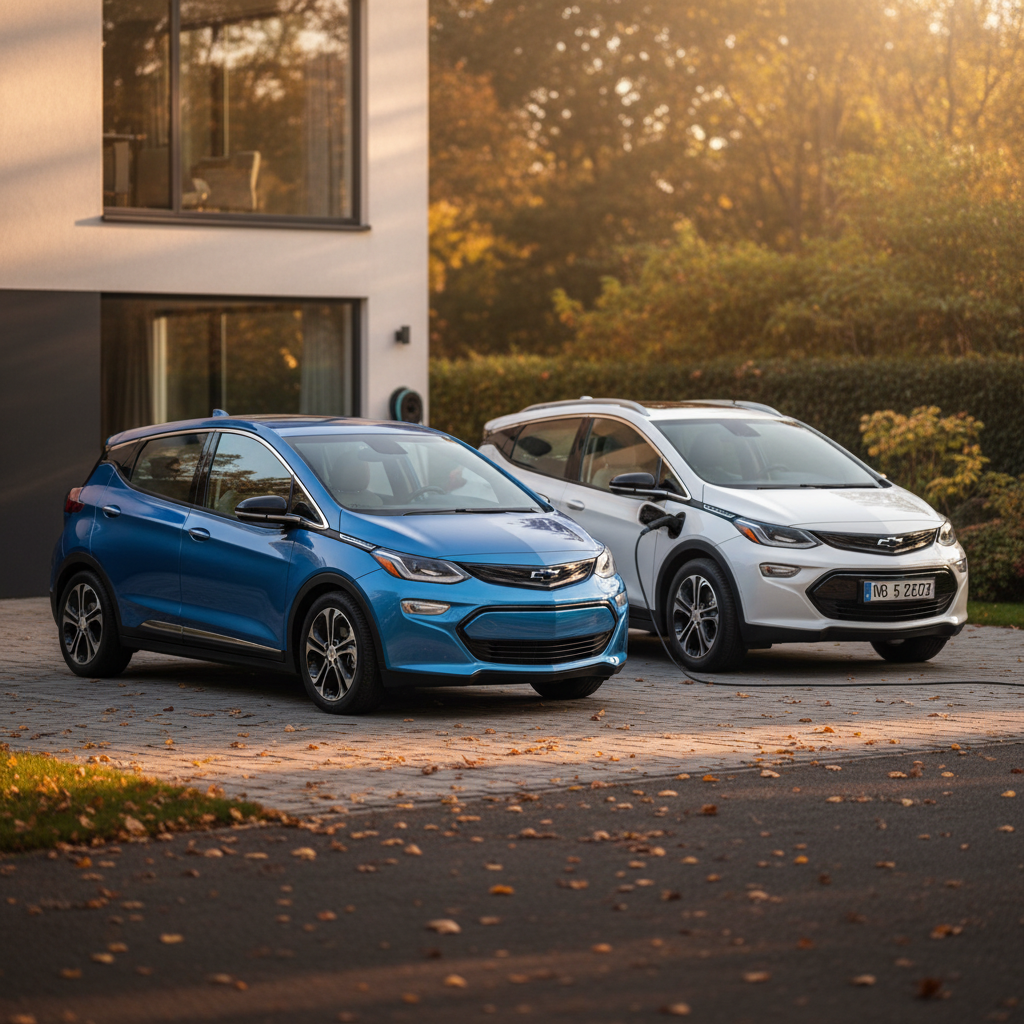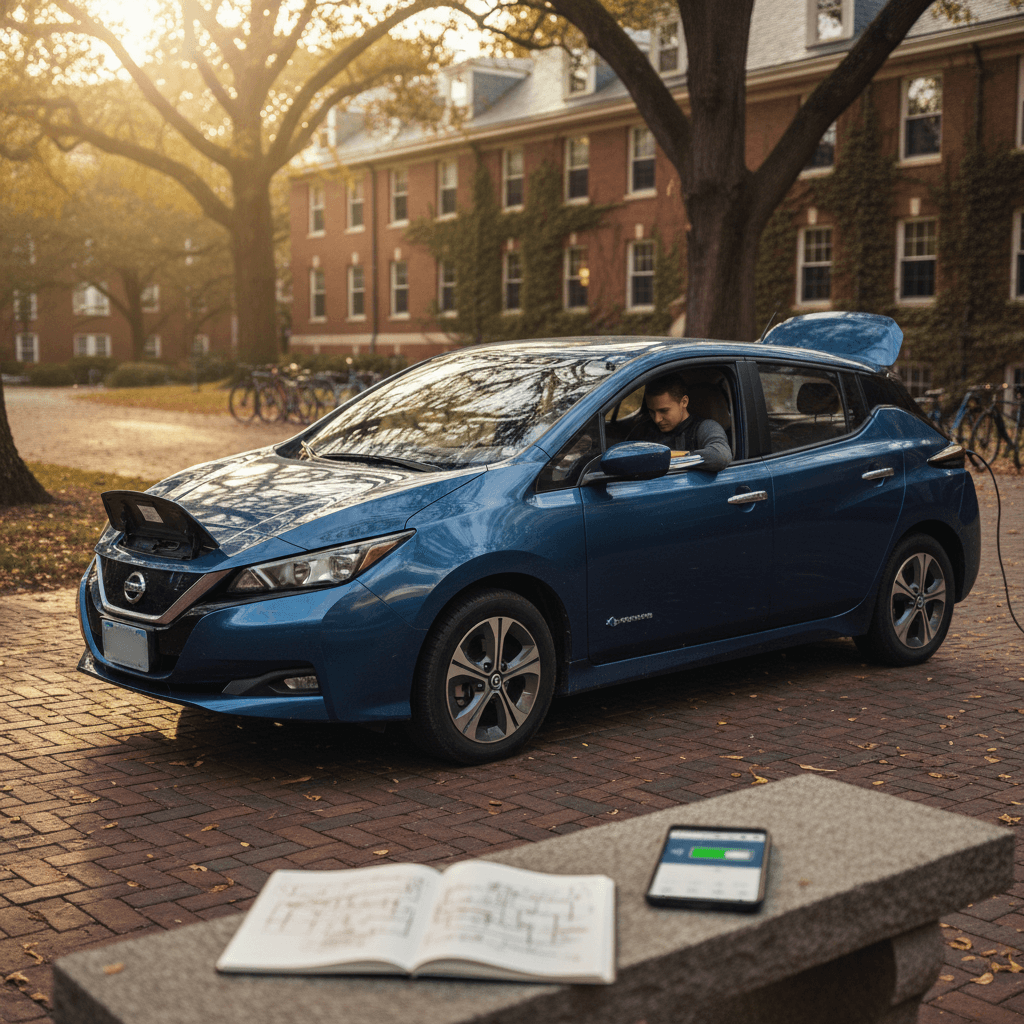
Choosing a used EV for a college student isn’t just a question of saving gas money. It’s about safety, reliability, campus parking realities, and whether your student will actually remember to plug the thing in. The good news: thanks to plunging used EV prices and more campus charging, the 2026 market is finally friendly to student budgets.
Who this guide is for
Why a used EV can be perfect for college
EVs vs gas cars: big picture for students
For a typical campus life, class runs, grocery trips, part‑time jobs, and the occasional weekend drive home, a used EV actually fits better than a traditional gas car. Daily mileage is low, there’s usually a place to park overnight, and fuel savings are real when you’re watching every dollar.
- Lower running costs: Electricity is usually cheaper per mile than gas, especially if charging happens at home or overnight on campus.
- Less maintenance: No oil changes, timing belts, or exhaust systems. Most routine items are tires, cabin air filters, and brake fluid.
- Quiet and safe: Modern driver‑assist tech and strong crash ratings are common even on older EVs.
- No gas runs at 1 a.m.: Students can "refuel" while sleeping or studying, instead of hunting for open stations.
Think like a campus commuter, not a road‑tripper
How much should a college student spend on a used EV?
Let’s be blunt: a car is usually the second‑most expensive thing a student will ever own after their degree. You want something safe and modern, but you don’t want the payment competing with textbooks and rent.
Common budget ranges for student EVs
Pick the tier that fits your family, then shop within it with discipline.
Under $10,000
Who it fits: Community college or commuter students who drive short distances and can live with older tech.
- Early Nissan Leaf, BMW i3, older Fiat 500e
- Shorter range (80–120 miles typical)
- Best when campus and housing are very close
$10,000–$18,000
Best balance for many families.
- Chevy Bolt, Kia Soul EV, Hyundai Kona Electric, older Kia Niro EV
- 150–230 miles of range is common
- Modern safety tech and decent fast charging
$18,000–$25,000+
When safety, range, and tech come first.
- Tesla Model 3, VW ID.4, newer Hyundai Ioniq 5/Kona
- 200–270+ miles of range
- Ideal for students frequently driving long distances home
Don’t spend the whole budget on the sticker price
Must‑have features in a used EV for students
Must‑haves
- Modern safety tech: Automatic emergency braking, lane‑keep assist, blind‑spot monitoring when available.
- At least 150 miles of real range: After battery aging. That usually means an original EPA rating closer to 200+ miles.
- DC fast‑charging capability: Crucial if the student will ever road‑trip or needs to charge quickly off campus.
- Compatible charging port: CCS or NACS in the U.S., plus any adapters included in the deal.
- Documented service history: Especially for recalls and battery‑related work.
Nice‑to‑haves
- Heated seats & wheel: Keeps them comfortable without cranking the heater and killing range.
- Wireless CarPlay/Android Auto: Encourages navigation and hands‑free calls.
- Adaptive cruise control: Great for long highway drives home.
- Parking sensors & camera: Tight campus lots, minimal experience, enough said.
- One‑pedal driving: Easier to control speed in traffic and kind to the brakes.
Features that can be deal‑breakers
Best used EVs for college students in 2026
Used EV prices have fallen hard since the boom years. Mainstream models like the Kia Niro EV, Chevy Bolt, Hyundai Kona Electric, VW ID.4, and Tesla Model 3 are now squarely in student‑car territory, often between roughly $12,000 and $25,000 depending on year and mileage.
Student‑friendly used EVs to put on your shortlist
These models balance price, range, and safety for college duty. Exact prices and specs vary by year and trim; use this as a directional starting point, not a promise.
| Model | Why it works for students | Typical used price* | EPA range when new | Charging & notes |
|---|---|---|---|---|
| Chevy Bolt EV | Compact hatchback that feels like a normal small car, easy to park, great efficiency. | $13,000–$18,000 | ~238–259 mi | DC fast charging on most trims; check recall/completed battery replacement. |
| Kia Niro EV | Small crossover with real rear‑seat space and a big cargo opening. | $12,000–$20,000 | ~239–253 mi | Good all‑rounder; often excellent value due to heavy depreciation. |
| Hyundai Kona Electric | Tall hatch/SUV look, strong range, lots of warranty on newer years. | $14,000–$20,000 | ~258 mi | Great for snowy climates with available heated features and stability control. |
| Volkswagen ID.4 | Roomier SUV feel for carpooling or hauling gear. | $20,000–$25,000+ | ~209–275 mi | Ideal for students who drive friends often or carry bikes/equipment. |
| Tesla Model 3 (RWD) | Long range, strong safety scores, simple tech students love. | $20,000–$27,000+ | ~220–272 mi (varies by year/trim) | Access to Tesla’s Supercharger network where available; watch insurance quotes. |
| Nissan Leaf (2nd gen, 40–62 kWh) | Cheapest way into a newer‑design EV if commute is short. | $5,000–$12,000 | ~150–226 mi | Battery can age faster in hot climates; great around‑town car with shorter trips. |
Approximate 2026 used prices assume mainstream trims with typical mileage.
How Recharged can simplify the shortlist
Charging on campus and at home
Before you fall in love with any particular used EV, figure out where your student will actually charge. This is the part families often skip, then discover the nearest plug is a half‑mile from the dorm and always full.
Three common student charging scenarios
Pick the row that looks most like your student’s life.
Apartment or house with driveway
Best‑case scenario. A basic Level 2 charger on a 240V outlet turns the car into a giant phone: plug in overnight, wake up with a full "battery."
- Expect ~20–30 miles of range added per charging hour in many EVs.
- Electric bill will go up, gas station visits vanish.
Dorm with campus chargers
Increasingly common. Many campuses now have a mix of Level 2 and a few DC fast chargers.
- Look for discounted or time‑limited student rates.
- Teach your student to unplug and move the car when done, campus EV etiquette matters.
Street or shared parking only
Trickiest, but not impossible. The student will rely on public chargers near campus or work.
- Favor EVs with fast DC charging and good range.
- Use apps to find reliable chargers near daily routes.
Do a 10‑minute charging audit
Insurance, maintenance, and real‑world costs
Sticker price is only half the story. Insurance on some EVs (especially Teslas) can be higher than for an equivalent gas sedan, while maintenance can be dramatically cheaper.
Insurance
- Model choice matters: A Chevy Bolt or Kia Niro EV often insures cheaper than a Tesla for young drivers.
- Location & parking: Gated lots beat street parking for both theft risk and premiums.
- Student discounts: Many insurers still offer good‑student and away‑at‑school discounts, ask explicitly.
Maintenance & repairs
- No oil changes: EVs skip dozens of engine‑related services entirely.
- Brake wear is low: Regenerative braking means pads can last an impressively long time.
- Budget the basics: Tires, cabin filters, and unexpected dings in tight parking garages still add up.
Approximate yearly operating costs
Battery health: the make‑or‑break factor when buying used
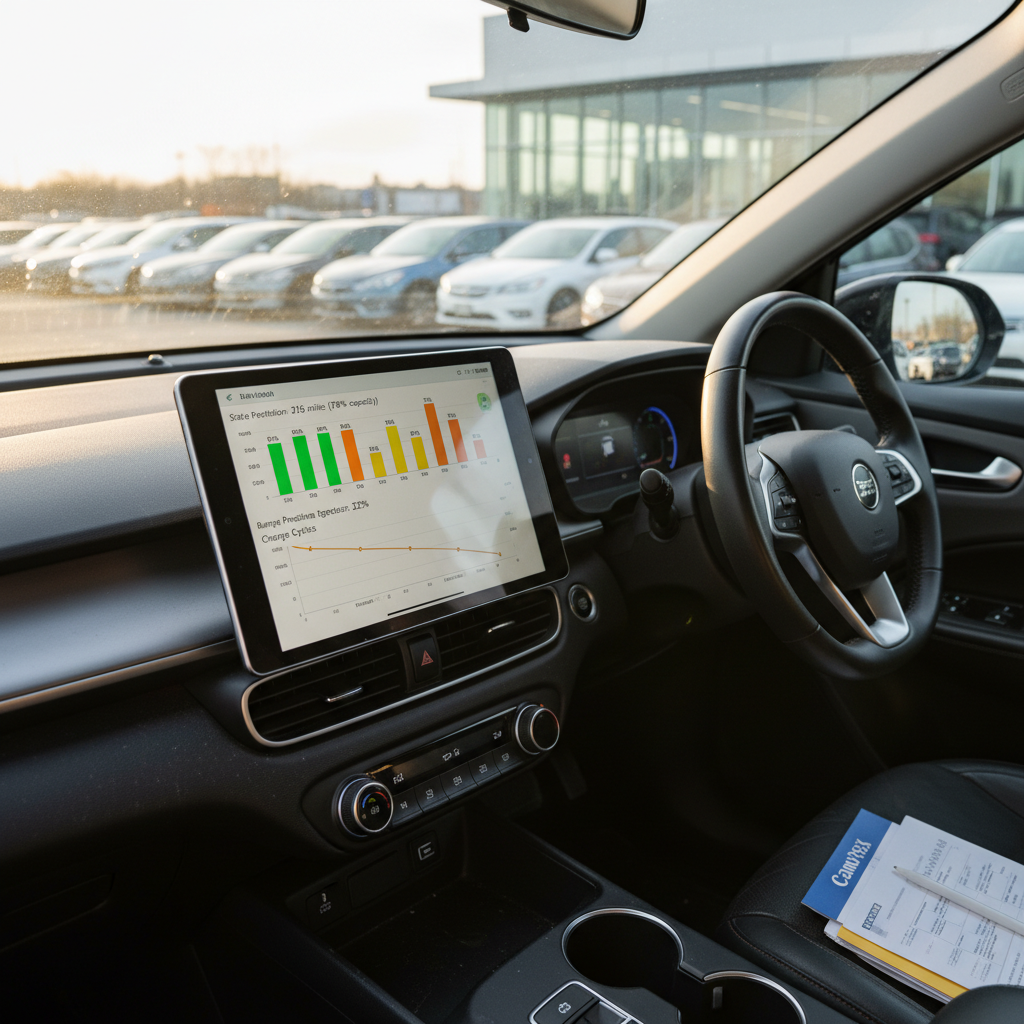
On a used EV, the high‑voltage battery is the whole ballgame. A car that left the factory with 250 miles of range but can only reliably deliver 140 miles in winter might be fine for a short‑hop campus, but a disaster for a student who drives 200 miles home once a month.
How to sanity‑check battery health before you buy
1. Look at real‑world range, not just the old window sticker
Ask the seller what range they actually see at 80–100% charge in mixed driving. Compare that to the original EPA rating, 30–40 miles of loss on an older EV can be normal; huge gaps may signal trouble or a mismatch with your needs.
2. Review battery warranty status
Many EV batteries carry 8‑year or 100,000‑mile warranties for capacity loss. Check the in‑service date and mileage; a car with several years of coverage left is a safer bet for a student.
3. Get a professional battery health report
A proper diagnostic can reveal usable capacity, cell balance, and any error codes. Recharged includes a <strong>Recharged Score</strong> battery assessment so you’re not buying on faith.
4. Avoid extreme‑use histories
Fleet cars that fast‑charged daily in hot climates can age faster. Prefer vehicles with mixed home/public charging and service records from temperate areas.
Why guessing on battery health is risky for students
Financing and paying for a used EV
In 2026, the federal used‑EV tax credit has effectively sunset for vehicles bought after September 30, 2025, so you can’t count on a $4,000 federal rebate to make the numbers work. Some states and utilities still offer smaller incentives or discounted charging, but the main levers you control now are price, down payment, and financing terms.
Ways students and parents commonly structure payment
There’s no single “right” answer, just what fits your risk tolerance and cash flow.
Traditional auto loan
Good for: Families with stable income who want predictable payments.
- Spread cost over 3–6 years.
- Try to keep total payment (car + insurance) under 10–15% of monthly take‑home.
Parent‑backed loan or co‑sign
Good for: Building the student’s credit history.
- Parents co‑sign or finance and have the student repay monthly.
- Spells out responsibility without trapping the student in high‑rate financing.
Cash + small loan
Good for: Families with some savings who want flexibility.
- Pay a big chunk upfront to reduce payment.
- Leaves room in the budget for surprises like travel, laptops, or internships.
How Recharged can help with financing
Step‑by‑step checklist for parents and students
Your 10‑step plan to buy a used EV for college
1. Map the student’s actual driving needs
List weekly miles to class, work, and activities, plus how often they’ll drive home. This prevents over‑ or under‑buying on range.
2. Audit campus and home charging
Check campus maps, local public chargers, and whether home housing can support Level 1 or Level 2 charging.
3. Set a hard all‑in budget
Include the car price, taxes, estimated insurance, and a small annual reserve for maintenance and parking tickets.
4. Shortlist 3–5 models
Use this guide and tools like Recharged’s search filters to narrow down to a few EVs that fit budget, range, and size.
5. Get insurance quotes by VIN
Before you sign anything, get real quotes on the exact cars you’re considering. Teslas and larger SUVs can surprise you.
6. Review battery health and warranties
Prioritize cars with strong battery capacity remaining and warranty coverage that will last at least a few school years.
7. Test‑drive in campus‑like conditions
If possible, drive in city traffic and tight parking, exactly how a student will use the car most days.
8. Decide who “owns” responsibility
Agree in writing who pays for what: payment, insurance, tickets, charging, and damage. Clarity now avoids conflict later.
9. Close the deal digitally if needed
If your student is out of state, use a digital‑first retailer like Recharged to handle paperwork, financing, and delivery to campus or home.
10. Do a charging and safety dry‑run
Before semester starts, practice charging, mapping chargers, changing a tire, and what to do if something goes wrong.
Frequently asked questions about used EVs for college students
Student & parent FAQs
Bottom line: Is a used EV right for your student?
A used EV for a college student can be a quietly brilliant choice: safe, simple, cheap to run, and aligned with the world they’re inheriting. The mistakes happen when families shop on brand hype or range numbers alone instead of starting with the basics, how the student actually lives, where they’ll charge, and what they can truly afford.
If you match an honest budget to the right model, verify battery health, and think through charging logistics, your student doesn’t just get a car; they get one less daily stressor. And if you’d rather not play battery detective on your own, Recharged can help you compare used EVs, understand true ownership costs, and deliver a vetted car to your driveway, or your student’s campus, without turning move‑in week into a full‑time car‑shopping job.