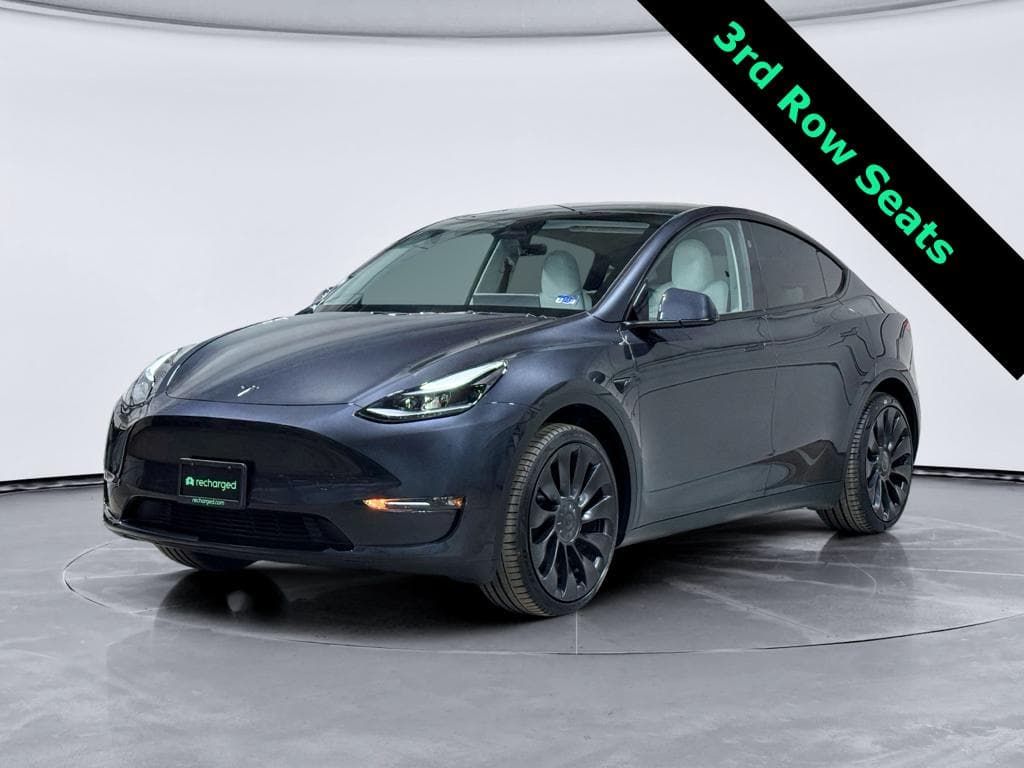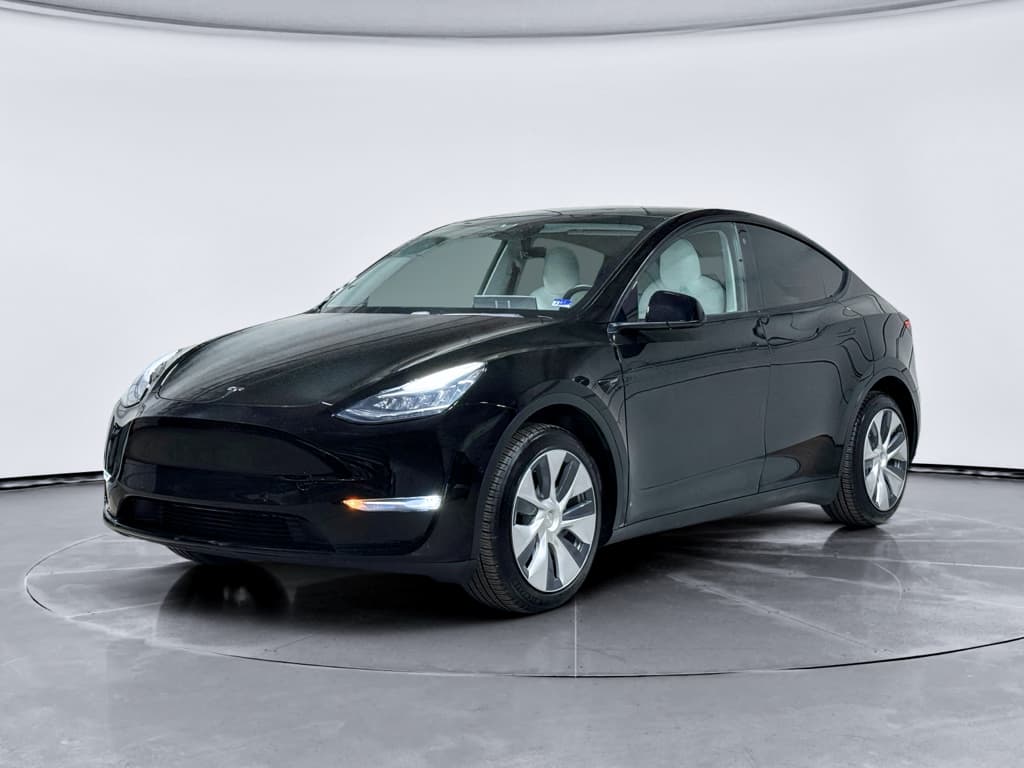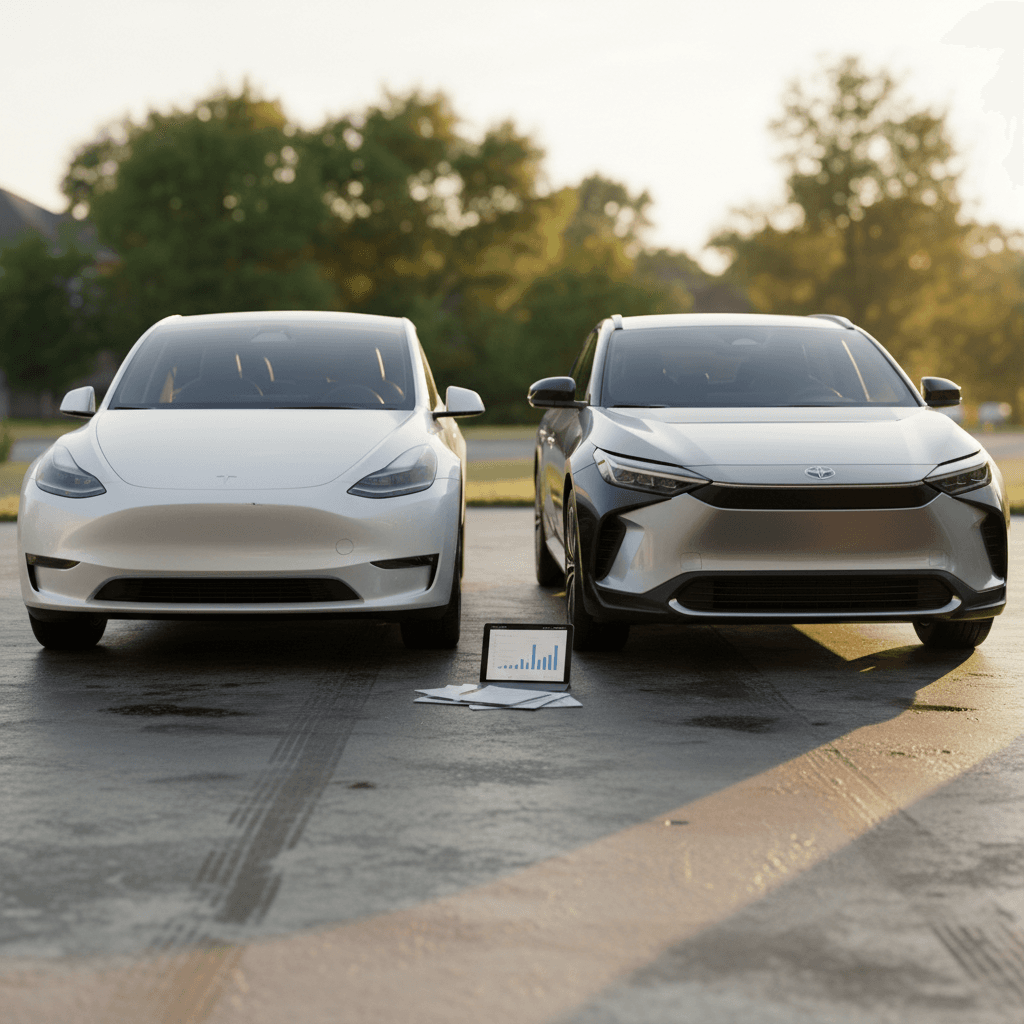
If you’re shopping the used EV market in 2026, it’s almost inevitable: you’ll end up comparing a used Tesla Model Y vs Toyota bZ4X. Both are compact electric SUVs with room for the family and a hatch for weekend gear, but they come from very different schools of thought. One leans hard into software and Superchargers; the other leans on Toyota’s reputation for durability and calm, predictable manners.
What this guide covers
Overview: Used Model Y vs bZ4X in 2026
On paper, the Tesla Model Y is the performance and range champ. Even earlier Long Range trims deliver roughly 300 miles of EPA-rated range and brisk acceleration. The Toyota bZ4X is more modest: front‑wheel‑drive examples are rated up to the low‑250‑mile range, with all‑wheel‑drive closer to the 220s. But that doesn’t tell the whole story for a used buyer.
By 2026, Tesla’s Supercharger network is well established, and most used Model Ys can tap into thousands of fast chargers with simple plug‑and‑go convenience. The bZ4X relies on the broader CCS fast‑charging ecosystem, which has improved but remains more fragmented, and early bZ4Xs were criticized for conservative fast‑charge curves and underwhelming highway efficiency.
Quick advice
At a Glance: Who Each SUV Fits Best
Which Used EV SUV Matches Your Life?
Match your driving style and priorities to the right vehicle.
Used Tesla Model Y is best if…
- You drive longer distances and want 280–320 miles of rated range on many trims.
- You’ll lean heavily on DC fast charging and value the Supercharger network’s reliability.
- You like a tech‑heavy cabin and frequent over‑the‑air updates.
- You’re okay with service that’s more app‑based than dealer‑based.
Used Toyota bZ4X is best if…
- You mainly drive around town and suburbs with modest road‑trip needs.
- You value a calm ride, simple controls, and Toyota build quality.
- You prefer a traditional dealer network for service and warranty work.
- You’re okay with less range and slower fast‑charging in exchange for a more conservative, familiar feel.
Key Specs: Used Tesla Model Y vs Toyota bZ4X
Core Specs for Common Used Trims (U.S. Market)
Approximate headline specs you’re likely to see on 2023–2025 used listings. Always verify exact trim and equipment on the individual car.
| Spec | Used Tesla Model Y (Long Range / AWD) | Used Toyota bZ4X (FWD / AWD) |
|---|---|---|
| EPA-rated range | ~279–330 miles depending on year and wheels | FWD: up to ~252 miles; AWD: ~222–228 miles |
| Battery size (usable, approx.) | ~75–82 kWh on most AWD trims | FWD: ~63–66 kWh; AWD: ~71–73 kWh |
| 0–60 mph | ~4.4–4.8 seconds (Long Range AWD), ~3.5s Performance | ~6.0–6.5 seconds depending on FWD vs AWD |
| Max DC fast charge rate | Up to ~250 kW on many trims | Up to ~150 kW FWD, ~100–150 kW on various AWD versions |
| Onboard AC charger | Up to 11 kW on most U.S. cars | 6.6–11 kW early years; some 2026‑era trims up to ~22 kW AC in other markets |
| Drive type options | RWD, AWD, Performance AWD | FWD or AWD |
| Seating | 5 seats (older), some 7‑seat 3‑row configurations | 5 seats |
| Fast‑charge connector (U.S.) | NACS (Tesla plug), many now support non‑Tesla charging with adapters | CCS1 (moving toward NACS on newer 2026‑era Toyotas) |
Figures are representative, not VIN‑specific. Look at the window sticker or listing details for precise specs.
Specs vary by year and trim
Range and Efficiency on Real Roads
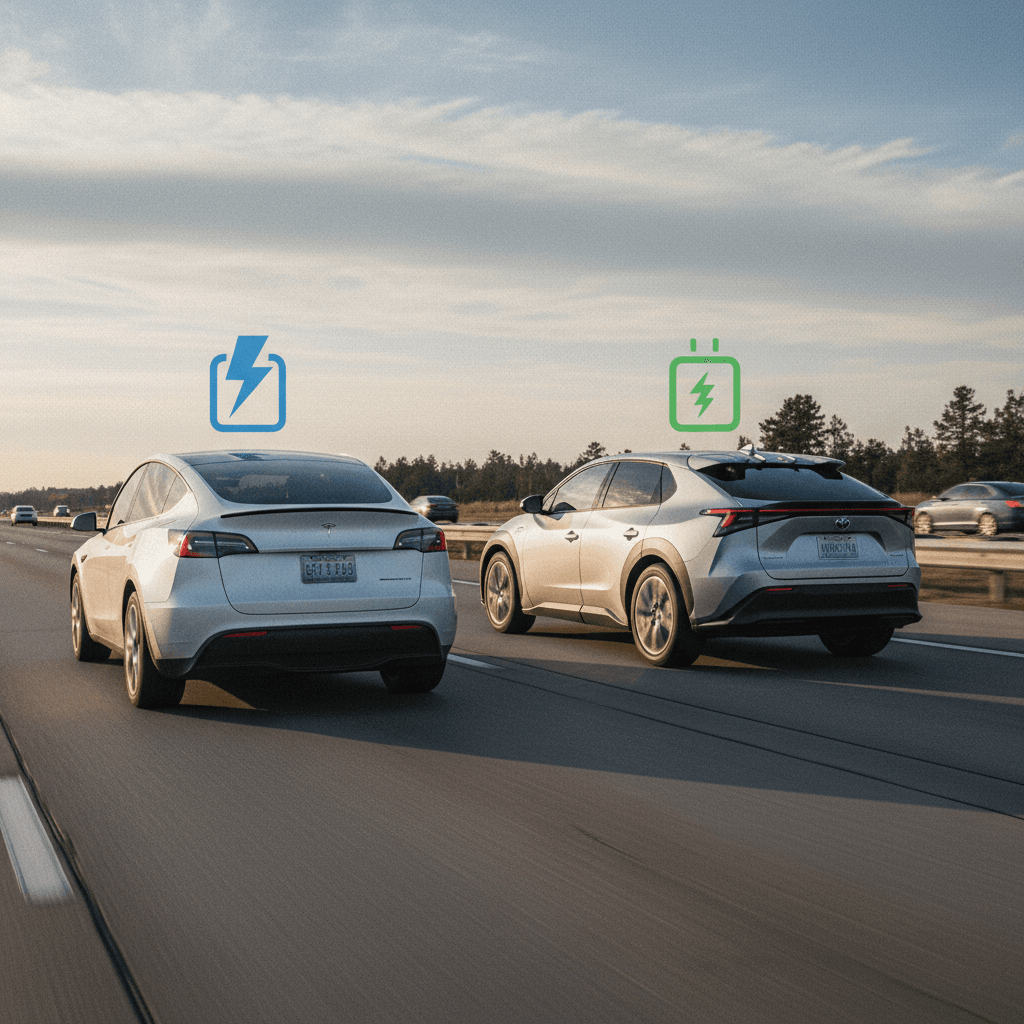
In the real world, a used Model Y Long Range will typically deliver more highway range than a bZ4X, even after a few years of use. Owners routinely report 260–280 miles at 70 mph with climate control running, assuming healthy tires and moderate temperatures. Tesla has also been refining aerodynamics and software; refreshed 2025–2026 cars are a bit more efficient than earlier years, though some EPA numbers have been adjusted under newer testing rules.
The Toyota bZ4X has always been more of a city and suburban specialist. Its official ratings, roughly 252 miles FWD and low‑220s for AWD, can be achievable in mixed driving, but extended 75‑mph highway stints, cold weather, or big elevation changes can knock that down faster than in a Model Y. Early independent testing often showed the bZ4X coming up short of its paper range on high‑speed trips, especially in AWD form.
How to sanity‑check real range on a used EV
Charging Speed, Plugs, and Road-Trip Ease
Tesla Model Y: Supercharger advantage
- Most used Model Ys in the U.S. use the NACS connector and plug directly into Tesla’s Superchargers.
- Many locations support high peak rates (around 250 kW), but the more important story is consistency and density of the network.
- The in‑car trip planner routes you through Superchargers and preconditions the battery to arrive at the right temperature for faster charging.
- By 2026, more non‑Tesla networks are adding NACS cables, and adapters are becoming common, so a used Model Y can tap into both worlds.
Toyota bZ4X: CCS today, NACS tomorrow
- Used bZ4X models up through 2025 primarily use the CCS1 connector in the U.S.
- Peak DC speeds are lower than Tesla, and early AWD versions especially were conservative about sustaining high charge rates.
- Your road‑trip experience depends heavily on the quality of the local CCS networks (Electrify America, EVgo, etc.).
- Later 2026‑era Toyotas move toward NACS, improving access, but those cars are just starting to trickle into the used market.
Fast‑charging expectations check
Battery Health and Degradation on the Used Market
Tesla has millions of vehicles on the road now, and the pattern we see on used Model Ys is fairly consistent: the first 5–10% of battery capacity often disappears in the early years, then the curve tends to flatten. A well‑cared‑for 2021–2023 Long Range typically still has the vast majority of its original range in 2026, but abusive fast‑charging habits or extreme climates can absolutely shave more off.
The bZ4X doesn’t have the same long track record yet, but Toyota has been conservative with its thermal management and charge rates, exactly the kind of decisions that protect battery longevity. Early bZ4Xs that have lived normal commuter lives often show modest degradation, and Toyota backs the pack with its usual long EV battery warranty. The trade‑off is that you never had huge range to begin with, so every lost mile stings a bit more.
What Matters Most for a Used EV Battery in 2026
Where Recharged helps on battery health
Ready to find your next EV?
Browse VehiclesReliability, Recalls, and Everyday Ownership
Tesla and Toyota bring very different reputations to the table. Toyota has built its business on cars that feel like appliances in the best possible way, start, drive, repeat for decades. The bZ4X stumbled with an early wheel‑hub recall, but that was quickly resolved, and the underlying platform has so far behaved like a typical Toyota: conservative software, robust hardware, and a dealer network that knows how to process a warranty claim.
The Model Y, by contrast, is more of a fast‑moving software product. You’re trading some traditional dealership stability for the ability to wake up to new features and tweaks after an overnight update. Fit and finish on earlier builds can be hit‑or‑miss, panel gaps, wind noise, interior squeaks, but the core powertrain has generally been strong. Service is app‑driven: mobile techs for many repairs, and service centers that can be busy depending on where you live.
Don’t ignore recalls and software history
Interior, Tech, and Driving Feel
Inside and behind the wheel of a used Model Y
- Cabin feel: Minimalist to a fault for some drivers, almost everything runs through the central touchscreen.
- Tech: Over‑the‑air updates, advanced driver‑assistance, slick navigation, and entertainment features baked in.
- Drive character: Quick, sometimes very quick. Instant torque, firm but controlled ride, and strong regen make it feel more like a sporty hatchback than a traditional SUV.
- Noise and comfort: Later years improved sound insulation and ride quality; earlier cars can feel a bit busier over rough pavement.
Inside and behind the wheel of a used bZ4X
- Cabin feel: More conventional controls, with physical buttons for core functions and a calmer design language.
- Tech: Toyota’s newer infotainment system is better than earlier efforts, but it’s not as fluid as Tesla’s UI. Apple CarPlay and Android Auto help a lot.
- Drive character: Softer, more relaxed tuning. It’s comfortable and easy to drive, but not particularly quick or sporty.
- Noise and comfort: Around town, the bZ4X is serene. On the highway, wind and road noise are well‑managed but the shorter range means more frequent stops.
Family and cargo duties
Used Prices, Depreciation, and Total Costs
By 2026, used EV pricing has settled into more predictable patterns. The Model Y has been one of the most common EVs on U.S. roads, which means there’s a lot of inventory, from high‑mileage rideshare cars to lightly used family crossovers. That volume tends to push asking prices down, and projections show Model Y depreciation sitting in the low‑40% range at five years in many scenarios, depending on trims and market swings.
The bZ4X is rarer on dealer lots and in private listings. Toyota’s brand strength and lower initial sales volume have helped it hold value slightly better so far, with some projections putting it in the mid‑40% depreciation range at five years. That means you may pay a little more for a comparable‑age bZ4X relative to its original MSRP, but your resale a few years down the road could also be steadier.
Cost Factors to Compare on Any Individual Car
Don’t just look at the sticker. Look at the story behind it.
Purchase price
Incentives & financing
Running costs
How Recharged Simplifies Buying Either SUV Used
Buying a used EV doesn’t have to mean decoding numbers and seller stories on your own. Recharged was built specifically for used electric vehicles, with tools and people who live and breathe this stuff. Every used Tesla Model Y or Toyota bZ4X on the platform comes with a Recharged Score Report, showing battery health, pricing vs market, and a transparent condition overview.
You can browse and buy completely online, get EV‑savvy financing, or even bring your current car as a trade‑in or instant‑offer candidate. If you’d rather kick the tires in person, Recharged operates an Experience Center in Richmond, VA, where you can talk through whether a Model Y or bZ4X better fits your commute, climate, and budget. Nationwide delivery means the right car doesn’t have to be in your zip code to be in your driveway.
One platform, both directions
Checklist: How to Choose Between a Used Model Y and bZ4X
Used Tesla Model Y vs Toyota bZ4X: Buyer’s Checklist
1. Map your real range needs
Write down your longest typical day, commute, errands, kid pickups, and your longest regular road trip. If your daily pattern fits easily inside <strong>180–200 miles</strong>, either SUV can work. If you regularly knock out 250–300‑mile stints, the Model Y’s extra range and faster charging are worth paying for.
2. Decide how often you’ll DC fast‑charge
If you only fast‑charge a handful of times per year, the bZ4X’s more conservative fast‑charging is less of a penalty. If you rely on fast‑charging every week or you road‑trip often, favor a <strong>Model Y</strong> and verify it has access to the latest Supercharger and public‑network options.
3. Think about who will service the car
Are you comfortable booking service through an <strong>app‑based system</strong> and waiting for mobile techs or a Tesla service center? Model Y. Do you want a <strong>traditional dealer service department</strong> nearby that looks like every other Toyota store? bZ4X.
4. Check battery health, not just miles
A low‑mileage EV is not automatically a healthy EV. Use tools like the <strong>Recharged Score battery diagnostic</strong> to see usable capacity, then ask how the previous owner charged and stored the car.
5. Compare total ownership cost, not payment alone
Look at insurance quotes, estimated charging costs, and projected resale, not just the monthly payment. A slightly more expensive Model Y might pay you back in energy savings and flexibility if you drive a lot of highway miles.
6. Drive both if you can
Numbers are one thing; how a car feels is another. If possible, <strong>test‑drive both</strong>. Some buyers fall in love with the Model Y’s shove and big‑screen tech; others immediately relax into the bZ4X’s quieter, more traditional vibe.
FAQ: Used Tesla Model Y vs Toyota bZ4X in 2026
Frequently Asked Questions
Bottom Line: Which One Should You Buy?
If you strip away badges and brand loyalties, the pattern is pretty clear. A used Tesla Model Y is the better tool for drivers who cover serious miles, want the most robust fast‑charging story in 2026, and don’t mind living in a software‑first, minimalist cabin. A used Toyota bZ4X suits drivers who mostly live in the city or suburbs, prefer a calmer, more traditional driving experience, and trust Toyota’s conservative engineering, and who can live with less range and slower fast‑charging.
The real decision happens not on a spec sheet, but when you compare two actual used SUVs side by side: their battery health, their service history, their price, and how they fit your life. That’s where Recharged comes in, with verified battery diagnostics, transparent pricing, EV‑savvy financing, and experts who will help you choose the right answer for you, whether that’s a Model Y, a bZ4X, or something else entirely.