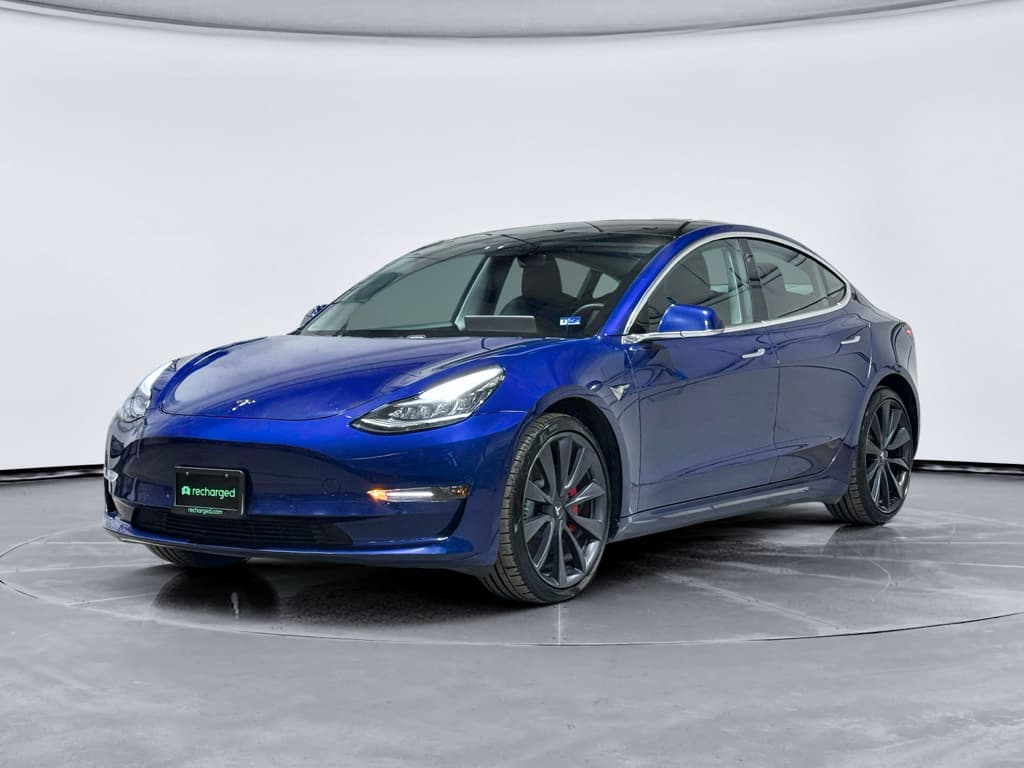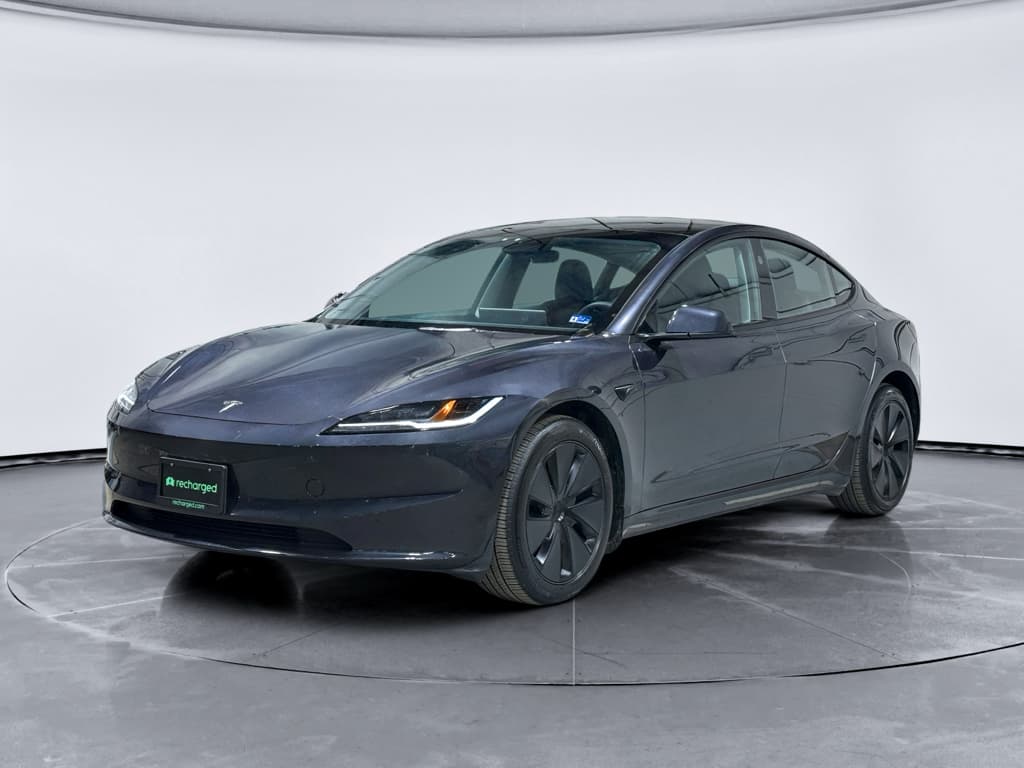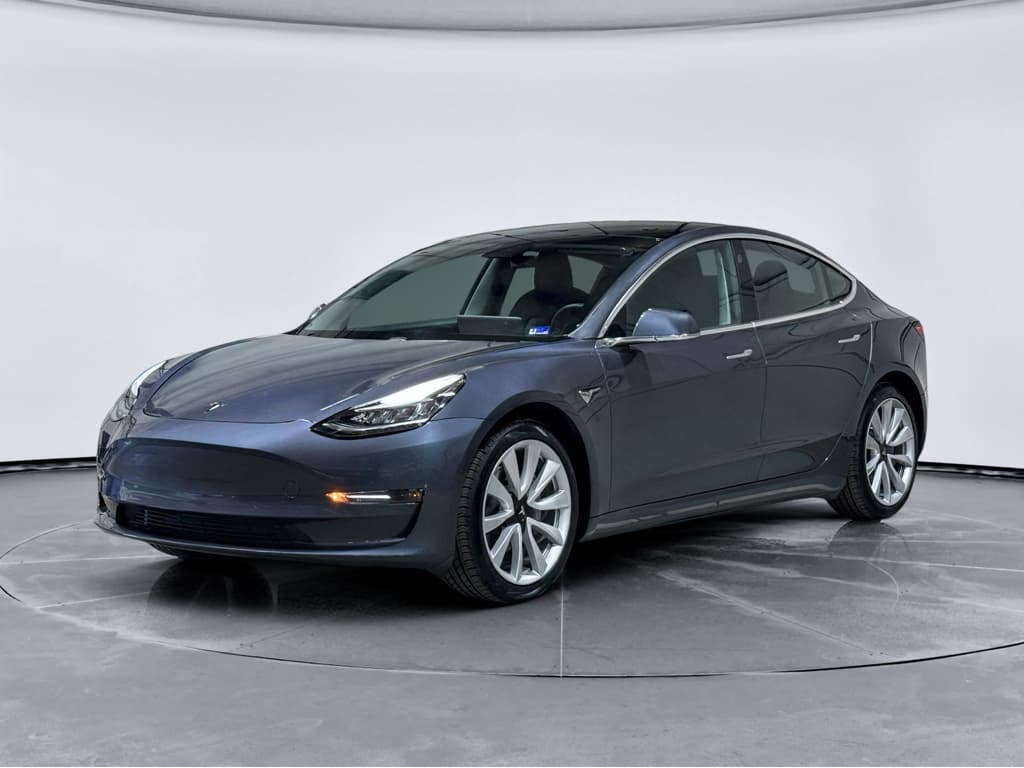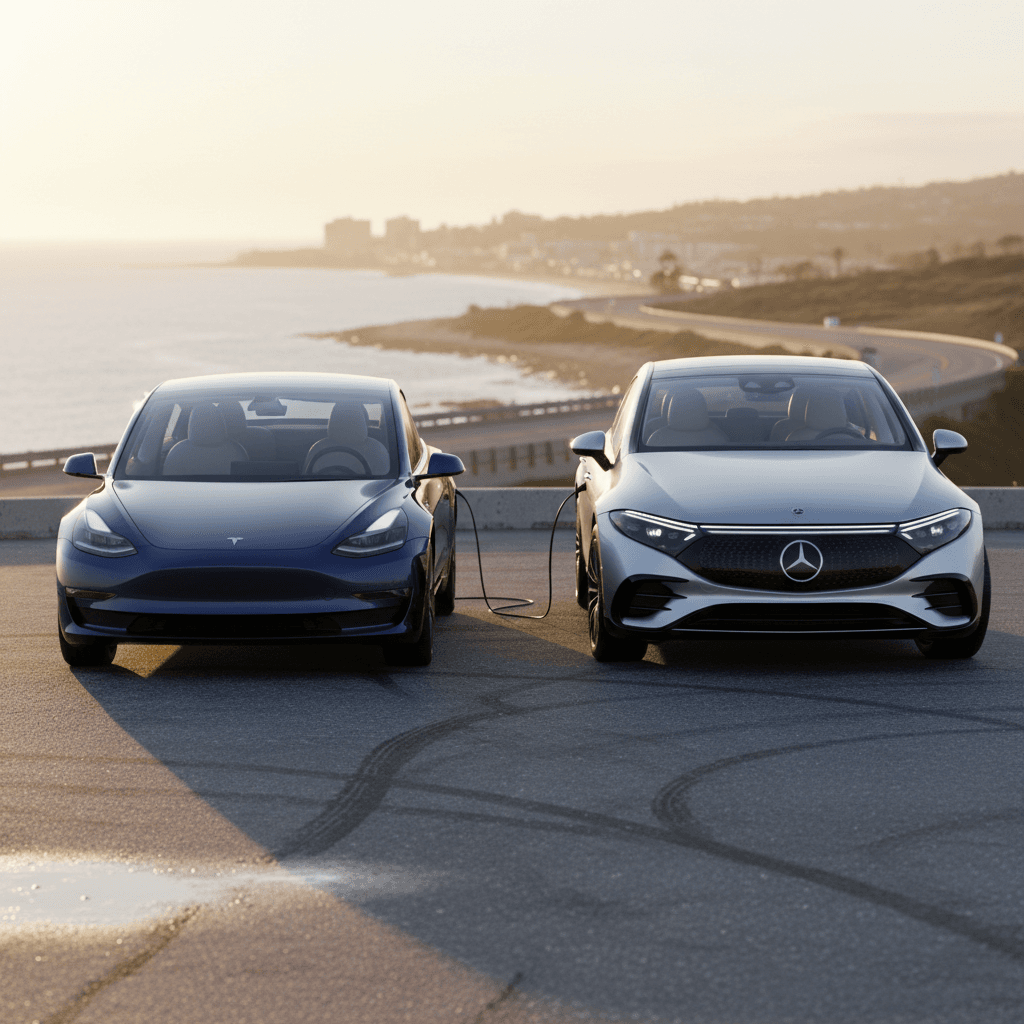
If you’re cross‑shopping the Tesla Model 3 vs Mercedes EQE, you’re really deciding between two very different visions of what an electric sedan should be. One is a compact, efficiency‑obsessed tech product; the other is a midsize luxury car that just happens to be electric. The real question isn’t which is “better” in a vacuum, it’s which fits your budget, driving habits and expectations for comfort and tech.
Two classes, one decision
Overview: Tesla Model 3 vs Mercedes EQE
Tesla Model 3: The efficiency and tech play
- Compact sport sedan footprint, very efficient and light.
- Strong real‑world range and access to Tesla’s Supercharger network.
- Minimalist interior, great software, but not traditional luxury.
- Typically lower purchase price and running costs.
Mercedes EQE: The comfort and luxury play
- Midsize luxury sedan with S‑Class vibes in an EV package.
- Large 90+ kWh battery, solid range, but heavier and less efficient.
- High‑end materials, quiet ride and more traditional controls.
- Higher original MSRP, but steep depreciation on the used market.
Quick answer: Which EV is better for you?
Who each car is best for
Match the car to your priorities, not the badge
Pick Tesla Model 3 if…
- You want maximum range per dollar and low running costs.
- Access to the Supercharger network matters for road trips.
- You prefer simple, app‑first tech over physical buttons.
- You’re okay with a firmer ride and compact rear seat.
Pick Mercedes EQE if…
- You want a true luxury sedan experience with a quiet, plush cabin.
- Most of your driving is commuting and city/highway cruising, not 500‑mile days.
- You value a three‑pointed star, dealer network and traditional controls.
- You’re comfortable with higher purchase price and insurance costs.
What most shoppers find
- Value hunters and heavy‑milers usually end up in a Model 3.
- Comfort‑first drivers and brand‑loyal Mercedes owners gravitate to EQE.
- On the used market, a well‑priced EQE can be a bargain luxury upgrade, if you understand range, warranty and charging trade‑offs.
Recharged takeaway
Pricing, depreciation and total cost
New, these cars lived in completely different universes. A 2024 Tesla Model 3 in the U.S. typically started in the high‑$30,000s to low‑$40,000s depending on trim, while the 2024 Mercedes‑Benz EQE sedan carried base MSRPs around $74,900 to mid‑$80,000s before options. That gap is why depreciation is so important: luxury EVs like the EQE have fallen much harder on the used market than the Model 3.
How the money side stacks up
Model 3 vs EQE: Price and cost snapshot
Approximate U.S. pricing and cost themes for late‑model cars as of early 2025. Real‑world used prices vary by mileage, trim, options and local demand.
| Aspect | Tesla Model 3 | Mercedes EQE |
|---|---|---|
| Original new MSRP (typical 2024 range) | High $30Ks–mid $50Ks depending on trim | ≈$74,900–$85,000+ depending on trim |
| Used pricing (common retail range) | ≈$25,000–$40,000 | ≈$40,000–$60,000 |
| Depreciation pattern | More moderate; strong demand supports values | Steep early depreciation common for luxury EVs |
| Energy efficiency | Very high (low kWh per mile) | Lower efficiency, higher energy use per mile |
| Insurance (typical) | Often lower than comparable luxury EVs | Luxury badge and repair costs can raise premiums |
The Mercedes EQE starts from a much higher MSRP, but steeper depreciation can narrow the gap in the used market.
Where Recharged fits in
Range, charging and road‑trip ability
On paper, both cars offer solid range. In practice, the Tesla Model 3’s efficiency and its privileged access to the Supercharger network make it a much easier road‑trip companion in most of the U.S. The EQE carries a big battery and competitive EPA ranges, but it’s heavier, less efficient, and relies on a patchwork of third‑party fast‑charging networks unless you’re using a newer Tesla‑compatible adapter.
Range and charging: How they differ
EPA estimates vary by trim; here’s the general picture
Tesla Model 3
- Recent Long Range trims advertise roughly 340+ miles of EPA range when new.
- Excellent efficiency: you use fewer kWh per mile than in most midsize luxury EVs.
- Direct, native access to the Tesla Supercharger network for DC fast charging.
- Home charging is straightforward with Tesla’s Wall Connector or a Level 2 charger.
Mercedes EQE
- Typical EPA range in the 225–279 mile window depending on EQE trim and wheel/tire setup.
- Large 90+ kWh battery helps support range, but added weight cuts efficiency.
- Uses CCS fast‑charging; access quality depends on local networks and reliability.
- Increasing access to Tesla Superchargers via adapters and NACS adoption, but not as seamless as a native Tesla yet.
Real‑world road‑trip reality
Comfort, space and interior experience
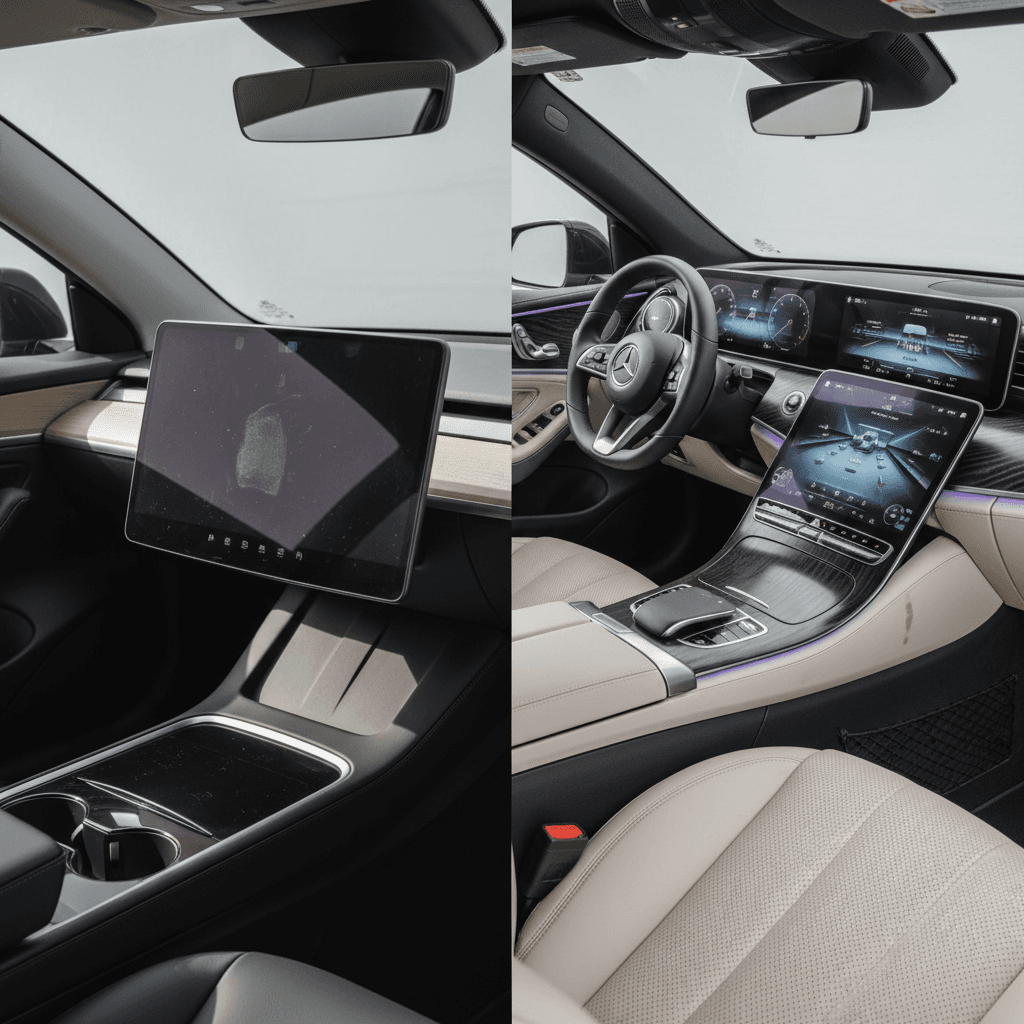
This is where the Mercedes EQE pushes back hard. The Model 3’s cabin is clean and modern, but it’s still a compact sedan. The EQE is a true midsize luxury car: more rear‑seat space, more sound insulation, richer materials and a driving experience tuned to feel like a quiet, electric E‑Class.
Tesla Model 3 interior
- Clean, minimalist design with a single central touchscreen for nearly everything.
- Supportive front seats; rear seat space is adequate but tight for taller adults on long trips.
- Cabin can feel firm and a bit noisy over rough pavement compared with German luxury sedans.
- Storage is clever (front trunk, deep center console), but overall footprint remains compact.
Mercedes EQE interior
- Classic Mercedes luxury: thick steering wheel, ambient lighting, high‑end materials.
- More rear legroom and shoulder room, better for regular adult passengers.
- Quieter, softer ride, especially on highway cruises; heavier car feels more substantial.
- Optional Hyperscreen and advanced seat features make it feel like a rolling lounge.
Cabin personality check
Performance and driving character
Both cars are quick compared with most gas sedans, but they go about it differently. The Model 3 skews sport‑sedan: light on its feet, eager to change direction, and genuinely fun on the right back road. The EQE feels like a heavier, more relaxed grand tourer, even in more powerful trims, its default mission is comfort, not lap times.
Model 3 vs EQE: Performance themes
Ballpark specs and driving impressions. Exact numbers vary by trim and model year.
| Aspect | Tesla Model 3 (typical) | Mercedes EQE (typical) |
|---|---|---|
| 0–60 mph | Mid‑5s down to low‑3s depending on trim | ≈3.2–6.2 seconds across EQE lineup |
| Driving feel | Light, agile, almost playful; firm ride in some trims | Substantial, planted, tuned for smoothness over sharp responses |
| Steering | Quick and direct, some drivers find it a bit numb | Heavier, relaxed steering, fits luxury character |
| Braking/regen | Strong regen options, mostly controlled via screen | Good regen as well, integrated with drive modes |
| Best use case | Daily commuting, spirited drives, efficient road trips | Comfort‑biased highway cruiser and luxury commuter |
Model 3 leans sporty efficiency; EQE leans effortless luxury speed.
Test‑drive advice
Tech, safety and driver assistance
Both brands lean heavily on software, but their philosophies differ. Tesla pushes over‑the‑air updates, minimalist controls and a camera‑heavy approach to driver assistance. Mercedes blends digital features with more traditional ergonomics, physical buttons for key functions and a suite of advanced safety aids that feel familiar if you’ve driven recent Mercedes models.
Software and safety: Where each car shines
Modern EVs are defined as much by code as by kilowatts
Tesla Model 3 tech
- OTA updates regularly tweak range, features and interface, keeping the car feeling fresh.
- Large central screen controls almost everything, including wipers and mirrors.
- Strong app experience for climate pre‑conditioning, charge control and trip planning.
- Autopilot and optional enhanced driver‑assist features are capable but can feel assertive and require driver trust.
Mercedes EQE tech
- MBUX infotainment with voice assistant and optional Hyperscreen for a dramatic cockpit feel.
- More physical controls for climate and key driving functions, which some buyers prefer.
- Comprehensive driver‑assist suite (adaptive cruise, lane‑keep, blind‑spot, etc.) tuned for smooth interventions.
- OTA capability exists but updates tend to be more conservative than Tesla’s frequent tweaks.
Driver‑assist is not self‑driving
Used‑market reality: Model 3 vs EQE
On the used market, the gap between these cars narrows in surprising ways. A well‑specced used EQE that was $80,000 new can sometimes be cross‑shopped with a newer, well‑equipped Model 3. That creates real opportunity, but only if you understand battery health, warranty and how these cars age.
Used Tesla Model 3
- Large supply, from early 2018 cars to fresh off‑lease examples.
- Generally strong demand keeps values healthier than many luxury EVs.
- Common used‑EV concerns: suspension wear, cosmetic issues, infotainment glitches, and normal battery degradation.
- Plenty of third‑party data on reliability and owner satisfaction, plus a strong independent‑shop ecosystem.
Used Mercedes EQE
- Smaller supply but often steep discounts vs original MSRP.
- Luxury features (air suspension, complex electronics) add comfort but can raise long‑term repair risk and cost out of warranty.
- Battery and high‑voltage components are engineered for longevity, but real‑world data is still maturing compared with Model 3.
- Dealer network familiarity with Mercedes products can be a plus, though labor rates are typically higher than independent EV shops.
How Recharged helps used‑EV shoppers
Ready to find your next EV?
Browse VehiclesChecklist: How to choose between Model 3 and EQE
Practical steps before you decide
1. Be honest about budget and total costs
Look beyond the purchase price. Estimate insurance, charging costs, tires and potential out‑of‑warranty repairs. A cheaper‑feeling Model 3 can be wiser financially than a heavily optioned EQE you have to stretch for.
2. Map your real driving pattern
If you regularly road‑trip across multiple states, the Model 3 plus Superchargers is the easy button. If most of your driving is 30–60 miles a day with occasional longer journeys, either car will cover it, so comfort can dominate your decision.
3. Decide how much luxury matters
Sit in both cars back‑to‑back. Pay attention to seat comfort, noise levels, rear‑seat space and how intuitively you can use the controls. If the EQE’s cabin makes you relax every time you close the door, that might be worth paying for.
4. Evaluate charging access where you live
Check fast‑charging stations around your home, work and regular routes. Tesla has a clear edge today, but if your area has strong CCS coverage (or Tesla access via adapters), the EQE’s charging limitations shrink.
5. Look closely at battery health and warranty
Ask for battery‑health data, remaining factory warranty and any high‑voltage‑system repairs. Tools like the <strong>Recharged Score</strong> streamline this step so you’re not guessing about the most expensive component in the car.
6. Test drive on your worst‑case road
Find the stretch of pavement you hate most: expansion joints, patched asphalt, rough city streets. Drive both cars over it. The way they handle that road, noise, comfort, body control, will tell you which one you’ll be happier living with every day.
FAQ: Tesla Model 3 vs Mercedes EQE
Frequently asked questions
Bottom line: Tesla Model 3 vs Mercedes EQE
If you strip away the badges and ask which car will be easier and cheaper to live with for most drivers, the Tesla Model 3 comes out ahead. It’s more efficient, simpler to fast‑charge across the U.S., and typically carries lower total ownership costs, especially if you pile on miles each year. That combination, plus healthy used supply, makes it the pragmatic choice for a wide slice of EV shoppers.
But if you step back and ask which feels like a proper luxury sedan, the Mercedes EQE makes its case quickly. It’s quieter, roomier, and wrapped in the kind of cabin that makes long drives feel shorter. On the used market, heavy depreciation can put that experience closer to Model 3 money than you might expect, as long as you go in with clear eyes about warranty, battery health and potential repair costs.
Ultimately, the answer to “Tesla Model 3 vs Mercedes EQE: which is better?” comes down to priorities. If you want the most EV for your dollar, the strongest charging ecosystem and minimal headaches, start with the Model 3. If you’re willing to trade some efficiency and simplicity for comfort, presence and a true luxury feel, a carefully chosen EQE can be a smart, satisfying upgrade, especially when paired with the kind of battery‑health transparency and pricing data you get from a Recharged Score Report.