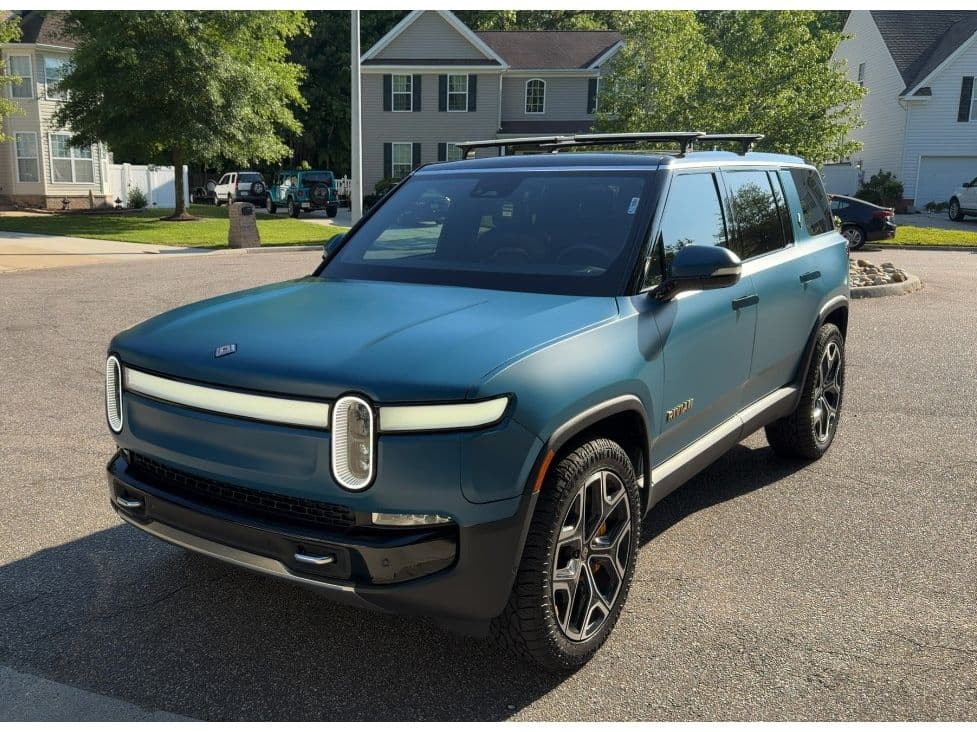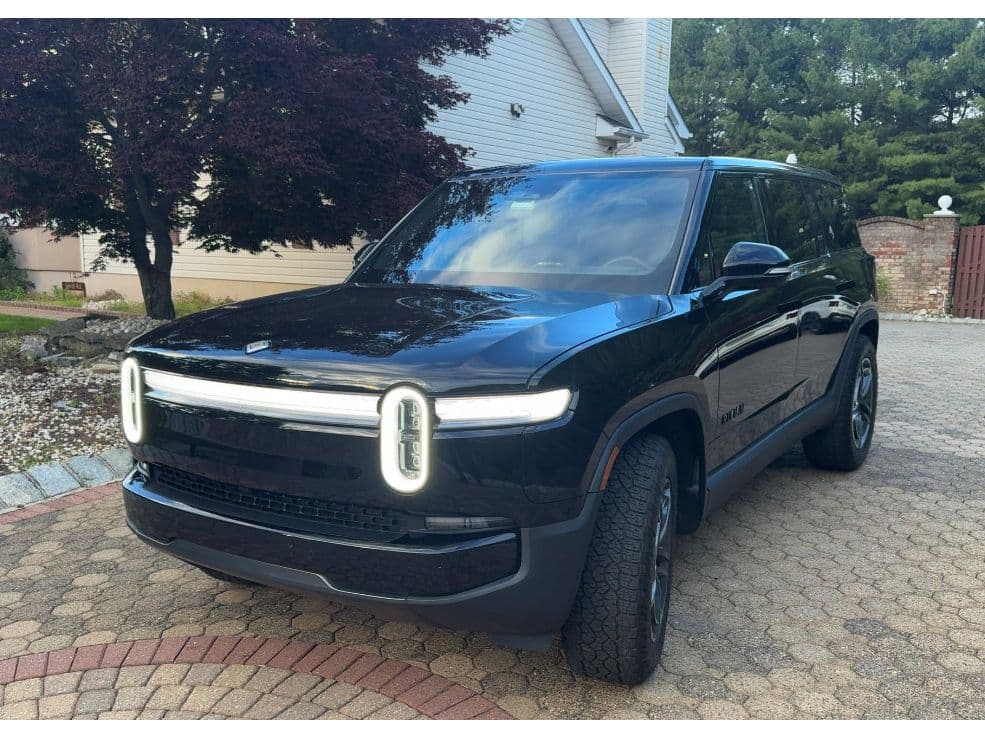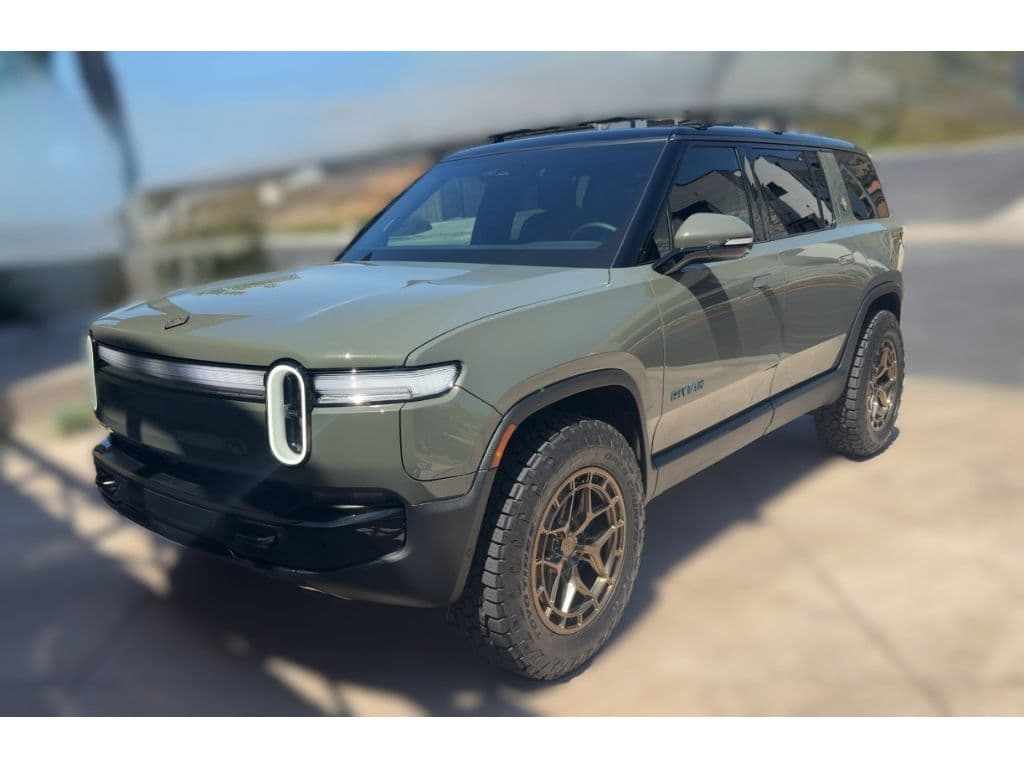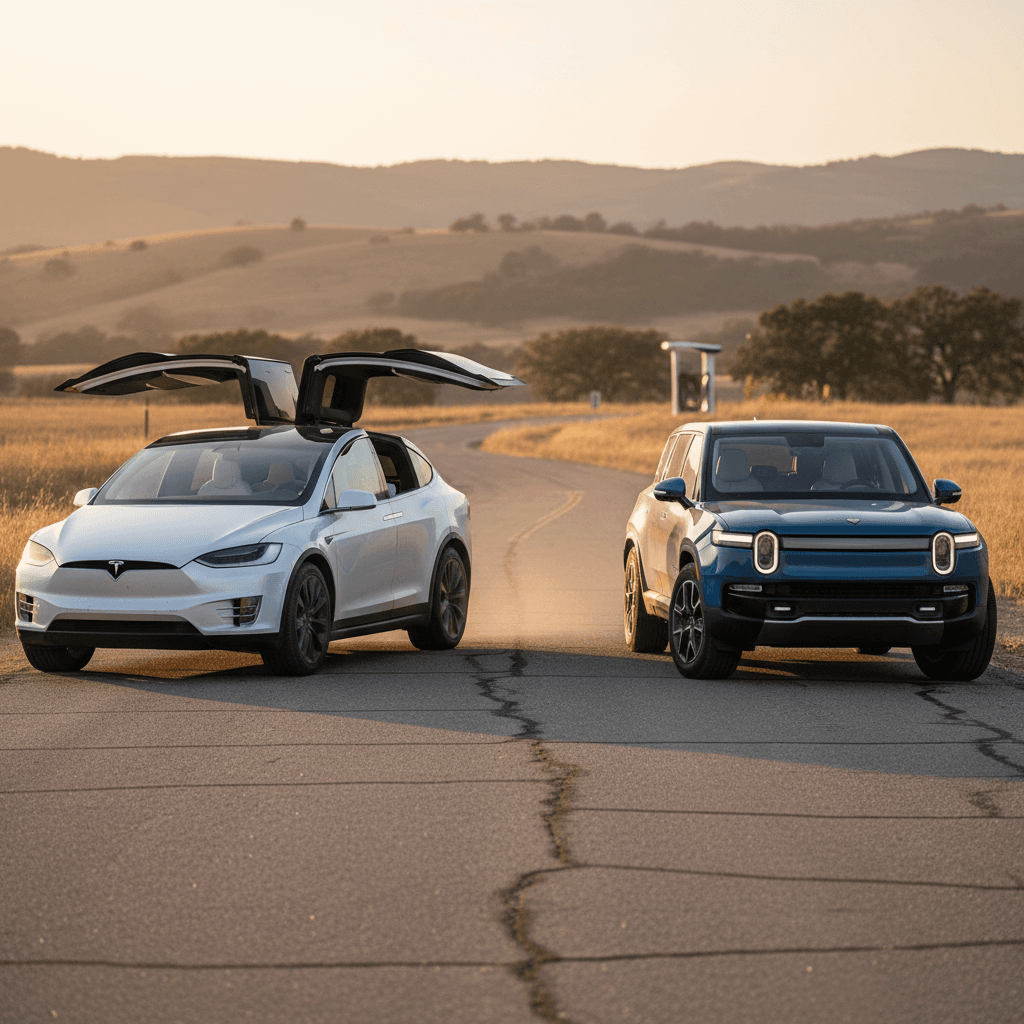
If you’re cross-shopping a used Tesla Model X vs Rivian R1S, you’re already looking at the top end of the electric SUV market: three rows, serious range, and enough power to embarrass sports cars. The hard part isn’t finding performance, it’s deciding which one actually fits your life, your budget, and your appetite for risk in the used EV market.
How this comparison is different
Overview: Used Model X vs Rivian R1S
Tesla Model X (used)
- On sale since 2015, many build years and mileages to choose from.
- EPA range up to ~350 miles on newer Long Range trims.*
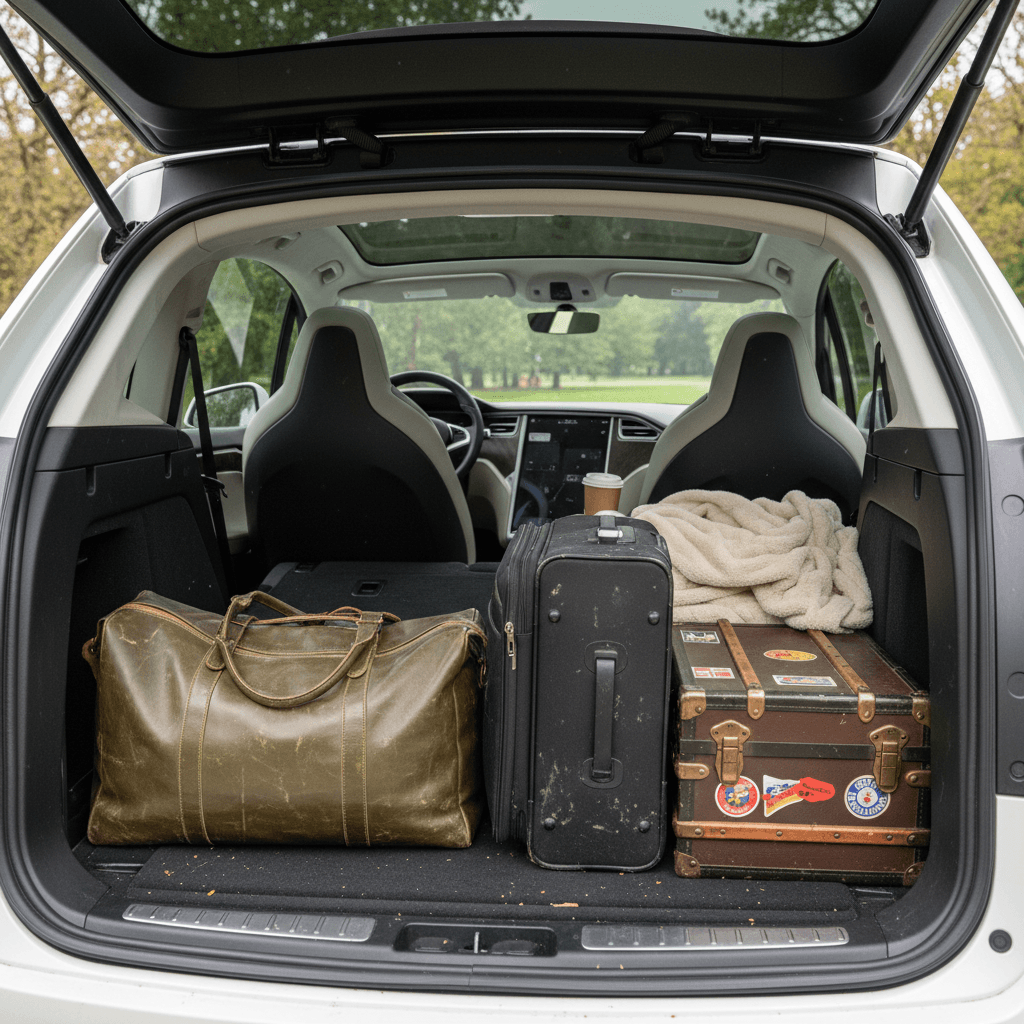
- Seats up to 7, huge cargo room (about 94.5 cu ft with seats folded).
- 5,000 lb tow rating, air suspension, all-wheel drive.
- Mature access to Tesla’s Supercharger network, now opening to many non‑Tesla EVs.
*Exact range varies by year, battery, wheels and software.
Rivian R1S (used)
- Deliveries started in 2022, so every R1S is relatively new.
- EPA range roughly 260–350+ miles, depending on battery and wheels.
- Standard 3-row, 7-seat layout; more upright, off‑road‑ready design.
- Up to 7,700 lb towing and generous cargo plus frunk storage.
- Adventure‑oriented driving modes, air suspension, strong off‑road capability.
Model years to target
Quick Specs: Model X vs R1S at a Glance
Headline Specs for Typical Well-Equipped Trims
Representative numbers for a recent Model X Long Range and a Rivian R1S with the Large Pack. Exact specs vary by year and configuration, especially in the used market.
| Spec | Used Tesla Model X (Long Range) | Rivian R1S (Large Pack) |
|---|---|---|
| EPA range (max trims) | Up to ~352 miles | Around 321–380 miles depending on battery/wheels |
| Drive layout | Dual‑motor AWD (Plaid adds tri‑motor) | Dual‑ or quad‑motor AWD |
| 0–60 mph | ~3.8 s Long Range; as quick as 2.5 s Plaid | ~3.0 s with quad motor; mid‑4s with dual motor |
| Max towing | 5,000 lbs | 7,700 lbs |
| Cargo volume (rear seats folded) | ≈94.5 cu ft | ≈104–105 cu ft |
| Seating | Up to 7 | 7 standard |
| Fast‑charge peak | Up to 250 kW Supercharging | Around 220 kW DC fast charging |
| Fast‑charge network | Tesla Supercharger + CCS/NACS adapters (varies by year) | CCS public networks; NACS support rolling out via hardware/adapter |
Use this table as a directional guide, then verify specs on the specific VIN you’re considering.
Specs depend on year & trim
Space, Comfort & Utility for Families
Interior Space: Sleek Minivan vs Adventure Bus
Both are big EVs, but they solve family hauling differently.
Tesla Model X: Sleek, Low, and Tech-Forward
- Seating: Configurable for 5, 6, or 7 passengers. Captain’s chairs in some 6‑seat layouts feel premium but cut into cargo flexibility.
- Access: Falcon Wing rear doors make third‑row access easy in tight parking, but they add complexity and potential repair cost.
- Cargo: Around 94.5 cu ft with seats folded; plus a useful front trunk.
- Feel: More "luxury crossover" than truck, with lower ride height and a sweeping windshield that makes the cabin feel bright and airy.
Rivian R1S: Boxy, Roomy, Adventure-Ready
- Seating: Standard 3‑row, 7‑seat layout. The upright shape helps adult headroom in rows two and three.
- Cargo: Up to roughly 104–105 cu ft with both rear rows folded; 17–18 cu ft behind the third row plus a sizable frunk.
- Access: Conventional rear doors keep things simple; higher step‑in height may be trickier for small kids or older passengers.
- Feel: More "expedition SUV" than luxury crossover, great if you like the vibe, less so if you want a traditional luxury feel.
Kid- and pet-friendliness
Range, Performance and Driving Feel
Performance & Range Highlights
In real‑world driving, both vehicles deliver more acceleration than most owners will ever need. On paper, a tri‑motor Model X Plaid and a quad‑motor R1S trade punches in the 0–60 race. For used‑car shoppers, what matters more is how range, efficiency and ride comfort line up with your daily routine.
Model X on the road
- Efficiency: The Model X is generally more efficient, especially at highway speeds, meaning fewer stops and lower energy cost per mile.
- Ride & handling: Air suspension and a lower center of gravity give it a smoother, more "luxury car" ride with confident cornering.
- Noise: Typically very quiet, though wind noise around the huge windshield and Falcon Wing doors can vary by build year.
- Range loss with age: Battery degradation is usually modest, but a high‑mileage, early‑build X can show more range loss, making a professional battery health check essential.
R1S on the road
- Efficiency: Heavier and boxier than the X, so it tends to use more energy per mile, especially at interstate speeds and on all‑terrain tires.
- Ride & handling: Adjustable air suspension and drive modes let you go from highway comfort to trail‑ready height at the tap of a screen.
- Off‑road bias: If you regularly travel bad roads, snow or dirt, the R1S feels more confident and composed.
- Range reality: Towing, big wheels and aggressive tires can eat into the headline EPA range more quickly than many new EV owners expect.
Watch real-world range, not just EPA numbers
Towing, Off-Road and Adventure Use
Towing and Capability Comparison
Both SUVs can tow, but the Rivian leans harder into the adventure role.
| Capability | Used Tesla Model X | Used Rivian R1S |
|---|---|---|
| Max rated towing | 5,000 lbs | 7,700 lbs |
| Ground clearance | Air suspension, but lower overall stance | Adjustable air suspension; up to ~14–15 in on some trims |
| Off-road focus | All-wheel drive, but more road‑oriented | Dedicated Off‑Road modes, excellent approach/departure angles |
| Trailer aids | Basic towing mode and trailer wiring | Towing modes that estimate trailer weight and adjust range estimates |
| Roof loads | More aerodynamic, lower roofline | Boxier roof is easier for racks and bulky gear |
Always confirm the exact tow rating on the door placard and owner’s manual for your specific VIN.
If your weekends look like REI ads…
Charging Experience and Road Trips
Charging is where the used Tesla Model X still has a structural advantage, especially if you road‑trip a lot. But the gap is narrowing as more public fast‑charging sites come online and automakers adopt Tesla’s NACS connector.
Home and Public Charging: How They Compare
Think about where you’ll charge 90% of the time before you buy.
Home charging
- Both: Level 2 charging at 32–48 amps is ideal. Either SUV can easily recharge overnight on a properly installed 240V circuit.
- Tesla X: Tesla Wall Connector integrates cleanly, but any quality J1772/NACS Level 2 charger works with the right adapter.
- R1S: Uses CCS today, with NACS adoption rolling in depending on build and hardware. A good third‑party Level 2 charger is typically all you need.
Public fast charging
- Model X: Native access to the Tesla Supercharger network on most model years makes long trips far easier. Many sites now support non‑Teslas too, but Tesla‑to‑Tesla remains the smoothest experience.
- R1S: Uses CCS fast charging on networks like Electrify America, EVgo and others, with growing access to NACS/Superchargers. Experience can vary more by location and operator.
- Road‑trip edge: If your family lives on the interstate, the used Model X still has the cleaner, more predictable fast‑charging story in most of the U.S.
Plan around your real routes
Tech, Infotainment and Driver Assistance
Tesla Model X tech
- Interface: Clean, minimalist interior with a central touchscreen (size and layout vary by year) and limited physical buttons.
- Infotainment: Native streaming apps, built‑in navigation and frequent over‑the‑air software updates on newer cars.
- Driver assistance: Tesla’s Autopilot and optional Full Self‑Driving (FSD) hardware show up on many used Model Xs. Performance depends heavily on which hardware and software generation the car has.
- Pros: Simple interface, strong navigation and charging integration, very mature OTA update ecosystem.
- Cons: No Apple CarPlay or Android Auto, and some early MCU (infotainment computer) generations have known failure patterns that may require replacement.
Rivian R1S tech
- Interface: Large central touchscreen plus a digital gauge cluster, with a more rugged, adventure‑themed design.
- Infotainment: Built‑in navigation and media, strong OTA support, but as of mid‑2020s many R1S builds still lacked Apple CarPlay/Android Auto, which some shoppers consider a downside.
- Driver assistance: Rivian Driver+ bundles lane keeping, adaptive cruise and other advanced features. It’s competitive, but still maturing and has seen software‑related recalls.
- Pros: Fresh, modern UI, lots of clever touches (like camp modes) and active feature updates.
- Cons: Some buyers prefer the familiarity of CarPlay/Android Auto; advanced driver‑assist behavior can change as Rivian refines software.
Over-the-air updates cut both ways
Reliability, Safety and Recalls
Neither the Tesla Model X nor the Rivian R1S is a low‑risk, low‑complexity vehicle. You’re buying a heavy, high‑power luxury EV from a tech‑driven company, not a bare‑bones commuter car. That said, their risk profiles aren’t identical.
How Each SUV Stacks Up on Safety & Reliability
Look beyond anecdotes to the patterns that matter when buying used.
Safety ratings
- Model X: Historically strong crash‑test results and active safety performance, with many advanced safety features standard.
- R1S: Earned the IIHS Top Safety Pick+ rating for 2023 models built after January 2023, reflecting excellent crash protection and lighting.
- Takeaway: Both vehicles are among the safest things on the road when properly maintained and updated.
Reliability & recalls
- Model X: Early years saw issues from Falcon Wing door alignment to MCU failures. Many have been addressed under warranty or recalls, but you’ll see wide variation car‑to‑car.
- R1S: Being newer, it has had software‑ and hardware‑related recalls, including suspension service campaigns. The fleet is smaller, so long‑term durability data is still developing.
- Your move: For any used EV, insist on up‑to‑date recall work, clean service history and a third‑party inspection if you’re buying outside a trusted marketplace.
Hidden risk: battery and high-voltage systems
Ownership Costs, Depreciation and Resale
The up‑front price of a used Tesla Model X vs Rivian R1S will depend heavily on year, mileage and trim, but there are some clear patterns in how each behaves financially once you own it.
Used Model X cost profile
- Depreciation: The Model X has already taken big early‑life depreciation, especially on pre‑refresh and high‑miles examples. That can make them "value buys" relative to original MSRP.
- Running costs: Electricity is cheap relative to gas, but out‑of‑warranty repairs on doors, suspensions and infotainment hardware can be expensive.
- Resale: Tesla brand recognition and Supercharger access tend to support resale values, especially on newer Long Range and Plaid trims.
Used R1S cost profile
- Depreciation: Because the R1S is newer and starts expensive, early depreciation can be steep in dollar terms. Over time, we’ll learn more about its long‑term curve.
- Running costs: Fewer independent shops are experienced with Rivian today, so you’re more reliant on the brand’s own service network.
- Resale: Strong demand among adventure‑oriented buyers should help, but long‑term data is limited. Unique color/trim combos can command a premium, or narrow your buyer pool.
Don’t just chase the lowest price
What to Check When Buying Used
Used EV Inspection Checklist: Model X & R1S
1. Battery health and real-world range
Ask for recent range data at common state‑of‑charge points (e.g., 80% to 10% highway). Whenever possible, get a <strong>professional battery health report</strong> like the Recharged Score to quantify usable capacity and detect pack or charging anomalies.
2. Charging behavior and port condition
Test both AC (Level 2) and DC fast charging if you can. Confirm the car reaches expected charge rates and that adapters, cables and the charge port latch operate smoothly.
3. Software, driver-assist and recall status
Verify that the vehicle is on current software, and that all <strong>open recalls and service campaigns</strong> have been addressed. On the Model X, document which Autopilot/FSD hardware is installed; on the R1S, test Driver+ features on a familiar stretch of road.
4. Suspension, steering and tires
Both SUVs are heavy and can be hard on suspension components and tires. Listen for clunks or creaks over bumps, and inspect tires for uneven wear that might hint at alignment or suspension issues.
5. Body and glass, especially on Model X
For the Model X, carefully check Falcon Wing door alignment, latches and seals, as well as the expansive windshield for chips or cracks. On the R1S, pay attention to panel gaps and any signs of off‑road damage underneath.
6. Interior wear and water exposure
Look for water stains, odd odors or corrosion around door sills and cargo areas, especially on vehicles that have spent time in wet or snowy climates. Electronics and moisture don’t mix, and both cabins are packed with electronics.
7. Seller transparency and documentation
Prioritize cars with <strong>full service records</strong>, clear title, no major accident history and transparent battery/charging data. Marketplaces like Recharged centralize this info and add expert‑guided support from first click to delivery.
How Recharged can help
Ready to find your next EV?
Browse VehiclesWho Should Choose Model X vs R1S?
Which Electric SUV Fits Your Life?
Match your use case to the right three-row EV.
Choose a Used Tesla Model X if…
- You road‑trip frequently on interstate corridors and want the smoothest fast‑charging experience via the Supercharger network.
- You prefer a luxury crossover feel with a lower ride height and strong on‑road manners.
- You value a more mature ecosystem of third‑party shops, aftermarket parts and owner knowledge.
- There are multiple build years and price points in your budget, and you’re comfortable hunting for the right battery and feature combo.
Choose a Used Rivian R1S if…
- Your life involves towing, camping, snow, or off‑road exploring and you want real SUV capability.
- You like the idea of a more rugged interior and adventure‑oriented features like adjustable ride height and drive modes.
- You mainly charge at home and use public fast charging occasionally, not every week.
- You’re comfortable owning a newer brand with fewer years of long‑term data in exchange for cutting‑edge design and performance.
FAQ: Used Tesla Model X vs Rivian R1S
Frequently Asked Questions
Bottom Line: Which Electric SUV Is Right for You?
When you line up a used Tesla Model X vs Rivian R1S, you’re not choosing between good and bad, you’re choosing between two very different interpretations of the electric family SUV. The Model X is the long‑legged road warrior with a luxury bent and a charging network that still sets the bar. The R1S is the adventure rig that happens to be electric, with big‑trail capability and a more conventional, boxy SUV form.
If your life is dominated by interstates, kids’ activities and long visits with grandparents two states away, the Model X probably fits better. If it’s more ski trips, trailheads and towing toys to the lake, the R1S likely deserves the front spot in your driveway.
Either way, the smart move in the used EV market is to focus less on brochure specs and more on verified battery health, real‑world usage and transparent history. That’s where Recharged comes in, with Recharged Score battery diagnostics, fair‑market pricing and EV‑specialist support from search to delivery, so you can pick the right three‑row electric SUV with confidence.