If you’re wondering whether the 2026 Ford Mustang Mach-E is a good buy, you’re not alone. Ford’s electric crossover has matured into a familiar face in EV showrooms, but it’s also competing in a tougher market, with sharper pricing on rivals and some lingering questions around depreciation and driver-assist tech. Let’s unpack whether a 2026 Mach-E makes sense for your money, especially if you’re weighing it against the growing pool of used models.
Short answer
2026 Mustang Mach-E at a glance
2026 Mustang Mach-E: key numbers to know
About 2026 numbers
What’s new (and not) for the 2026 Mustang Mach-E
By 2026, the Mustang Mach-E is no longer the fresh disruptor it was in 2021. Ford has been iterating rather than reinventing: tweaks to software, charging profiles, and driver-assist tech rather than a clean-sheet redesign. The 2025 model already introduced BlueCruise 1.5 on certain trims and shorter included subscription terms, and that package is expected to carry into 2026 with minor refinements rather than wholesale change.
Likely "new" for 2026
- Updated BlueCruise hands-free driving on more highways and with better lane centering.
- Small range and efficiency tweaks via software and powertrain calibration.
- Possible feature reshuffling by trim (heated seats, driver aids moving up or down the ladder).
- Minor color and wheel changes to keep the lineup fresh.
What likely stays the same
- Overall battery sizes and motor configurations similar to 2024–2025.
- General interior layout with vertical center touchscreen.
- Broadly similar DC fast‑charging curve and peak speeds.
- Positioning as a compact electric SUV rivaling Tesla Model Y, Hyundai Ioniq 5, Kia EV6, and VW ID.4.
Why this matters
Price, incentives, and where the Mach-E fits in 2026
Ford has used aggressive pricing and incentives to keep the Mach-E in the conversation as EV competition heats up. For 2024–2025, transaction prices often landed below headline MSRPs once dealer discounts, financing offers, and federal or state incentives were factored in. By 2026, the picture is more nuanced: some buyers still qualify for federal EV tax credits and local rebates, but manufacturer discounts ebb and flow with inventory and demand.
How the 2026 Mach-E likely compares on price
Approximate new-vehicle pricing landscape in early 2026 for popular compact EV SUVs in the U.S. (before incentives).
| Model | Typical 2026 transaction band* | Notable strengths | Key tradeoffs |
|---|---|---|---|
| Ford Mustang Mach-E | Mid-$40,000s to low-$60,000s | Strong performance, familiar badge, hands-free BlueCruise on many trims | Faster depreciation than some gas SUVs, driver-assist scrutiny |
| Tesla Model Y | Low-$40,000s to mid-$50,000s | Supercharger access, strong efficiency, software polish | Price swings, build variability, minimalist interior not for everyone |
| Hyundai Ioniq 5 | Low-$40,000s to low-$50,000s | Ultra-fast charging, roomy interior, long warranty | Inventory and dealer markups vary by region |
| Kia EV6 | Low-$40,000s to mid-$50,000s | Sporty driving feel, fast charging, sharp design | Rear visibility and cargo space not best-in-class |
Always verify current incentives and MSRPs, EV pricing has been unusually volatile since 2023.
Incentive reality check
Range, charging, and daily usability
Range is one of the Mustang Mach-E’s core selling points, and by 2026 it remains competitive even if it’s no longer segment-leading. Depending on battery and drivetrain, recent Mach-E models have delivered roughly 250–310 miles of EPA-rated range, with real-world results shaped by temperature, driving speed, and wheel choice. That still covers most American commutes and weekend trips, especially if you can charge at home.
How the 2026 Mach-E fits into daily life
Range and charging strengths, and what you need to plan around.
Home charging friendly
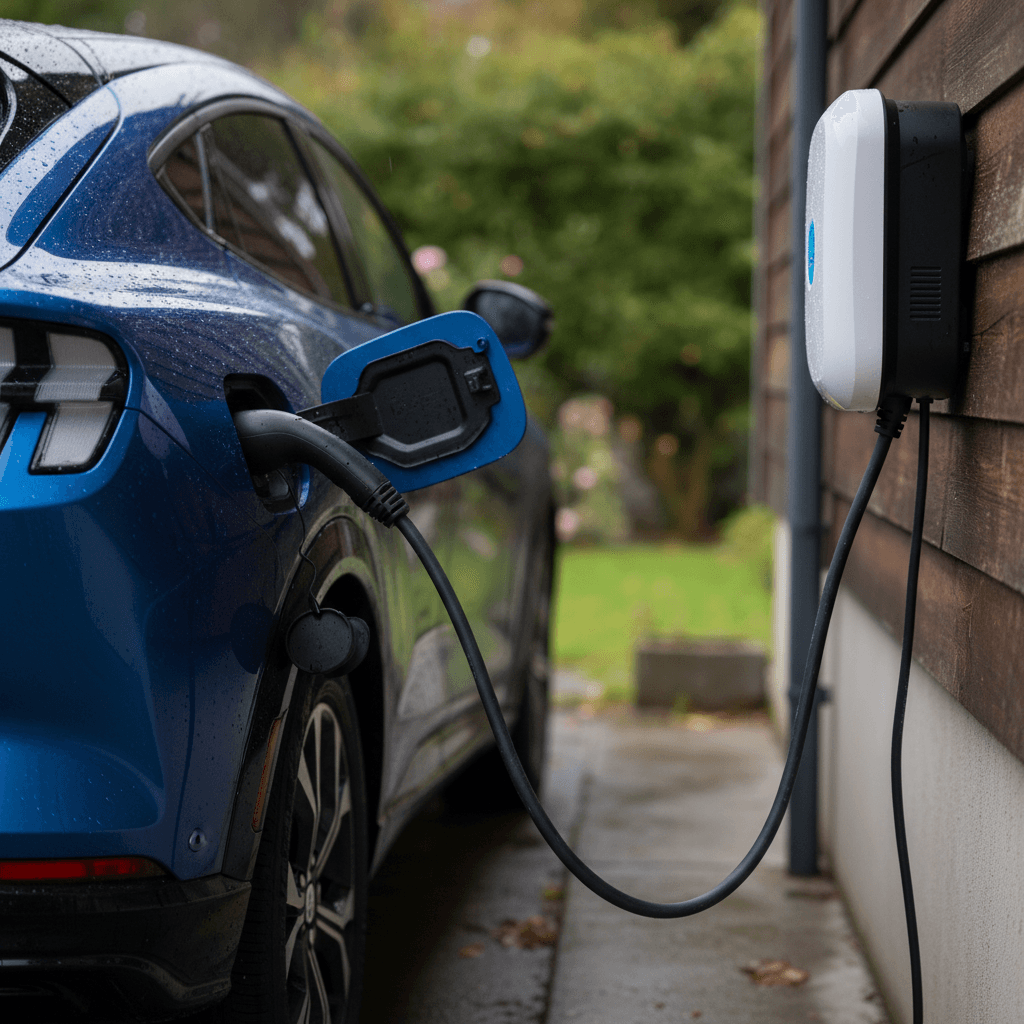
With a 240V Level 2 charger, most Mach-E trims can easily recharge overnight, even from low state of charge. Expect to add 25–35 miles of range per hour at home, depending on amperage.
Highway fast charging
Peak DC fast-charging rates around 150 kW are adequate, though not class-leading. Plan on 10–80% in roughly 35–40 minutes under ideal conditions.
Road-trip ready, with planning
Public networks are expanding, but coverage and uptime vary. It’s workable for road-trips, but you’ll want to plan stops carefully, especially in rural stretches.
Cold-weather reality
Reliability, safety investigations, and recalls
Shopping a 2026 Mustang Mach-E means you’re buying into a model with several years of real-world data, and a paper trail. Owner surveys and reliability scores for earlier model years have been mixed, with software glitches, infotainment issues, and some build-quality complaints showing up more often than in Ford’s best gas models. Separately, driver-assist technology is facing heightened scrutiny, which matters if BlueCruise is a major reason you’re considering the Mach-E.
- Multiple recalls have affected 2021–2025 Mach-E models, including high-profile software and hardware campaigns.
- In 2025, regulators opened investigations involving collisions where BlueCruise was active or suspected to be in use, adding pressure on Ford to fine-tune the system.
- Ford has leaned heavily on over‑the‑air (OTA) updates to fix issues, but OTA fixes can be delayed, and not every owner installs them promptly.
- Later model years (2024–2025) tend to show better reliability scores than the earliest builds, though long‑term battery and electronics durability are still being written.
Don’t skip the recall check
Depreciation and resale value: the hard part
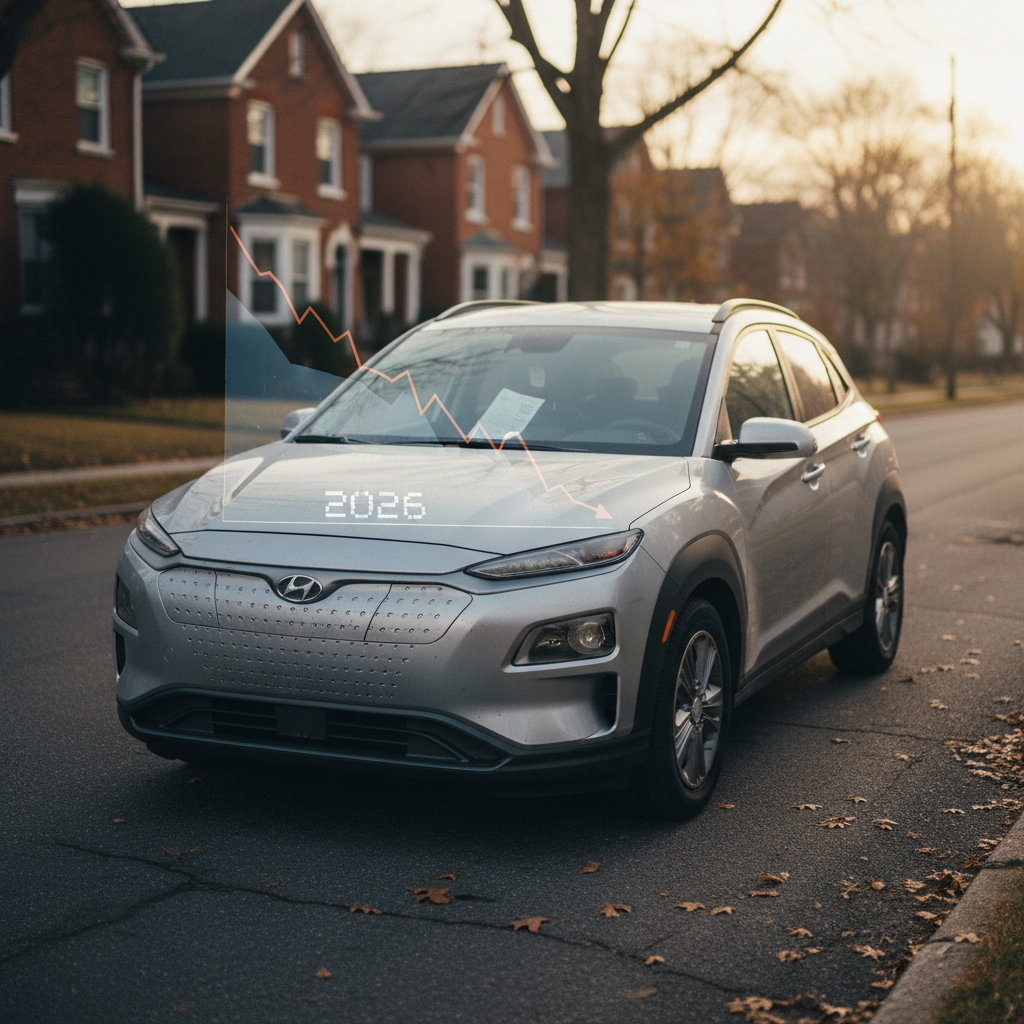
If there’s one area where the 2026 Mustang Mach-E can sting, it’s resale value. Across several data sets, the Mach-E sits in the group of EVs that lose value faster than traditional gas SUVs, and in some rankings, among the worst performers over five years. Some sources peg average five‑year depreciation north of 60%, while others show the Mach-E as more of a middle-of-the-pack EV for value retention. The through line is the same: this is not a resale champion.
Mustang Mach-E depreciation in context
How the Mach-E generally stacks up against other EVs and a mainstream gas SUV on five‑year value retention.
| Vehicle | Approx. 5‑yr depreciation | What that means in dollars* | Takeaway |
|---|---|---|---|
| Ford Mustang Mach-E | ~55–60% | A $50,000 new Mach‑E often lands in the high‑teens to low‑$20,000s after 5 years. | Aggressive price drops and fast‑moving EV tech drag values down. |
| Tesla Model Y | ~50–55% | A similarly priced Model Y tends to hold slightly more value over 5 years. | Stronger brand pull and Supercharger loyalty buoy resale. |
| Nissan Leaf / older EVs | 60%+ | Many early Leafs and small EVs lose well over 60% of their value. | Shows how quickly first‑generation EV tech ages in the market. |
| Toyota RAV4 (gas) | ~40–45% | A $38,000 RAV4 might still be worth low‑$20,000s after 5 years. | Conventional SUVs continue to outpace most EVs on resale. |
Numbers are generalized from multiple market analyses; actual performance varies by trim, mileage, incentives, and local demand.
Why depreciation isn’t all bad news
Who should consider a 2026 Mustang Mach-E?
Is a 2026 Mach-E right for your situation?
Three buyer profiles where the Mach-E can make sense.
EV-curious Mustang fan
If you like the Mustang nameplate and want a fun-to-drive electric crossover with strong acceleration and distinctive styling, the Mach-E still checks those boxes. It’s more engaging than many anonymous EV appliances.
Home-charging commuter
If you have a place to install a Level 2 charger and your daily mileage is under 150 miles, the Mach-E’s range and comfort make it an easy daily driver, especially in Premium or higher trims.
Value-focused used buyer
If you’re shopping the used market, a 2–4 year‑old Mach-E often undercuts rival EVs with similar tech. Combine that with a strong battery warranty and you can get a lot of EV for the money.
Who should think twice
Should you buy a new 2026 Mach-E or a used one?
Case for buying a new 2026 Mach-E
- Latest BlueCruise version and driver-assist tuning, with the longest window for OTA updates.
- Full factory warranty coverage, plus the maximum remaining battery warranty.
- Ability to spec the exact trim, color, and options you want.
- Potential access to federal tax credits or attractive leasing offers that reduce effective cost.
Best if you value peace of mind, want specific equipment, and are comfortable absorbing early‑year depreciation.
Case for buying a used Mach-E instead
- Let someone else take the steepest depreciation hit; 2–3 year‑old Mach-Es can be thousands cheaper.
- Plenty of 2022–2024 models already have BlueCruise 1.3+ and updated software.
- Battery warranty is typically 8 years / 100,000+ miles, so many used examples still have coverage.
- You can target specific trims that historically hold value better, like longer-range or all‑wheel drive models.
Best if you’re payment-sensitive, flexible on color/options, and willing to shop carefully for a clean history and healthy battery.
Where used shines
How Recharged can de-risk a Mach-E purchase
The biggest fear with any used EV, especially one with fast-moving tech and mixed reliability headlines, is buying a problem child. That’s where a structured, data-driven approach matters more than brand loyalty or paint color. Recharged is built specifically to simplify and de-risk used EV ownership, including the Mustang Mach-E.
What Recharged brings to the table for Mach-E shoppers
From battery health to fair pricing, you get more than a Carfax and a handshake.
Verified battery health
Every vehicle on Recharged includes a Recharged Score Report with battery diagnostics, so you’re not guessing about remaining battery capacity or past abuse.
Fair-market pricing
Recharged’s pricing leans on real-time market data and EV-specific depreciation trends, helping you understand whether a particular Mach-E is priced realistically for its age, mileage, and configuration.
End-to-end EV support
From EV‑savvy financing and trade‑in options to nationwide delivery and an Experience Center in Richmond, VA, Recharged supports the entire transaction, not just the listing.
Ready to find your next EV?
Browse VehiclesIf you already own a Mach-E and are thinking about trading out before more depreciation hits, Recharged can also help you sell or consign your EV. Getting an instant offer or using consignment can surface more value than a quick, uninformed dealer trade.
Quick checklist before you buy a Mach-E
11-step checklist for evaluating a 2026 (or used) Mustang Mach-E
1. Confirm your charging situation
Do you have access to overnight Level 2 charging at home or work? If not, map out public chargers you’d realistically use before you buy.
2. Right-size your range
Look at your typical weekly mileage and climate. Choose a battery and drivetrain that leave a buffer beyond the EPA estimate, especially for winter or regular highway trips.
3. Compare total cost, not just payment
Factor in insurance, home charger installation, maintenance, electricity rates, and expected depreciation when comparing a Mach-E to gas or hybrid alternatives.
4. Verify software and BlueCruise status
On any Mach-E you’re considering, check which BlueCruise version it has, whether the subscription is active, and whether all relevant OTA updates have been applied.
5. Run a full recall and campaign check
Use the VIN to search for open recalls and service campaigns, and confirm with documentation that completed work was actually done.
6. Inspect battery health data
Ask for a recent battery health report or Recharged Score. Look for signs of unusual degradation, heavy DC fast‑charging use, or thermal-management issues.
7. Drive it the way you’ll use it
On a test drive, include highway speeds and rough pavement. Pay attention to ride comfort, wind noise, BlueCruise behavior (if equipped), and real-world energy use.
8. Evaluate charging curve, not just peak kW
Ask how the Mach-E sustains charging speeds from 10–80%. A car that hits 150 kW briefly but quickly tapers may be less road‑trip friendly than specs suggest.
9. Look closely at tires and brakes
EVs are heavy and can be hard on consumables. Worn tires or premature brake wear can quietly add thousands to the true cost of a used Mach-E.
10. Benchmark resale expectations
Use current market data to estimate what the Mach-E might be worth in 3–5 years at your expected mileage. Make sure the potential loss fits your budget and plans.
11. Consider certified or marketplace options
Buying through a platform that understands EVs, like Recharged, can give you more transparency on battery health, pricing, and history than a typical auction‑sourced dealer unit.
Frequently asked questions about the 2026 Mustang Mach-E
2026 Ford Mustang Mach-E: buyer FAQ
Bottom line: is the 2026 Mustang Mach-E a good buy?
Whether the 2026 Ford Mustang Mach-E is a good buy depends less on the badge and more on your situation. As a product, it still offers quick acceleration, competitive range, and a familiar cockpit that doesn’t demand you relearn how to drive. It falls short on resale value and sits in the crosshairs of a fast-changing EV tech and regulatory landscape, especially around driver-assist systems.
If you can live with the depreciation, have solid charging access, and prioritize a fun-to-drive electric crossover, a carefully chosen Mach-E, especially a late-model used example with documented battery health, can be a smart, defensible choice. And if you’d rather not navigate that complexity alone, working with an EV-focused marketplace like Recharged can turn a high-stakes guess into a transparent, data-backed decision.