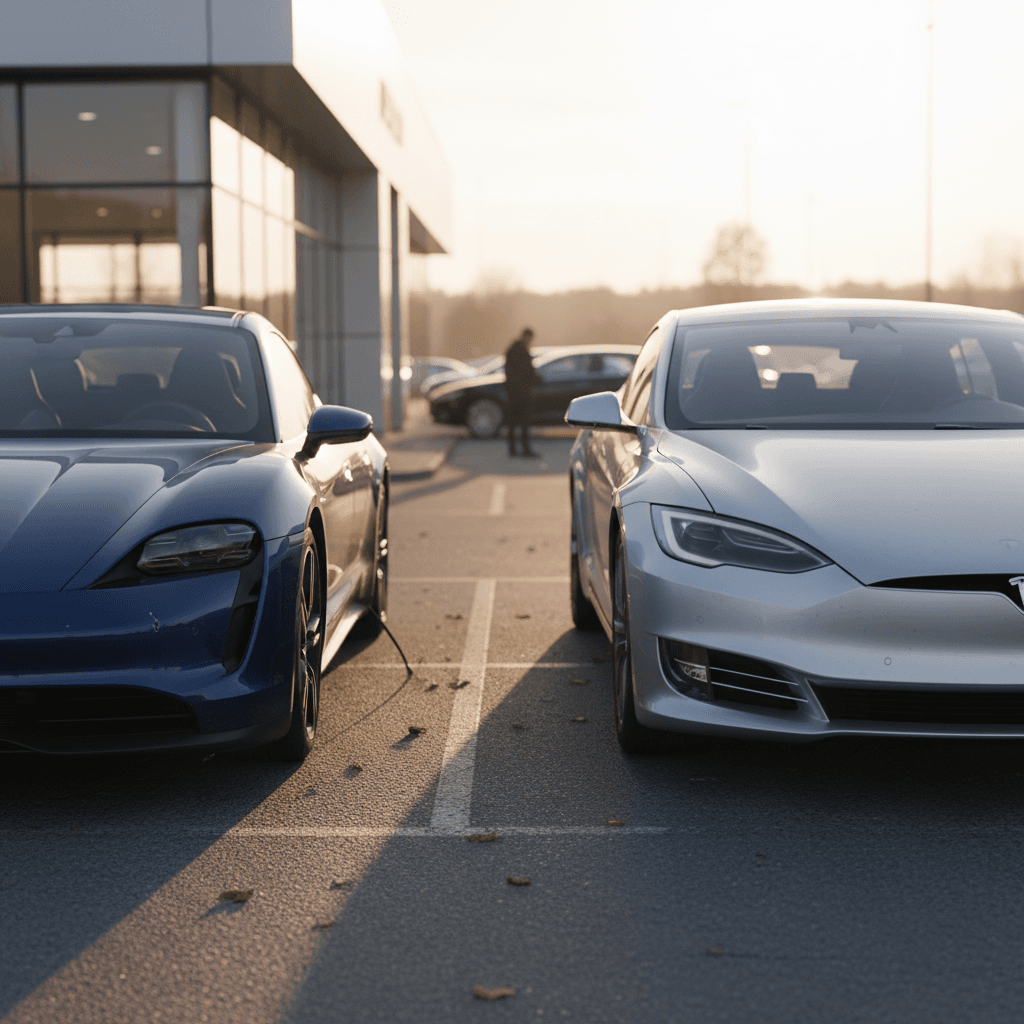
If you’re shopping a used performance EV in 2026, a used Porsche Taycan vs Tesla Model S comparison is probably at the top of your shortlist. Both are brutally quick, comfortable long‑distance cruisers, and packed with tech, yet they take very different paths to get there, especially once you factor in used pricing, battery health, and real‑world charging.
The high‑level story
How to use this 2026 Taycan vs Model S guide
- We focus on realistic 2020–2023 used Taycan and 2020–2024 used Model S examples you’re likely to find on the market in 2026, not just brochure numbers.
- We compare the trims most shoppers cross‑shop: Taycan 4/4S vs Model S Long Range, Taycan Turbo/Turbo S vs Model S Plaid.
- You’ll see at‑a‑glance tables plus plain‑English explanations of what the numbers feel like in daily driving.
- Where it matters, we explain how Recharged’s battery‑health diagnostics and Recharged Score change the risk equation on a used high‑performance EV.
Start with your priorities
Typical used buyers: what you’re actually cross‑shopping
Two common used‑EV shopper profiles
Most Taycan vs Model S decisions fall into one of these buckets
The road‑trip power user
You regularly knock out 200–400 mile days and care deeply about range, charging speed, and network coverage.
- Leaning Tesla Model S: Huge battery, excellent Supercharger access, simpler planning.
- Taycan can work, but you’ll live by DC fast‑charge maps and good planning.
The enthusiast daily driver
You want something that feels special every time you drive, steering feel, braking, body control, and you don’t do constant cross‑state runs.
- Leaning Porsche Taycan: Sharper driving dynamics and more classic luxury‑sport ambiance.
- Model S is still very quick, but feels more like a fast appliance than a sports sedan.
Used Taycan vs Model S snapshot for 2026 shoppers
Specs showdown: range, charging, and performance
The headline numbers on a used Porsche Taycan vs Tesla Model S can be confusing because the lineups changed year by year. Below is a simplified look at what you’re likely to see in 2026 used‑car listings if you’re shopping mainstream trims.
Typical used trims compared (U.S. market, 2020–2023 cars)
These are representative specs; exact figures vary by year, wheels, and software updates.
| Model | Drivetrain | 0–60 mph (approx) | EPA/realistic highway range* | Max DC fast charge | Onboard AC charging |
|---|---|---|---|---|---|
| Porsche Taycan 4 (sedan) | AWD | 4.5–4.8 s | ~220–260 mi real‑world | Up to ~270 kW on 800V chargers | Up to 11–19.2 kW depending on spec |
| Porsche Taycan 4S | AWD | 3.5–4.0 s | ~230–280 mi real‑world | Up to ~270 kW | Up to 19.2 kW on some U.S. cars |
| Porsche Taycan Turbo | AWD | 3.0 s | ~240–280 mi real‑world | Up to ~270 kW | Typically 11–19.2 kW |
| Tesla Model S Long Range | AWD | 3.1–3.7 s | EPA up to ~375–405 mi; ~300–360 mi real‑world | Up to ~250 kW on V3 Superchargers | Up to 11.5 kW |
| Tesla Model S Plaid | AWD tri‑motor | ~2.0 s with rollout | EPA ~348–396 mi; ~280–340 mi real‑world | Up to ~250 kW | Up to 11.5 kW |
Always verify the exact specs of the specific VIN you’re considering.
How to read these specs
Real-world range and charging behavior
Taycan: fast but range‑sensitive
The Taycan’s pack size and efficiency improved for the 2025 refresh, but most used cars in 2026 will still be earlier builds with shorter range than their Tesla rivals. Think 200–260 highway miles for many trims if you’re driving 70–80 mph and using climate control.
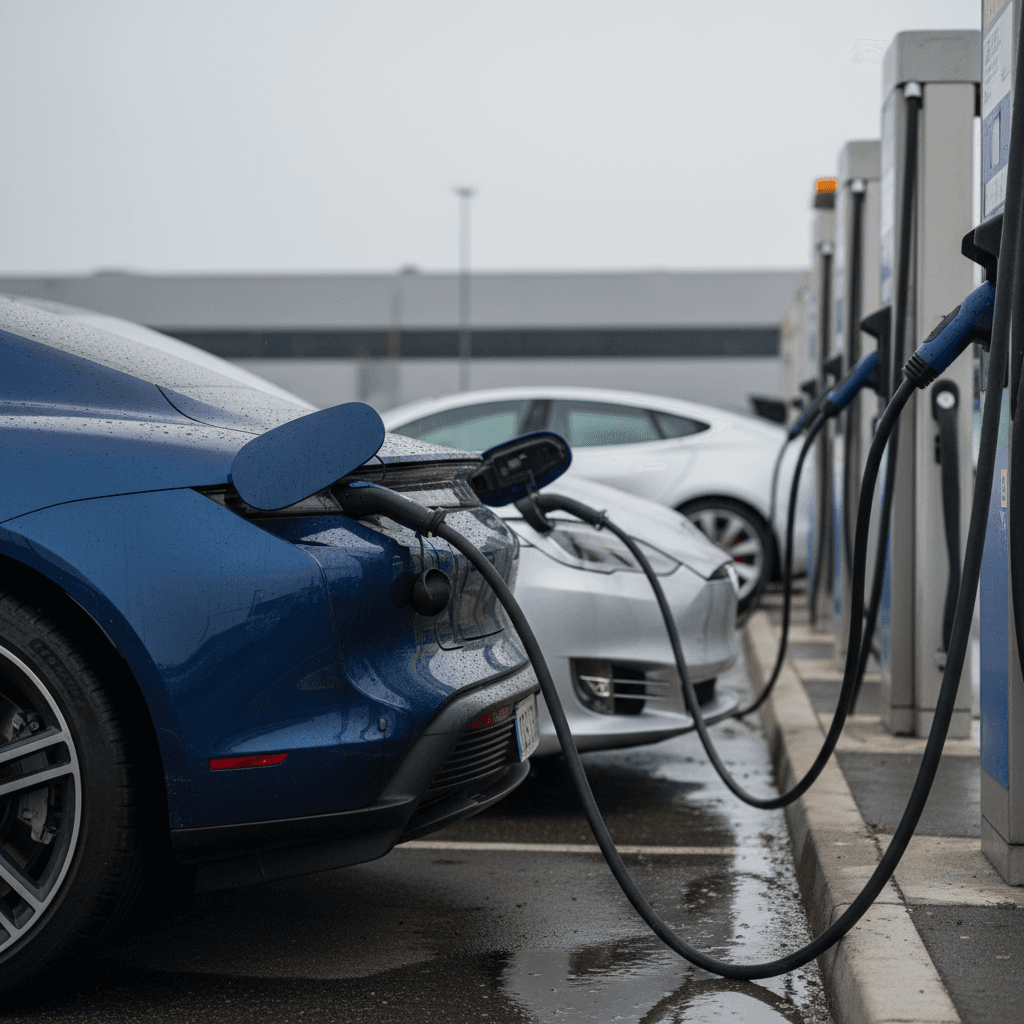
Where the Taycan shines is the charging curve. On a true 800‑volt DC fast charger in ideal conditions, it can take the pack from about 5–80% in the low‑20‑minute range, with peak power around the mid‑200‑kW mark. Practically, that means very short stops, but you’ll make those stops more often than in a Model S.
Model S: big tank, calmer stops
The Model S plays the opposite game: an enormous battery and strong efficiency. A Long Range car can realistically run 300+ miles between charges at highway speeds, so you plan fewer stops and have more flexibility choosing where to plug in.
Charging is fast, but the curve is less dramatic than the Taycan’s. Peak power is typically a bit lower, and the taper can be more gradual. However, the Supercharger network’s density and reliability still make road‑tripping feel very easy, especially now that more sites also support non‑Tesla EVs.
Don’t chase brochure numbers
Price, depreciation, and total cost in 2026
When you’re cross‑shopping a used Porsche Taycan vs Tesla Model S in 2026, pricing and depreciation may end up mattering more than pure specs. These are luxury performance EVs with big MSRPs when new and equally big potential swings as used cars.
What you’ll usually pay in 2026
Approximate U.S. used‑market ranges for well‑kept cars; exact pricing varies by mileage, options, and market conditions.
Used Taycan 4 / 4S
Roughly $50,000–$65,000 for 2021–2023 cars with average miles.
Older, shorter‑range 2020 cars can slide under $50k; heavily optioned 4S and GTS trims can go higher.
Used Taycan Turbo / Turbo S
Roughly $70,000–$95,000 depending on year and mileage.
These cars took a big depreciation hit from sky‑high original MSRPs, which can make them used‑car bargains, if you understand the running costs.
Used Model S Long Range / Plaid
Roughly $55,000–$90,000+.
Earlier Raven cars and first‑gen Plaids live on the lower side; low‑mile late‑model Long Range and Plaid with desirable wheels and FSD trend higher.
Depreciation patterns
Ownership cost questions to ask yourself
1. How many miles do you drive per year?
If you’re driving 8,000–10,000 miles a year, fuel savings vs a gas car will matter, but so will the cost of high‑performance tires and insurance. The more you drive, the more range and charging convenience tilt you toward a Model S.
2. Will you track or canyon‑carve the car?
If you’ll actually use the performance, expect more frequent tire and brake service, especially on a heavy, ultra‑quick Taycan Turbo/Turbo S or Model S Plaid.
3. What’s your tolerance for out‑of‑warranty repairs?
A Taycan’s hardware and Porsche‑specific parts can be costly at retail rates. Tesla’s parts prices and service experiences can vary by market. Buying a car still under a strong battery and drive‑unit warranty goes a long way in either case.
4. Do you plan to keep the car past 8 years?
Once you’re beyond the initial high‑voltage warranty window, the cost of a major battery or electronics repair can easily erase the savings of picking the cheaper car up front.
Interior, tech, and driving feel
Porsche Taycan: classic luxury with EV flair
The Taycan feels like a modern Porsche from the driver’s seat: low driving position, thick steering wheel, firm yet controlled ride, and serious braking hardware. It’s the rarer car in traffic and looks properly exotic in bright colors or Turbo/Turbo S trim.
The tech is familiar to anyone who’s driven a recent Porsche, multiple screens, configurable driver display, and a mix of touch and physical controls. It doesn’t feel as futuristic as a Tesla, but it feels high‑quality and coherent.
Tesla Model S: minimalist tech pod
The Model S is all about the center screen. Much of the car’s character flows from Tesla’s software: slick navigation with charging integration, frequent over‑the‑air updates, and driver‑assist features. The interior design is minimalist and airy, with more usable interior and cargo space than a Taycan sedan.
Fit and finish have improved on newer builds but still feel more “Silicon Valley startup” than classic German luxury. If you value software and a clean look over traditional buttons and leather, the S feels right at home.
Driving joy vs effortless speed
Reliability, battery health, and warranty
Both of these cars are early members of the modern long‑range EV club, and each has quirks that show up as they age. The key on a used example is to move beyond guesses and marketing and look at actual battery data and service history.
Battery, warranty, and reliability at a glance
Details vary by model year and market, always confirm for a specific VIN.
Battery & drive warranties
- Tesla Model S: historically 8 years with 150,000‑mile limit and at least 70% retained capacity on many trims.
- Porsche Taycan: similar 8‑year high‑voltage coverage, with mileage limits that vary by region.
Check the in‑service date to see what’s left, calendar age matters as much as odometer miles.
Common ownership quirks
- Taycan: complex 800‑V hardware and active suspension; tires and brakes can be expensive; some owners report picky DC charging behavior on marginal hardware.
- Model S: suspension wear on high‑mile cars, interior squeaks/rattles, and occasional issues with door handles or infotainment hardware on older builds.
Why battery health reports matter
Daily usage, practicality, and who each fits best
Which one fits your life better?
Match the car to your daily reality, not your fantasy weekend.
Frequent road‑tripper
Edge: Tesla Model S
- More range, fewer stops.
- Excellent Supercharger access in most of the U.S.
- Easier for less‑experienced EV passengers and drivers.
Driving enthusiast with a commute
Edge: Porsche Taycan
- Sharper, more connected driving feel.
- Beautifully tuned brakes and steering.
- Feels special even on a short grocery run.
Garage‑kept, home‑charging owner
Either works, pick your flavor
- If you have reliable Level 2 home charging, the Taycan’s shorter range is less of an issue.
- If you sometimes go 200+ miles in a day, the Model S is still the easier living room on wheels.
How Recharged helps with used Taycan and Model S shopping
Performance EVs are thrilling, but they’re also complicated and expensive machines. That’s why Recharged was built specifically to make buying and owning a used EV, especially something like a Porsche Taycan or Tesla Model S, simple, transparent, and less stressful.
- Every car listed on Recharged comes with a Recharged Score Report that includes verified battery health, charging history signals where available, and fair‑market pricing analysis.
- Our specialists understand the quirks of Taycan and Model S, from wheel and tire packages to how fast‑charging habits affect range, and can help you compare specific VINs, not just badges.
- You can complete the purchase end‑to‑end online, arrange financing, get an instant offer or consignment help for your trade‑in, and schedule nationwide delivery.
- If you want to see, touch, and drive before deciding, you can visit the Recharged Experience Center in Richmond, VA for in‑person help from EV specialists.
Side‑by‑side, apples‑to‑apples
Ready to find your next EV?
Browse VehiclesFAQs: Used Porsche Taycan vs Tesla Model S (2026)
Frequently asked questions
Bottom line: which should you buy in 2026?
If your number‑one priority is effortless long‑distance driving, the Tesla Model S, especially a Long Range car, remains the safe, simple choice in 2026. It gives you more miles per charge, an excellent fast‑charging network, and a software experience that still feels a step ahead. For a lot of families, that combination is hard to beat.
If you care just as much about how a car feels as how fast it is, a well‑chosen used Porsche Taycan is one of the most rewarding EVs you can own. You give up some range and a bit of convenience, but you gain world‑class driving dynamics and a cabin that feels closer to traditional luxury, often at a surprisingly approachable used price.
The real win is matching the right car to your life and risk tolerance. That’s where a data‑driven report and an EV‑savvy partner matter. With Recharged, you can put a specific used Taycan and a specific used Model S side‑by‑side, compare verified battery health and pricing, and buy the one that makes sense for the way you actually drive, not just the way the brochure looks.