If you’re eyeing a used 2022 BMW i4, you’re smart to ask about problems and fixes before you sign anything. The i4 was BMW’s first modern electric Gran Coupe, and while it’s impressed owners with its performance and refinement, there are a few 2022 BMW i4 problems and fixes you should know about, especially around software, recalls, and normal EV wear items.
Quick take
Overview: How Problematic is the 2022 BMW i4?
2022 BMW i4 Reliability Snapshot
When you look across owner forums, reliability data, and recall campaigns, a pattern emerges: the 2022 i4 isn’t a problem child, but it does have some specific areas you’ll want to check. The biggest watchpoints are high‑voltage battery recalls, iDrive 8 software behavior, charging‑session dropouts, and the usual BMW wear items like tires and brakes on heavier, powerful models.
- High‑voltage battery recall campaigns on a limited number of 2022–2023 i4s
- Infotainment and driver‑assist glitches tied to early iDrive 8 software builds
- Occasional charging errors that are often caused by the station, not the car
- Build‑quality niggles like rattles, wind noise, or minor water leaks
- Fast tire wear on M50 models driven aggressively
How to use this guide
High-Voltage Battery Issues & Recall Checks
Battery problems are what keep most EV shoppers up at night, so let’s start there. The good news: there is no evidence of widespread day‑to‑day battery failures on the 2022 i4. The bad news: a limited batch of 2022–2023 BMW i4s was recalled because certain battery cell modules might have been assembled with excessive force, potentially stressing the module frames and, in rare cases, leading to a shutdown of the high‑voltage system or even a thermal event if left unaddressed.
- Risk: Sudden loss of drive power if the battery management system detects an internal fault, triggering a high‑voltage shutdown
- Very small population: Only a fraction of 2022–2023 i4s were built with the affected modules, but you can’t assume yours isn’t one of them
- Manufacturer response: BMW dealers replace affected battery modules free of charge under safety‑recall procedures
Don’t skip the recall check
Battery & Recall Checks: What You Should Do
1. Run the VIN through NHTSA
Before you fall in love with a car, enter its VIN at the federal recall site or ask a BMW dealer to print the recall history. Confirm whether any high‑voltage battery or drive‑system campaigns apply.
2. Verify recall completion
If a recall shows as “open,” ask the seller to complete it before purchase. If it’s “closed,” request the service record or invoice as proof that the work was done.
3. Ask about battery history
Ask the owner or seller about any prior messages such as “high‑voltage system error” or “drivetrain malfunction.” Single, resolved warnings after a recall fix are less concerning than repeated, unexplained errors.
4. Check battery warranty status
The i4’s high‑voltage battery is covered for 8 years/100,000 miles in the U.S. Confirm the in‑service date so you know how much coverage is left.
Thermal risk is rare, but serious
Software and iDrive 8 Glitches
BMW’s iDrive 8 system in the 2022 i4 is powerful and feature‑rich, but like most new software platforms it had some early teething issues. Owners report a mix of minor quirks and occasionally more serious glitches that can temporarily sideline driver‑assist functions.
- Infotainment screen freezing or going black until the system reboots
- Laggy or unresponsive touch input, especially when multitasking navigation, music, and phone calls
- Wireless Apple CarPlay/Android Auto disconnecting or refusing to reconnect
- Driver‑assist features (adaptive cruise, lane‑keeping) temporarily unavailable after a restart or software update
- Random warning messages that disappear after cycling the car off and on
Typical Causes
- Early software builds on 2022 cars that hadn’t yet received later stability updates.
- Corrupted Bluetooth or user‑profile data when phones were migrated from other BMWs.
- Low 12‑volt battery voltage after short trips or extended storage.
Common Fixes
- Updating to the latest iDrive software over‑the‑air or at the dealer.
- Deleting and re‑pairing phones, then recreating driver profiles from scratch.
- Hard reset of the infotainment system or certain control modules if software hangs persist.
Test-drive tip: stress the software
Charging Problems vs. Charging-Network Issues
Many “BMW i4 charging problems” turn out to be charging‑network problems. The car is often blamed when the real culprit is a flaky DC fast‑charging station, a worn plug, or a payment error at the charger operator. Still, there are a few i4‑specific patterns worth understanding.
Typical Charging Symptoms on 2022 i4s
How to tell if it’s the car, the cable, or the charger
DC session stops early
Fast‑charge session ramps up then drops to 0 kW or terminates after a few minutes.
Likely cause: Station fault or communication error, not the i4 itself.
Won’t start charging
Plug clicks in but charging never begins, or you get a “charging error” message.
Likely cause: Payment failure, station offline, or dirty pins on the connector.
Slow Level 2 charging
Car charges, but slower than expected on a home or workplace Level 2 unit.
Likely cause: Low‑amp circuit, shared circuit load, or conservative charge settings in iDrive.
Quick diagnostic
DIY Checks Before Assuming a Major Charging Problem
1. Try a different connector and stall
Bad cables or worn connectors are common at busy stations. Move to another stall, even within the same station, to rule out a single faulty unit.
2. Inspect the charge port
Look for debris, corrosion, or physical damage around the i4’s charge inlet. Any damage here needs a professional repair.
3. Review charging settings
In iDrive, confirm there’s no low current limit set for that location and that departure‑time charging or charge limits aren’t restricting behavior.
4. Test Level 2 at home or work
If DC fast charging is unreliable but the car charges normally at a known‑good Level 2 station, the problem is probably with the fast‑charge network, not your i4.
Build Quality, Noise, and Water Leaks
The 2022 BMW i4 shares much of its body structure with the gas‑powered 4 Series Gran Coupe. That means the underlying platform is proven, but adapting it for EV duty has revealed a few common build‑quality complaints, most of them more annoying than dangerous.
- Rattles or squeaks from the rear hatch, cargo cover, or folding rear seatbacks, especially over rough pavement
- Buzzing from interior trim, like the center console or door panels, at certain speeds or temperatures
- Wind noise at highway speeds from frameless door glass, window seals, or mirrors
- Isolated reports of minor water ingress around the trunk or door seals after heavy rain or a high‑pressure wash
How to listen for trouble
Quick Body, Noise & Water‑Leak Checks
1. Inspect door and hatch seals
Open each door and the rear hatch and feel the rubber seals for tears, flattening, or obvious gaps. Look for water staining on interior trim or in the trunk well.
2. Highway wind‑noise test
At 65–70 mph on a calm day, listen for whistle or roar around the side windows and mirrors. Light wind rush is normal; loud whistling or “howling” may indicate misalignment.
3. Check the cargo area
Lift the trunk floor and feel for damp carpet or musty smell. Water in the spare‑well area can point to a bad hatch seal or tail‑light gasket.
Tires, Brakes, and Suspension Wear
The 2022 i4, especially in M50 trim, is a heavy, powerful EV. That combination is great for acceleration but hard on consumables. Owners frequently mention rapid tire wear and, on higher‑mileage cars, earlier‑than‑expected suspension and brake service compared with lighter sedans.
- Fast wear on performance tires, sometimes under 20,000 miles for spiritedly driven i4 M50s
- Cupping or uneven wear if alignment is out or if wheels have taken curb hits
- Brake rotors developing surface rust or vibration on cars that sit a lot, since EVs lean on regenerative braking
- Occasional clunks or knocks over sharp bumps as suspension components age
Typical Wear Items on a 2022 BMW i4
These aren’t “defects” so much as costs you should budget for on a used performance EV.
| Component | What to Watch For | Simple Fix | Buyer Impact |
|---|---|---|---|
| Tires | Low tread depth, edge wear, vibration at speed | Replace with quality EV‑rated tires and do a fresh alignment | Use remaining tread as a bargaining chip on price |
| Brakes | Pulsation under braking, lip on rotor edge, rust | Resurface or replace pads/rotors as needed | Not unusual; factor into your first‑year maintenance budget |
| Suspension | Clunks on bumps, uneven tire wear, floaty feel | Inspect control arms, bushings, and shocks; replace worn parts | Higher‑mileage cars may need a suspension refresh sooner |
Actual service intervals vary with driving style, climate, and road conditions.
Don’t judge by mileage alone
Warning Lights and Drive-System Errors
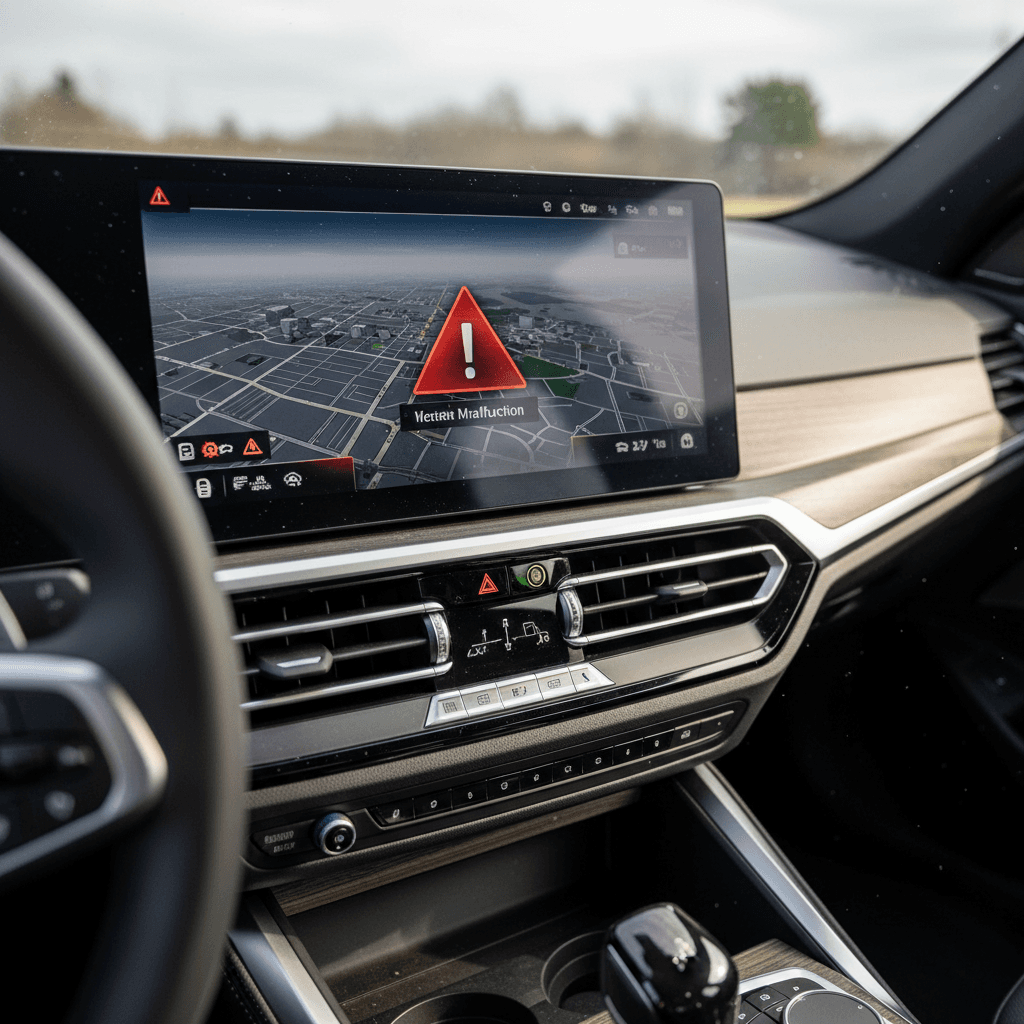
Like most modern EVs, the 2022 i4 can light up its dashboard with warnings when something in the network of control modules isn’t happy. Owners occasionally report messages such as “drivetrain malfunction,” “high‑voltage system error,” or clusters of ABS and traction‑control lights, sometimes after events as simple as a car wash or a 12‑volt battery issue.
- Transient errors that clear after restarting the car and never return, often software or low‑voltage related
- HV‑system warnings linked to the battery‑module recalls, should be resolved once recall work is completed
- Sensor‑related ABS/traction‑control warnings requiring replacement of a wheel‑speed sensor or related component
- Rare cases where a cascading electrical fault takes time at the dealer to diagnose, but is covered under warranty on low‑mileage cars
Take red warnings seriously
How to Approach Warning Lights on a 2022 i4
1. Document everything
Take clear photos of the warning messages and note the date, mileage, speed, and conditions (e.g., after DC fast charging, after a wash, after sitting).
2. Check for patterns
Did the warning appear once and never return, or does it pop up daily? Single, self‑clearing events after software updates are less concerning than regular, repeat faults.
3. Scan the car
Ask a BMW dealer or independent shop with BMW EV tools to scan for stored fault codes. This creates a record and can often point directly to the failed sensor or module.
4. Confirm warranty or recall coverage
Many serious electrical issues on a 2022 i4 are covered under BMW’s new‑car or high‑voltage battery warranty, or via safety recalls. Don’t pay out of pocket without verifying coverage first.
Pre-Purchase Checklist for a Used 2022 BMW i4
If you’re shopping a used 2022 i4, whether an eDrive40 or an M50, go in with a plan. Here’s a concise checklist you can follow at the dealership, at a private seller’s driveway, or when evaluating a 2022 i4 listed on a marketplace like Recharged.
Essential Used 2022 BMW i4 Buyer Checklist
1. Confirm recall and warranty status
Run the VIN for open recalls and ask for the in‑service date so you know how much battery and bumper‑to‑bumper coverage remains.
2. Review charging behavior
Plug into a Level 2 charger and, if possible, a DC fast charger. Confirm that the car starts charging reliably, ramps to expected power levels, and doesn’t throw repeat error messages.
3. Stress‑test iDrive 8
On the test drive, operate navigation, media, phone, and driver‑assist systems. Watch for freezing, reboots, or unavailable features that persist even after a restart.
4. Inspect for leaks and odors
Check the trunk well, underfloor storage, and rear footwells for dampness or musty smells. Water leaks are rare but a hassle to chase down.
5. Examine tires, wheels, and brakes
Measure tread depth, look for sidewall bubbles or curb rash, and feel for brake pulsation. A full set of near‑worn tires can easily run into four figures on an i4 M50.
6. Get a professional EV inspection
If you’re serious about a particular car, invest in a pre‑purchase inspection from a BMW dealer or an EV‑savvy shop, or rely on a curated marketplace like Recharged, where diagnostics and pricing are already vetted.
Why buying certified or curated helps
What Recharged Looks at on a 2022 BMW i4
Because the battery and drivetrain are the most expensive components on any EV, Recharged goes deeper than a typical visual walk‑around when evaluating a 2022 i4 for our marketplace. Our goal is to surface any pattern issues up front so you don’t inherit someone else’s headaches.
Key 2022 BMW i4 Checks in the Recharged Score
How we de‑risk a used i4 purchase
High‑voltage battery health
We pull diagnostic data to assess usable capacity and balance across the pack, then fold that into the Recharged Score so you can compare one i4 to another at a glance.
Recall & service history
We confirm completion of applicable BMW recalls, especially battery‑ and drivetrain‑related campaigns, and review maintenance history where available.
Software & feature check
We verify that the car is on an appropriate software level and that core systems, charging, driver assists, infotainment, behave as they should.
Road test & noise inspection
On‑road evaluation looks for warning lights, abnormal noises, braking feel, and suspension behavior that might indicate worn or damaged components.
Ready to find your next EV?
Browse VehiclesWhen you see a 2022 BMW i4 listed on Recharged, you’re not just getting photos and a price. You’re getting a transparent look at battery health, fair market pricing, and any red‑flag issues we’ve already identified, plus access to EV‑specialist support, financing options, trade‑in offers, and nationwide delivery.
2022 BMW i4 Problems and Fixes: FAQ
Frequently Asked Questions About 2022 BMW i4 Problems
Bottom Line: Should You Buy a 2022 BMW i4?
If you like the idea of a BMW that happens to be electric, not an appliance with a battery, the 2022 BMW i4 is one of the more compelling used EVs on the market. Its most common issues are manageable: software bugs that updates can cure, charging hiccups that often trace back to the station, and wear items that any performance car will chew through. The true high‑stakes problems, like battery‑module defects, have been targeted by recalls and are repairable at no cost to you, provided you verify the work.
Follow the checklists in this guide, insist on clean recall and service history, and pay close attention on your test drive. Do that, and a sorted 2022 i4 can deliver exactly what you’re after: sharp driving dynamics, a premium cabin, and the low day‑to‑day running costs of an EV. If you’d rather have experts do the digging, consider starting your search with a 2022 BMW i4 listed on Recharged, where battery health, pricing, and problem patterns are already laid out in the Recharged Score so you can shop confidently.