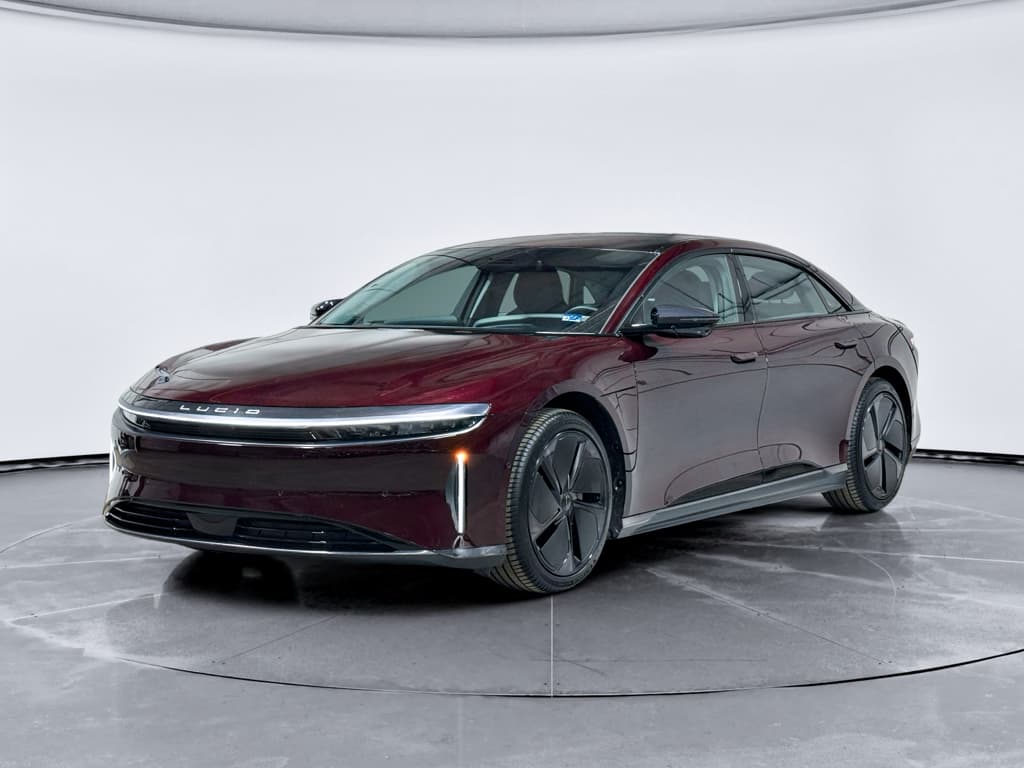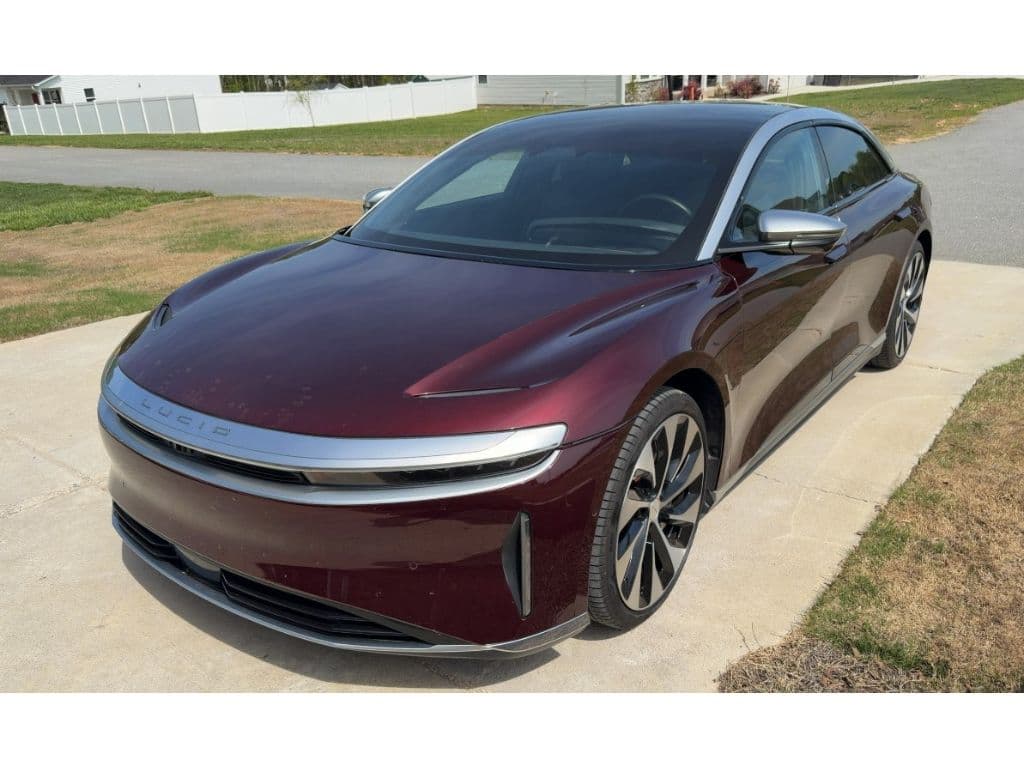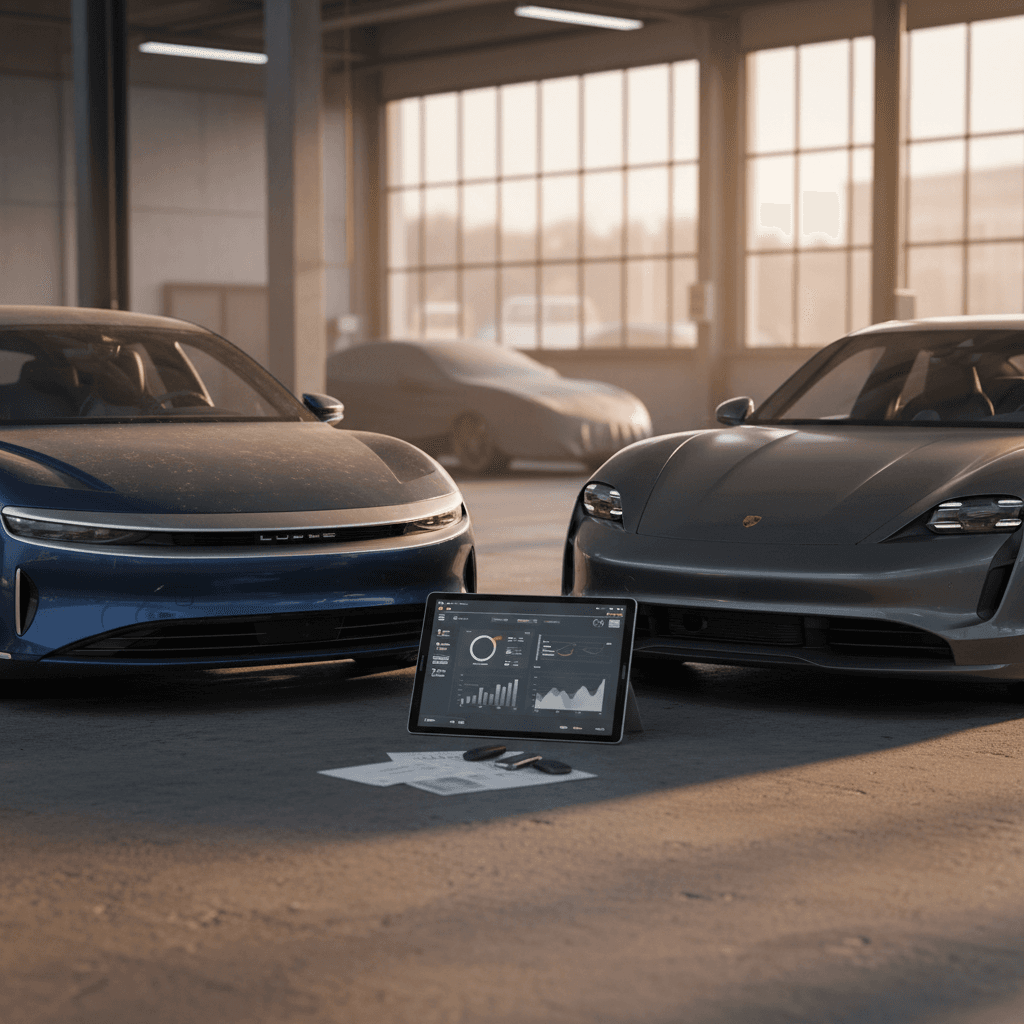
If you’re cross-shopping a used Lucid Air vs Porsche Taycan in 2026, you’re exactly the kind of buyer reshaping the EV market. Both cars deliver supercar-level performance and luxury, but they take very different paths on range, driving feel, and long‑term value, especially once they hit the used market.
Context for 2026 shoppers
Why a Used Lucid Air vs Porsche Taycan Comparison Matters in 2026
On paper, the Lucid Air looks like the obvious winner: industry‑leading EPA range that can top 400 miles, huge interior space, and astonishing efficiency per kWh. The Porsche Taycan counters with track‑honed handling, build quality that feels carved from billet, and one of the best fast‑charging experiences available, especially after its 2025 updates.
But once you shift to the used EV lens, new questions appear: Which car holds value better? How worried should you be about software glitches or early‑production issues? What does real‑world range look like on a three‑year‑old pack? And critically, what does it actually cost to live with either of these cars once depreciation has done its work?
How to use this guide
Specs at a Glance: Key Used Models to Compare
To keep this grounded for 2026 used‑market shoppers, we’ll focus on the trims you’re most likely to see under six figures rather than the wild Sapphire or Turbo GT halo cars. Think of these as the sweet‑spot used Lucid Air and Taycan variants.
Core Specs: Used Lucid Air vs Porsche Taycan (Typical 2022–2024 Models)
Representative trims you’re likely to see in 2026 with similar asking prices when used. EPA ranges are approximate and depend on wheels and options.
| Model (typical used trim) | Drivetrain / Power | Approx. EPA Range (mi) | 0–60 mph (sec) | Usable Battery (kWh) | Peak DC Fast Charge |
|---|---|---|---|---|---|
| Lucid Air Pure (RWD/AWD) | Single or dual motor, ~430–480 hp | ~400–420 (RWD), ~360–380 (AWD) | 4.0–4.5 | ~88–92 | Up to ~250 kW |
| Lucid Air Touring | Dual motor, ~620 hp | ~380–410 | 3.4–3.7 | ~92 | Up to ~250 kW |
| Porsche Taycan (Base RWD, updated pack) | Single motor, ~402 hp (overboost) | High‑200s to low‑300s | ~4.5 | ~79–97 (depending on year/pack) | Up to ~270–320 kW |
| Porsche Taycan 4S | Dual motor, ~522 hp (overboost) | Mid‑200s to ~300 | ~3.8 | ~79–97 | Up to ~270–320 kW |
Specs are approximate and can vary slightly by model year, wheel size, and software updates. Always verify for the exact VIN you’re considering.
Don’t over‑index on brochure numbers
Range and Efficiency: Where Lucid Pulls Ahead
Why Range Is the Lucid Air’s Trump Card
Lucid built its brand around efficiency and it shows. A used Lucid Air Pure or Touring still delivers some of the longest real‑world range you can buy in 2026, new or used. Owners commonly report 3.5–4+ mi/kWh on highway‑heavy drives when they’re not hammering the throttle, which translates into genuine 300‑plus‑mile legs, even after some degradation.
The Porsche Taycan, especially the refreshed 2025 models with boosted battery capacity and efficiency, closes much of the early gap. But most used Taycans on the market in 2026 will be pre‑refresh cars. Expect realistic highway ranges more in the 220–270‑mile window depending on trim, wheels, and climate.
Lucid Air on a used budget
- Best choice if you do frequent 200–400 mile drives.
- More buffer in winter or at higher speeds.
- Less pressure to top up to 90–100% every day.
Porsche Taycan used reality
- Plenty for most commutes and weekend trips.
- More planning required on long, rural routes.
- Efficiency suffers more if you drive it like a Porsche.
How to sanity‑check range on a used car
Performance and Driving Feel: Two Different Flavors of Fast
Both the Lucid Air and Taycan are blindingly quick, but they answer very different briefs. Lucid leans into effortless, near‑silent thrust and rock‑steady highway composure; Porsche leans hard into feedback, repeatable performance, and driver confidence at the limit.
How They Feel From Behind the Wheel
Same ballpark on straight‑line speed; very different characters on a back road.
Lucid Air: effortless thrust
Even mid‑pack Touring models deliver near‑instant torque that just keeps building. The sensation is more "electric S‑Class" than sports car, calm, composed, brutally effective.
Taycan: driver’s EV
Steering weight, turn‑in, and body control feel immediately familiar to anyone who's driven a 911 or Panamera. The car encourages you to push, even if the range meter doesn’t.
Repeatability and heat
Porsche’s thermal management and brake blending make repeated high‑speed runs or track days less stressful. Lucid can match or beat Taycan in headline numbers, but Taycan often feels more durable under abuse.
If you value feel over stats
Charging Experience: Road Trips and Daily Life
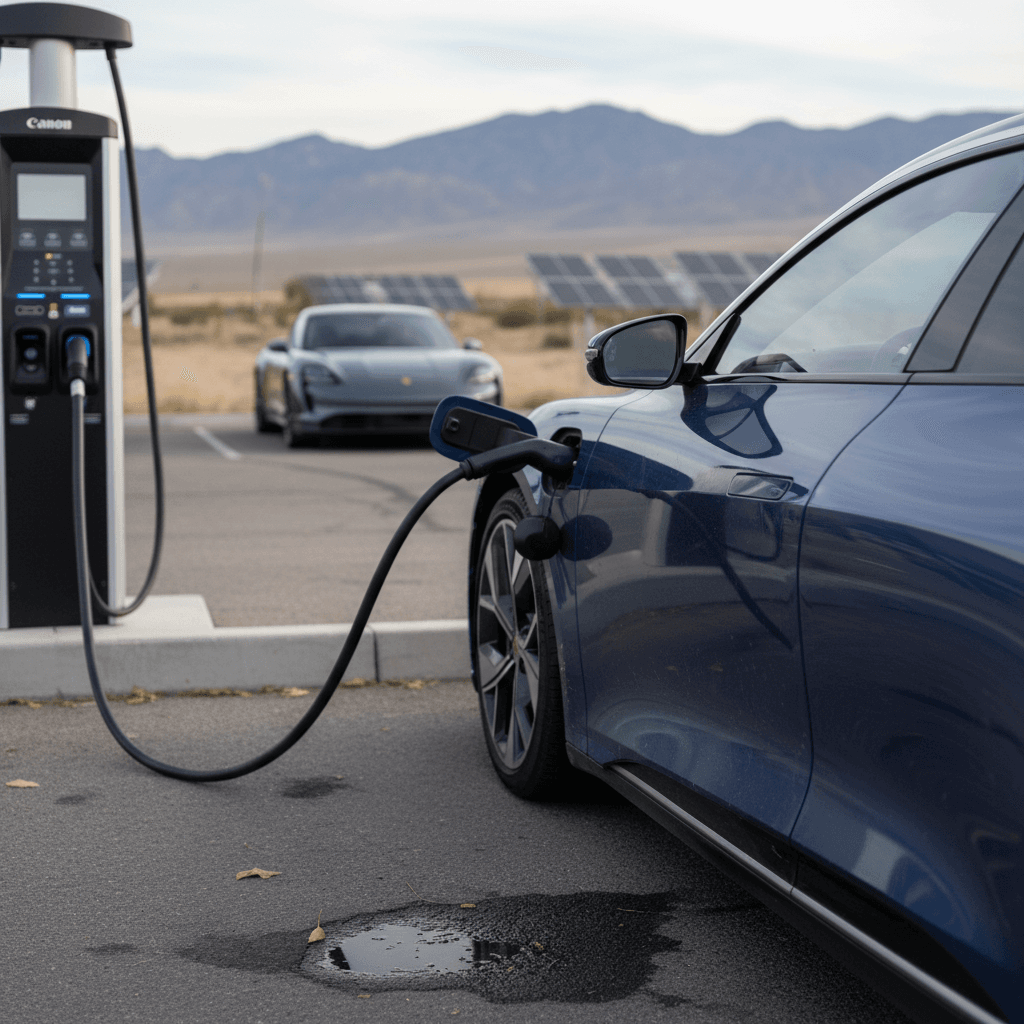
By 2026, both cars sit in a maturing charging ecosystem. Many high‑power DC stations are live across major U.S. corridors, and automaker support for the NACS/Tesla standard keeps evolving. But there are still meaningful differences in how a used Lucid Air and Taycan fit into your charging reality.
Daily charging
- Both cars are happiest on Level 2 at home or work.
- Plan for a 40A–48A 240V circuit if you own; apartment dwellers should budget extra time on public AC chargers.
- Because the Lucid Air has more range, you may be able to charge less often, say every 2–3 days instead of nightly.
Road‑trip DC fast charging
- Taycan has one of the best fast‑charge experiences: an 800V architecture and a strong, flat charging curve mean short, predictable stops when you can hit a 270–320 kW station.
- Lucid Air also charges very quickly, but its range advantage often matters more than peak kW, it simply needs fewer stops.
- Network quality and plug type (CCS vs NACS) along your routes should be part of your decision.
Check connector standards and adapters
Interior Comfort and Tech: Lounge vs Sports Cockpit
The cabins tell you almost everything about each brand’s philosophy. The Lucid Air aims to be a bright, airy lounge with huge rear legroom and a glassy, modern UX. The Taycan is more of a low‑slung sports sedan with a cocooning cockpit and classic Porsche ergonomics translated into an EV world.
Living With Each Car Day to Day
Space, seating, and screens in the used‑EV context.
Lucid Air cabin
- Massive rear legroom; adult‑friendly for long trips.
- Big glass area and available glass canopy make it feel airy.
- Interface centers on a large curved display plus a retractable lower screen.
- Some early‑build cars had fit‑and‑finish inconsistencies and software quirks, worth checking on a test drive.
Taycan cabin
- More traditional sports‑sedan seating position.
- Material quality and switchgear feel bank‑vault solid.
- Multiple screens, but UX is more conservative than Lucid.
- Rear seat and trunk are usable but not class‑leading; the Lucid is roomier.
Used‑car interior checklist
Reliability, Battery Health, and Warranty on the Used Market
Because both of these are relatively young EV nameplates, 2026 used‑market buyers are effectively the second wave of test pilots. You’re benefiting from early depreciation, but you’re also inheriting first‑generation complexity.
What to Watch For on Used Lucid Airs and Taycans
Neither car is an appliance; diligence pays off.
Battery health
Both cars carry long battery warranties (commonly 8 years/100,000+ miles for pack and drive units), which helps. Still, you want objective data: State of Health (SoH), fast‑charge history, and any prior battery‑related service campaigns.
Software and electronics
Lucid has iterated its software rapidly; early cars saw more bugs and UI oddities. A 2023–2024 car on current software will likely be more stable than a 2021 build. Porsche leans on a more mature corporate electronics stack, but Taycan still has its share of infotainment quirks.
Mechanical robustness
Taycan benefits from decades of Porsche durability engineering. Suspension components, brakes, and general assembly feel over‑built. Lucid’s chassis hardware is sophisticated but hasn’t seen the same multi‑decade industrialization; that’s not a red flag, but it is a reason to inspect carefully.
Essential Used‑EV Health Checks
1. Get a real battery health report
Don’t settle for "it charges fine." Ask for quantified battery State of Health and charging history. A platform like Recharged includes a <strong>Recharged Score</strong> with battery diagnostics on every vehicle so you’re not guessing.
2. Verify remaining factory warranty
Confirm in‑service date and mileage, and call a dealer to verify remaining high‑voltage and bumper‑to‑bumper coverage for that specific VIN.
3. Scan for software and recall history
Ask for service records and confirm that major software updates and recalls have been completed. Both Lucid and Porsche have issued updates that materially affect reliability and charging behavior.
4. Inspect wear items and underbody
EVs eat tires and brakes differently than ICE cars. Check for uneven tire wear, suspension noises, and any underbody damage from aggressive driving or steep driveways.
Don’t ignore early‑build quirks
Depreciation and Total Cost of Ownership
From a pure spreadsheet standpoint, depreciation is where the Lucid Air and Taycan diverge most dramatically. In 2026, both are still expensive cars, but they don’t behave identically in the used‑EV market.
Lucid Air depreciation dynamics
- As a newer, smaller brand, Lucid doesn’t yet enjoy Porsche‑level residual values.
- That means steeper depreciation from new, but also more car per dollar if you’re buying used.
- For the price of a lightly optioned used Taycan base, you may find a better‑equipped Air Touring with more range.
Porsche Taycan depreciation dynamics
- Higher MSRP and Porsche brand strength support residuals, but early Taycans also took a hit due to rapid EV tech improvements.
- In 2026, a used Taycan 4S in good spec can still command strong money, especially from brand‑loyal buyers.
- Insurance, tire and brake costs, and Porsche service pricing can make total ownership costs higher than headline EV "fuel" savings suggest.
Used‑Market Reality Check (Qualitative)
Model your real costs, not just price
Which Used Buyer Fits Each Car?
By this point, you can probably feel which car is pulling you in. To make it concrete, here’s how I’d match used‑market buyers to each EV in 2026.
Who Should Buy a Used Lucid Air vs Porsche Taycan?
Match the car to your real‑world priorities, not just bragging rights.
Choose a used Lucid Air if…
- You regularly drive 150–300 miles in a day and hate stopping.
- You want a quiet, ultra‑comfortable highway car for family or work trips.
- Space and rear‑seat comfort matter, kids, adults, or rideshare/livery use.
- You’re value‑oriented and like the idea of letting someone else absorb early depreciation.
- You’re comfortable with a younger brand as long as you can see objective battery and service data.
Choose a used Porsche Taycan if…
- You care more about how a car feels to drive than how far it goes.
- You do shorter daily mileage and have solid charging access at home or work.
- Brand heritage, dealer network, and build quality are big priorities.
- You might do track days or truly spirited back‑road driving.
- You’re okay paying more for service and consumables to get the Porsche experience.
How Recharged Helps With Used Lucid Air and Taycan Shopping
If you’re trying to decide between a used Lucid Air and a Porsche Taycan, the hardest part isn’t reading spec sheets, it’s trusting the specific car in front of you. That’s exactly the gap Recharged was built to close.
What Recharged Brings to a High‑End Used EV Purchase
From battery health to nationwide delivery, the process is built for EVs, not gas cars.
Recharged Score battery diagnostics
Every vehicle on Recharged gets a Recharged Score Report with verified battery health, charging behavior, and fair‑market pricing. That’s critical context when you’re weighing a 3‑year‑old Lucid vs a 4‑year‑old Taycan.
Financing and trade‑in for EVs
Recharged offers EV‑friendly financing, instant trade‑in offers or consignment options if you’re selling, and a fully digital process. You can move from quote to keys without stepping into a traditional showroom.
Nationwide delivery & expert support
Whether you’re near the Recharged Experience Center in Richmond, VA, or across the country, you can buy online with nationwide delivery. EV‑specialist staff can walk you through Lucid vs Taycan trade‑offs, not just generic used‑car talking points.
Ready to find your next EV?
Browse VehiclesWhy this matters for Lucid vs Taycan
FAQ: Used Lucid Air vs Porsche Taycan in 2026
Frequently Asked Questions for 2026 Buyers
Bottom Line: 2026 Used Lucid Air vs Porsche Taycan
If you strip away the marketing and tribalism, the 2026 used‑market story is relatively simple: the Lucid Air is the long‑legged, space‑efficient outlier that gives you huge range and room per dollar, while the Porsche Taycan is the tactile, over‑engineered driver’s EV that trades range for feel and brand cachet.
If your life is built around long highway stretches, family road trips, or rideshare/livery work, a healthy used Lucid Air Pure or Touring is hard to beat. If your joy comes from perfectly weighted steering, repeatable performance, and Porsche craftsmanship, a well‑specced Taycan base or 4S will make you happier every time you turn the wheel.
Either way, you’re shopping in a part of the EV market where individual car condition matters more than any spec sheet. That’s why platforms like Recharged, combining verified battery diagnostics, fair‑market pricing, EV‑savvy financing, trade‑in options, and nationwide delivery, are becoming the default path into complex used EVs like the Lucid Air and Porsche Taycan.
Take the time to define your real priorities, get hard data on any car you’re serious about, and don’t be afraid to walk away from a gorgeous but questionable example. In a young, fast‑moving EV market, discipline is the difference between buying a great used Lucid or Taycan, and inheriting someone else’s experiment.