If you drive, or are thinking about buying, an electric vehicle, you’re already part of the “used lithium” story. Every EV on the road carries a big, expensive lithium‑ion battery pack that will eventually be reused, repurposed, or recycled. Understanding how used lithium batteries behave and where they go after automotive life isn’t just an environmental curiosity; it directly affects resale value, long‑term costs, and how confident you feel buying a used EV.
Quick definition
Why “used lithium” matters right now
The used lithium battery wave, by the numbers
In 2025, the first big wave of EVs sold in the late 2010s is aging out of original ownership. Their battery packs are becoming used lithium assets instead of just worn‑out parts. At the same time, the global lithium‑ion battery recycling market is booming, measured in billions of dollars and growing double‑digits each year as more EVs, e‑bikes, and grid batteries reach end of life.
For you as a driver, this matters in three ways: it influences how long an EV pack can serve you on the road, what happens to that battery afterward, and how much value you get back when you resell or trade in the car. At Recharged, we see this every day when we inspect battery health and price used EVs, which is exactly why every car we list includes a Recharged Score Report that details verified battery condition.
If you only remember one thing
What actually counts as “used lithium”?
“Used lithium” is a sloppy phrase, but under the hood it refers to a few distinct things, each with very different risks and rewards.
Three main flavors of used lithium
Different types of used lithium batteries behave, and are valued, very differently.
1. EV traction packs
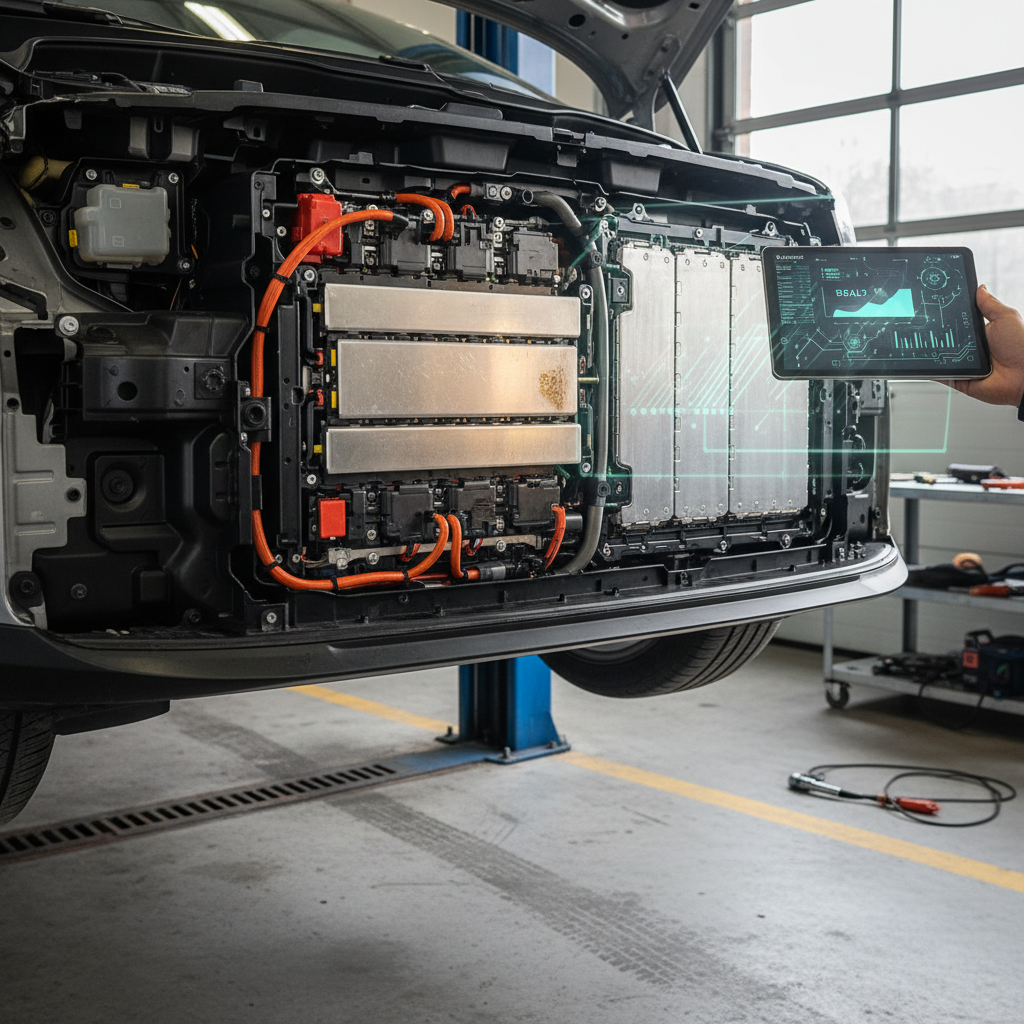
These are full high‑voltage battery packs from electric cars and trucks. They’re engineered for a decade or more of daily use, often retired from vehicles when they’ve dropped to 70–80% of original capacity, not because they’ve failed.
2. Module & cell harvests
Recyclers and refurbishers break packs into modules and individual cells. The best units may be reused in custom projects, DIY solar storage, RV builds, off‑grid cabins, while the rest are processed for materials.
3. Black mass & recovered metals
After shredding spent packs, recyclers turn the mix into black mass, then refine it back into lithium, nickel, cobalt, and other materials that go into brand‑new batteries.
Used lithium ≠ bargain bin
Second‑life batteries: from EV to energy storage
A modern EV pack usually leaves automotive service with plenty of life left, just not enough for a picky driver who remembers the day‑one range. When a pack is down to, say, 70% of its original capacity, it might no longer deliver 300 miles of range, but that same pack can be perfect for stationary storage where weight and space are less critical.
Grid‑scale storage
Large collections of used EV packs can be wired together into megawatt‑scale battery farms. These systems soak up excess solar or wind power in the afternoon and release it in the evening peak. The chemistry doesn’t care whether the pack is in a car or a shipping container; what matters is usable capacity and safety.
Commercial & community microgrids
Big‑box stores, data centers, and communities are starting to use second‑life batteries as backup power and peak‑shaving tools. A retired EV pack that’s “too tired” for highway duty can still keep a supermarket lit during an outage or smooth out demand spikes that would otherwise drive utility bills through the roof.
Recycling leaders are already turning used EV batteries into modular microgrids and second‑life systems, often claiming capacity in the tens of megawatt‑hours at a single site. This isn’t science fiction; it’s a fast‑growing business model built on the idea that an EV battery has two careers: first in a vehicle, then in stationary storage.
Why second life is a win
Inside the used lithium recycling boom
Even after second life, lithium‑ion batteries don’t just disappear. When they’re truly spent, or too damaged for reuse, they head to recyclers. This is where “used lithium” becomes the feedstock for new batteries, closing the loop.
How used lithium batteries are recycled today
Most modern lithium‑ion recycling in North America and Europe follows some variation of these steps.
| Step | What happens | Why it matters |
|---|---|---|
| 1. Collection & logistics | Used EV packs, consumer batteries, and industrial packs are collected and shipped to specialized facilities. | Safe packaging and transport prevent fires and contamination. |
| 2. Discharge & dismantling | Packs are fully discharged, opened, and separated into modules and cells; casings and wiring removed. | Reduces fire risk and separates high‑value components. |
| 3. Shredding to black mass | Cells are shredded into a granular mix called black mass plus metal scraps and plastics. | Black mass contains lithium, nickel, cobalt, manganese and graphite. |
| 4. Hydrometallurgical or pyrometallurgical refining | Chemical or thermal processes separate and purify metals from the black mass. | Recovers 80–95% of critical materials for reuse in new batteries. |
| 5. Production of new materials | Recyclers turn recovered metals into battery‑grade chemicals or cathode active material. | These materials go back into new cells for EVs and energy storage. |
Exact processes vary by company, but the broad flow is consistent: collect, safely discharge, shred, refine, and return materials to the battery supply chain.
Globally, recycling capacity is racing to catch up with the tidal wave of batteries now entering the system. China currently dominates with the majority of installed capacity, but North American and European recyclers are scaling rapidly as governments push for domestic, circular supply chains and offer incentives for high recycled content.
Is recycled lithium actually worth it?
Should you buy a used lithium battery for home, RV or solar?
If you search for used lithium batteries today, you’ll see everything from ex‑data‑center packs to mystery modules pulled from wrecked EVs. The attraction is obvious: lithium‑ion at a fraction of the price of new. The risk is equally obvious: you’re buying someone else’s problem if you’re not careful.
Used lithium buying checklist (for DIY storage, RVs, boats, etc.)
1. Know the original application
Batteries retired from EVs or reputable stationary storage tend to have well‑documented performance histories. Random imports or unlabeled modules can be a safety hazard and may not meet U.S. standards.
2. Demand a real test report
Voltage and a quick load test are not enough. Look for documentation of remaining capacity (state of health), internal resistance, and cycle count. Without that, you’re guessing.
3. Check for an appropriate BMS
A quality battery management system (BMS) is non‑negotiable. It watches cell temperatures, voltages, and currents, and it can shut the pack down if something goes wrong. Never run reclaimed cells without a proper BMS.
4. Respect voltage and current limits
Used packs may have lower safe charge/discharge rates than when new. Oversizing your pack slightly and being conservative with current draw helps avoid stress and overheating.
5. Understand that warranties are rare
Unlike new lithium batteries, used units often come with minimal or no warranty. If the price seems too good to be true, assume you’re self‑insuring the risk.
6. Consider the total project cost
Inverters, chargers, wiring, fire‑rated enclosures, and professional installation can quickly erase the savings of a bargain pack. Run the full math before you commit.
Fire safety isn’t optional
Used lithium and buying a used EV
For most drivers, your biggest exposure to used lithium isn’t in the basement or the RV; it’s in the traction battery of the used EV you’re considering. That pack accounts for a meaningful share of the vehicle’s value. Get it right and you enjoy years of low‑cost driving. Get it wrong and you inherit a large future bill.
Key questions to ask about the used EV’s lithium battery
These are the questions savvy buyers ask before they fall in love with the paint color.
What’s the current state of health (SoH)?
SoH tells you what percentage of original capacity remains. A pack at 90% will feel very close to new; one at 70% will have noticeably less range. Ask for measured data, not guesses.
How has the car lived?
Lots of fast charging, extreme heat, and heavy towing can accelerate degradation. A commuter car gently charged at home will usually have a happier battery than a cross‑country DC‑fast‑charge warrior.
Is there documentation and warranty coverage?
Factory service records, software updates, and any remaining battery warranty are all part of the value story. Some OEMs still cover the pack for 8–10 years from first sale.
How is battery health reflected in the price?
Battery condition should be baked into the valuation. A car with a fresher pack is worth more than an identical model with a tired one, even if the odometers match.
This is where a platform like Recharged earns its keep. Every vehicle we sell includes a Recharged Score battery health diagnostic plus a transparent pricing breakdown, so you’re not guessing how much useful life is left in the pack. You can also arrange financing, value your trade‑in, and have the car delivered, without ever stepping into a showroom.
Practical rule of thumb
Environmental impact: how “used lithium” changes the equation
Critics love to point at lithium mines and ask if EVs are really greener than gasoline cars. The full answer depends heavily on what happens at the end of the battery’s first life. Second‑life use and high‑efficiency recycling are the multipliers that make the math work in favor of electrification.
Upside of robust used‑lithium systems
- Fewer new mines: Recycled materials can eventually supply a significant portion of battery‑grade lithium, nickel and cobalt, reducing pressure to open new mines in sensitive regions.
- Lower lifecycle emissions: Every additional kilowatt‑hour discharged from a pack in second life spreads its manufacturing footprint over more delivered energy.
- Shorter supply chains: Domestic recycling and material production cut down on long international shipping routes.
The challenges we still have to solve
- Collection rates: Many smaller devices and off‑grid batteries still slip through the cracks and end up in landfills or scrap streams.
- Economic incentives: Recycling is capital‑intensive, and not every chemistry carries the same metal value. Policy has to nudge the industry in the right direction.
- Safety & standards: Informal trade in used modules without proper handling or certification can undo some of the environmental gains through fires and waste.
Don’t toss that pack
Future trends: what used lithium will look like by 2030
By 2030, “used lithium” will be less about piles of old batteries and more about a mature circular economy that treats spent packs as a standard input. Several trends already visible in 2025 will accelerate over the next five years.
Where used lithium is headed
For EV owners and used‑car shoppers
Battery health reports will become as normal as a Carfax, your next used EV listing will almost certainly include a quantified state‑of‑health score.
Trade‑in and resale prices will be more tightly linked to pack condition and remaining warranty, not just mileage and trim level.
In some markets, you may be able to opt into battery refurbishment or replacement programs when your pack reaches a certain age.
For grid and home energy users
Second‑life packs will increasingly show up behind the scenes in commercial buildings, data centers, and community microgrids, even if you never see the hardware.
Home battery products are likely to incorporate more recycled content and, in some cases, refurbished modules within certified enclosures.
Utilities and regulators will push for minimum recycled content in large storage projects, embedding used lithium into standards and incentives.
For the broader battery industry
Recycling plants will expand and cluster near EV manufacturing hubs, shrinking supply chains for cathode materials.
New chemistries will be designed from the start with recyclability and second‑life use in mind, not bolted on after the fact.
Data sharing between automakers and recyclers will improve, making it easier to route each used pack to the optimal second‑life or recycling pathway.
“The real story isn’t just how many batteries we can build; it’s how many times we can use the materials inside them before they become waste.”
FAQ: used lithium batteries
Frequently asked questions about used lithium batteries
Bottom line: what used lithium means for your next EV
Used lithium batteries are no longer an afterthought; they’re the backbone of a growing circular economy around EVs and energy storage. For drivers, that translates into better resale values, clearer information about battery health, and a path for your car’s pack to keep working long after you trade it in.
If you’re shopping for a used EV today, treat the battery like the heart of the car. Ask for hard numbers, not vibes. Look for platforms like Recharged that provide a Recharged Score battery health report, fair market pricing, financing, and expert EV support from first click to delivery. Do that, and you’re not just buying a car, you’re buying into a system where used lithium is a feature, not a bug.