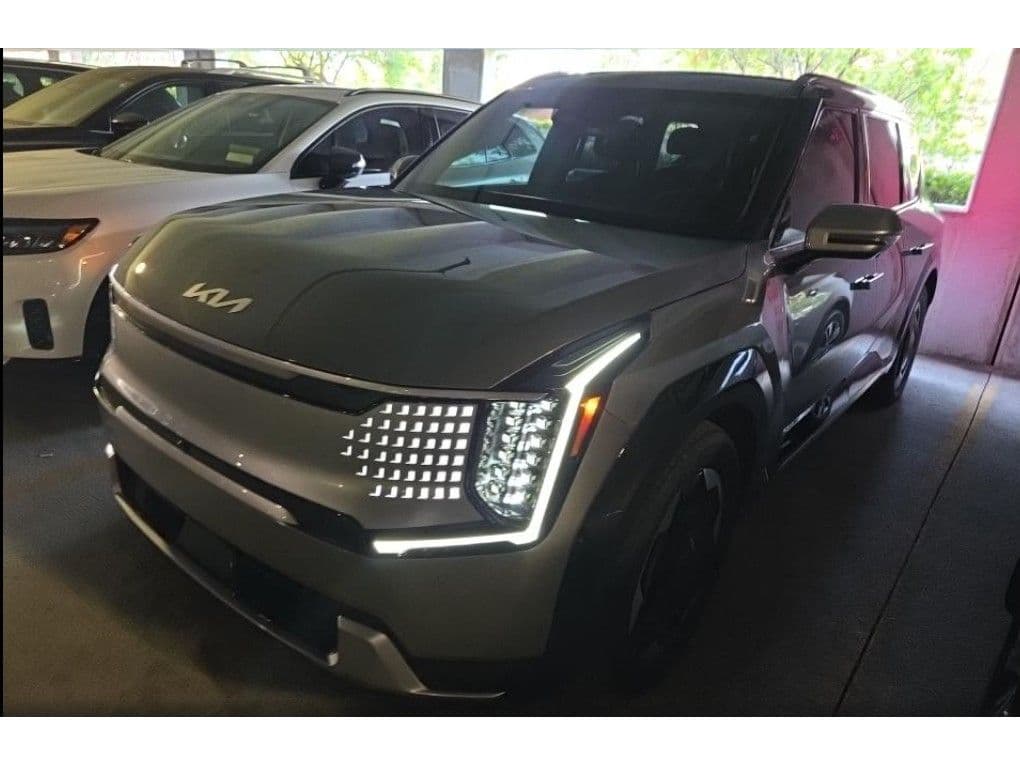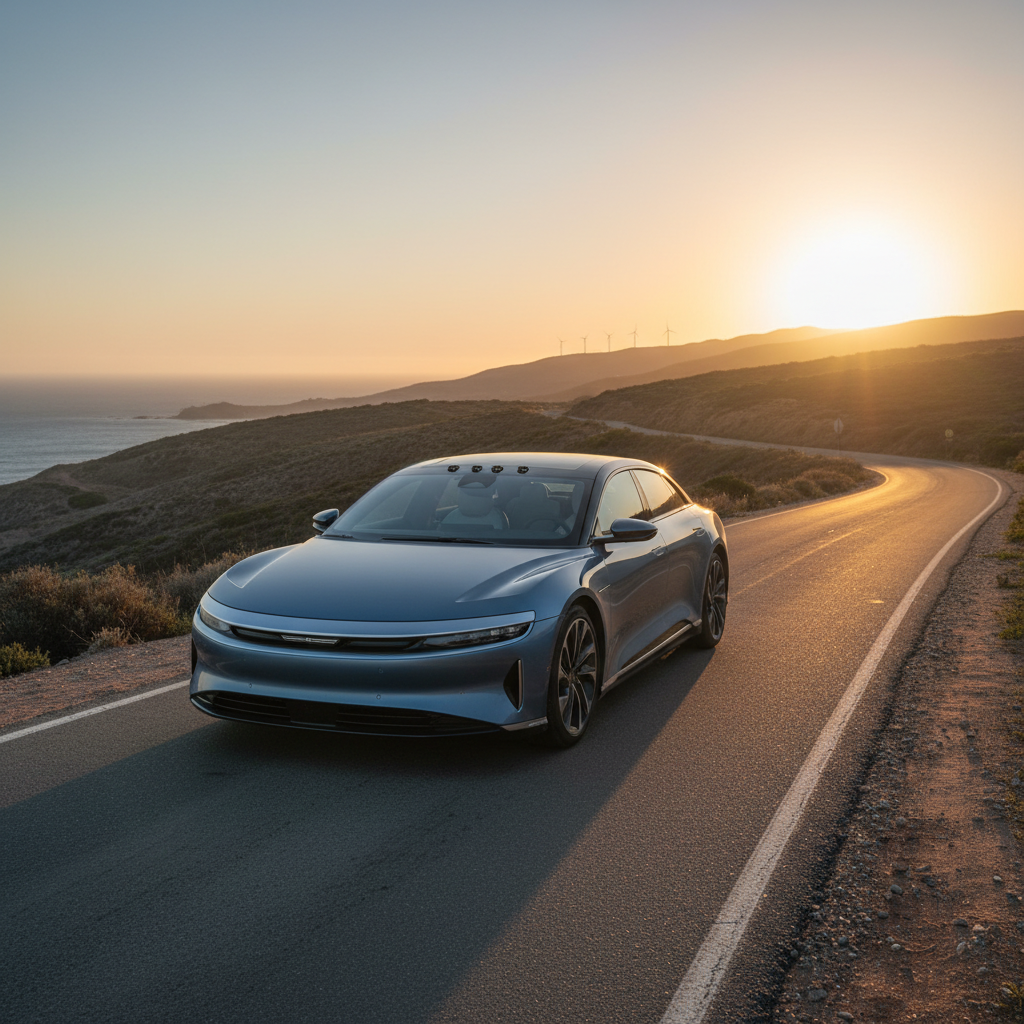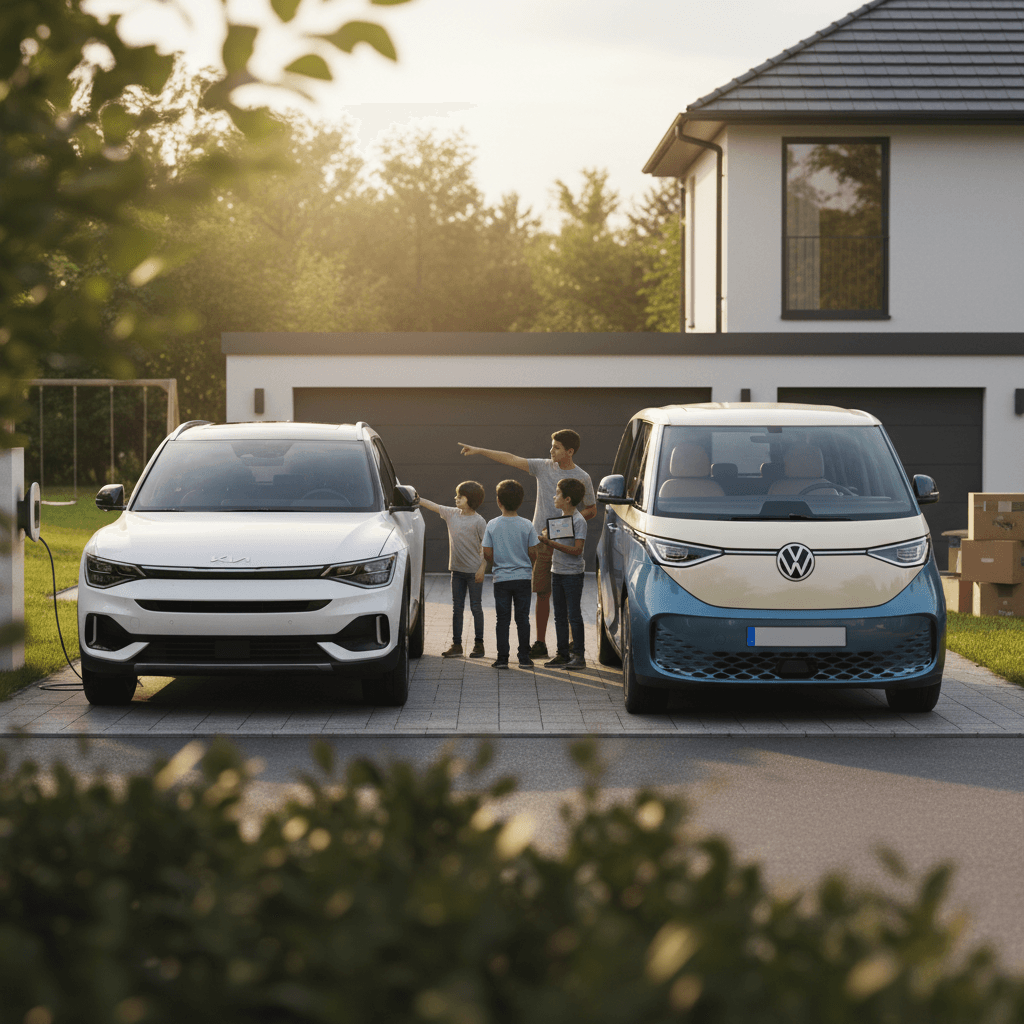
If you’re shopping the used market in 2026 for a family EV, the **Kia EV9** and **Volkswagen ID. Buzz** are probably on your shortlist. One is a sharp, three-row SUV; the other is a retro‑styled electric van. Both promise room for kids, pets, and road‑trip gear, but they deliver that promise in very different ways, especially once they hit the used market.
Two very different takes on the family EV
Overview: Kia EV9 vs VW ID. Buzz as used buys in 2026
By early 2026, **used Kia EV9s** are increasingly common in the U.S. thanks to strong new‑car sales, leases rolling off, and early adopters trading up. The **Volkswagen ID. Buzz** arrived later and in smaller volumes, so used examples are rarer, and pricing can reflect that scarcity and the van’s cult‑favorite status.
Kia EV9 (used)
- Body style: 3‑row midsize SUV
- Strengths: Range, DC fast‑charging speed, value, tech, and comfort
- Best for: Families replacing a 3‑row SUV or crossover who want an EV that feels familiar
Volkswagen ID. Buzz (used)
- Body style: Electric van (short and long wheelbase variants abroad; U.S. focuses on long‑wheelbase)
- Strengths: Huge cabin, flexible seating, design character
- Best for: Van‑lifers, families who prioritize space and style over maximum range
U.S. availability note for 2026
Fast facts: core specs that matter on the used market
Headline numbers: Kia EV9 vs VW ID. Buzz (U.S. models)
Used Kia EV9 vs Volkswagen ID. Buzz: quick spec comparison (typical U.S. trims)
Numbers are representative of common 2024–2025 model‑year vehicles you’ll see on the U.S. used market in 2026. Always confirm exact specs by VIN for the vehicle you’re considering.
| Spec | Used Kia EV9 (typical) | Used VW ID. Buzz (typical) |
|---|---|---|
| Body style | 3‑row SUV (6 or 7 seats) | 3‑row van (6 or 7 seats) |
| Battery capacity | ~76–99 kWh usable | ~79–86 kWh usable |
| EPA‑style range | Up to ~300 mi (RWD LR) | Roughly mid‑200s mi, depending on wheelbase and trim |
| DC fast‑charge peak | ~215–230+ kW | ~200 kW |
| On‑board AC charger | ~11 kW | ~11 kW |
| Drive layout | RWD or dual‑motor AWD | RWD or dual‑motor AWD (e.g., GTX) |
| Typical used price (2026) | Often mid‑$40Ks to low‑$60Ks, trim‑dependent | Often high‑$50Ks to $70K+, depending on spec and rarity |
| Towing capacity | Up to ~5,000 lbs (properly equipped) | Lower than EV9, more focused on people/cargo than trailers |
SUV efficiency vs van space: two different approaches to moving a family on electrons.
Space and practicality: SUV vs electric van
If you’re coming out of a minivan or a three‑row crossover, practicality is probably your first question. Both vehicles technically seat six or seven, but they do it with very different personalities.
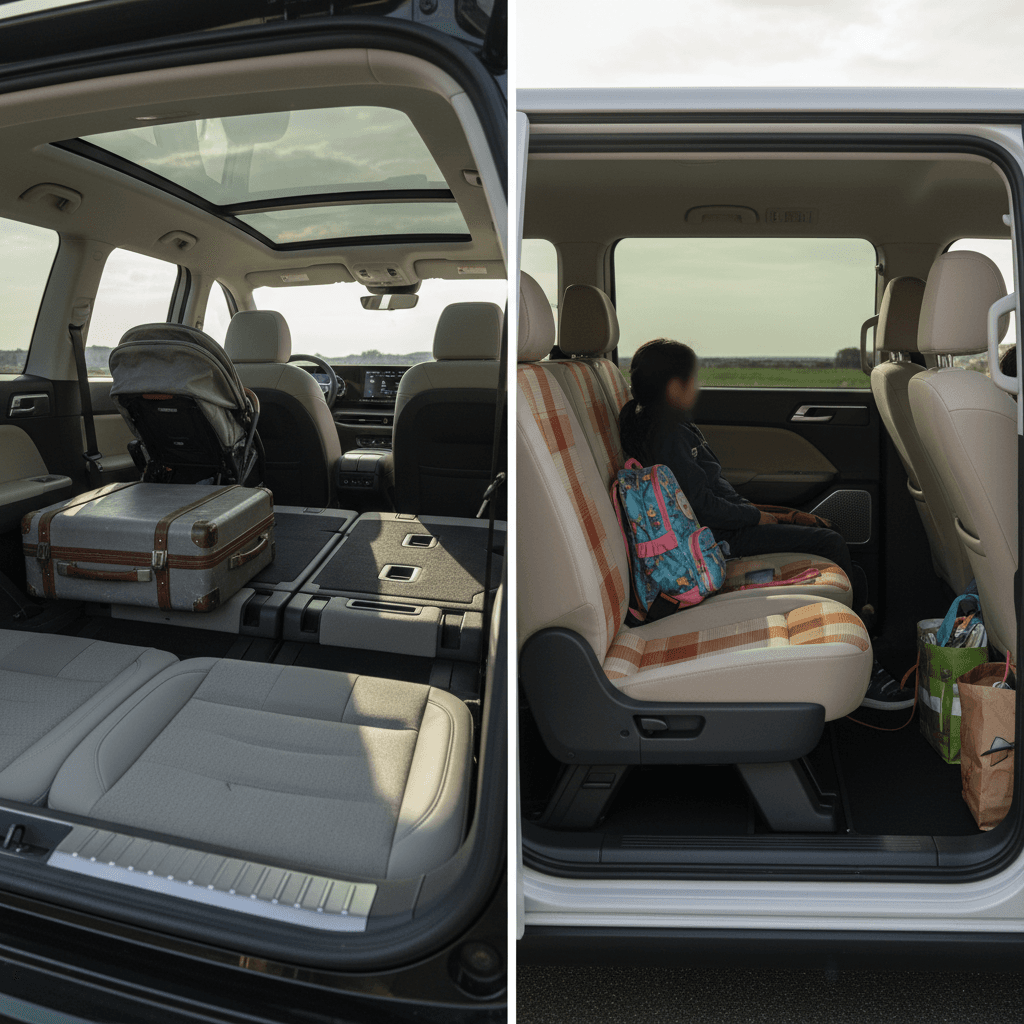
Interior space: how they carry people and stuff
Think about doors, third‑row comfort, and cargo flexibility, not just seat count.
Kia EV9: traditional SUV practicality
- Seating: 6‑ or 7‑seat layouts with captain’s chairs available in the second row.
- Access: Conventional rear doors; third‑row access is similar to other midsize SUVs.
- Third row: Usable for adults on shorter trips; excellent for kids and teens.
- Cargo: With all rows up, more limited than a van, but still competitive among 3‑row SUVs.
- Towing: Rated up to roughly 5,000 pounds when properly configured, a plus for small campers or trailers.
Volkswagen ID. Buzz: full‑on people hauler
- Seating: 3 rows with a more upright, van‑like seating position and big glass area.
- Access: Sliding rear doors and a tall roofline make loading kids and car seats easier.
- Third row: More spacious and airy; better for adults on long hauls.
- Cargo: With rear seats folded or removed, the Buzz is cargo‑van generous.
- Flexibility: Ideal for campers, bikes inside the cabin, and DIY "micro‑RV" builds.
Test the third row like you’ll really use it
Range, efficiency, and charging experience
On paper and in real‑world testing, the **Kia EV9 usually wins on range and charging speed**. That matters more on the used market than you might think, because a more efficient design can help hide some early battery degradation and make road trips less stressful.
- Many rear‑wheel‑drive EV9 trims are rated around 280–300 miles of range when new, with all‑wheel‑drive versions typically in the 240–270‑mile neighborhood.
- The ID. Buzz, especially in long‑wheelbase U.S. form, trades some efficiency for its huge boxy cabin, landing closer to the mid‑200‑mile range depending on wheel size and trim.
- All EV9s use 800‑volt‑class hardware, enabling strong DC fast‑charge performance; the Buzz uses a more conventional layout with a slightly lower peak, so highway charging sessions are generally longer.
Kia EV9 on the road
- DC fast‑charging: Peak rates in the ~215–230+ kW ballpark mean short, high‑power sessions on capable chargers.
- Charging curve: Holds relatively high power through a good portion of the session, so 10–80% can take well under 30 minutes in ideal conditions.
- Home charging: ~11 kW on‑board AC charger makes overnight full charges straightforward on a 48‑amp Level 2 setup.
- Network access: By 2026, many EV9s can use Tesla Superchargers via adapters or NACS integration, broadening your fast‑charge options.
Volkswagen ID. Buzz on the road
- DC fast‑charging: Peak of about 200 kW is still solid, but sessions are typically longer than in an EV9 for a similar energy boost.
- Charging curve: The big, upright body and lower efficiency mean more frequent stops on long trips versus an equivalent‑battery EV9.
- Home charging: Similar 11 kW AC hardware; nightly top‑ups are easy if you have a 240‑volt circuit available.
- Network access: Support for U.S. fast‑charging networks continues to improve, but VW software and route planning have historically been weaker than Kia’s and some rivals’ apps.
Watch real‑world range on big‑wheel trims
Driving experience, tech, and comfort
The EV9 feels like a modern, quiet SUV with a bit of sportiness available in dual‑motor trims. The ID. Buzz feels largely like what it is: an incredibly refined, charming van. Neither is a track car, but the difference in character is obvious within the first five minutes behind the wheel.
How they feel to drive and live with
From power and steering to in‑car tech and driver assistance.
Performance
Kia EV9: Dual‑motor versions can top the mid‑300‑horsepower range with big torque. Passing power and on‑ramp acceleration are strong, especially compared to most gas SUVs.
ID. Buzz: Adequate but less dramatic; tuned more for smoothness than shove. GTX performance versions add more punch but are less common used and can be pricey.
Ride & noise
EV9: Feels like a well‑sorted crossover: stable, quiet, and comfortable on the highway. Some trims can feel firmer on large wheels.
ID. Buzz: Tall, airy cabin and big glass create a sense of space, but crosswinds and road noise can be more noticeable, typical for vans.
Tech & UX
EV9: Large dual screens, robust driver‑assist features, and generally better‑reviewed software and apps than VW’s current systems.
ID. Buzz: Infotainment has improved from earlier VW EVs but still draws criticism for lag and menu complexity on some builds.
“If I wanted the easiest EV to live with day‑to‑day, I’d lean EV9. If I wanted a personality vehicle that doubles as a family hauler and weekend camper, I’d look hard at the Buzz.”
Reliability, resale value, and ownership costs
For used shoppers, depreciation, maintenance, and long‑term battery health matter at least as much as range or 0–60 times. We’re still early in the life cycle for both of these vehicles, but some patterns are already emerging.
Used market trends as of 2026
How the EV9 and ID. Buzz are holding value and what that means for you.
Kia EV9: volume and value
- By 2026, there’s a meaningful supply of off‑lease and low‑mileage EV9s on the market.
- Early data suggests depreciation is noticeable but not catastrophic for a new‑tech 3‑row EV, helped by strong demand for family‑sized electric SUVs.
- Because there are more EV9s for sale than Buzz vans, you can often negotiate more aggressively and find trims that fit your budget and range needs.
- Battery packs appear to be aging reasonably well so far, with most used examples still retaining the majority of their original capacity.
Volkswagen ID. Buzz: scarcity pricing
- Lower production volume and strong interest from enthusiasts mean used Buzz prices often stay high relative to age and mileage.
- That can be good if you’re thinking about resale later, but tougher if you’re trying to get into one on a budget.
- Software‑related warranty work is more common for some VW EVs; factor in dealer support quality in your region.
- The Buzz’s unique body style and interior may age well emotionally, but repair costs for some trim pieces can be higher due to low volumes.
Battery health and the Recharged Score
Which used EV fits you best? Key scenarios
Once you strip away nostalgia for the classic VW bus and the wow factor of the EV9’s futuristic cabin, your decision comes down to how you use your vehicle. Here are some practical scenarios that tend to favor one over the other.
Common buyer profiles: EV9 vs ID. Buzz
Family replacing a 3‑row SUV or minivan
You mostly drive suburban and highway miles with kids and cargo.
You want something that still fits in standard parking spots and garages.
You care about long‑distance range for holiday road trips.
<strong>Leans toward:</strong> Kia EV9, thanks to range, efficiency, and familiar SUV shape.
Weekend camper / van‑life curious
You want to sleep inside the vehicle or build a light camper interior.
You value vertical space and sliding doors more than highway efficiency.
You may carry bikes or surfboards inside rather than on a hitch rack.
<strong>Leans toward:</strong> Volkswagen ID. Buzz for its boxy, configurable cabin.
Heavy towing and mountain trips
You plan to tow a small camper, boat, or utility trailer regularly.
You drive at higher speeds over long distances, where aerodynamics matter.
You live in a region with cold winters and hilly terrain.
<strong>Leans toward:</strong> Kia EV9, which typically offers higher tow ratings and more efficient highway performance.
Design‑driven early adopter
You want something that looks like nothing else in the school pickup lane.
You’re willing to pay extra for character and rarity.
You don’t mind putting in a bit more effort to find the right used example.
<strong>Leans toward:</strong> Volkswagen ID. Buzz, especially distinctive colors and trims.
How Recharged helps you shop used EV9s (and similar 3-row EVs) with confidence
Because the ID. Buzz is still rare and region‑dependent in the U.S. used market, most shoppers will find far more **used Kia EV9s** and similar three‑row EVs in stock at any moment. That’s exactly the space Recharged is built for: helping you compare real‑world vehicles with clear, transparent data instead of brochure promises.
- Every EV on Recharged comes with a Recharged Score Report that summarizes battery health, projected range, pricing versus the market, and any notable issues.
- You can buy entirely online with financing, trade‑in, or selling your current vehicle via instant offer or consignment.
- If you’re near Richmond, VA, you can visit the Recharged Experience Center to sit in different three‑row EVs, compare interior space, and get EV‑specialist advice.
- Nationwide delivery means you can focus on finding the right configuration, EV9 trim, color, seating layout, without being limited to your local lot.
Not seeing an ID. Buzz nearby?
Ready to find your next EV?
Browse VehiclesChecklist: what to inspect on a used EV9 or ID. Buzz
Newer EVs like the EV9 and ID. Buzz haven’t been on the road for decades, but early build issues, software quirks, and EV‑specific wear points are already known. Use this checklist as a starting point when you’re evaluating any individual vehicle.
Used Kia EV9 / VW ID. Buzz inspection checklist
1. Verify battery health and range
Ask for a recent battery health report or range test at typical highway speeds. Compare the displayed full‑charge estimate to the original EPA figure to understand any degradation.
2. Check DC fast‑charging behavior
If possible, do a short DC fast‑charge session. Watch for unusually low peak power, errors, or repeated session drops, these can point to battery or software issues that deserve attention.
3. Inspect tires and wheels carefully
Both vehicles are heavy and often run large wheels. Uneven tire wear can hint at alignment issues; curb rash on big wheels can be expensive to fix.
4. Test all doors and seats
On the EV9, fold and slide all rows, and confirm power seat functions and child‑seat anchors. On the ID. Buzz, work the sliding doors repeatedly and check seat folding/removal mechanisms for smooth operation.
5. Stress‑test infotainment and apps
Spend time switching between navigation, audio, phone, and driver‑assist settings. Confirm that over‑the‑air update history is documented and that key features (like adaptive cruise) behave as expected.
6. Review recall and service history
Ask the seller for recall documentation and service records. Pay particular attention to any software, charging, or airbag recalls and make sure they’ve been addressed.
Private‑party vs curated marketplace
FAQ: Used Kia EV9 vs Volkswagen ID. Buzz in 2026
Frequently asked questions
If you strip away badges and nostalgia, the used **Kia EV9** emerges in 2026 as the more rational family EV: longer range, stronger charging, easier availability, and broadly solid ownership costs. The **Volkswagen ID. Buzz** counters with van‑level space and personality that no SUV can replicate, but in a smaller, pricier, and more region‑limited used market. Think hard about how often you’ll exploit that van flexibility versus how often you just need to cover miles comfortably and efficiently. Then use tools like the Recharged Score Report, transparent pricing, and EV‑specialist support to make whichever path you choose a confident one.